- Keke Rosberg
- Nigel Mansell
- Jenson Button
- Nico Rosberg
- Gilles Villeneuve
- Mika Hakkinen
- Jackie Stewart
- Charles Leclerc
- Lewis Hamilton
- Max Verstappen
- Lando Norris
- Ayrton Senna
- Michael Schumacher
- Fernando Alonso
- Oscar Piastri
- George Russell
- Kimi Antonelli
- Nico Hülkenberg
- Gabriel Bortoleto
- Pierre Gasly
- Franco Colapinto
- Carlos Sainz
- Oliver Bearman
- Sergio Pérez
- Valtteri Bottas
- Isack Hadjar
- Alain Prost
- James Hunt
Ready to Strike: Kimi Antonelli Arrives for Qualifying Day
Posted by
 123Helmets Editorial Team
123Helmets Editorial Team
Race Week News
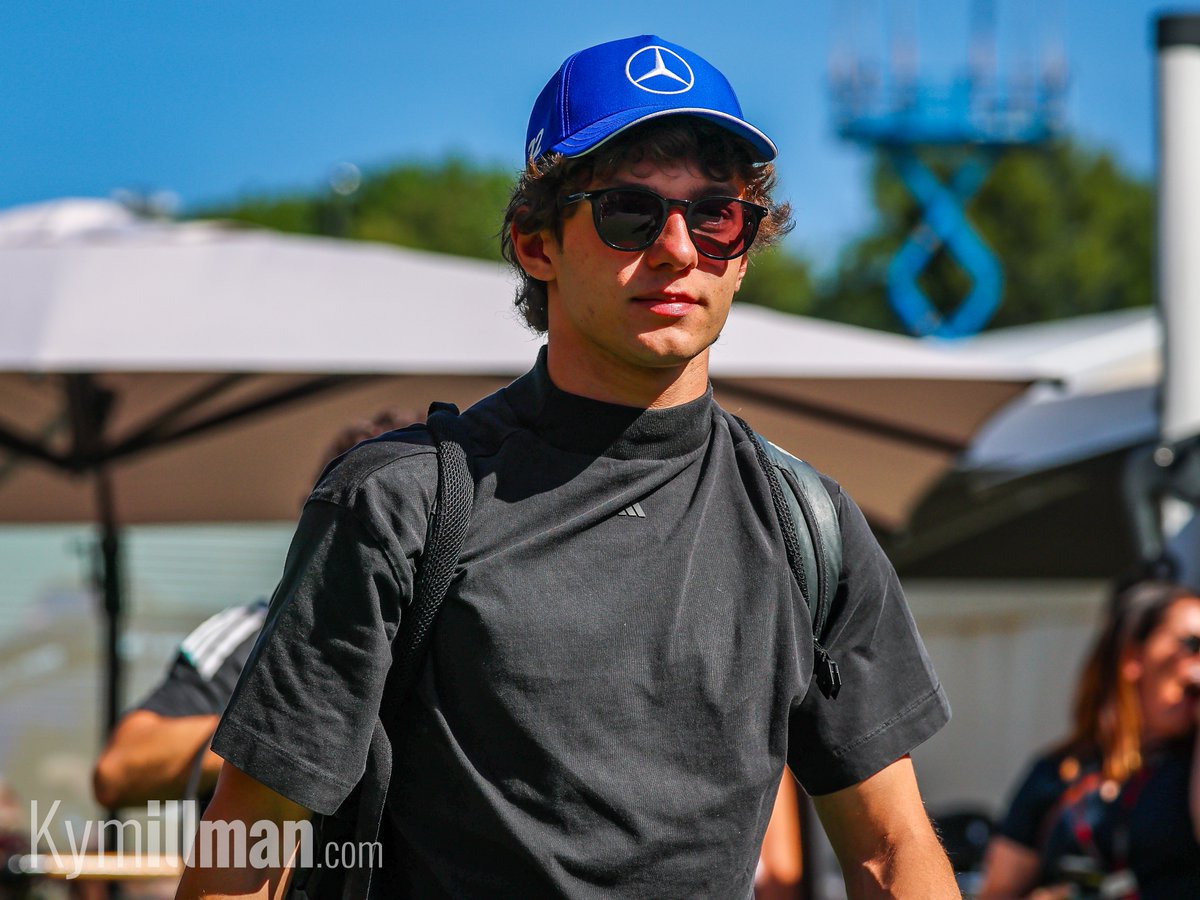
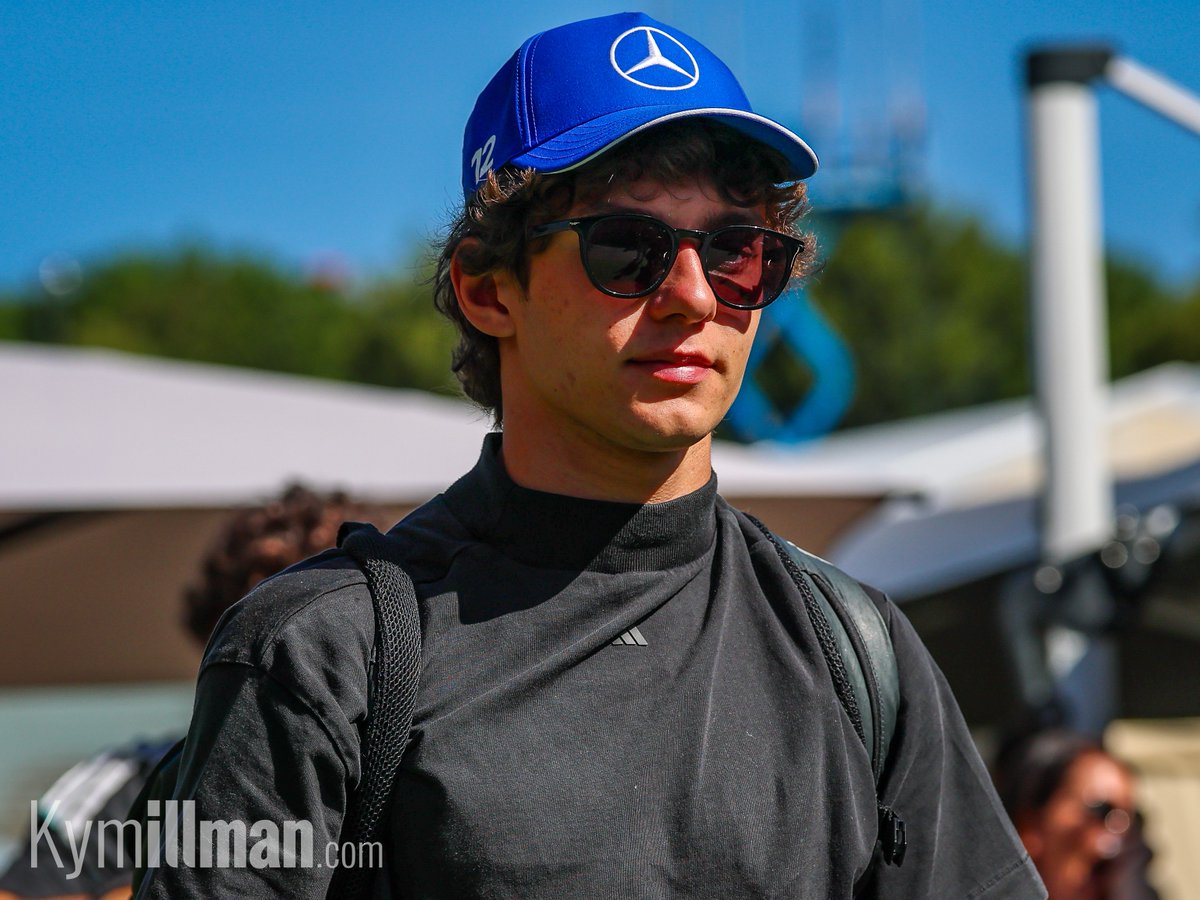
Kimi Antonelli stepped into the paddock this morning with purpose, heading into final practice and a qualifying hour that could define his weekend. After Frederik Vesti covered FP1 duties, Antonelli returned for FP2 and clocked in roughly half a second behind Lando Norris — the championship leader who has won five consecutive races. The gap is real, but so is the opportunity.
Key Takeaways
Antonelli sat out FP1, with Frederik Vesti taking his Mercedes seat before Kimi returned for FP2.
Lando Norris has won five consecutive races and holds the championship lead heading into today’s qualifying session.
Antonelli finished approximately 0.5 seconds off Norris’s FP2 benchmark — a gap that sets the target for qualifying.
Collector replica helmets marking Antonelli’s first full Mercedes season are already among the most talked-about pieces in the F1 display community.
The Morning the Paddock Was Watching
There are mornings in an F1 paddock that carry a different kind of weight, and this was one of them. Kimi Antonelli — the teenager Mercedes staked their post-Hamilton future on — walked in ahead of final practice with every camera in the garage pointed his way. The context matters: he had not driven yesterday’s opening practice session, FP1, with reserve driver Frederik Vesti taking the wheel in his place. That is a standard procedure teams use to fulfill the FIA’s requirement for young driver running during the season, but it still meant Antonelli arrived on qualifying morning with fewer laps in his legs than most of his rivals.
When he did climb into the Mercedes for FP2, the stopwatch told a clear story. He ended the session approximately half a second behind the benchmark posted by Lando Norris — the man who has turned the 2025 season into something of a personal procession. Half a second in Formula 1 is not a chasm, but it is not nothing either. On a Saturday when positions on the grid can be separated by hundredths, it represents a meaningful stretch of tarmac that Mercedes will have spent the overnight hours trying to understand and close.
For anyone tracking Antonelli’s progress across his first full season as a Mercedes race driver, mornings like this one are the raw material of a career story still being written at speed.
Norris and the Five-Race Juggernaut
To understand what Antonelli is chasing, you have to understand what Lando Norris has become in 2025. The McLaren driver has won five races in succession heading into today’s qualifying session — a run of form that has transformed him from a talented contender into the undisputed championship leader. He has carried momentum from one weekend to the next with a consistency that is genuinely rare at this level of the sport.
Norris’s FP2 benchmark was not set under pressure — it was set by a driver who appears to be operating within himself, managing pace rather than extracting every last tenth. That is arguably the most unsettling thing about his current dominance. When the championship leader is not at his ceiling and still sets the session reference time, the teams behind him face a complicated calculation: how much is left in his pocket, and how do you plan a strategy around an unknown reserve?
For Mercedes, closing a 0.5-second FP2 deficit is achievable if the car’s setup has been properly optimised overnight and if Antonelli can extract maximum performance on a clear lap in qualifying trim. The question is whether the package itself has the headroom — and whether a 19-year-old in his debut full season can deliver that lap when it counts most.
What the Gap Actually Means
Half a second across a lap is meaningful, but practice sessions are not qualifying. Fuel loads differ, tyre conditions differ, and track evolution across a race weekend consistently produces lap times that bear little resemblance to Friday afternoon’s numbers. The teams know this. Antonelli knows this. The gap is data, not destiny.
Antonelli’s First Full Season: A Story in Real Time
Kimi Antonelli did not ease his way into Formula 1. He was handed the seat vacated by Lewis Hamilton — arguably the most scrutinised cockpit in the history of the sport — and was expected to perform immediately while the world watched for any sign that Mercedes had moved too fast. The pressure of that context does not dissipate over a race weekend. It accumulates.
What has emerged so far in 2025 is a picture of a driver who is learning the rhythms of Grand Prix racing without losing his composure. There have been difficult weekends, as there always are for rookies in competitive machinery, but there have also been flashes of the pace that convinced Mercedes to back him so completely. FP2 on any given Friday is a small data point in a long data set, but every small data point matters when you are building the case that the gamble was right.
This qualifying session is another chapter. If Antonelli can convert his overnight preparation into a clean, representative lap, he has the chance to put his car near the front of the grid and give himself a race-day platform. If the gap remains around the 0.5-second region FP2 suggested, the weekend becomes about damage limitation and strategic thinking rather than outright speed.
Either way, the story is worth following closely — both in real time on the timing screens and in the longer historical record that collector pieces are already beginning to document.
Why Collectors Are Already Paying Attention
Within the world of full-size 1:1 display replica helmets, Kimi Antonelli’s first Mercedes season has generated genuine collector interest from the opening race. The reasoning is straightforward: he is one of the few active drivers whose career narrative carries the kind of weight that tends to translate into long-term collector value. Taking over from Hamilton, representing Mercedes in a post-dominant era, carrying the expectations of an entire manufacturer program — these are the ingredients that make a career collectible.
Display replica helmets produced to 1:1 scale capture the livery, visor specification, and graphic detail of the helmets Antonelli actually wears during a race weekend. For a qualifying day like today, that means the exact design sitting in the car as he pushes for a grid position is the same design reproduced in exhibition-quality replica form for collectors and display purposes. These pieces are not certified protective equipment and carry no safety rating — they are collector items produced to be displayed, studied, and appreciated as documentary objects that record a specific moment in motorsport history.
A typical full-size F1 display replica helmet weighs approximately 1.45 kg and measures around 27 × 35 cm in its display footprint — close enough to the real article that the visual impression at a metre’s distance is effectively identical. The visor on a quality display replica is generally produced to a 4 mm polycarbonate specification, giving it the correct optical character without the structural engineering of a race visor. For anyone building a collection that documents the 2025 season, a piece tied to Antonelli’s debut Mercedes year has a clear place in that record.
The Vesti Angle
It is also worth noting that Frederik Vesti’s FP1 appearance in Antonelli’s car adds a secondary collector footnote. Reserve and test drivers who take a seat during a race weekend occasionally generate their own commemorative display pieces — not common, but not unheard of either. For completists tracking every car appearance across the 2025 season, Vesti’s Friday morning run is part of the documentary record.
What to Watch in Qualifying
The qualifying hour is divided into three segments — Q1, Q2, and Q3 — and each one creates its own pressure point. For Antonelli, the first objective is clean passage through Q1 and Q2 without incident or tyre misjudgement. By the time Q3 arrives, the field is reduced to the ten fastest cars, and the lap that matters most is the one you set when track conditions peak, usually in the final minutes.
Mercedes will be watching tyre warm-up windows carefully. One of the recurring challenges for teams not at the absolute front of the field is finding the precise preparation lap and cool-down sequence that puts the rubber exactly in its performance window when the driver begins the flying lap. Get this wrong by even a small margin and the data you collect is not representative of the car’s actual ceiling — and you lose grid positions you did not have to lose.
For Antonelli specifically, the challenge is combining the technical execution of a qualifying lap — precise braking points, smooth kerb use, no moments of oversteer that scrub time in the corners — with the mental composure to deliver it cleanly after a morning that included final practice, a debrief, and the accumulated pressure of a weekend where Norris has already demonstrated superior pace.
If he can close that 0.5-second gap from FP2 and put the Mercedes on the second or third row, the strategic options available for Sunday open considerably. Formula 1 in 2025 rewards track position, and a strong qualifying result can compensate for gaps in outright race pace that are difficult to close through pit-stop strategy alone.
The Bigger Picture: A Season Defining Itself
Saturdays in F1 have a particular quality. They are the day the weekend’s preparation either pays off or reveals its limits. Everything that happened on Friday — every practice lap, every tyre comparison, every setup adjustment logged in the engineers’ data — either translates into grid positions or it does not. There is no buffer, no chance to regroup before the result is posted.
For Kimi Antonelli, arriving in the paddock this morning is the visible gesture that the weekend is still his to shape. He sat out FP1, absorbed the FP2 data showing a half-second gap to Norris, and came back on Saturday morning ready to extract something better. That is the posture of a driver who has not conceded anything — which, given the competitive context of five consecutive Norris victories, is the only posture that makes sense.
The championship leader’s streak will end at some point. Five races is a long run, and Formula 1 history is full of dominant spells that were eventually interrupted by weather, strategy, mechanical misfortune, or simply a rival who found an extra tenth at exactly the right moment. Whether today is that moment for Mercedes and Antonelli is unknown until the timing screens go green.
What is known is that Kimi Antonelli walked into this paddock this morning with purpose, and that is the starting point for every qualifying session worth remembering. For the collectors and display enthusiasts who document these seasons through exhibition-quality replica helmets, mornings like this are precisely the moments that later define whether a piece belongs in a collection — or simply on a shelf.
“The championship leader has won the last five races and continues to carry remarkable momentum into every weekend.”
— Kym Illman, @KymIllman on X
“Kimi sat out FP1 yesterday, with Frederik Vesti taking over driving duties in his Mercedes. When he returned to the car for FP2, he finished around half a second adrift of the benchmark set by Lando Norris.”
— Kym Illman, @KymIllman on X
FAQ
Q: Why did Kimi Antonelli miss FP1?
Antonelli sat out FP1 to allow reserve driver Frederik Vesti to take his Mercedes seat. Teams are required by FIA regulations to run a young or reserve driver in at least two practice sessions across the season, making Vesti’s FP1 appearance a planned procedure rather than a response to any issue with Antonelli.
Q: How far was Antonelli behind Norris in FP2?
Antonelli ended FP2 approximately half a second behind the benchmark set by Lando Norris. In Formula 1 terms that is a meaningful gap on a single lap, though practice session times are affected by fuel loads and tyre conditions that differ from qualifying trim.
Q: How many consecutive races has Lando Norris won going into this qualifying session?
Lando Norris has won five consecutive races heading into today’s qualifying hour, making him the championship leader with significant momentum behind his McLaren.
Q: What are the physical specifications of a full-size 1:1 F1 display replica helmet?
A quality full-size 1:1 display replica helmet typically weighs around 1.45 kg and has a display footprint of approximately 27 × 35 cm. The visor on exhibition-quality pieces is generally produced to a 4 mm polycarbonate specification. These are collector and display items only — not certified protective equipment and not intended for road, race, or track use.
Q: Why do collectors focus on helmets from a driver’s debut season with a major team?
A driver’s first full season with a historically significant manufacturer — particularly one as prominent as Mercedes — creates a well-defined documentary moment in motorsport history. Display replica helmets from that period capture a specific chapter that cannot be repeated, which is why collector interest tends to concentrate on debut-year liveries and designs.
Browse F1 Helmet Collection — find full-size 1:1 display replica helmets documenting the 2025 season and beyond at our shop.
Display and collector replicas only. Not certified for protective use. Full-size 1:1 scale.