Blog
Leclerc Faces Fitness Check at Madring After Monza Crash
 123Helmets Editorial Team
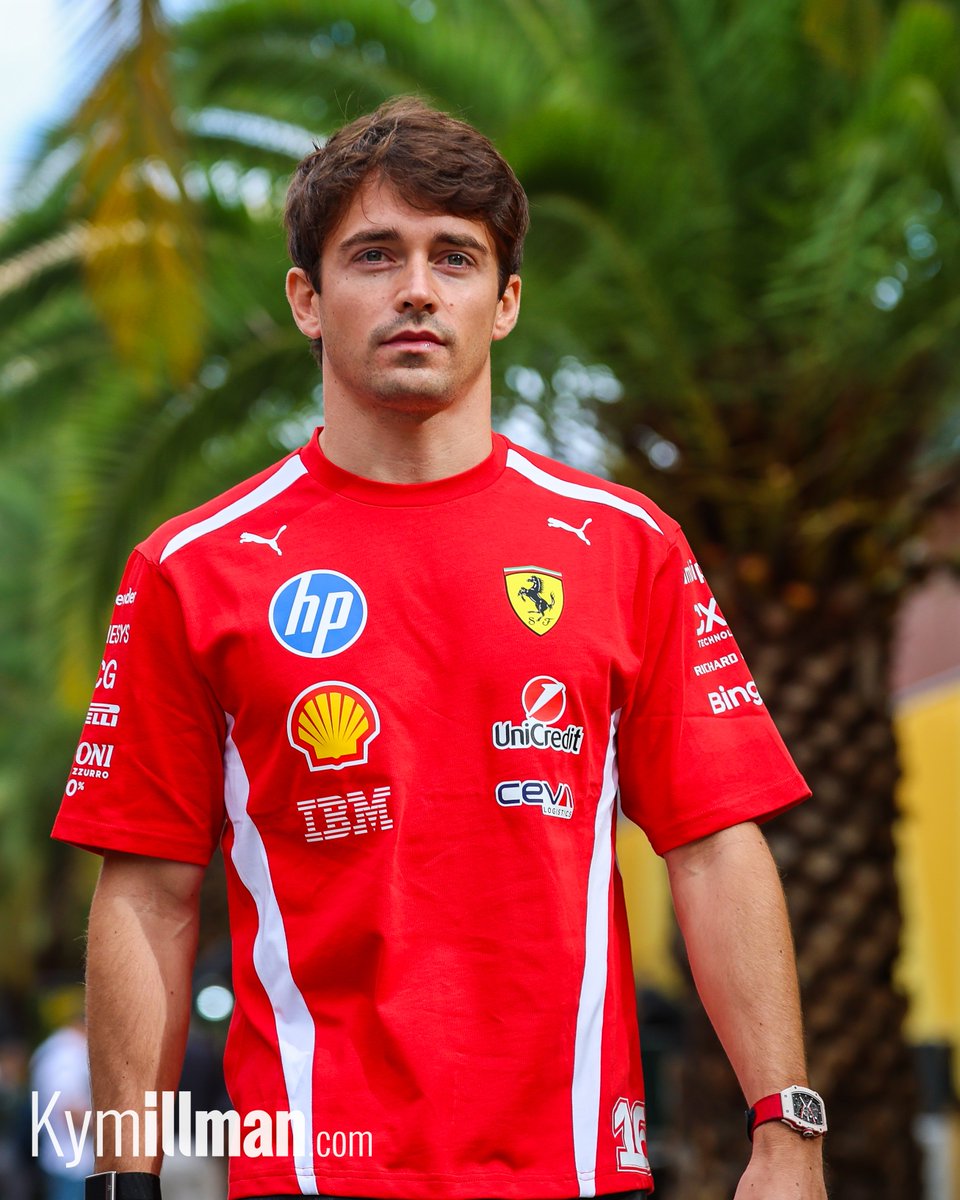
Charles Leclerc has arrived at the Madring circuit for the Spanish Grand Prix weekend still under medical assessment following a 60g impact during last weekend’s Italian Grand Prix at Monza, with his participation in Sunday’s race not yet confirmed.
Key Takeaways
Charles Leclerc suffered a 60g crash at Monza during last weekend’s Italian Grand Prix.
He has arrived at the Madring circuit for the Spanish Grand Prix weekend.
Leclerc is confirmed to drive FP1, after which the team will assess whether he can continue.
Antonio Giovinazzi is the most likely reserve if Leclerc is ruled unfit to start the race.
What happened to Charles Leclerc at Monza
Charles Leclerc was involved in a crash measured at 60g during last weekend’s Italian Grand Prix at Monza. Impacts of that magnitude are rare in modern Formula 1 and typically trigger a full medical review before a driver is cleared for further running. The exact circumstances of the crash have not been detailed beyond the recorded impact figure, but the scale of it is why his participation at the following round is now in question rather than a formality.
Following any high-g impact, teams and the FIA medical delegate work through standard checks covering neurological response, neck and spine assessment, and general fitness before signing off on a return to the cockpit. Leclerc’s case is being handled under that process this week at Madring.
Leclerc’s arrival at Madring
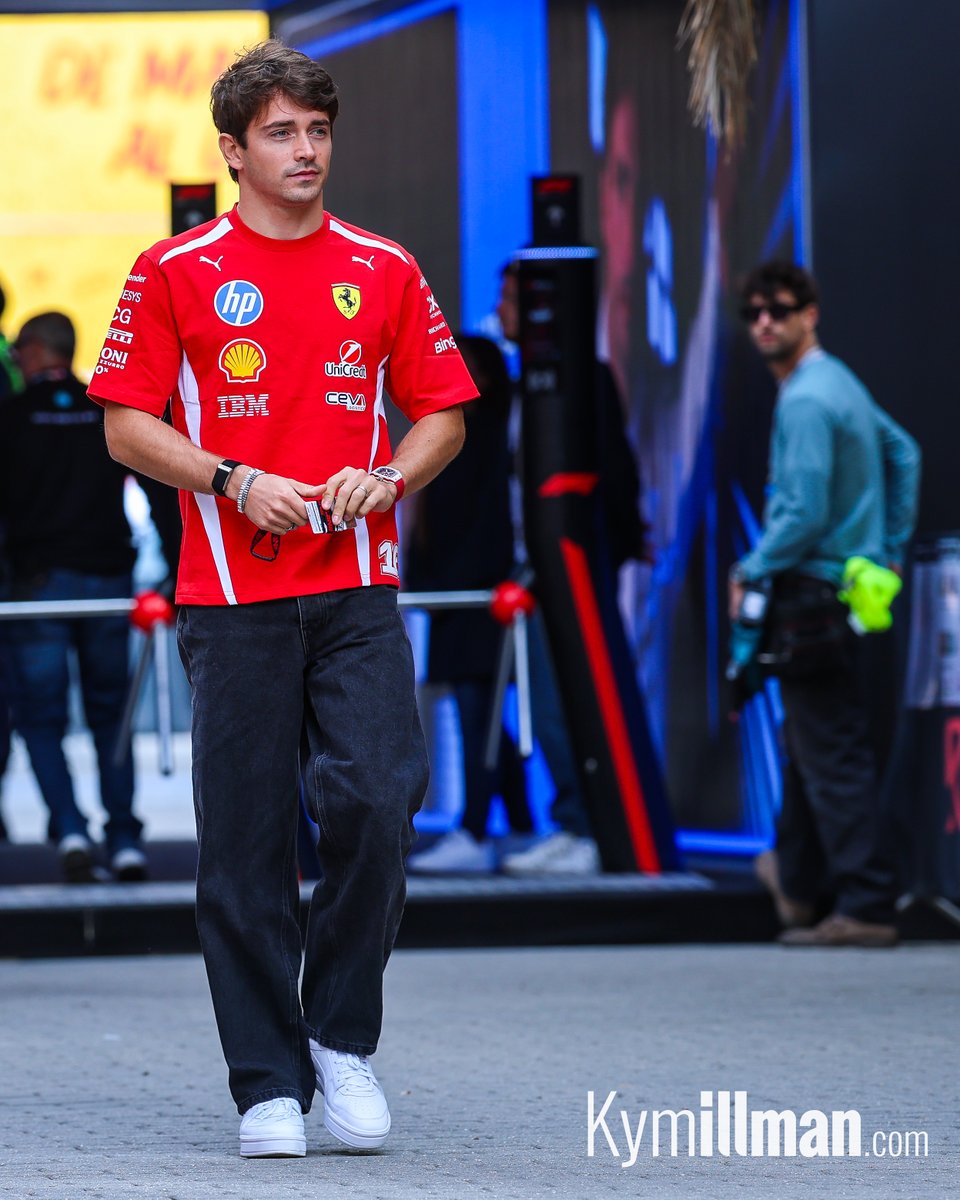
Charles Leclerc has arrived at the Madring circuit ahead of the Spanish Grand Prix weekend, images from the paddock confirming he is on site despite the uncertainty over his fitness. Madring is hosting the Spanish Grand Prix, and Leclerc’s presence at the track is the first practical step toward a possible race weekend, though arriving at the circuit does not by itself guarantee he will be behind the wheel come Sunday.
Paddock protocol means a driver recovering from a significant impact can still walk the track, meet with team engineers, and go through simulator or fitness work even while a final decision on racing remains open.
FP1 confirmed, but the race remains uncertain
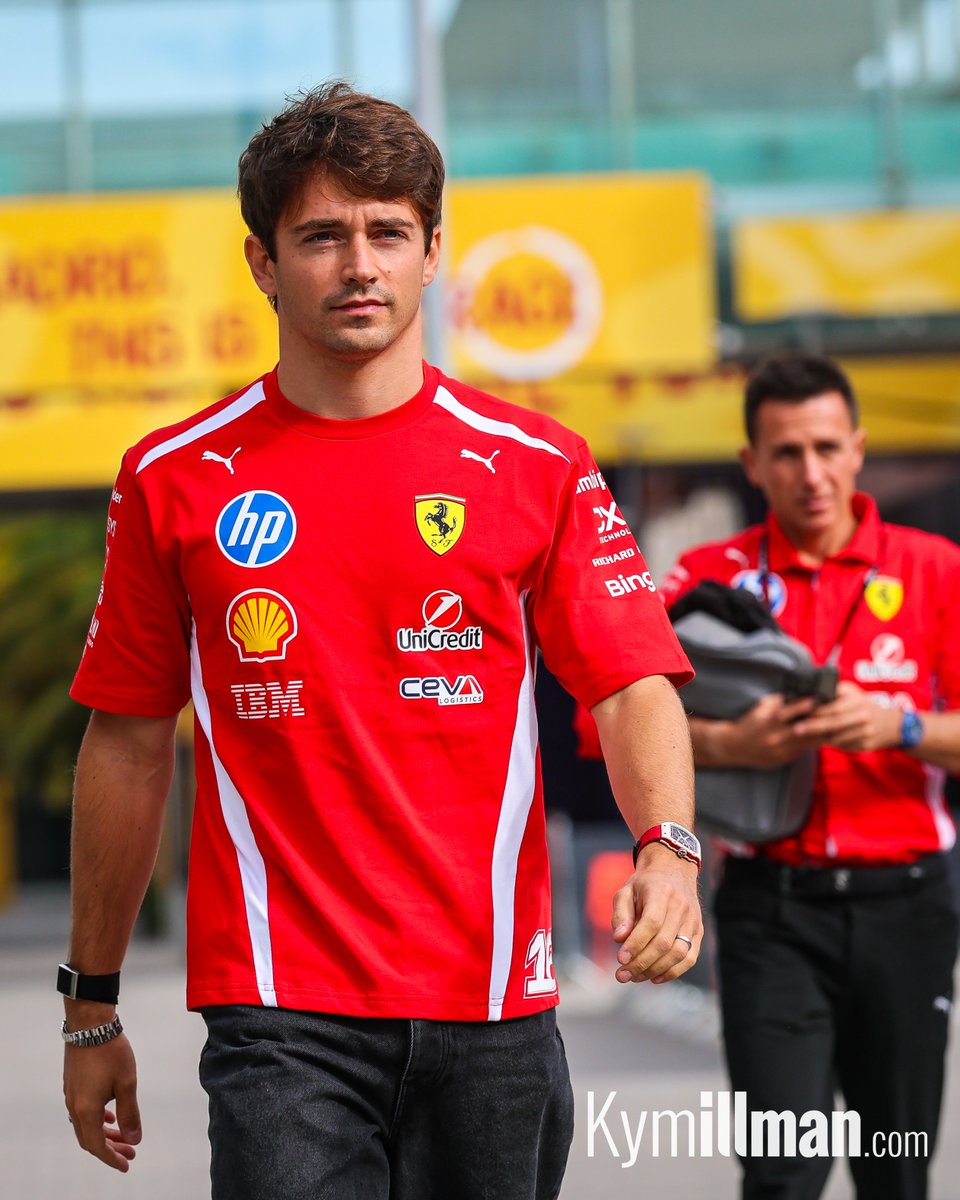
Charles Leclerc will definitely drive in Free Practice 1 at Madring, but that alone does not guarantee he starts Sunday’s Spanish Grand Prix. Ferrari’s plan is to use FP1 as the real-world test of his condition: a driver can pass basic medical checks in the paddock yet still struggle with the physical demands of high-speed cornering, braking loads, and sustained neck strain over a full session.
The team has stated it will assess the situation only after that FP1 running is complete. If Leclerc shows any sign of discomfort, reduced reaction time, or physical limitation during the session, the decision on whether he continues into FP2, qualifying, and the race itself will be reviewed accordingly. Nothing beyond FP1 is currently locked in.
Antonio Giovinazzi on standby
Antonio Giovinazzi is the driver most likely to replace Charles Leclerc if he is ruled unfit to start the Spanish Grand Prix. Reserve and substitute drivers in this situation are typically briefed and prepared to step in at short notice, and Giovinazzi being named as the contingency option signals that Ferrari is treating the scenario as a real possibility rather than a remote one.
Should a substitution be required, it would mark a significant moment for Giovinazzi, who would be stepping into a race seat under pressure rather than in a planned outing. No final call has been made, and the outcome depends entirely on how Leclerc’s FP1 running goes.
Why a 60g impact matters
A 60g crash is a serious impact by Formula 1 standards, and it is the primary reason Leclerc’s Spanish Grand Prix appearance is being treated with caution rather than assumed. Modern F1 cars and their survival cells are built to manage extreme deceleration forces, but the physical toll on a driver’s body — particularly the neck and spine — from an impact at that level is significant enough to warrant the multi-stage clearance process now playing out at Madring.
This is also why the story is being followed closely across the paddock and by fans: a 60g impact is well outside the range of a routine incident, and the sport’s own safety protocols are designed specifically to catch cases like this before a driver returns to competitive speeds.
“He will definitely drive in FP1, but the team will assess the situation afterwards.”
— Team update via Kym Illman
FAQ
Q: Will Charles Leclerc race at the Spanish Grand Prix?
It is not yet confirmed. He will drive FP1 at Madring, and Ferrari will decide on his race participation based on how he comes through that session.
Q: What caused the doubt over Leclerc’s participation?
A 60g crash during last weekend’s Italian Grand Prix at Monza is the reason for the ongoing fitness assessment ahead of the Spanish Grand Prix.
Q: Who would replace Leclerc if he is ruled out?
Antonio Giovinazzi is named as the most likely driver to take Leclerc’s place if he is deemed unfit to start the race.
Q: Is Leclerc confirmed for any session this weekend?
Yes, he is confirmed to drive Free Practice 1 at Madring regardless of the final decision on the race itself.
Q: Where is the Spanish Grand Prix being held?
The Spanish Grand Prix weekend covered here is taking place at the Madring circuit, where Leclerc has already arrived.
Browse F1 Helmet Collection
Display and collector replicas only. Not certified for protective use. Full-size 1:1 scale.