Blog
Monaco 2026 Penalty Chaos: Is There a Fair Fix?
 123Helmets Editorial Team
The 2026 Monaco Grand Prix produced one of Formula 1’s most tangled officiating controversies in years. A 77-centimetre timing error cascaded into a chain of penalties, reinstatements, and rival protests that left the final classification looking less fair than the original result. Now Red Bull, McLaren, and Mercedes are all exploring avenues for redress — and the question is whether any truly equitable solution even exists.
Key Takeaways
Formula One Management’s pitlane speed measurement system was confirmed inaccurate by 77 centimetres, triggering the entire penalty chain at the 2026 Monaco Grand Prix.
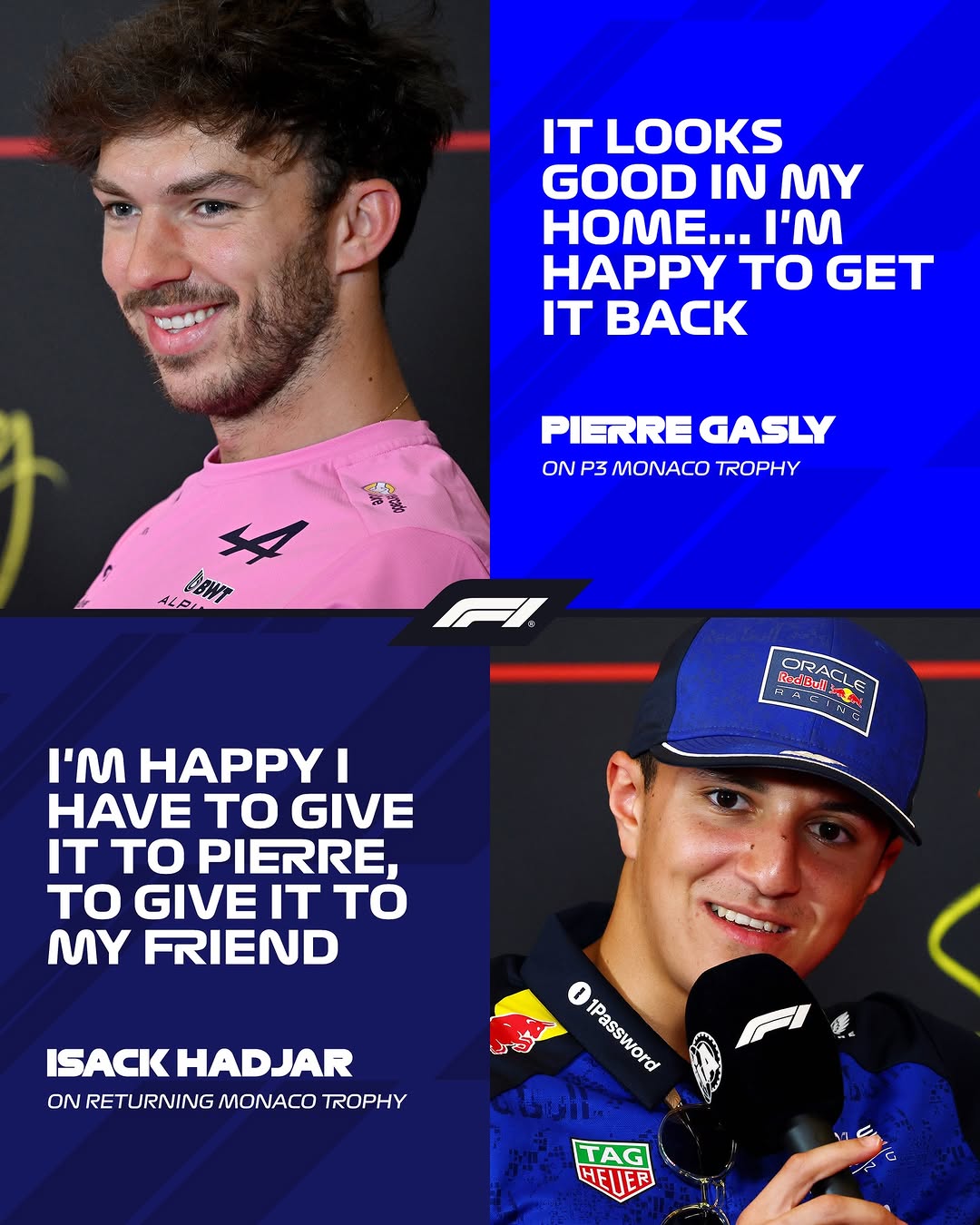
Pierre Gasly’s two penalties were cancelled following Alpine’s right-of-review request, reinstating his third place — but the revised classification created new injustices for drivers who had complied with the original penalties.
Red Bull, McLaren, and Mercedes are all exploring routes to seek further redress, arguing their drivers were penalised for correctly obeying flawed instructions.
Helmets worn at the centre of defining controversy have long become the most sought-after collector pieces — Monaco 2026 is already shaping up as one of those landmark moments.
The 77-Centimetre Error That Unravelled Monaco
A 77-centimetre measurement error in Formula 1’s official pitlane speed system is the root cause of the entire 2026 Monaco Grand Prix officiating crisis. Formula One Management, which also acts as the championship’s official timing supplier, confirmed that the speed measurement equipment had been operating inaccurately — a margin that sounds negligible against the backdrop of a street circuit but proved catastrophic in its consequences.
Monaco’s pitlane entry is already one of the most demanding on the calendar. The speed limiter zone is tight, the sight lines are compressed, and the tolerance for error from both driver and equipment is effectively zero. When the measuring system placed cars 77 cm further down the lane than they actually were at the moment of reading, it generated speed readings that were artificially elevated. Penalties followed automatically. Drivers who had done nothing wrong received five-second time additions during a race where track position is almost impossible to recover.
Alpine filed a right-of-review request specifically for Pierre Gasly, presenting the FOM timing admission as significant new evidence. The stewards agreed, cancelled both of Gasly’s penalties, and restored his third place. The result looked cleaner on paper. In practice, it created a new layer of unfairness that rivals were not prepared to accept quietly.
Why the Reinstatement Made Things Worse
Reinstating Gasly’s third place without addressing the downstream consequences of the original penalties made the 2026 Monaco classification less fair, not more. The core problem is straightforward: several drivers who received the same flawed penalties as Gasly responded by adjusting their pace or strategy to serve their time at the next pit stop. Gasly did not adjust. When the stewards cancelled only Gasly’s penalties, those who had reacted correctly to official instructions were left in lower positions than drivers who had effectively ignored them.
That is a deeply uncomfortable precedent for a sport that depends on drivers and teams trusting the officiating process in real time. If the lesson from Monaco 2026 is that compliance with a penalty is more damaging than non-compliance, the credibility of in-race stewardship takes a direct hit. Red Bull, McLaren, and Mercedes each have drivers who appear to fall into the ‘punished for compliance’ category, which is why all three organisations are exploring formal routes to challenge the updated result.
There is also a mathematical dimension that is hard to resolve. Reversing the entire race back to the pre-penalty state would help some drivers and harm others differently. Applying corrections only to those who changed their behaviour adds another layer of subjective judgement. Any outcome requires assumptions about counterfactual lap times — what would lap 38 have looked like if a given driver had not slowed for a pit stop that, in hindsight, was unnecessary? Formula 1’s stewarding process has no established mechanism for that kind of reconstruction.
What the Rival Teams Are Arguing
Red Bull, McLaren, and Mercedes are each making a version of the same argument: their drivers lost positions, points, or both because they obeyed penalties that should never have been issued. The case is legally coherent. If the timing data underpinning the penalties was demonstrably wrong — confirmed by FOM itself — then every penalty derived from that data is tainted, not just Gasly’s.
The complication is procedural. Alpine’s right-of-review succeeded partly because of the specificity and timing of the new evidence. Each rival team now needs to establish its own evidentiary basis, demonstrate that its driver’s specific penalty derived from the same flawed measurement system, and argue the case before stewards who have already ruled once. Stewards can revisit decisions, but the bar for a second review is high, and consistency across multiple simultaneous reviews of the same root cause is not guaranteed.
Red Bull‘s situation carries particular weight given where the championship stands in mid-2026. Every point matters. A five-second penalty applied to Max Verstappen or a team-mate during a Monaco race — where overtaking is measured in millimetres rather than metres — can represent the difference between a podium and fifth place. The same logic applies at McLaren, where the constructors’ title fight is close enough that a single Monaco result carries meaningful championship weight.
Mercedes, meanwhile, is dealing with a transitional season as Andrea Kimi Antonelli continues to develop alongside a restructured technical programme. Every points opportunity in 2026 has compounding value for a team rebuilding its competitive platform.
Is Any Classification Actually ‘Fair’?
No single revised Monaco 2026 classification can be fully fair to every affected party, because the error propagated through the race in ways that cannot be cleanly undone. That is the honest answer, and it is worth stating plainly before any discussion of options.
Three broad routes exist. The first is full reinstatement of the pre-penalty race order, treating all penalised laps as if the penalties had never been issued. This is the most internally consistent approach but requires reconstructing positions across multiple drivers simultaneously — a process the sporting regulations were not written to handle at scale.
The second route is selective review, processing each team’s right-of-review request individually. This is the path the sport appears to be on. The risk is inconsistent outcomes: one stewards’ panel ruling in favour of a McLaren driver while another panel, hearing the same underlying evidence, rules against a Red Bull driver at a different session. That inconsistency would be damaging in its own right.
The third route is to treat Monaco 2026 as a declared irregular result and award partial or full points on a different basis — an option the FIA has used in exceptional circumstances in the past but that would be politically explosive and almost certainly contested by whoever benefits least from the adjustment.
The reality is that Formula 1 is built on the assumption that its timing and measurement infrastructure is correct. When that infrastructure fails, the sport has no clean playbook. Monaco 2026 is exposing that gap in the regulations in real time.
Monaco Controversy and the Collector Lens
Races defined by officiating controversy have always produced some of Formula 1’s most historically significant helmets and memorabilia, because they mark moments when the sport’s narrative shifted in ways that fans remember for decades. Monaco 2026 is already that kind of race.
Collector-grade full-size 1:1 replica helmets connected to disputed or dramatically reversed results carry a specific kind of documentary weight. They are display pieces that place the viewer inside a precise moment of sporting history — not just a race win or a championship lap, but a race that the record books will carry an asterisk beside in the memory of everyone who followed the 2026 season.
Gasly’s helmet design from the Monaco weekend, the lids worn by the drivers whose results were altered by compliance with a flawed system, the Alpine team livery that framed the right-of-review hearing — all of these become exhibition-quality reference points. A display replica produced to full 1:1 scale, finished to the specifications a driver wore on that specific weekend, is a 29 × 25 × 35 cm slice of documented history that no photograph or broadcast clip can fully replicate.
The weight of a quality display replica — typically around 1.2–1.5 kg for a full-shell construction — gives the object a physical presence that matches its historical density. You are not looking at a souvenir. You are looking at a record of one of the sport’s more genuinely puzzling afternoons, preserved at the scale it actually existed.
What Happens Next in 2026
The FIA stewards will process any further right-of-review requests as they are formally submitted, with each team required to present new and significant evidence beyond what was already before the Monaco stewards at the original hearing. Given that FOM’s timing admission is now part of the public record, the threshold for ‘new evidence’ is arguably lower for teams whose drivers received penalties from the same system on the same day — but that is a legal interpretation that stewards will make individually.
Formula 1’s championship calendar does not pause for administrative resolution. The 2026 season continues, and every race between now and the final round adds points that may ultimately make the Monaco delta irrelevant or make it the margin by which a title is decided. The drivers and teams at the centre of this controversy will be back on track within days, which concentrates minds and limits the time available for protracted regulatory argument.
What Monaco 2026 has already done, regardless of how the formal process resolves, is place the reliability of F1’s timing infrastructure under scrutiny in a way that will force process changes before the next street circuit weekend. A 77-centimetre error in a pitlane speed system is not an abstract technical footnote — it is a championship-shaping input, and the sport’s governing bodies know it. The review and upgrade of measurement systems at street circuits in particular will be a priority discussion at the next technical working group meeting.
For collectors and followers of the sport’s history, Monaco 2026 joins a short list of races — disputed results, reversed classifications, equipment failures with championship consequences — that define eras. The helmets, the liveries, and the precise race dates of 2026-05-25 will be referenced for years. That is both the sport’s frustration and, for those who document it through display pieces, its enduring appeal.
“That’s just a classic Formula 1 mess, isn’t it? The championship built on perfection and precision, measured to the third digit after the decimal point both literally and figuratively, has descended into complete chaos because of a tiny error measured in just seven dozen centimetres.”
— Paddock analysis, 2026 Monaco Grand Prix aftermath
“Gasly’s eventual podium appeared to be a reward for the fact that many of his rivals — unlike Pierre — actually reacted to what now evidently were incorrectly issued penalties. And, as a result, got punished for it.”
— F1 paddock observation, Monaco 2026 right-of-review hearing
FAQ
Q: What caused the penalty controversy at the 2026 Monaco Grand Prix?
A 77-centimetre inaccuracy in Formula One Management’s official pitlane speed measurement system caused drivers to receive incorrect speeding penalties. FOM, which also acts as the championship’s official timing supplier, confirmed the equipment had been operating inaccurately, generating inflated speed readings that triggered automatic penalties for drivers who had not actually broken the pitlane speed limit.
Q: Why was Pierre Gasly’s penalty cancelled after the Monaco race?
Gasly’s two penalties were cancelled after Alpine submitted a right-of-review request supported by the FOM timing admission as new and significant evidence. The stewards agreed the evidence met the threshold for review, ruled the penalties had been incorrectly applied, and restored Gasly’s third-place finish.
Q: Why are Red Bull, McLaren, and Mercedes unhappy with the revised Monaco result?
Their drivers received penalties from the same flawed timing system but, unlike Gasly, responded by adjusting their pace or pit strategy to serve the time — which cost them positions. When only Gasly’s penalties were cancelled, drivers who had complied with incorrect instructions were left worse off than a driver who had not complied, creating a new injustice within the revised classification.
Q: Can the entire Monaco 2026 race result be reversed to a pre-penalty order?
Full reversal is theoretically possible but practically very difficult. Reconstructing positions across multiple drivers would require counterfactual lap-time modelling — estimating what each driver’s race would have looked like without the penalties — and Formula 1’s sporting regulations were not written to handle that kind of multi-driver reconstruction simultaneously. The sport appears to be processing individual right-of-review requests instead.
Q: Why do collector replica helmets from controversial races carry special historical value?
Full-size 1:1 display replica helmets from disputed or landmark races document a precise moment in the sport’s history that fans and historians reference for decades. A collector piece finished to the specifications worn at Monaco 2026 is an exhibition-quality record of one of the season’s most contested afternoons — a physical object, typically around 1.2–1.5 kg for a full-shell replica, that places the viewer inside that specific chapter of the championship narrative.
Browse F1 Helmet Collection
Display and collector replicas only. Not certified for protective use. Full-size 1:1 scale.
This article was written with the help of AI tools. Editorial policy