Blog
Bottas: Austria Is the Real Test for Cadillac
 123Helmets Editorial Team
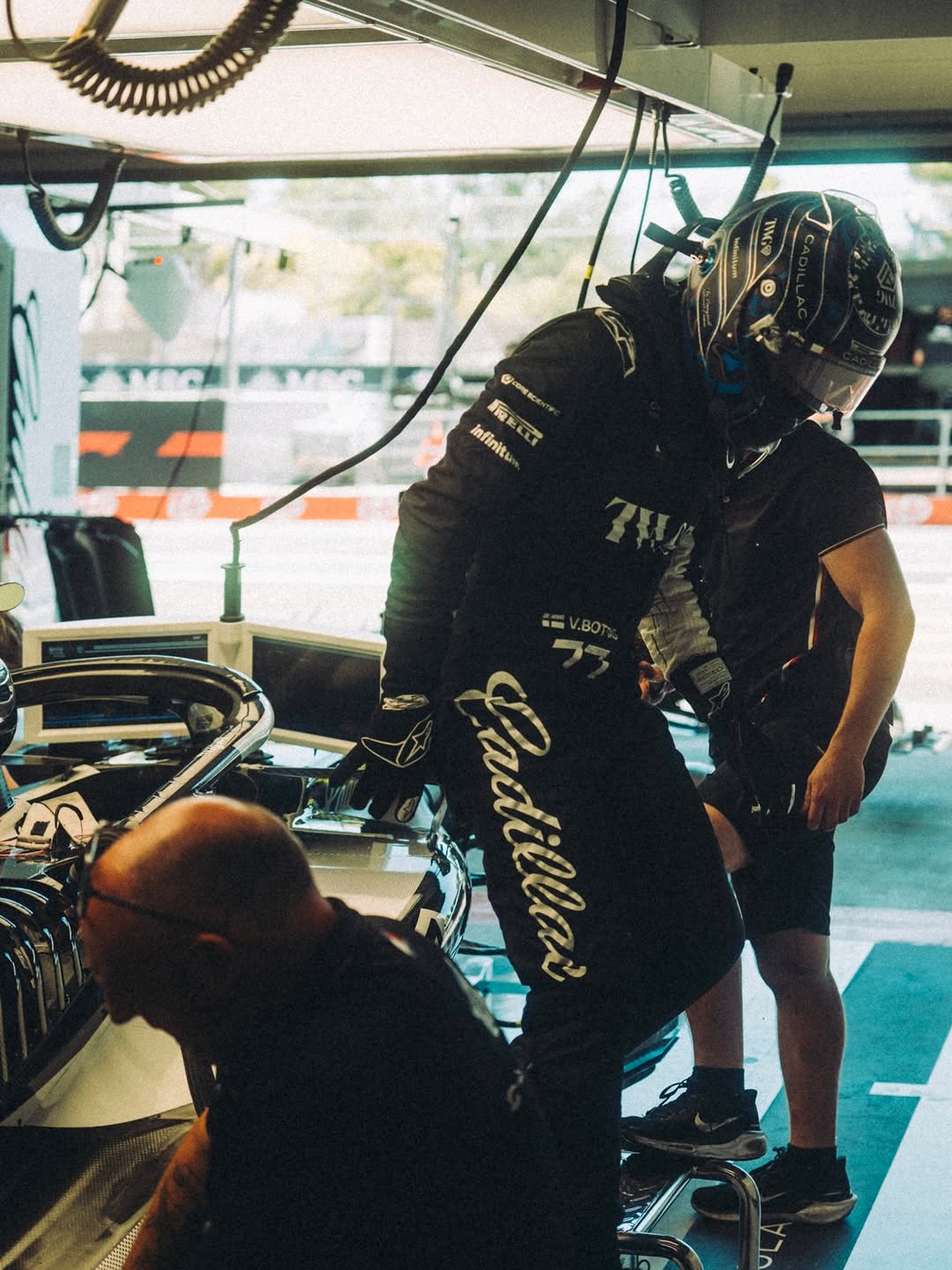
Valtteri Bottas arrived at the Red Bull Ring carrying two consecutive DNFs and a substantial upgrade package. His verdict: if Cadillac’s revised brakes and new bodywork survive Austria’s heat, the team has finally turned a corner.
Key Takeaways
Cadillac introduced a ‘substantial’ upgrade at Austria covering new sidepods, bodywork and a full floor replacement.
Bottas has not finished the last two races — Monaco (brakes) and Barcelona (overheating) — making reliability the stated priority over outright pace.
New bodywork provides additional engine cooling options, reducing Bottas’s concern about overheating compared to previous rounds.
Austria’s FIA-confirmed heat hazard makes the Red Bull Ring the toughest possible environment to validate Cadillac’s brake and thermal fixes.
Two DNFs, Zero Points, One Big Package
Cadillac are the only team on the 2026 grid yet to score a championship point, a status made more painful by the fact that Sergio Pérez crossed the line in P10 in Monaco only to lose that result to a post-race penalty. The team arrived at the Red Bull Ring for the 2026 Austrian Grand Prix on 2026-06-27 carrying none of the relief that a first points finish brings — only the pressure of a third consecutive weekend spent searching for answers.
For Valtteri Bottas, the situation is stark. Two retirements from two starts — brake failure in Monaco and overheating in Barcelona — mean he has not seen a chequered flag since the early rounds of 2026. His Cadillac entry, one of the most watched stories of the season given the American outfit’s debut year in the sport, has become a study in the gap between ambition and execution.
That gap is exactly what a large development push is designed to close. The Red Bull Ring, sitting at 670 metres above sea level and notorious for its high ambient temperatures in late June, was chosen as the venue to introduce what the team describes as a substantial update to the car. The timing is deliberate: if the fixes hold here, they hold almost anywhere.
What Cadillac Brought to Austria
The upgrade package for the 2026 Austrian Grand Prix covers three primary areas: revised sidepods, new bodywork and a completely new floor. Bottas confirmed the scope of the work in comments made ahead of the race weekend, framing the changes as a package that is ‘in theory quite a good step forward’ while being careful not to oversell what remains an unproven set of components in race conditions.
Speaking to media on the Thursday before the Grand Prix, Bottas said: ‘We’ve got some new upgrades, sidepods, bodywork, new floor, which should be in theory quite a good step forward but on top of that we’ve been working on the reliability issues we’ve had in the last two races and I think that’s still the priority as I haven’t finished the last two events.’
The sidepod and bodywork revisions are not purely aerodynamic. A central motivation is thermal management — the new geometry opens additional cooling pathways for the engine, addressing the overheating failure that ended Bottas’s race in Barcelona. On a circuit where air temperatures in late June regularly exceed 30 °C and track surface temperatures can climb well above 50 °C, the ability to move heat out of the car efficiently is as important as any aerodynamic gain the new floor might deliver.
The team also targeted the brake system specifically, fitting expanded cooling options to the corners that failed in Monaco. It is the combination of these two fixes — thermal and brake — that Bottas identified as the defining test of the weekend, not lap time.
Brakes as the Real Examination
Austria is the hardest brake circuit on the calendar relative to its lap length, making it the definitive examination of any brake-cooling solution Cadillac has developed. The Red Bull Ring’s layout — 4.318 km, 10 corners — concentrates heavy braking into a small number of very late, very deep stops, building heat in the discs and callipers far faster than a conventional high-downforce circuit would.
Bottas was direct about what the weekend means: ‘We’ve had issues in the last events with overheating so we’ve made some changes. We have more cooling options for the brakes but this is going to be the real test. If we can survive here, I think it means we have solved it.’
The FIA confirmed a heat hazard designation for the 2026 Austrian Grand Prix, activating an additional driver cooling protocol. That designation, which triggers specific procedures for cockpit ventilation and hydration, signals ambient and track conditions severe enough to affect both driver performance and mechanical reliability. For a team that retired from Barcelona partly due to overheating, the heat hazard flag is a pointed reminder that the conditions will not be forgiving of any shortfall in the new cooling architecture.
Completing the race — reaching kilometre 306 of the 71-lap Austrian Grand Prix — is therefore Bottas’s first objective. Points, and the genuine midfield challenge against Aston Martin and Audi that the upgrades are ultimately designed to enable, come only if the car reaches the flag.
The Cadillac Livery at the Red Bull Ring: A Display Perspective
From a collector’s standpoint, the 2026 Austrian Grand Prix weekend produced some of the most photographically striking Cadillac imagery of the season. The team’s white, black and red livery — a palette that reads as bold contrast against the Red Bull Ring’s grey tarmac and the deep green of the Austrian hills — catches light in a way that few other cars on the grid manage at this venue.
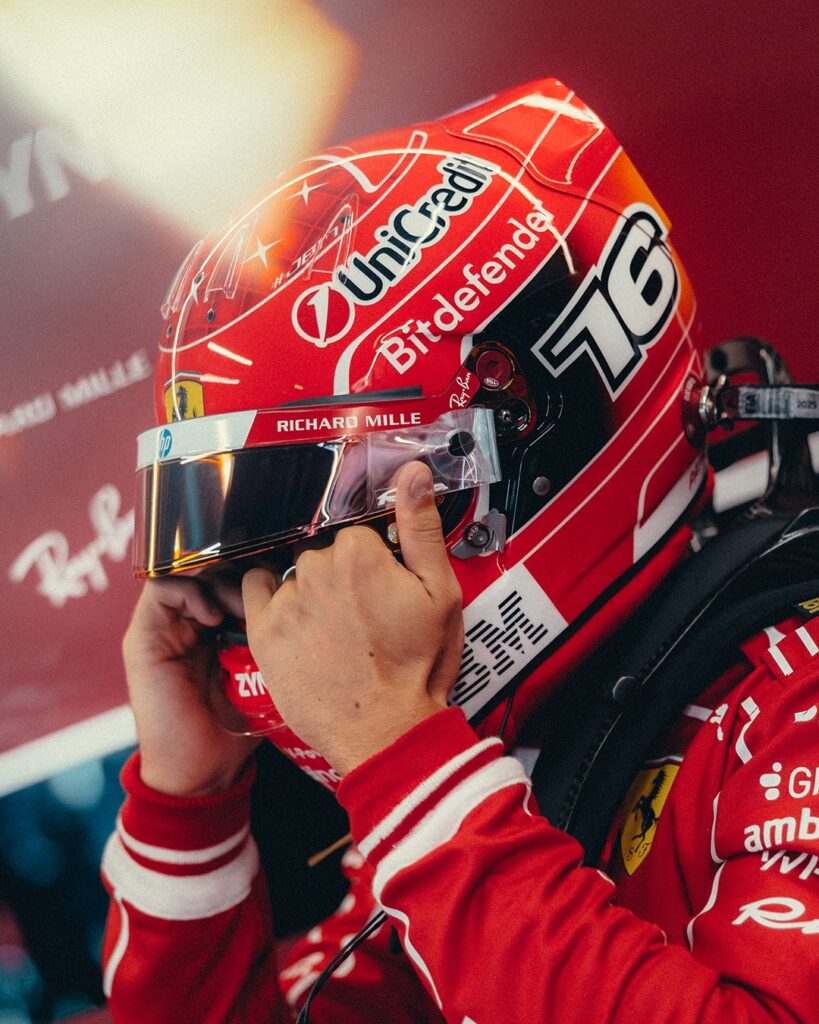
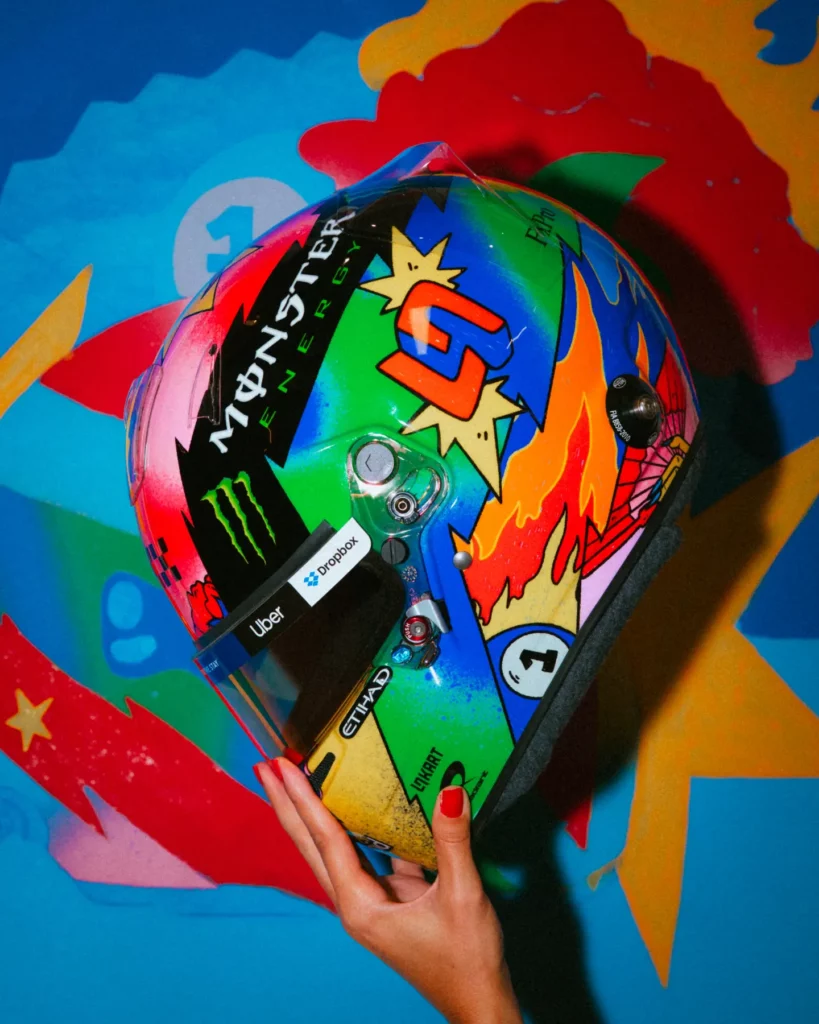
Bottas’s helmet for the Austrian weekend continued the design language he has worn through the 2026 season: a predominantly blue base with geometric white sections and the distinctive Cadillac crest integrated into the chin panel. At 1:1 full-size scale, the replica captures the 29 × 25 × 35 cm frontal silhouette that defines his helmet profile, including the narrow visor aperture that became part of his visual identity during his Mercedes years and has carried over into the Cadillac chapter.
The helmet’s visor configuration for Austria — a dark-tinted unit rated for high-sun environments — is one of the details that collectors of display replicas look for: the specific amber or dark gold tint used in bright-weather races is visually distinct from the clear or light-smoke units used in overcast conditions in venues like Spa or Silverstone. A 2026 Austrian GP replica visor in that configuration locks the piece in time and place as precisely as any race date stamp.
For display purposes, the combination of the Cadillac livery elements and Bottas’s Austrian-spec helmet creates a shelf or cabinet centrepiece that documents a historically significant weekend — the round at which a new constructor attempted to prove its car could survive the sport’s most thermally demanding environment. That context adds a layer of meaning to the physical object that pure aesthetics alone cannot provide.
Bottas and the Midfield Target
Cadillac’s realistic competitive aim for the second half of 2026 is the lower midfield: closing to within a few tenths of Aston Martin and Audi on a consistent basis, then converting that proximity into points on circuits that suit their car’s characteristics. Bottas, who spent much of his career racing at the front of the grid with Mercedes, is measured in how he frames the challenge.
The Austrian upgrade is not expected to transform the car from backmarker to points-regular in a single round. A ‘substantial’ development package at this stage of a first season typically delivers incremental gains — meaningful in the context of a team building from scratch, but unlikely to leap Cadillac past multiple established competitors in one race weekend. What it can do is remove the reliability failures that have made even realistic target results impossible to achieve.
Pérez, who joined the team for 2026 after his departure from Red Bull, has faced similar frustrations. His Monaco P10 — the result that would have given Cadillac their first point — was erased post-race, leaving the team’s constructors’ tally at zero. The psychological weight of that outcome makes Austria a pressure point for both drivers, not just for engineering reasons but for team morale heading into the second half of the season.
Bottas’s read on the situation is pragmatic: prove the reliability, then build the pace. Austria, with its heat hazard, its brake-loading layout and its 71-lap race distance, is as demanding a reliability examination as the 2026 calendar offers. Surviving it with both cars intact would be, by the team’s own measure, the most important result of their debut year so far — regardless of the finishing position.
Why the 2026 Austrian GP Belongs in Any Cadillac Collection
The 2026 Austrian Grand Prix is a collector’s milestone for Cadillac as a constructor: the weekend they chose to answer the question of whether the car was fundamentally fixable. Whatever the race result, that narrative is permanently attached to the event.
A full-size 1:1 display replica helmet from this weekend — Bottas’s Austrian-spec design with dark-tinted visor, Cadillac branding on the chin and crown, and the 2026 livery colour references worked into the shell — is a physical record of that moment. The 4.318 km Red Bull Ring circuit has hosted defining races throughout F1 history, and the 2026 edition adds another chapter: the debut season of American manufacturer Cadillac, fighting to score its first point against a heat hazard backdrop.
Display replicas produced at 1:1 scale — full-size, exhibition-quality collector pieces — capture the helmet exactly as worn by the driver during race weekend, from the width of the visor aperture to the placement of sponsor decals on the rear fin. These are not functional helmets and carry no safety certification; they are made to be seen, displayed and preserved as records of specific moments in the sport’s history.
The Bottas Austria 2026 helmet joins a short list of pieces that mark a team’s turning-point races — the kind of weekend that every long-term Cadillac supporter will reference when the team eventually does score, and eventually does challenge the midfield consistently. Owning that moment in collector form means owning the beginning of the comeback, not just the result that eventually followed it.
“We’ve got some new upgrades, sidepods, bodywork, new floor, which should be in theory quite a good step forward but on top of that we’ve been working on the reliability issues we’ve had in the last two races and I think that’s still the priority as I haven’t finished the last two events.”
— Valtteri Bottas, ahead of the 2026 Austrian Grand Prix
“We have more cooling options for the brakes but this is going to be the real test. If we can survive here, I think it means we have solved it.”
— Valtteri Bottas, on Cadillac’s brake development for Austria
FAQ
Q: What upgrades did Cadillac bring to the 2026 Austrian Grand Prix?
Cadillac introduced new sidepods, revised bodywork and a new floor at the 2026 Austrian Grand Prix. The sidepod and bodywork changes were designed to improve engine cooling as well as aerodynamic performance, while the floor upgrade aimed to reduce the lap time deficit to midfield rivals.
Q: Why has Valtteri Bottas not scored points in 2026?
Bottas has not finished two consecutive races in 2026: he retired in Monaco due to brake failure and in Barcelona due to overheating. Additionally, Sergio Pérez’s P10 in Monaco — which would have given Cadillac their first point — was removed after a post-race penalty, leaving the team without a championship point.
Q: Why is Austria considered a tough test for Cadillac’s brake fixes?
The Red Bull Ring’s 4.318 km layout concentrates heavy braking into a small number of corners, building disc and calliper temperatures faster than most circuits. The FIA also confirmed a heat hazard for the 2026 Austrian Grand Prix, meaning ambient conditions are severe enough to require additional driver cooling protocols — the worst possible environment for a team that retired from braking failures in recent rounds.
Q: What makes the Bottas 2026 Austrian GP helmet display-worthy?
The Bottas Austrian GP helmet is a collector piece because it documents a turning-point weekend for Cadillac’s debut season: the round at which the team introduced its largest upgrade package and faced its hardest reliability test. A full-size 1:1 display replica captures the dark-tinted visor specific to high-sun race conditions, the Cadillac livery colour references and the exact sponsor placement worn that weekend. It is a display and exhibition-quality piece — not certified for any protective use.
Q: Is Cadillac targeting specific rivals with their 2026 upgrades?
Yes — Cadillac has identified Aston Martin and Audi as the nearest targets in the constructors’ standings. The Austria upgrade package is designed to reduce the qualifying and race pace deficit to those teams as a step toward consistently competitive results in the second half of the 2026 season.
Browse F1 Helmet Collection
Display and collector replicas only. Not certified for protective use. Full-size 1:1 scale.
This article was written with the help of AI tools. Editorial policy