Blog
Ocon P15: Alpine’s Rear Downforce Crisis in Austria
 123Helmets Editorial Team
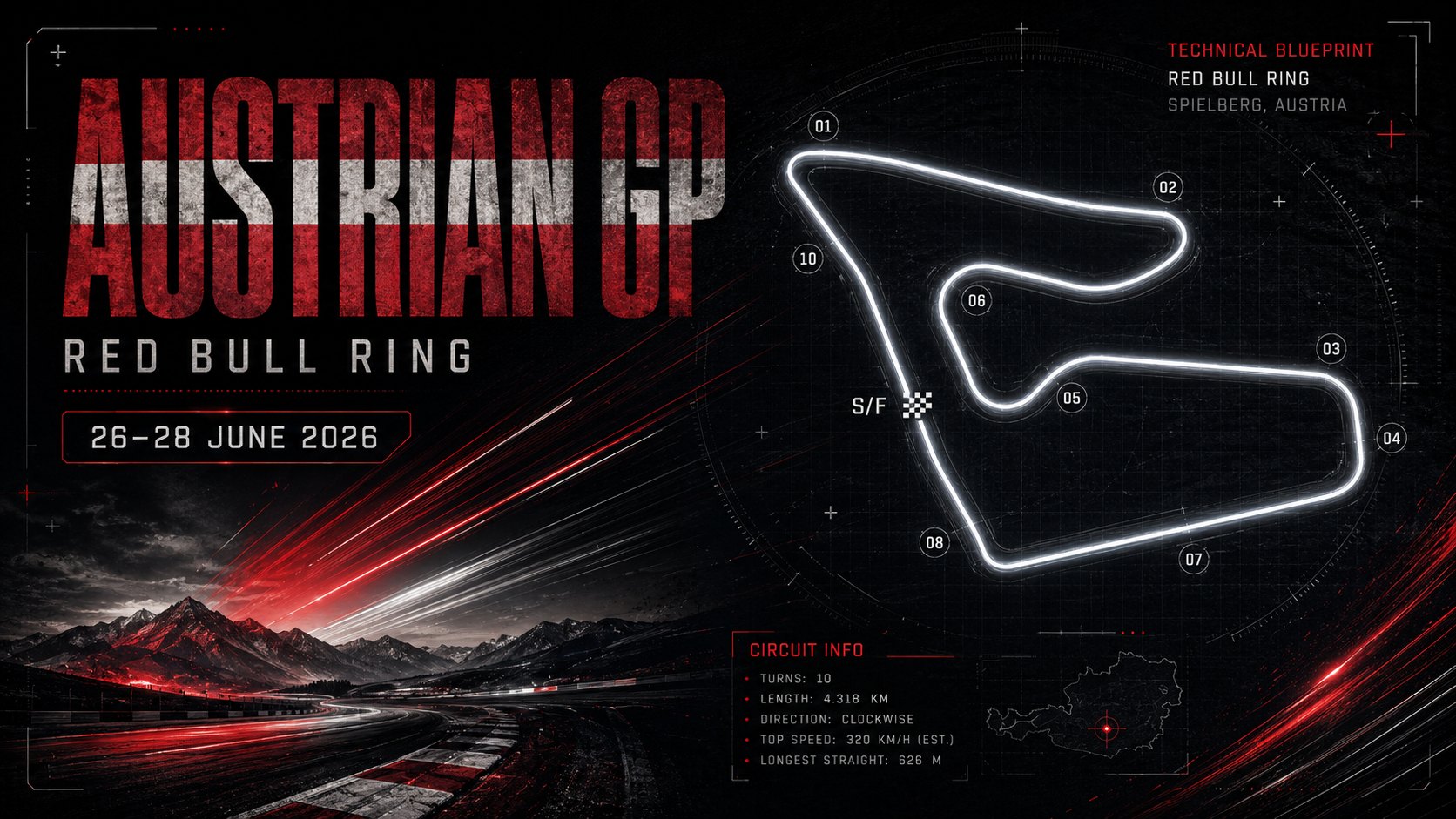
Esteban Ocon qualified a frustrated P15 at the 2026 Austrian Grand Prix after Alpine’s engineers failed to plug a rear downforce deficit that had been visible in Friday data — swapping the floor, front wing and rear wing overnight still left the car fighting the same fundamental weakness into Saturday’s session.
Key Takeaways
Ocon ended 2026 Austrian GP qualifying in P15, one of Alpine’s worst single-lap results of the season.
Alpine replaced the floor, front wing and rear wing between Friday and qualifying — yet the rear downforce deficit remained.
Ocon described the rear downforce loss as ‘massive’, citing traction-area exits as the worst-affected phase of each corner.
The deficit cost Alpine kilos of rear downforce, a concrete mechanical shortfall rather than a set-up or driver issue.
P15 and the Data That Called It Early
Alpine’s rear downforce problem was identified on Friday, yet it still defined Saturday’s qualifying result at the 2026 Austrian Grand Prix. Esteban Ocon ended the session in P15, a position that reflected not a single-lap mistake but a structural aerodynamic shortfall the team had been unable to solve in the overnight window between free practice and qualifying.
Ocon was direct about where the car was bleeding performance. The traction zones — the exits of corners — were the sharpest pain point. The car was losing what Ocon described as ‘quite a few kilos’ of rear downforce through those phases, a figure visible in telemetry from the first day of running. The word ‘massive’ was his own, unprompted assessment of the gap between where the rear downforce should have been and where it actually was.
For a team fighting in the midfield in 2026, a deficit of that nature is not a minor tuning problem. Rear downforce governs how confidently a driver can deploy power on exit, which in turn shapes lap time through every medium and slow corner on the Red Bull Ring’s 4.318 km layout. The Red Bull Ring’s nine corners mean traction exits repeat frequently enough that a systemic weakness compounds into a significant overall deficit.
The Overnight Component Swap That Wasn’t Enough
Alpine replaced three major aerodynamic components — floor, front wing and rear wing — between Friday practice and Saturday qualifying, and the rear downforce deficit survived all three changes. That single fact is the clearest signal that the problem is not component-specific; it is deeper in the car’s aerodynamic concept or its interaction with the 2026 Red Bull Ring conditions.
Changing a floor, a front wing and a rear wing in a single overnight session represents a significant logistical effort by any team’s engineering crew. Ocon acknowledged the work directly: ‘The guys did an awesome job by changing all the components they could.’ The credit to the mechanics and engineers is genuine, because the effort was real — but the result in qualifying told the same story the Friday data had already written.
The persistence of the deficit after a full aero package change raises a harder question: whether Alpine’s 2026 car carries a structural rear downforce sensitivity that component swaps alone cannot address. That is a question for the race engineers and aerodynamicists, not for a Saturday afternoon in Spielberg, but it is the one that will follow the team beyond Austria.
For context, the Red Bull Ring sits at approximately 660 metres above sea level, which already reduces aerodynamic efficiency compared to sea-level circuits. A car already losing rear downforce at sea level will feel that gap more acutely in Austria’s thinner air — a compounding factor the team would have known entering the weekend.
What a Rear Downforce Deficit Actually Means on Track
A rear downforce deficit means the rear tyres carry less vertical load, reducing their grip threshold and forcing the driver to manage oversteer or instability at every corner exit. In practical terms, Ocon had to roll off the throttle earlier or more gently on exit than a car with balanced downforce would need to, costing time in the phase of the corner that most directly feeds straight-line speed.
The Red Bull Ring’s layout makes this particularly damaging. Turns 3, 4 and the Rindt corner complex all demand confident, early power application on exit to carry speed onto the circuit’s longer straights. A car struggling with rear grip in traction is a car that cannot capitalise on those exits, which are the primary lap-time generators at this venue.
Qualifying at the Red Bull Ring in 2026 was contested over a lap of 4.318 km. A deficit of multiple kilos of rear downforce — Ocon’s own framing — translates to tenths across a lap of that length, not hundredths. The gap from P15 to the Q3 cut-line represents exactly that kind of systemic loss, not the margin of a single braking point or a missed apex.
Traction Zones: The Specific Problem Area
Ocon was specific about where the car was weakest: ‘all the traction area, all the exits of corners.’ This is not a generalised complaint about car balance. It pins the aerodynamic loss to a precise phase of cornering — the exit — which aligns directly with rear downforce loss. When the rear of the car is not loaded correctly, the driver cannot put power down, and that is where Alpine was losing kilos of vertical load.
Ocon and Alpine in the 2026 Season Context
Esteban Ocon and Alpine have had a complicated 2026 season, and P15 in Austrian qualifying is among the hardest results to absorb because the engineering effort before the session was unambiguous. The team did not arrive in Spielberg unprepared or complacent; they identified the problem on Friday, acted overnight, and still qualified near the back of the midfield.
That sequence is harder to process than a straightforward bad weekend. A bad weekend can be attributed to set-up misjudgement or weather timing. This one has a clear aerodynamic fingerprint, and the fact that three component changes did not erase it suggests the 2026 Alpine has a rear downforce characteristic that is sensitive to conditions Alpine has not yet fully mapped.
Ocon’s tone in his post-qualifying comments was frustrated but analytical — the language of a driver who has seen the data and understands exactly what the numbers show, even if he cannot fix them himself. That kind of technical clarity from a driver is valuable for a team trying to diagnose a problem, but it does not change the grid position for Sunday’s race.
The Collector’s View: A Helmet That Carries a Difficult Afternoon
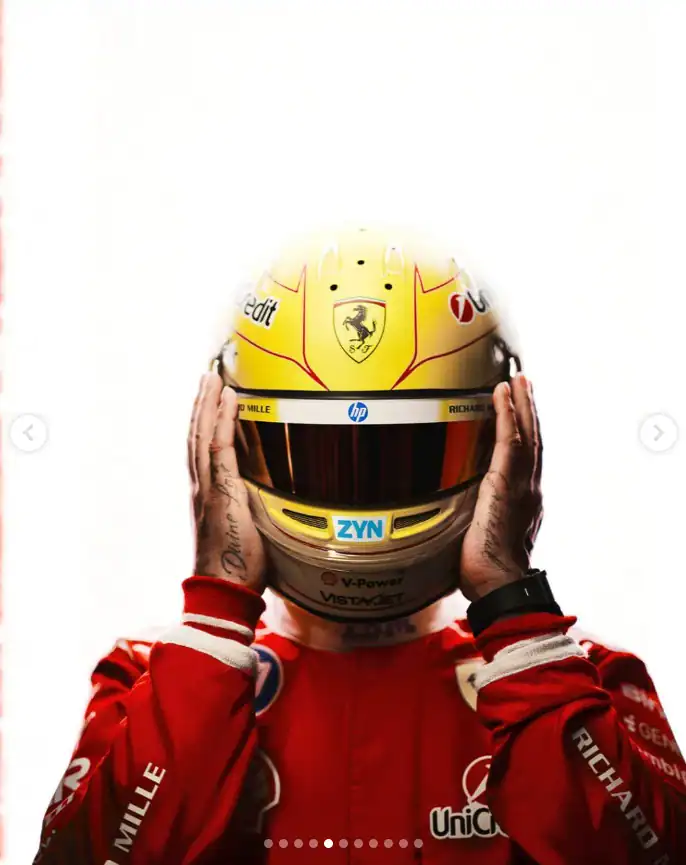
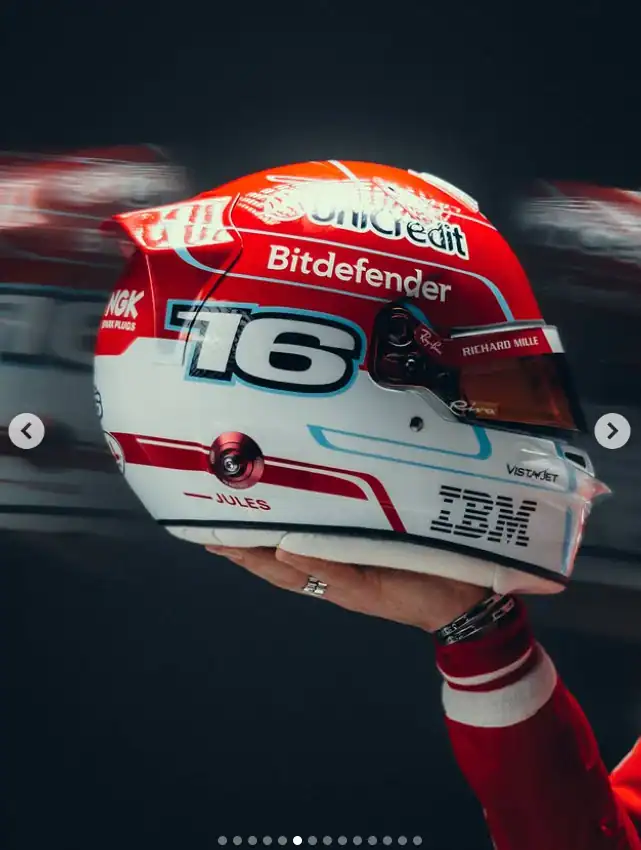
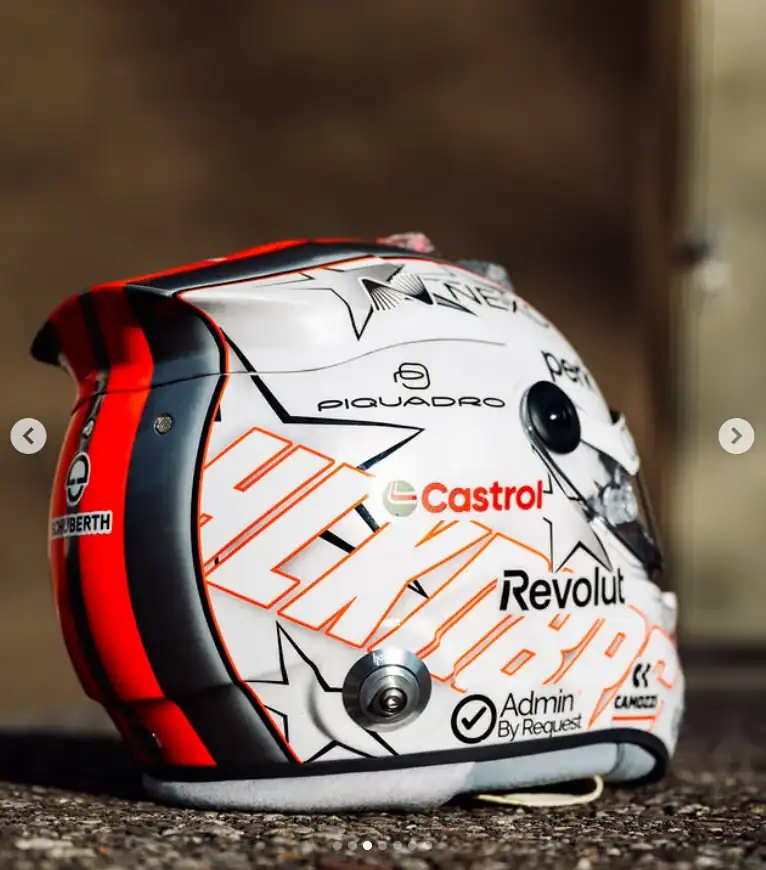
A full-size 1:1 display replica of Ocon’s 2026 Austrian GP helmet captures a moment in which a driver was demonstrably faster than his grid position suggested, held back by a car problem rather than a performance gap. That context adds a layer of meaning to the collector piece that straightforward race-win helmets do not carry in the same way.
The 2026 season has produced several moments where the sport’s technical complexity has overridden individual driver quality, and P15 in Austria is one of the clearest examples. Ocon’s helmet from this weekend records not just a qualifying result but a specific aerodynamic problem, an overnight repair effort and the gap between engineering ambition and what the physics of a 4.318 km lap would allow.
Full-size 1:1 replica helmets displayed at exhibition quality — at approximately 29 × 25 × 35 cm for a standard display configuration, with a visor panel of roughly 26 mm depth — give collectors a physical object connected to specific moments in a season’s narrative. The Austrian GP weekend, with its documented rear downforce crisis, is the kind of narrative that gives a display piece a story beyond the livery.
These are display and collector replicas only, intended for exhibition, not for any protective or safety use. Every collector piece in the 2026 range is a full-size 1:1 scale replica — a visual record of a season as it actually happened, with all its frustrations included.
What Comes Next for Ocon and Alpine
Sunday’s race at the Red Bull Ring gives Ocon an opportunity to recover from P15, but the aerodynamic deficit that produced that qualifying position does not disappear between sessions. Race trim involves different wing settings and downforce targets than qualifying trim, and it is possible Alpine’s rear downforce issue is less acute over a race distance — but that is conditional on the team finding a set-up window that Friday and Saturday did not provide.
The 2026 Austrian Grand Prix is scheduled for 28 June 2026, and starting from P15 means Ocon will need strategy, tyre management and likely safety-car luck to recover significant ground. A pure pace recovery from that grid slot at a circuit with limited overtaking opportunities outside Turn 3 and Turn 4 is a narrow path.
For Alpine’s engineering team, the more important question is whether the rear downforce deficit observed in Spielberg is circuit-specific — related to the altitude, the kerb profile or the specific corner geometry — or whether it is a broader characteristic of the 2026 car that will appear at other venues. Answering that question accurately will determine how the second half of the 2026 season plays out for both Ocon and the team.
P15 in Austria is a data point. The pattern it forms with the results around it will tell Alpine whether they are dealing with a local problem or a structural one — and the honest answer to that question is the one Ocon’s Friday telemetry was already starting to write.
“What we were fighting with on Friday is the deficit of rear downforce. We lose quite a few points of rear downforce, quite a few kilos, in all the traction area, all the exits of corners, and it was quite apparent on data. Massive, actually. The guys did an awesome job by changing all the components they could, floor, front wing, we changed rear wing as well, but we were still fighting with the same deficit into qualifying.”
— Esteban Ocon, post-qualifying — 2026 Austrian Grand Prix
FAQ
Q: Why did Ocon qualify P15 at the 2026 Austrian Grand Prix?
Ocon qualified P15 because Alpine’s car carried a rear downforce deficit identified on Friday that persisted into qualifying despite an overnight swap of the floor, front wing and rear wing. The deficit was concentrated in traction zones — corner exits — costing the car kilos of rear vertical load and limiting how early Ocon could apply power.
Q: What components did Alpine change overnight before qualifying in Austria?
Alpine changed three aerodynamic components between Friday practice and Saturday qualifying: the floor, the front wing and the rear wing. Despite that full aero package change, Ocon reported the same rear downforce deficit in qualifying.
Q: How does a rear downforce deficit affect lap time at the Red Bull Ring?
A rear downforce deficit at the Red Bull Ring costs lap time primarily on corner exits, where reduced rear grip forces earlier throttle lift-off and slower speed onto the straights. The Red Bull Ring’s 4.318 km layout repeats this exit phase through nine corners, compounding the loss into a gap measured in tenths rather than hundredths.
Q: What is a full-size 1:1 display replica F1 helmet?
A full-size 1:1 display replica F1 helmet is a collector and exhibition piece scaled to the exact dimensions of a race helmet — typically around 29 × 25 × 35 cm — produced to capture a specific driver’s livery from a particular race or season. These are display items only, not certified for any protective or safety use.
Q: When is the 2026 Austrian Grand Prix race?
The 2026 Austrian Grand Prix race is scheduled for 28 June 2026 at the Red Bull Ring in Spielberg, Austria. Ocon starts from P15 on the grid following his difficult qualifying session.
Browse F1 Helmet Collection
Display and collector replicas only. Not certified for protective use. Full-size 1:1 scale.
This article was written with the help of AI tools. Editorial policy