Blog
Red Bull Rear Wing Split at 2026 Austrian GP
 123Helmets Editorial Team
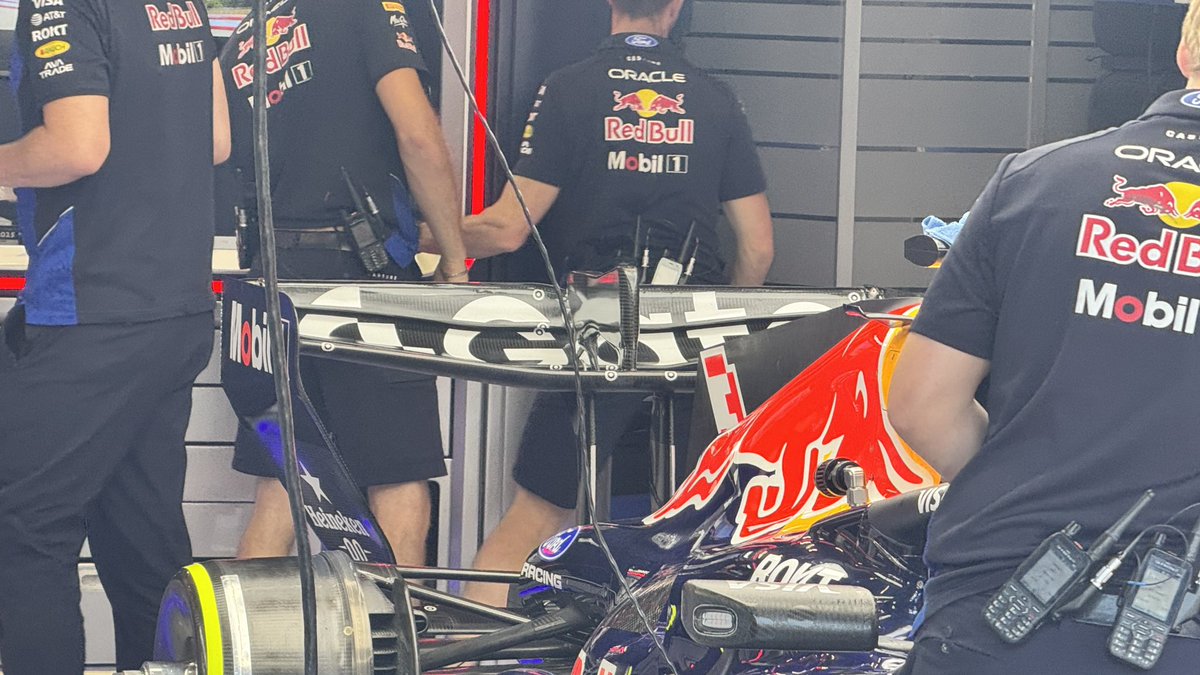
Red Bull ran different rear wing configurations across their two cars during the 2026 Austrian Grand Prix weekend, with Max Verstappen set to confirm the lower-drag specification tested in FP3 as his race-day choice.
Key Takeaways
Red Bull ran two distinct rear wing configurations across their cars during the 2026 Austrian GP weekend.
Max Verstappen is expected to confirm the lower-drag rear wing first used in FP3 as his race specification.
Wing selection at the Red Bull Ring is particularly sensitive given the circuit’s mix of high-speed corners and two long straights where drag reduction matters.
The aerodynamic split signals Red Bull’s ongoing search for the right efficiency balance under the 2026 technical regulations.
Two Wings, One Team: What Happened at Red Bull in 2026
Red Bull arrived at the 2026 Austrian Grand Prix with two different rear wing specifications in the garage, running each configuration on a separate car during the practice sessions. This kind of open aero test is a deliberate data-collection exercise — the team puts both options on track simultaneously to gather direct, back-to-back lap-time and telemetry comparisons under identical circuit and weather conditions.
The Red Bull Ring in Spielberg is a circuit of roughly 4.318 km and features two prominent straights separated by a tight infield section. That layout makes rear wing drag one of the most consequential setup choices of the entire weekend. Too much downforce costs top speed on the main and back straights; too little risks instability through the high-speed Turn 7 and Turn 9 complex. Teams therefore spend considerable effort bracketing the optimal wing angle before committing to a race specification.
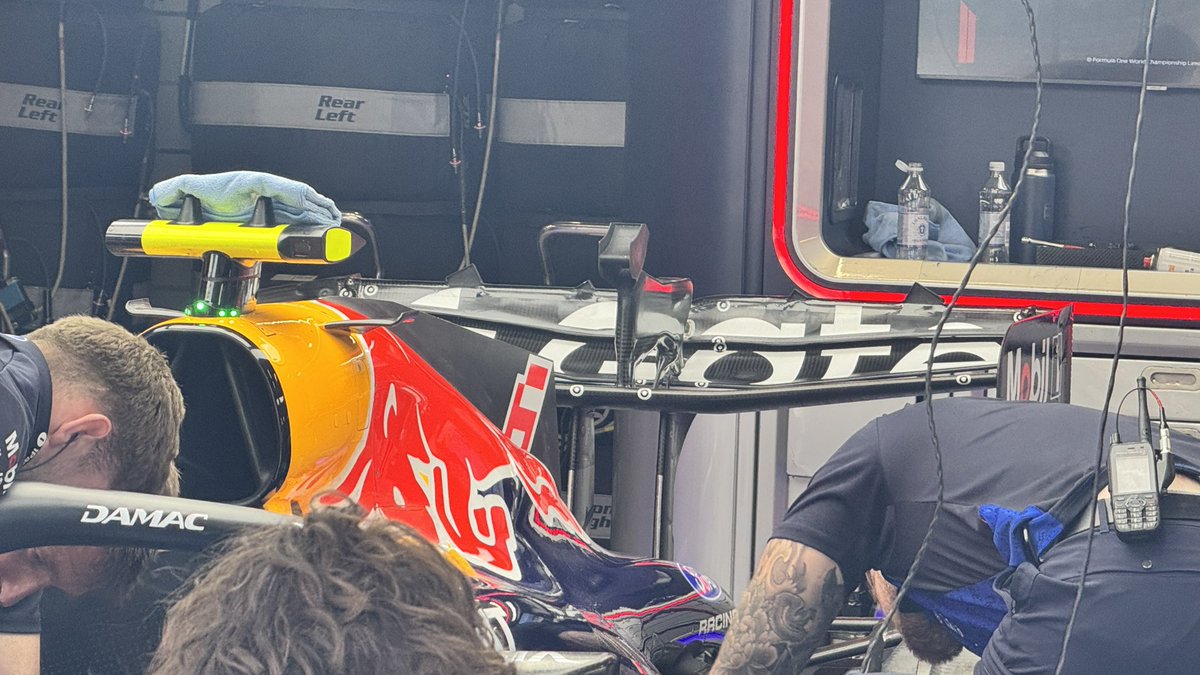
According to the report published on 2026-06-27, Red Bull specifically assigned the lower-drag rear wing to Max Verstappen for FP3, the session that most closely mirrors race conditions in terms of fuel load strategy and tyre compound selection. That placement was not accidental — FP3 is the final free-practice hour before qualifying and the last realistic window to evaluate a setup change without the pressure of lap-time elimination.
Why the Low-Drag Wing Matters on This Circuit
The lower-drag rear wing reduces aerodynamic resistance along the two main straights at the Red Bull Ring, where top speeds regularly exceed 320 km/h in modern Formula 1 machinery. Every incremental reduction in drag translates directly into a higher terminal velocity and a later, harder braking point into Turn 3 and Turn 4 — the two heaviest braking zones on the lap.
At a circuit where qualifying lap times are often separated by tenths rather than seconds, a rear wing that sheds even a small amount of drag can move a car two or three positions on the grid. In the 2026 season, with the sport operating under substantially revised aerodynamic and power-unit regulations, teams are still finding the precise efficiency curve of their car packages. Running a split aero test in FP3 gives Red Bull real-world data that no simulator session can fully replicate.
The lower-drag specification also interacts with the DRS system. When the rear wing’s baseline drag is already reduced, the incremental gain from opening the DRS flap changes in character — the absolute top-speed delta shifts, and the team’s strategists must recalculate overtaking opportunity windows accordingly. This is particularly relevant at the Red Bull Ring, where the DRS detection point on the start-finish straight feeds into one of the most used overtaking zones of the calendar.
FP3 as the Decision Session
FP3 runs for 60 minutes and typically begins around 12:00 local time on Saturday, leaving the engineering team roughly 90 minutes to process data before qualifying begins. Verstappen’s use of the lower-drag wing in FP3 placed it in the highest-scrutiny window possible, and the expectation that he will confirm that specification for the race suggests the data returned from that session was conclusive enough to close the debate inside the garage.
The Aerodynamic Picture Under 2026 Regulations
The 2026 technical regulations introduced the most significant structural changes to Formula 1 car aerodynamics since the 2022 overhaul, placing stricter constraints on rear wing geometry and interaction with the active aerodynamic systems now mandated by the rulebook. Under these rules, rear wing development has become one of the sharpest competitive battlegrounds because the design space — while more regulated — still allows meaningful differentiation in drag-versus-downforce efficiency.
Red Bull’s decision to bring two rear wing variants to Austria is consistent with a team that is actively iterating its aero package race by race rather than settling on a single homologated specification. In a season where the power-unit regulations have also changed materially, the aerodynamic efficiency of the car directly influences how hard the hybrid system must work to maintain lap-time targets, which in turn affects deployment strategy and battery charge management.
For Verstappen, confirming a wing that was only debuted in FP3 — rather than one with more hours of track data behind it — is a statement of confidence in both the engineering team’s data processing speed and in his own ability to read car balance feedback over a single 60-minute session. That speed of decision-making is itself part of what defines a front-running team in the modern era.
Collector Context: Verstappen’s 2026 Austrian GP Helmet
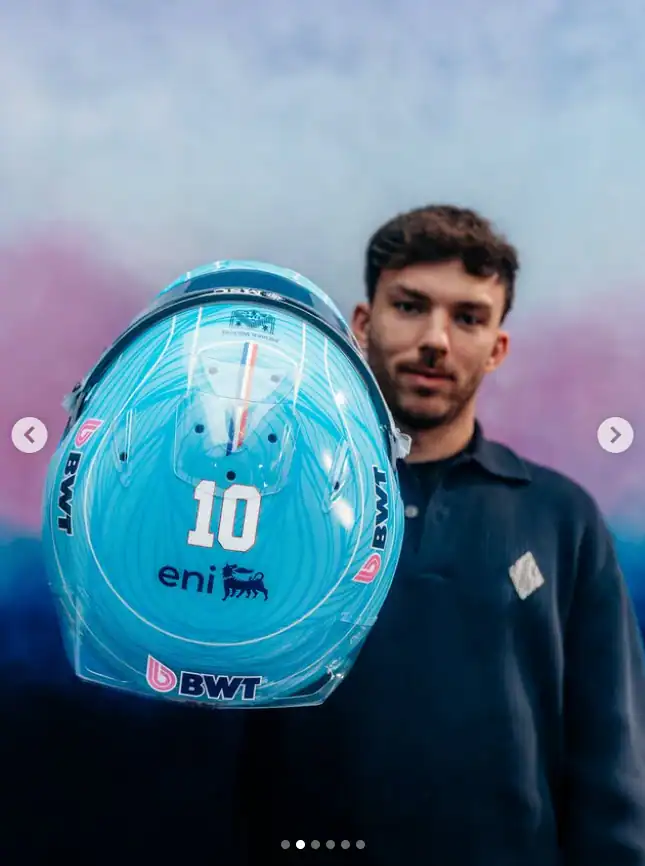
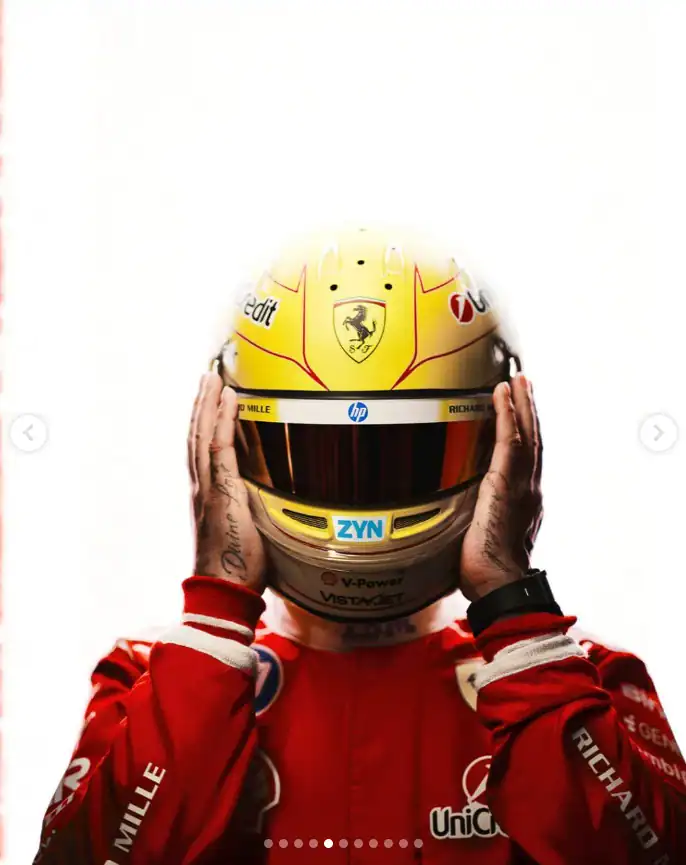
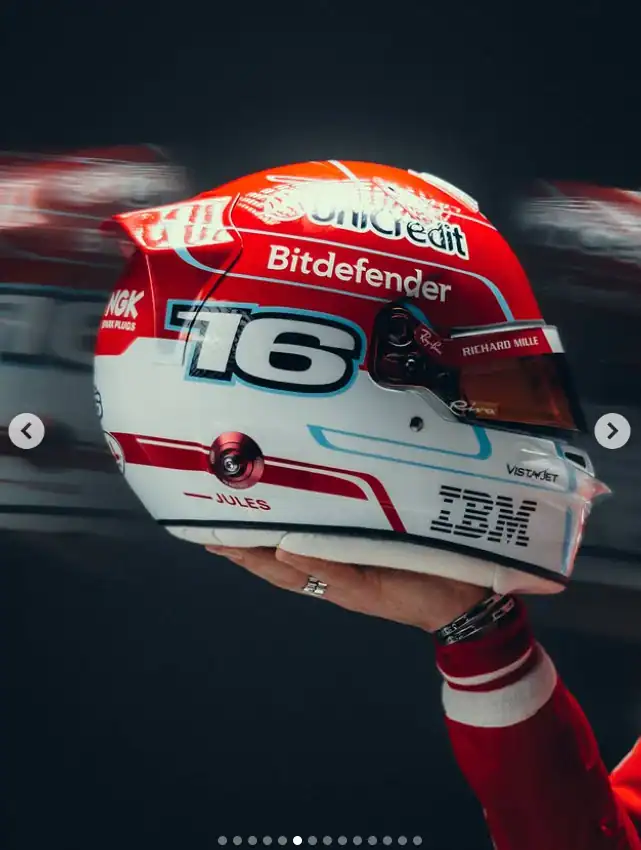
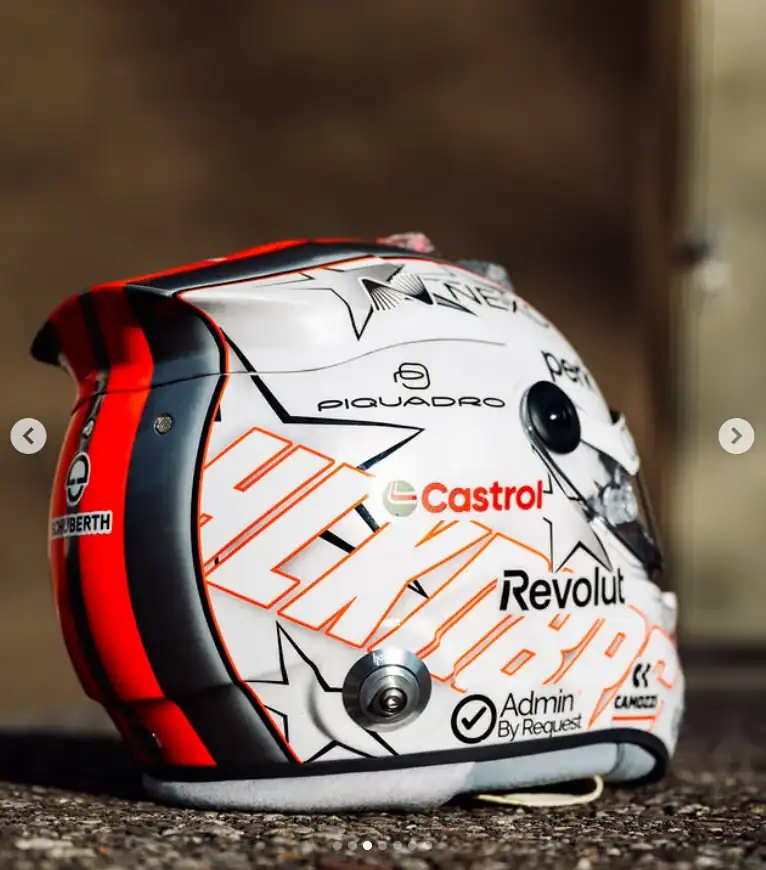
The 2026 Austrian Grand Prix represents one of the most symbolically loaded rounds on the calendar for Red Bull, who race on their home circuit at Spielberg and consistently bring updated livery or helmet details to the weekend. For collectors of full-size 1:1 display replica helmets, race-specific events like the Austrian GP are among the most sought-after reference points in any given season.
A display replica helmet tied to a specific race — particularly one where a driver secured pole, a win, or a notable technical story like a rear wing specification confirmation — carries a distinct narrative anchor that purely generic season livery helmets do not. The helmet Verstappen wears during a weekend in which he and the team made a deliberate, high-stakes aerodynamic call is the same lid visible in the broadcast imagery associated with that decision.
Full-size 1:1 collector and display replica helmets at 123Helmets.com are exhibition-quality pieces: scaled precisely to match the dimensions of the race-used originals, finished with multi-layer paint processes, and produced for display and collection purposes only. These are not certified protective equipment and carry no FIA, Snell, ECE, or DOT ratings — they exist purely as collector artefacts that let enthusiasts bring a specific moment from the season into their home or office display.
The livery detail on a 2026 Austrian GP replica would capture the exact helmet graphics Verstappen ran at Spielberg, providing a tangible connection to a weekend defined by technical precision and aerodynamic decision-making at the highest level of motorsport.
What the Rear Wing Split Signals for the Championship
Running different rear wing specifications across two cars at the same race weekend signals that Red Bull has not yet locked down a single optimal aero configuration for the full range of circuit types remaining on the 2026 calendar. That is not necessarily a weakness — it can also mean the team has genuinely competitive options and is still determining under which specific track conditions each one delivers the best lap-time return.
At the Red Bull Ring, the lower-drag option tested by Verstappen in FP3 addresses the circuit’s straight-line emphasis. If he confirms it for the race, the data from Austria will inform the wing-selection conversation at the next circuits with comparable straight-length profiles — Monza being the extreme case later in the season, but also circuits like Baku and Spa-Francorchamps where drag efficiency is a primary performance lever.
For the championship standings, the Austrian GP weekend falls in the first half of the 2026 season, a phase in which teams are still accumulating the circuit-by-circuit database they need to make rapid, confident calls. The fact that Verstappen is expected to confirm the wing after just one session of data suggests the performance delta was clear enough to make the choice straightforward — which would indicate the lower-drag specification was the meaningful step forward that the engineering team hoped it would be.
Rival teams monitoring Red Bull’s wing choice will also draw their own conclusions about how aggressively to target straight-line speed for the remainder of the weekend. Aero configuration decisions at the front of the field create a ripple effect through the order, as midfield teams calibrate their own wing angles partly in response to what the benchmark cars are running.
From Pitlane to Display Case: Why Technical Moments Define Collector Pieces
The most memorable collector helmets are not always tied to victories — they are tied to moments when a driver’s name became inseparable from a specific technical or strategic narrative. The 2026 Austrian GP rear wing story places Verstappen at the centre of exactly that kind of moment: a deliberate, calculated aerodynamic gamble confirmed after a single free-practice session at his team’s home race.
Full-size 1:1 display replica helmets produced to match the 2026 Austrian GP specification give collectors a physical object that maps directly onto that story. The helmet’s external graphics — the livery paint layers, the visor tinting, the sponsor placement — are all documented from the race weekend imagery. When displayed, the piece anchors the viewer to a specific Saturday morning in Spielberg, June 2026, when Red Bull’s engineers were still processing FP3 telemetry and Verstappen was preparing to confirm a wing that had been on the car for less than an hour of competitive running.
That specificity is what separates a race-referenced display replica from a generic branded item. At 123Helmets.com, every full-size 1:1 collector replica is produced as an exhibition-quality display piece — not protective equipment, not road or track use, purely a collector artefact faithful to the season livery and race context it represents.
“Verstappen is expected to confirm the less drag rear wing used in FP3.”
— @RosarioGiuliana via X, 2026-06-27
FAQ
Q: Why did Red Bull run different rear wings on their two cars at the 2026 Austrian GP?
Red Bull ran two different rear wing specifications to collect direct, simultaneous track comparison data under identical conditions. Placing contrasting configurations on each car during the same session eliminates variables like weather shifts and circuit evolution, giving the engineering team a clean performance delta between the two options.
Q: What is a low-drag rear wing in Formula 1?
A low-drag rear wing uses a shallower angle of attack and a more efficient profile to reduce aerodynamic resistance, trading some downforce for higher straight-line top speed. It is typically chosen at circuits like the Red Bull Ring, where the two main straights reward reduced drag more than additional mechanical downforce through corners.
Q: Why is FP3 the key session for confirming a race rear wing?
FP3 is the final free-practice hour before qualifying and mirrors race fuel loads and tyre selections more closely than FP1 or FP2. Engineers treat it as the last viable test window before the competitive sessions begin, meaning data from FP3 carries the highest predictive value for race-day setup choices.
Q: Are the 2026 Austrian GP Verstappen helmet replicas protective equipment?
No. Full-size 1:1 display replica helmets at 123Helmets.com are collector and exhibition pieces only. They carry no FIA, Snell, ECE, or DOT certification and are produced exclusively for display, not for protective use on road or track.
Q: How does a race-specific event like the 2026 Austrian GP affect collector helmet value?
Race-specific context gives a collector helmet a concrete narrative anchor — a particular weekend, a technical decision, or a notable result — which distinguishes it from a generic season-livery piece. Helmets associated with technically significant moments, like a rear wing specification confirmation at a home race, tend to carry stronger collector interest because the story attached to the object is specific and documented.
Browse our full-size 1:1 display replica helmet collection and find the 2026 season piece that belongs in your collection.
Display and collector replicas only. Not certified for protective use. Full-size 1:1 scale.
This article was written with the help of AI tools. Editorial policy