Blog
Antonelli P4: Safe Call Costs Front Row in 2026
 123Helmets Editorial Team
Kimi Antonelli aborted his final qualifying lap after mistaking a signal for double-waved yellow flags, leaving the 2026 championship leader fourth on the grid — his lowest starting position of the season — and facing a harder charge when the lights go out.
Key Takeaways
Antonelli’s P4 is his worst qualifying result of the 2026 F1 season, snapping a run of front-row starts.
The championship leader self-reported the error in the media pen, calling it a mistake that likely cost him a front-row place.
Starting fourth adds overtaking work on race day and increases exposure to first-corner incidents for the title contender.
The incident is now a permanent part of the 2026 season story — and of the helmet collector timeline that documents it.
The Moment Antonelli Lifted
Kimi Antonelli aborted his final Q3 flying lap after he believed he had seen double-waved yellow flags on track, surrendering what would almost certainly have been a faster time. Double-waved yellows demand an immediate, significant reduction in speed and the abandonment of any timed lap — the rule exists to protect marshals and drivers, and no serious competitor ignores it. The problem, as Antonelli acknowledged within minutes of climbing from the cockpit, was that the flags were not there.
Speaking directly to reporters in the media pen on 2026-06-28, Antonelli was characteristically candid: he said he saw what he thought were double-waved yellows, reacted accordingly, and accepted afterwards that it was a misread. The honest admission did nothing to change the timing sheet. His aborted lap locked him into fourth place — a position that, by the standards of his 2026 season, counts as a genuine setback.
For a driver who has made a habit of occupying the front two rows, P4 is unfamiliar territory. It is also, in the blunt language of race strategy, a more complicated starting point: two cars ahead on each side of the grid, a tighter line into the first corner, and a slightly longer path to the lead if the race does not shake up naturally in the opening laps.
A Season Built on Consistency
Fourth on the grid is Antonelli’s lowest Grand Prix starting position of the entire 2026 season, which underlines just how dominant his qualifying form has been. Across every other round contested so far, he has qualified closer to the sharp end — a consistency that has been the foundation of his championship lead rather than a single spectacular result.
That consistency is what makes today’s outcome sting. It was not a mechanical failure, a red flag that ended a session early, or a rival simply finding an extra tenth. It was a judgement call, made in the fraction of a second that separates a driver committing to a lap from a driver lifting off, and it turned out to be the wrong one. Antonelli leads the 2026 drivers’ championship heading into race day, which means every point surrendered to the chasing pack narrows the buffer he has spent the season constructing.
Mercedes will run strategy calculations overnight. The gap between P4 and a podium finish — or better — depends heavily on how the first stint unfolds, whether the safety car makes an appearance, and whether the drivers starting ahead convert their grid slots into clean getaways. None of those variables are impossible to overcome; several championship-winning seasons in F1 history include race wins from fourth or further back. But the margin for error is smaller than it would have been from the front row.
Safe Call, Sorry Outcome
The phrase “safe but sorry” captures the dilemma exactly: Antonelli made the decision a responsible driver should make when he believed a danger signal was present, and ended up paying a sporting price for it. The rules around yellow flags exist for good reason, and the sport’s governing body has historically taken a firm line on drivers who fail to respect them. No penalty was warranted here because Antonelli responded to what he genuinely believed he saw — the fault lay in the perception, not the reaction.
What the incident illustrates is how fine the margins are at the top of the 2026 grid. Q3 laps at this level are separated by hundredths of a second. The window in which a driver must read the trackside environment, process a colour and a motion, and decide whether to continue at racing speed is measured in fractions of a second at closing speeds that can exceed 300 km/h on a straight. Under those conditions, a misread is not careless; it is a reminder of how much information a driver absorbs in real time.
Antonelli’s willingness to stand in front of the media and describe the error plainly — without deflecting blame onto a crew radio call or a marshal’s positioning — is a detail that will not be forgotten quickly by those who follow the sport closely. He accepted the outcome, said it likely cost him a front-row place, and confirmed he will go racing from P4 tomorrow.
What P4 Means on Race Day
Starting fourth in Formula 1 in 2026 places Antonelli on the dirty side of the grid in the standard two-by-two formation, with less rubber laid down ahead of him than the cars on pole and second. The race distance and circuit layout will determine how quickly he can attack, but the fundamental task is clear: make up at least one place in the early laps while keeping the car clean and the championship points intact.
The title lead is the overriding priority. A race win from P4 would be the ideal recovery; a strong points finish that limits damage is the minimum acceptable outcome. Teams in this position typically look for the undercut — pitting slightly earlier than the cars ahead to emerge in front after the stop cycle — as the primary route to track position. Alternatively, an early safety car can compress the field and hand P4 a free shot at the top three on the restart.
None of this is guaranteed. Fourth place on the grid has historically produced both brilliant recoveries and frustrating afternoons spent stuck in traffic. Antonelli’s racecraft has been one of the more discussed qualities of his 2026 campaign, and tomorrow will test it against a field that knows exactly where the championship leader is sitting on the grid.
Documenting the 2026 Season: The Collector Angle
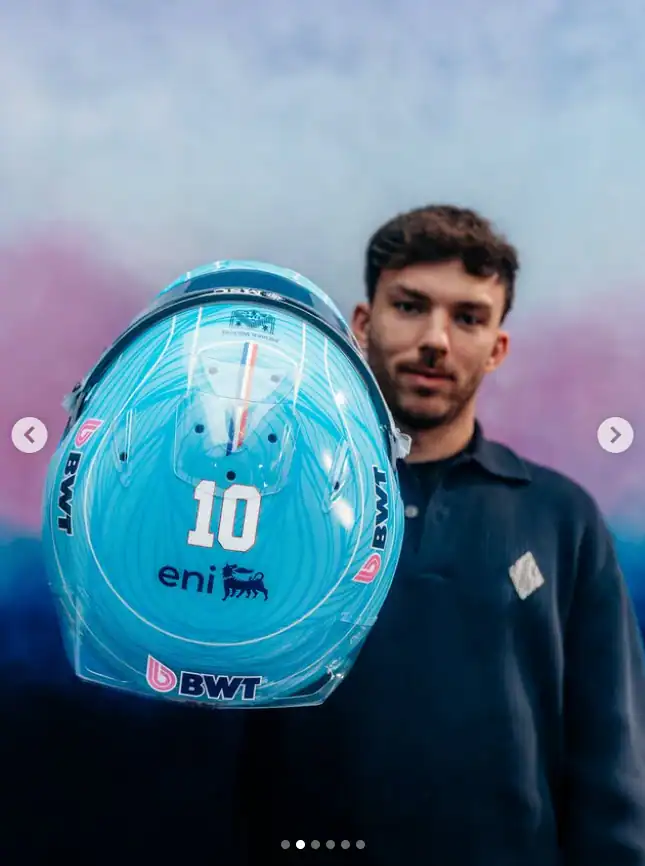
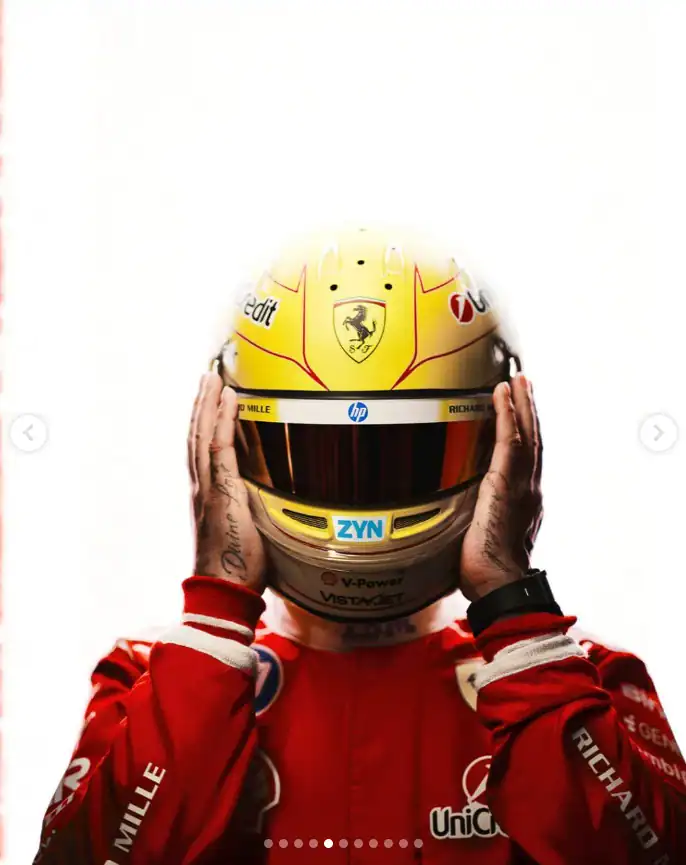
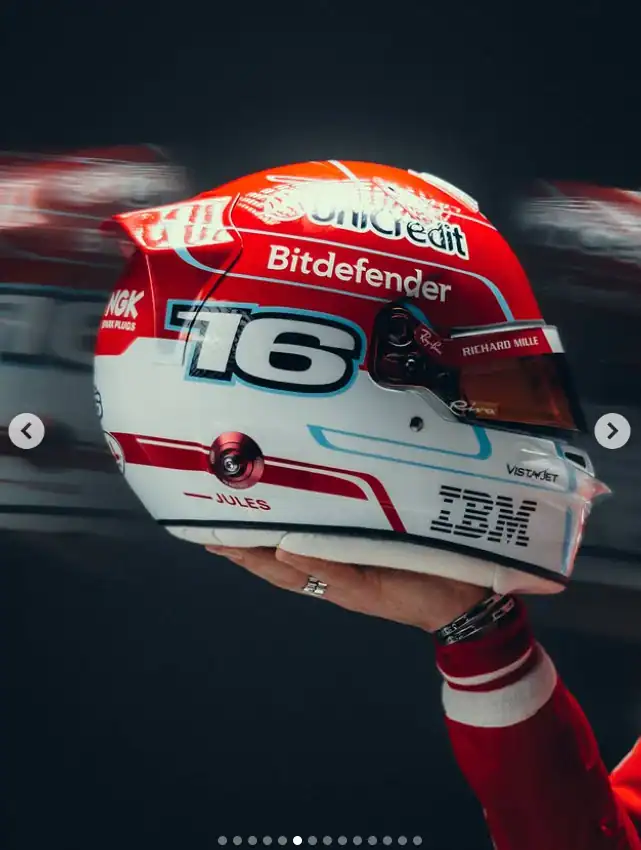
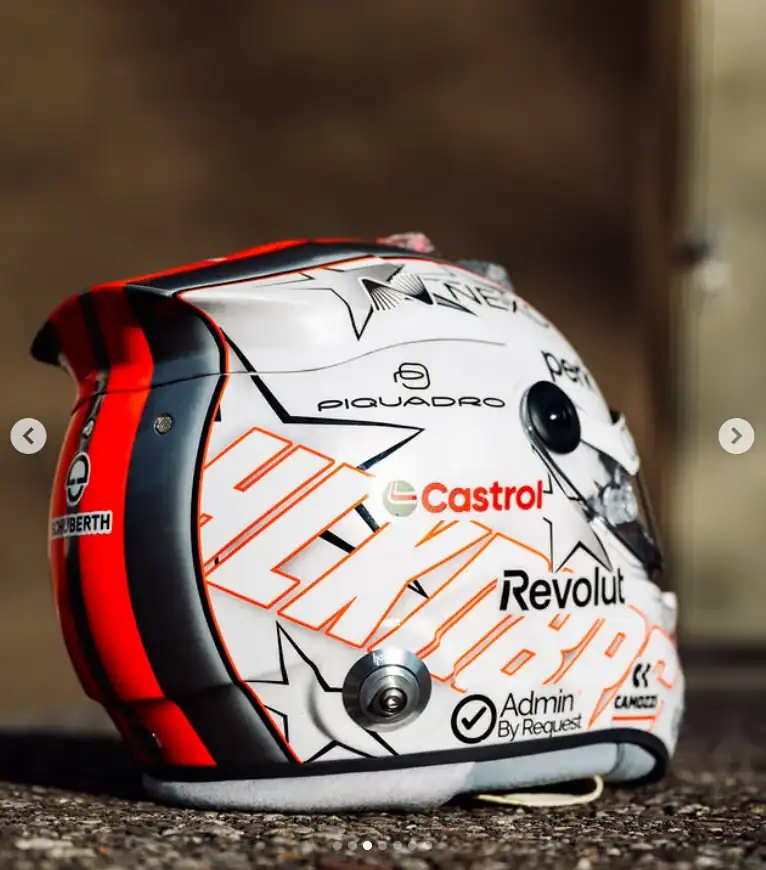
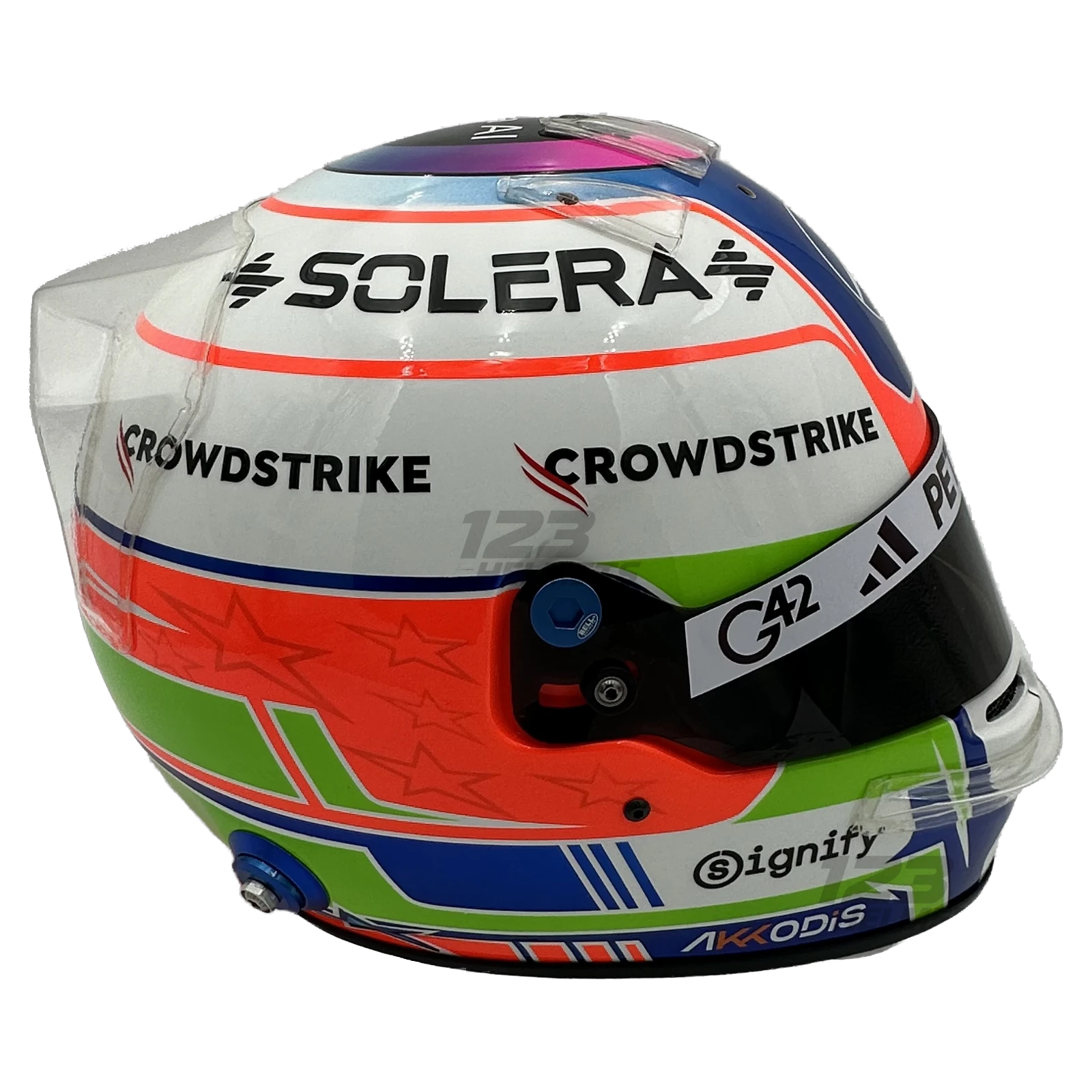
For helmet collectors, today’s qualifying session is the kind of moment that gets attached permanently to a driver’s 2026 season record — and to the physical objects that represent it. A full-size 1:1 replica display helmet carrying Antonelli’s 2026 livery sits in a very specific place in the season narrative: it is the lid worn during the year his championship lead was first genuinely threatened by a self-inflicted qualifying error, and during the race that followed it.
Display replica helmets at 1:1 scale are collector pieces built to exhibition quality, not certified for any protective use on road or track. What they capture is visual and historical: the exact livery, the sponsor layout, the colourway that appeared on timing screens and broadcast graphics during a specific season. When a season includes moments like a championship leader’s lowest qualifying position, that context adds a layer of significance to the physical item that represents the driver and the year.
Antonelli’s 2026 helmet design has appeared at the front of the field for most of the season to date. After today, there is a new data point in the story it tells. A full-size 1:1 collector replica — displayed at approximately 29 × 25 × 35 cm in a standard presentation case — becomes a record of the complete season, rough sessions included. The weight of a quality display piece typically sits around 1.2–1.5 kg, designed for shelf or cabinet display rather than use, and finished to the same visual specification as the race-used item it represents.
Why Collector Replicas Mark These Moments
Collector and display replicas are documented by season, not by individual race result, which means a 2026 Antonelli helmet carries the full year: the front-row starts, the championship lead, and the Saturday afternoon in late June when he pulled out of a lap he believed was flagged and found out, standing in the media pen, that it was not. That is what a season looks like in full, and it is what a serious collector’s shelf reflects.
Looking Ahead to the Race
Antonelli starts the 2026 Grand Prix from fourth on the grid on 2026-06-29, with the championship lead intact but the front row unavailable. The three drivers starting ahead of him will have their own strategies, their own tire choices, and their own reasons to make the first corner count. The opening lap is where P4 most often becomes either P2 or P6, and Antonelli’s task tomorrow is to make sure it moves in the right direction.
Mercedes will have spent the overnight hours running simulations against the grid order as it stands. Tire degradation rates, projected safety car probability, and the overtaking characteristics of the circuit will all feed into a race plan that begins with the assumption that places must be made on track rather than handed over by the cars ahead. It is a different kind of Sunday morning than the team would have preferred.
The 2026 championship is long, and one qualifying error — however publicly acknowledged — does not define a title campaign. What it does is place Antonelli in the unusual position of being the hunter rather than the quarry for at least the first half of tomorrow’s race. If he converts P4 into a podium or better, the narrative by Sunday evening will be recovery; if the afternoon goes wrong, the yellow flag misread becomes the headline it is today for longer than anyone at Mercedes would like. Either way, the session is already locked into the record of what the 2026 season was.
“I thought I saw double-waved yellows. I reacted to what I saw. Looking back, it was a mistake, and it probably cost me a place on the front row.”
— Kimi Antonelli, post-qualifying media pen, 2026-06-28
FAQ
Q: Why did Kimi Antonelli abort his qualifying lap?
Antonelli aborted his final Q3 flying lap because he believed he had seen double-waved yellow flags on track. He acknowledged afterwards that it was a misread, and that the flags were not actually displayed.
Q: What grid position does Antonelli start from in the 2026 race?
Antonelli starts from fourth on the grid — his lowest Grand Prix starting position of the entire 2026 season.
Q: Is Antonelli still leading the 2026 F1 championship after qualifying?
Yes. Antonelli remains the 2026 drivers’ championship leader heading into race day, despite qualifying fourth — his worst grid slot of the season so far.
Q: What does an Antonelli 2026 display replica helmet represent for collectors?
A full-size 1:1 collector replica helmet carrying Antonelli’s 2026 livery is a display piece — not certified for protective use — that records the complete season, including championship-leading form and events like this qualifying session. Display replicas typically weigh around 1.2–1.5 kg and measure approximately 29 × 25 × 35 cm.
Q: Are the F1 helmet replicas at 123Helmets certified for racing or road use?
No. Every item in the collection is a display and collector replica only — full-size 1:1 scale, exhibition quality, not certified for any protective, road, or track use.
Browse F1 Helmet Collection
Display and collector replicas only. Not certified for protective use. Full-size 1:1 scale.
This article was written with the help of AI tools. Editorial policy