Blog
Bearman’s Blind Q1 Gamble: From ‘Worst Car Ever’ to P15 on the Grid
 123Helmets Editorial Team

Ollie Bearman arrived at Q1 completely in the dark after describing his Haas as the worst car he had ever driven during FP3. By the end of qualifying he had turned a potential elimination nightmare into a P15 grid slot — and nobody in the garage could fully explain how.
Key Takeaways
Bearman described his Haas in FP3 as so unpredictable he feared he would have crashed had the same setup carried into Q1.
An unidentified change between FP3 and qualifying transformed the car’s behaviour, earning him a P15 grid start.
Starting 15th means Bearman lines up inside the top half of the 20-car field despite the session beginning without clear data.
The incident is a reminder of how fine the margin is between a display-worthy qualifying lap and a garage-bound elimination.
What Bearman Said About His FP3 Haas
Ollie Bearman described his Haas during FP3 as, in his own words, “the worst car I’ve ever driven in my life, actually — it was terrible.” That assessment came from a driver who, at 20 years old in 2025, has already logged seat time across Formula 2, guest outings in a Ferrari, and a full season build-up with Haas — making the statement carry genuine weight rather than simple frustration.
The problems were not limited to raw pace. Bearman’s language pointed to a car that was unpredictable lap to lap: “challenging, unpredictable and horrible.” In qualifying trim, where a driver commits to the absolute limit of traction and aero balance on a single flying lap, an unpredictable platform is not just slow — it is dangerous. Bearman was explicit: “If I had the car I had in FP3, I would have probably crashed.”
FP3 runs typically between 60 and 75 minutes depending on session scheduling, giving engineers a compressed window to diagnose handling problems before the clock resets for qualifying. That window appeared to produce no clear answer for the Haas crew on this occasion, which is precisely what made the Q1 entry so unusual.
Going Into Q1 ‘Absolutely Blind’
Bearman and the entire Haas team entered Q1 without a confirmed explanation for the car’s FP3 behaviour — a situation the driver described as going in “absolutely blind.” Q1 in Formula 1 eliminates the five slowest cars from a 20-car field, meaning any driver carrying unresolved setup uncertainty faces an immediate and very public exit.
The psychological weight of that situation is significant. A driver preparing a qualifying lap already operates at the outer edge of concentration, committing to braking points, kerb apexes, and throttle application that leave almost no margin for error. Doing so without confidence in how the rear of the car will behave under load, or how the front will respond mid-corner, multiplies that risk considerably.
Bearman’s candour in describing the session captures something that telemetry printouts rarely communicate: the driver’s read on a car’s character is itself a performance variable. When that read is missing, lap time suffers even before a mechanical problem appears. His expectation walking to the car was straightforward — “I was expecting to be out.”
That expectation made the eventual result all the more striking. The team made changes between the end of FP3 and the start of qualifying — changes that, by Bearman’s own account, neither he nor the engineers fully understood at the moment of committing to the installation lap.
P15: The Number That Tells the Story
P15 on a 20-car Formula 1 grid places Bearman at the front of the lower half, ahead of 5 other drivers who could not beat his time in qualifying. In a session he entered expecting elimination, that outcome represents a genuine turnaround. It also means Bearman starts on the clean side of the grid — odd-numbered positions in many circuits carry traction advantages at the start — though the exact side depends on track layout.
For context, the gap between P15 and a points-scoring position (P10) in modern Formula 1 typically ranges from three to six tenths of a second in qualifying, a margin that translates to roughly 15 to 20 metres of track distance at racing speeds above 200 km/h. Clearing five cars off the line and through the opening stint is achievable, particularly when strategy and tyre compound selection play out across the race distance.
The Haas team has demonstrated in recent seasons that mid-grid qualifying can convert into points finishes when faster cars ahead encounter safety car periods, strategy splits, or mechanical retirements. Starting P15 with a car that — whatever was done to it — now behaves predictably, keeps that possibility open in a way that a P18 or P19 would not.
The Setup Mystery and What It Means for the Race
The unresolved question going into race day is whether the improvement between FP3 and qualifying can be reproduced over a full race distance. Bearman acknowledged the gap in understanding directly: “So we need to understand” — the quote trails off in the source, but the implication is clear. The team must determine which specific change produced the turnaround so they can trust it, replicate it, and build on it across a stint length that typically runs to 25–35 laps before the first pit window opens.
Formula 1 cars are adjusted across dozens of parameters between sessions — ride height, wing angles, differential maps, brake bias, tyre blanket temperatures, and more. Identifying which single variable (or combination of variables) transformed the car from undriveable to qualifying-worthy requires the kind of post-session data analysis that engineers carry out against a tight timeline. When the transformation is unexplained, the risk is that it reverses just as mysteriously during the race.
Tyre behaviour adds another layer. FP3 and qualifying both run on relatively fresh rubber in short bursts. A race requires managing tyre degradation across multiple laps at racing load, meaning a setup that felt correct on a three-lap qualifying run may generate overheating, graining, or understeer well before a driver reaches the pit window. If the team cannot pinpoint what they changed, optimising for race pace becomes largely guesswork.
That uncertainty, paradoxically, makes this one of the more interesting cars to watch from P15 on race day. Bearman’s feedback — direct, precise, and unusually candid for a driver still in his first full campaign — gives the engineering team a clear brief. The race will reveal whether the brief was answered in time.
Bearman’s Feedback Voice and Its Place in F1 History
Bearman’s ability to articulate exactly what was wrong with his car — and to do so with specific, actionable language rather than generic complaints — is a skill that separates drivers who shape car development from those who simply react to it. Describing a car as “so difficult, challenging, unpredictable and horrible” is not vague frustration; it is a four-point engineering brief delivered in plain language.
Historically, drivers who could translate physical sensation into clear verbal feedback accelerated development cycles significantly. Ayrton Senna’s granular debriefs at McLaren in the late 1980s are still cited as a standard. Michael Schumacher’s Ferrari tenure from 1996 to 2006 produced ten constructors’ championships in part because of the precision with which he could communicate what the car needed lap by lap. Bearman, still in the early chapters of his F1 career, shows a similar instinct.
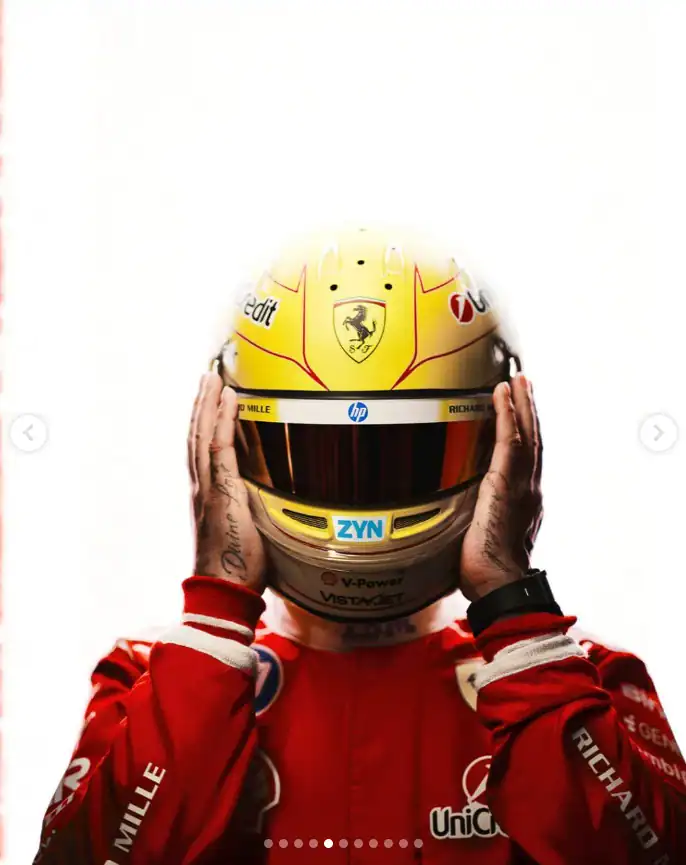
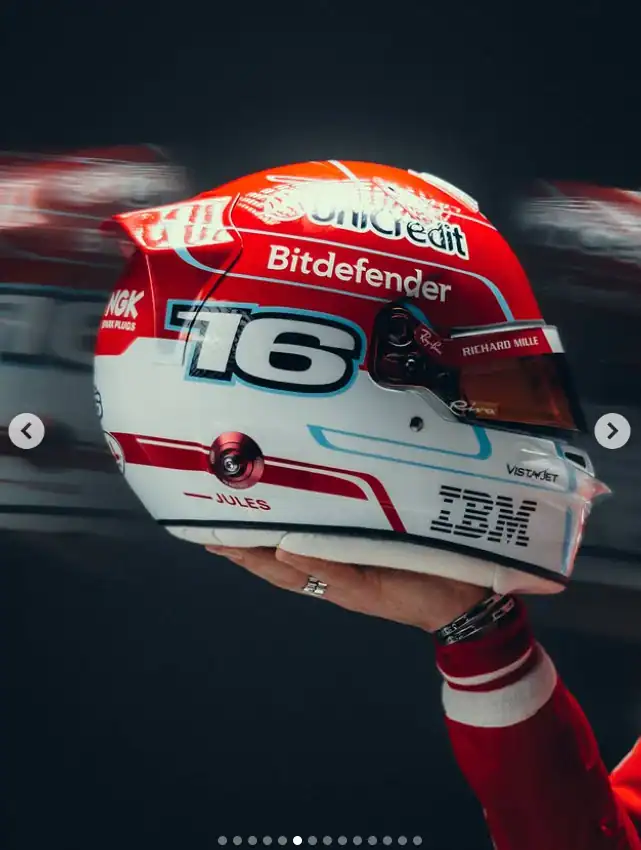
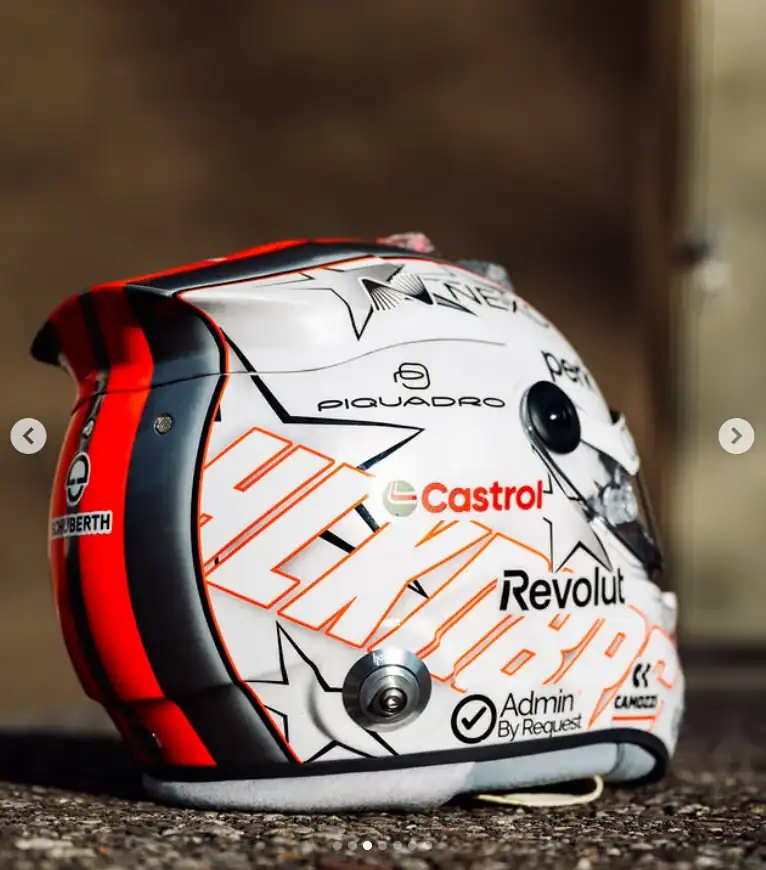
For collector and display audiences, the helmet worn during sessions like this one carries a narrative weight that raw results do not capture. A P15 starting position recorded after a driver described the car as nearly uncontrollable in practice is the kind of qualifying story that gives a race-day helmet display its specific context. The 1:1 full-size replica helmet marking this period of Bearman’s Haas career sits at the beginning of a story whose later chapters are still being written.
Display pieces at exhibition quality — full-size 1:1 scale — document exactly these moments: the sessions where a driver proved something, often against the machinery rather than purely with it. The helmet is a fixed object; the weekend that surrounds it in the record gives it meaning.
Collecting the Bearman Haas Era: What to Look For
A full-size 1:1 collector replica of Bearman’s Haas helmet from this period of his career represents a specific and early moment in what may become a long top-flight career. Display replica helmets in this category are produced at 1:1 scale, meaning the dimensions match the actual race helmet — typically around 29 × 25 × 35 cm in exterior profile — and are finished to exhibition quality for shelf or case display.
The Haas livery has undergone several visual iterations since the team’s entry into Formula 1 in 2016, and helmets from specific race weekends in 2025 carry a timeline value: they document a driver in his first full season, at a team navigating its own development arc, during a regulatory period before the 2026 rule changes alter the competitive order substantially.
Collector replica helmets are display pieces only. They carry no FIA, Snell, ECE, or DOT certification and are not intended for road, track, or any protective use. Their value is entirely documentary and aesthetic — a physical record of a driver, a team, and a weekend that produced results nobody in the garage fully expected at the start of qualifying.
From a display perspective, pairing a Bearman replica with documentation of this specific weekend — the FP3 struggles, the blind Q1 entry, the P15 outcome — transforms a collector item into a story object. That narrative depth is what separates a helmet on a shelf from a helmet in a collection.
“I don’t know what we did to the car, but in FP3 it was the worst car I’ve ever driven in my life, actually — it was terrible. So I was going into Q1, and we were all going into Q1, absolutely blind. Honestly, I was expecting to be out — if I had the car I had in FP3, I would have probably crashed, it was just so difficult, challenging, unpredictable and horrible.”
— Ollie Bearman, Haas F1 Team, via @adamcooperF1 on X
FAQ
Q: What position did Ollie Bearman qualify in despite his FP3 problems?
Bearman qualified P15 for the race, placing him 15th on the starting grid out of 20 cars. That result came after he described his Haas during FP3 as the worst car he had ever driven and entered Q1 expecting to be eliminated.
Q: Why did Bearman say he might have crashed if the FP3 car carried into qualifying?
Bearman said the car in FP3 was unpredictable and difficult to control, meaning it lacked the consistent behaviour a driver needs to commit to qualifying-pace braking points and cornering loads. Pushing such a car to the limit on a flying lap significantly raises the risk of losing control.
Q: Did Haas identify what change fixed the car between FP3 and qualifying?
No — Bearman stated the team did not know what they did to the car, and the incomplete quote suggests the investigation was ongoing. The improvement happened, but the specific cause had not been confirmed at the time of his post-qualifying comments.
Q: What are Ollie Bearman Haas F1 display helmets?
They are full-size 1:1 scale collector and display replicas of the helmets worn by Bearman during his Haas F1 campaign. Produced to exhibition quality, they are display pieces only — not certified for any protective use under FIA, Snell, ECE, or DOT standards.
Q: Why is a P15 qualifying result considered a positive outcome for Bearman at this race?
P15 places Bearman ahead of 5 competitors in a 20-car field, inside the lower boundary of the top half. Given that he entered Q1 expecting elimination after a dysfunctional FP3, surviving the session and securing a mid-grid start represents a meaningful recovery under difficult circumstances.
Browse F1 Helmet Collection — full-size 1:1 display replicas from Haas, Ferrari, McLaren, and the full current grid. Every helmet is a collector item finished to exhibition quality. Shop the collection.
Display and collector replicas only. Not certified for protective use. Full-size 1:1 scale.
This article was written with the help of AI tools. Editorial policy