Blog
Building Foundations: Perez P19, Bottas P20 as Cadillac F1 Grows
 123Helmets Editorial Team
Sergio Perez lines up P19 and Valtteri Bottas P20 as Cadillac’s debut 2026 season continues to take shape race by race. For collectors following every step of this historic new team’s journey, each grid slot tells a story worth preserving.
Key Takeaways
Sergio Perez starts P19 and Valtteri Bottas P20 for Cadillac in the 2026 F1 season — the team’s first as a full constructor entry.
Perez holds the head-to-head advantage over Bottas in qualifying and race results so far in 2026.
Building a new F1 constructor takes multiple seasons; Cadillac’s current grid positions reflect early-phase development, not ceiling.
Full-size 1:1 Perez and Bottas Cadillac replica helmets mark this historic debut season as display collectibles for serious F1 fans.
The Grid Positions That Tell a Bigger Story
Sergio Perez will start today’s race from P19, with teammate Valtteri Bottas lining up directly behind him in P20 — a back-row lockout that, on its surface, looks like a disappointing Saturday. For Cadillac F1, however, these positions are not a verdict. They are a data point in what will be a multi-year construction project, and every lap run, every setup sheet filled in, and every chassis fault identified moves the team incrementally closer to where it needs to be.
The 2026 Formula One season marked the full arrival of Cadillac as a constructor, the first American-backed team to enter the sport as a new entity in decades. That weight of expectation — commercial, political, and sporting — has sat alongside every session the team has run this year. Perez and Bottas were not signed for their pace alone. They were signed because experience at the back of the grid, managing development feedback under race pressure, is exactly the currency a new team needs most.
Neither driver has been able to challenge for points consistently in 2026. That is the honest assessment from the team itself. But the gap between where Cadillac started preseason testing and where it sits now, race by race, tells a more nuanced story than any single grid sheet can.
Perez Holds the Head-to-Head Edge
In the internal battle between the two Cadillac drivers, Perez has had the upper hand for most of the 2026 season. Head-to-head qualifying and race results have favoured the Mexican, who spent a decade at the front of the grid with Force India, Racing Point, and Red Bull before his 2025 departure and subsequent Cadillac signing.
That advantage matters beyond the championship table. When a new constructor has two experienced drivers, the one who consistently extracts more from an underperforming car provides the clearest development benchmark. Every tenth Perez finds over Bottas in qualifying is a reference point the engineering team can trace back to setup choices, driving style, and mechanical balance — information that feeds directly into future car specification decisions.
Bottas, who brought six seasons of front-running experience with Mercedes and five with Alfa Romeo/Sauber, is far from a passenger in this process. His data, even when it trails Perez’s, gives the team a second axis of comparison. Two experienced drivers producing different results from the same package is, counterintuitively, one of the most useful situations a young constructor can have in its garage.
The 2026 technical regulations — which introduced a significant overhaul of power unit architecture — affected all teams, but new constructors without legacy data faced the steepest learning curve. Cadillac arrived with no prior baseline. Every session in 2026 is, in a real sense, their first lap of reference.
What Building a New F1 Team Actually Looks Like
A new Formula One constructor does not become competitive inside one calendar year — historically, the timeline from entry to genuine points contention runs three to five seasons minimum. The most instructive modern comparison is Haas F1, which scored points on its debut in 2016 but spent years oscillating around the lower midfield before stabilising. Cadillac entered with even greater ambition, but also with the weight of building infrastructure, supply chains, and technical partnerships simultaneously.
The 2026 season represents Cadillac’s first full year with its own chassis, making every race weekend a factory test session in competitive conditions. P19 and P20 today represent two more hours of live aerodynamic data, tyre degradation readings, power unit stress mapping, and strategic simulation — none of which is available in any wind tunnel or simulator at the fidelity that race day provides.
From a structural standpoint, full-size F1 chassis construction involves tolerances measured in fractions of a millimetre, and teams typically run between 18 and 22 personnel on the pit wall and in the garage per car per race weekend. Coordinating that operation smoothly, under pressure, is a skill that only repetition builds. Every P19 finish is, in that sense, a training session disguised as a race result.
Both Perez and Bottas have been vocal in 2026 about the team’s direction and the tangible improvements they have felt car-to-car. That feedback loop — experienced driver input translated into engineering action between races — is the quiet engine of any young team’s progress.
The Collector Significance of a Debut Season
The 2026 Cadillac F1 season is a historically singular moment — the debut campaign of an all-new American constructor in the sport’s modern era, and the first season in which both Perez and Bottas wore Cadillac livery on a Formula One grid. For collectors and display enthusiasts, debut seasons carry a premium of permanence: these are the helmets, the liveries, and the race numbers that will define how this chapter of the sport is remembered.
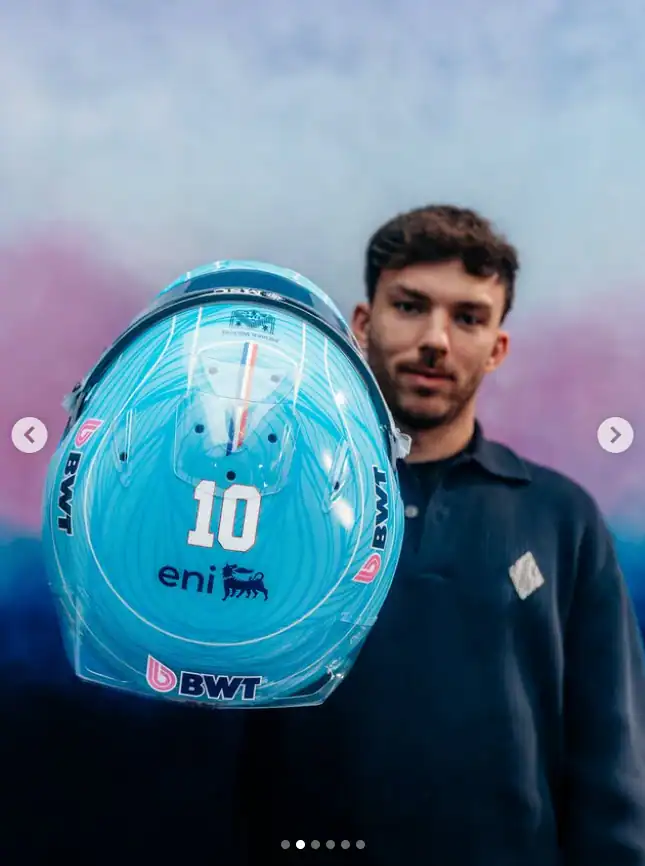
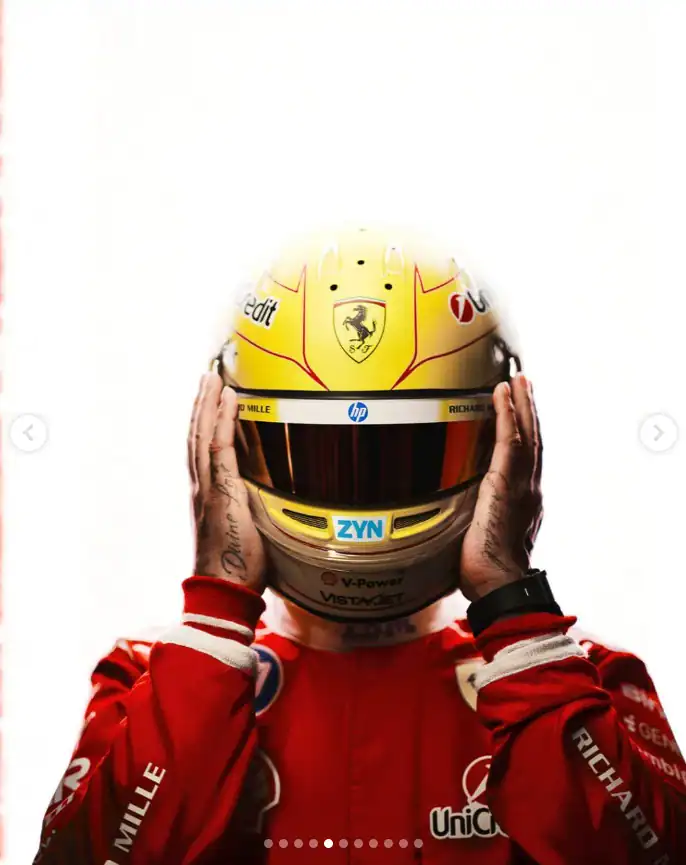
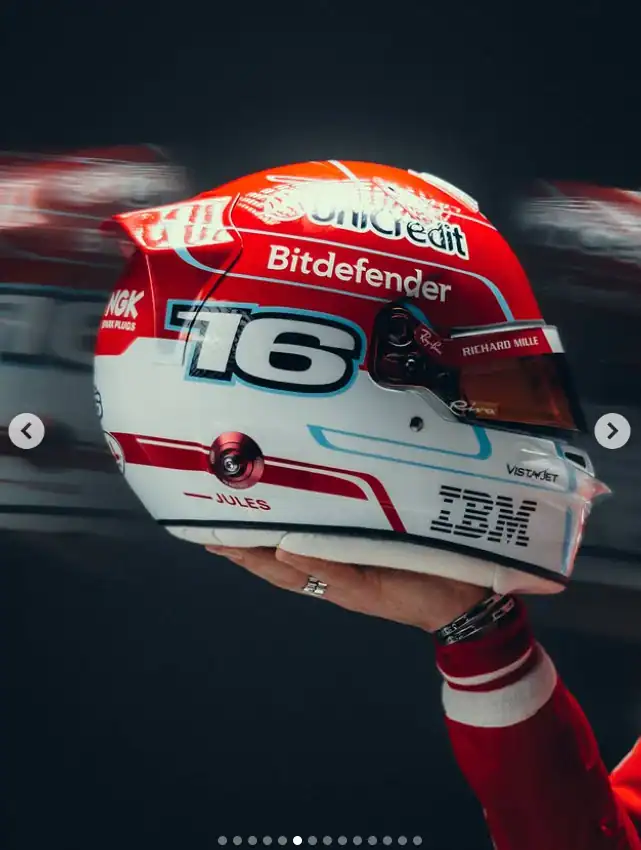
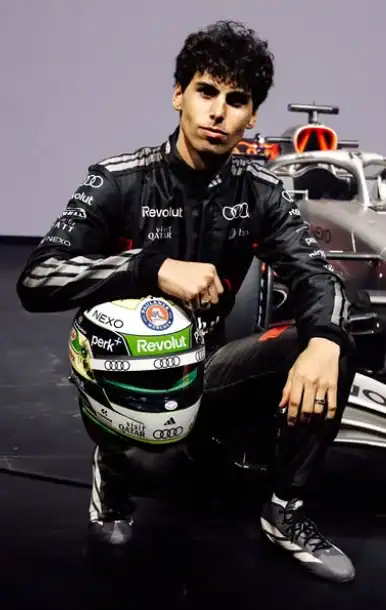
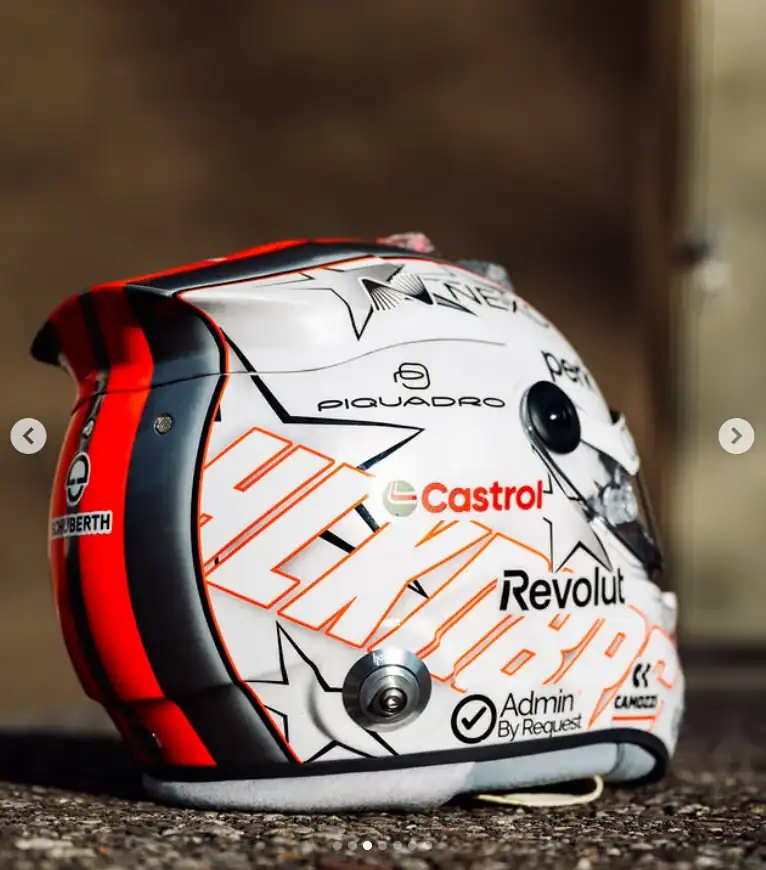
Full-size 1:1 replica helmets from this season — Perez’s Cadillac-era design and Bottas’s corresponding lid — are exhibition-quality display pieces that place the 2026 grid exactly where it belongs: preserved, scaled correctly, and built to last as collector items rather than as functional equipment.
A standard full-size 1:1 replica F1 helmet measures approximately 29 × 25 × 35 cm and weighs around 1.2–1.5 kg, replicating the outer shell geometry of the race-used item without being rated, certified, or intended for any protective purpose. These are display pieces only, not certified for use on road or track. The visor panels on quality replicas typically run 4 mm to 6 mm in thickness, giving the finished piece the correct visual proportions when displayed on a stand or inside a case.
What makes the 2026 Cadillac pieces specifically notable as collector items is their timing. First-season helmets from any constructor — and from any driver entering a new chapter of their career — represent a moment that cannot be reproduced. Perez running P19 in Cadillac colours on a 2026 race day is a specific coordinate in F1 history. A replica helmet from that era is a fixed reference to it.
Perez and Bottas: Two Careers at a New Crossroads
Sergio Perez’s decision to join Cadillac for 2026 followed his departure from Red Bull after the 2025 season — a move that closed a chapter in which he scored multiple race wins and finished as high as third in the Drivers’ Championship. His role at Cadillac is not purely that of a hired gun. Perez has spoken openly about the responsibility of helping construct a team from its foundations upward, a task that requires patience of a different kind than fighting for podiums.
Valtteri Bottas brings a complementary profile. His five seasons at Alfa Romeo/Sauber after leaving Mercedes saw him navigate a midfield and lower-midfield environment with consistency. He knows how to extract results — or at least, maximum learning — from a car that is not yet capable of regular points finishes. That experience maps directly onto what Cadillac needs from its second seat in 2026.
Together, the two drivers represent a combined tenure of well over 400 Formula One race starts between them. That volume of experience — race craft, tyre management, engineering communication, media handling under pressure — is exactly the kind of institutional knowledge a new team cannot manufacture in a factory. It has to walk in through the garage door wearing a race suit.
For collectors, the pairing also creates a natural dual-display opportunity. Two helmets, same constructor, same 2026 season, two distinct driver identities. The Perez and Bottas Cadillac replica helmets side by side represent the full story of one team’s debut year — starting from the back row and building toward something worth watching.
What Comes Next for Cadillac F1
Cadillac’s trajectory from here depends on how quickly the technical learnings from 2026 translate into measurable car performance in 2027 and beyond. The first season of any new constructor is defined less by results than by the rate of development — how fast the gap to the midfield closes, and whether the team is able to retain and attract engineering talent as the project matures.
Both Perez and Bottas have flagged genuine optimism about the team’s direction. The 2026 regulations, which overhauled both aerodynamic philosophy and power unit architecture, reset the competitive order to some degree across the entire grid. Cadillac entered at the exact moment when every other team was also recalibrating — a fact that narrowed, slightly, the gap between a new constructor and an established one.
Points finishes before the end of 2026 remain a stated team goal. Whether P19 today moves to P14 by the final race of the season, or whether consistent points remain a 2027 target, the direction of travel is what the paddock — and collectors — are watching most closely. In F1, a team that is getting faster matters more than one that is merely fast.
The 2026 Cadillac F1 season, P19 starts and all, will one day be the first page of a story that may end somewhere very different. Display replicas from this year are not just memorabilia — they are the opening chapter, fixed in full-size 1:1 scale, of an American F1 team’s history being written in real time.
“Building a new Formula One team takes time, and the experience both drivers bring has been invaluable in helping shape the team’s development.”
— Cadillac F1 team context, 2026 season
“In the head-to-head battle, Checo has had the upper hand for most of the 2026 season — a benchmark the engineering team continues to use as its primary development reference.”
— Race week report, 2026
FAQ
Q: Where did Sergio Perez and Valtteri Bottas qualify for today’s race?
Perez qualified P19 and Bottas P20, giving Cadillac F1 a back-row lockout for today’s race during the 2026 Formula One season.
Q: Which Cadillac driver has the better head-to-head record in 2026?
Perez holds the head-to-head advantage over Bottas across qualifying and race results for the majority of the 2026 season so far.
Q: Is 2026 Cadillac F1’s first season as a constructor?
Yes, 2026 is Cadillac’s debut season as a full Formula One constructor, making it one of the most historically significant new team entries in the sport’s modern era.
Q: What are the dimensions of a full-size 1:1 F1 replica helmet?
A standard full-size 1:1 replica F1 helmet measures approximately 29 × 25 × 35 cm and weighs around 1.2–1.5 kg. These are display and collector items only — not certified for protective use on road or track.
Q: Why are 2026 Cadillac F1 helmets significant as collector pieces?
The 2026 season is the debut year of the Cadillac F1 constructor, making Perez and Bottas replica helmets from this season historically singular display items that document the team’s first chapter in Formula One.
The 2026 Cadillac F1 season is history being made from the back of the grid forward. Browse F1 Helmet Collection and find full-size 1:1 display replicas that preserve this era — Perez, Bottas, and beyond.
Display and collector replicas only. Not certified for protective use. Full-size 1:1 scale.
This article was written with the help of AI tools. Editorial policy