Blog
Oscar Piastri: Fan Favourite at the Barcelona GP Weekend
 123Helmets Editorial Team
Oscar Piastri arrived at Circuit de Barcelona-Catalunya alongside his girlfriend Lily, stopped to sign autographs and pose for photos with fans, then prepared to race from seventh on the grid after a strong FP3 but a qualifying session that left him with work to do.
Key Takeaways
Piastri showed genuine pace in FP3 but converted it into only seventh place on the Barcelona qualifying grid.
He arrived at the circuit with girlfriend Lily and spent time with fans before heading to the McLaren hospitality suite.
The Barcelona GP race start was scheduled for 3 pm local time.
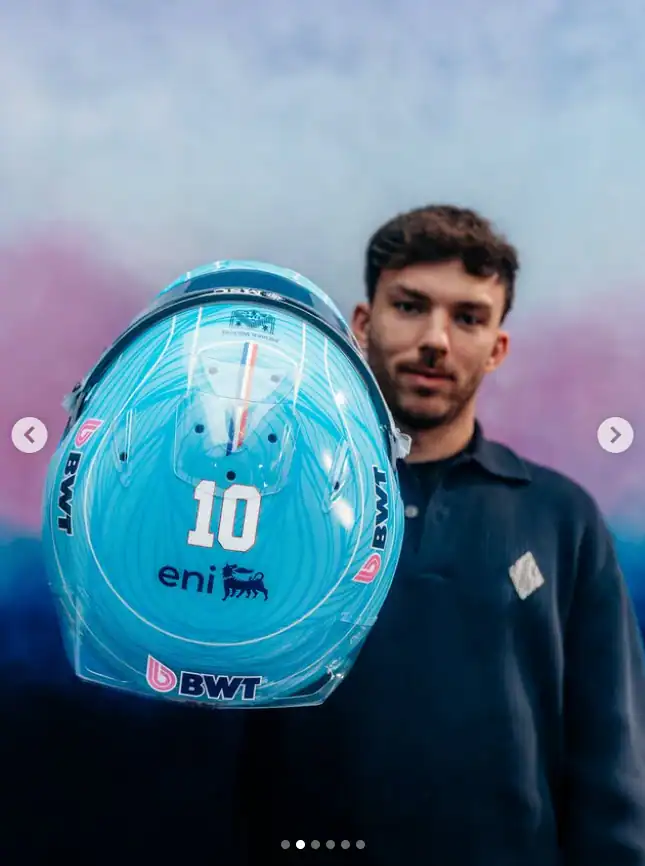
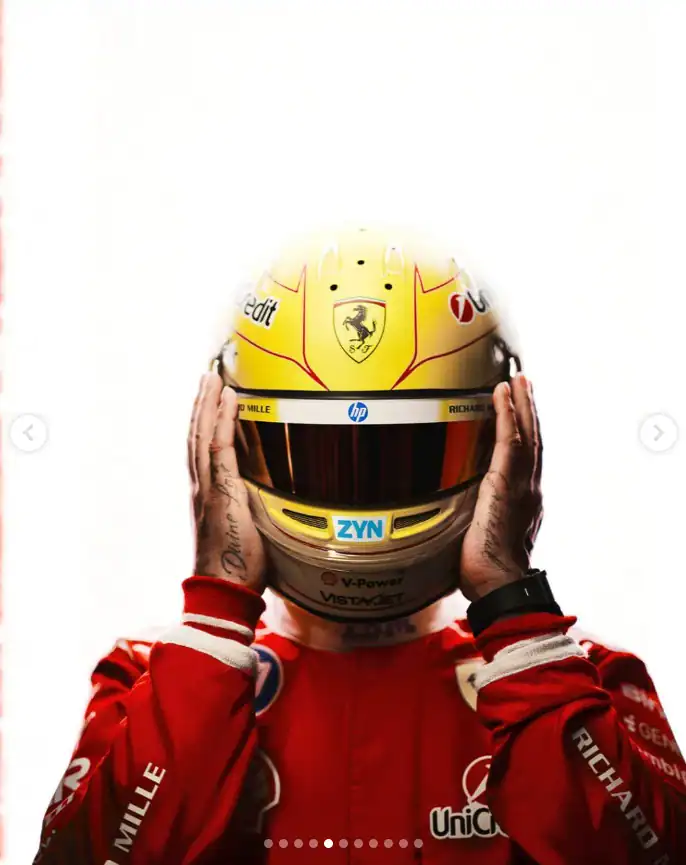
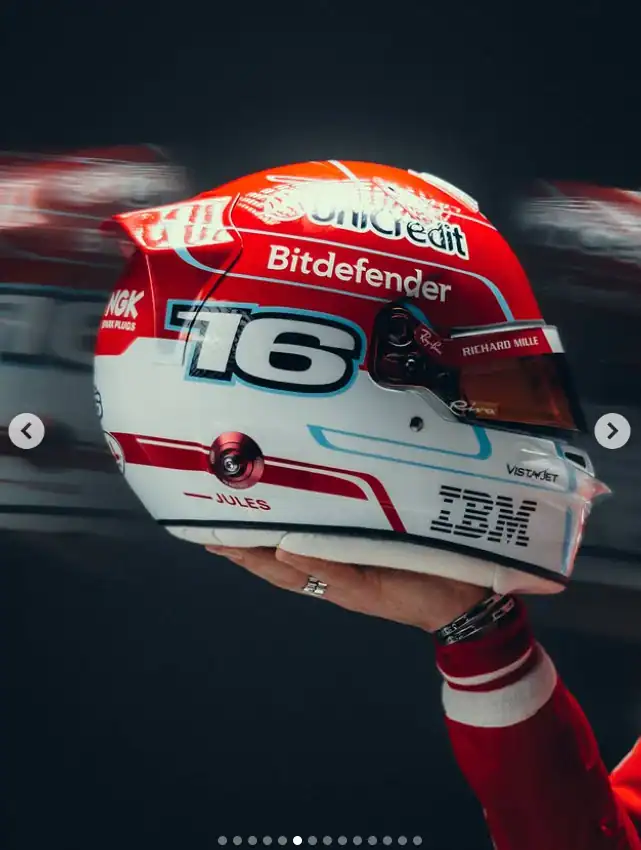
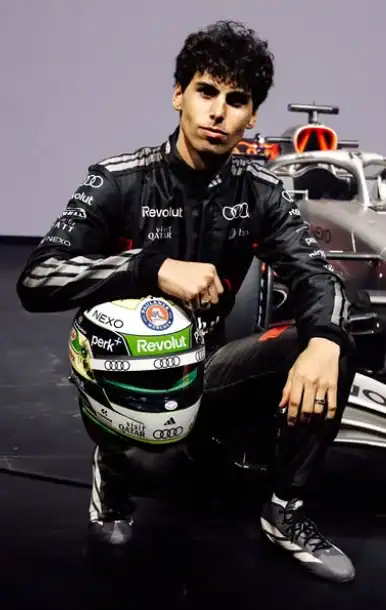
Moments like Piastri’s paddock walkabout are exactly the kind of scenes immortalised in full-size 1:1 display replica helmets that collectors prize.
Seventh on the Grid, First in the Hearts of the Fans
Oscar Piastri qualified seventh for the Barcelona Grand Prix, a result that sat awkwardly against the pace he showed in Free Practice 3 the previous day. Seventh place on a street-free, high-downforce circuit like Circuit de Barcelona-Catalunya is not where McLaren expected to find their Australian charger after FP3 painted such a promising picture. Yet by the time the chequered flag fell on the qualifying session, seventh was the number next to his name, and he had a 3 pm local race start to think about rather than dwelling on what went wrong in the final sector.
What made Saturday genuinely memorable for the crowd gathered outside the McLaren paddock, however, had little to do with lap times. Piastri arrived at the circuit on race morning alongside his girlfriend Lily, and instead of walking straight through the gate and into the hospitality suite, he stopped. He signed autographs. He posed for photos. He gave the fans the kind of unhurried, relaxed engagement that does not always come naturally on a race weekend, when every minute of a driver’s schedule is spoken for by engineers, PR teams and sponsor commitments.
That willingness to be present with the people who follow the sport is not accidental. It is part of why Piastri, still only in the early chapters of his Formula 1 career, has built a following that punches well above his race-wins tally so far.
Reading the FP3 Data: What Made Piastri Look Strong?
Free Practice 3 gave Piastri the kind of lap that makes engineers reach for their laptops with something approaching optimism. His balance through the technical middle sector of Barcelona — a circuit that demands precise rotation through Turns 5 and 7 — looked settled, and his long-run tyre degradation data was clean enough to suggest race pace would be his strongest card. Circuit de Barcelona-Catalunya sits 16 metres above sea level and runs across 4.657 kilometres of tarmac, a layout that rewards aerodynamic consistency over a full lap rather than single-corner heroics. When a McLaren MCL is working correctly there, the package shows up across all three sectors.
Qualifying, as it often does, compressed the performance window. The difference between a confident, well-built practice run and a single flying lap with one set of fresh soft tyres is enormous in terms of psychology and setup risk. Something in that compression cost Piastri six grid positions relative to where the paddock expected him to feature. Whether it was a traffic moment on an out-lap, a small setup miscalculation, or simply the margins falling the wrong way on a Saturday afternoon in Spain, the team would have been working through the data before the sun came up on race day.
For everyone watching from outside the barriers — and for the fans who would later get an autograph from Piastri himself — the qualifying result was a number, not a verdict on his season.
The Paddock Walkabout: Why It Matters More Than It Looks
A driver stopping to greet fans on a race morning is a small gesture with an outsized effect on how the sport is experienced by the people who travel to watch it. Many fans at a grand prix circuit spend the majority of their weekend behind crowd barriers, watching carbon-fibre shapes blur past at speeds above 300 km/h. The moment a driver crosses to their side of the barrier — even briefly — shifts the entire register of the day.
Piastri did that at Barcelona. Arriving with Lily, he could have kept walking. The McLaren hospitality suite was close. The pre-race schedule was full. He stopped anyway, and the phones came out, the Sharpies appeared, and for a few minutes the distance between a 25-year-old Formula 1 driver and the people who wake up at 5 am to get a good spot at the fence compressed to almost nothing.
This is the texture of the sport that journalists and photographers scramble to capture — not because it belongs in the race report, but because it tells a different and arguably more durable story about who a driver is. This exact scene was flagged on social media precisely because it is the sort of human detail that the television broadcast does not stop to show.
For collectors of Formula 1 memorabilia, these moments carry weight that goes beyond a single Saturday morning. When a fan picks up a full-size 1:1 display replica helmet representing Piastri’s McLaren livery, the object connects to every interaction like this one — the autographs, the photos, the personality behind the visor.
Piastri’s Helmet as a Collector Object: What the Display Replica Captures
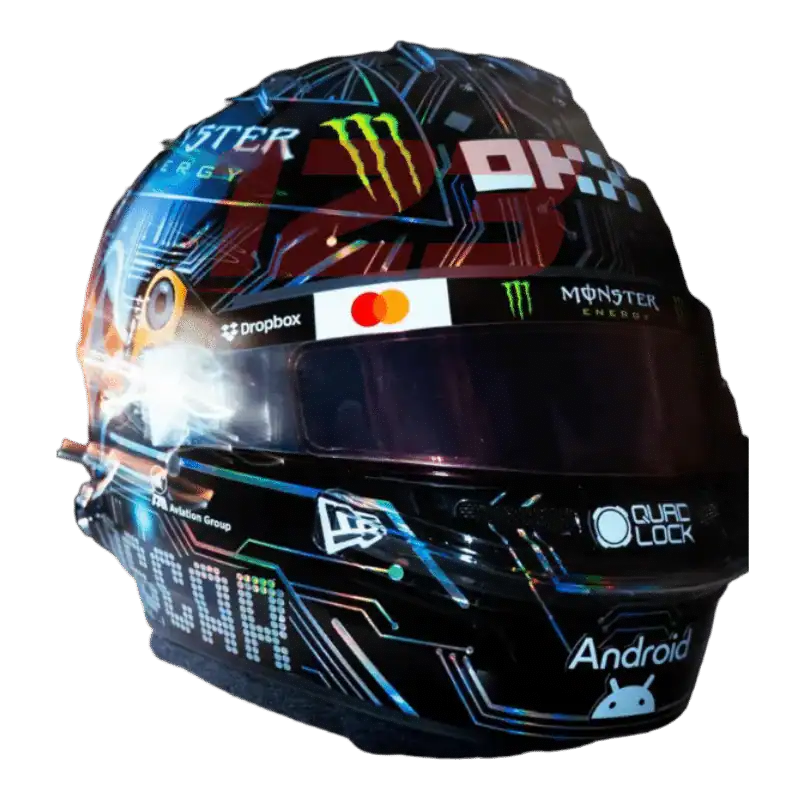
A full-size 1:1 display replica of Piastri’s McLaren helmet is a collector piece that translates the visual identity of his race career into a permanent, exhibition-quality object. The papaya and black livery that McLaren brought back as their primary identity has become one of the most recognisable colour combinations on the current grid, and Piastri’s personal helmet graphics — typically featuring his driver number 81 and the angular shapes favoured by his designer — extend that identity into something specific to him rather than just the team.
Display replicas at exhibition quality are built to 1:1 scale, meaning they match the exact external dimensions of the helmets worn on track. A standard open-face or full-face racing helmet shell in collector replica form typically measures approximately 29 × 25 × 35 cm in profile, with a weight around 1.2 to 1.5 kg depending on the finish applied. The visor on a properly produced display replica is usually moulded from a clear or tinted polycarbonate panel running approximately 26 mm in depth at the aperture edge — deep enough to reproduce the visual proportions accurately without requiring any certification that would apply only to helmets intended for protective use.
These are display pieces and collector items only. They carry no FIA, Snell, ECE or DOT certification and are not produced for road or track use. Their purpose is exhibition: on a shelf, behind glass, on a dedicated helmet stand in a study or collection room. That purpose is precisely what makes the material finish — the paint layers, the decal registration, the chrome or gold visor tint — the aspect that matters most to the buyer.
For a driver like Piastri, whose career is still building its legend race by race, the display replica is also a time-stamp. A collector who acquires a replica tied to his 2024 or 2025 livery is capturing a specific chapter before it changes — before a title, before a new sponsor relationship shifts the graphics, before he moves into whatever the next phase of his career looks like.
Barcelona GP Context: What Seventh Means for the Race
Starting seventh at Circuit de Barcelona-Catalunya is not ideal, but it is recoverable given the right opening lap and a well-timed pit strategy. The 4.657 km circuit runs 66 laps in the standard race distance, giving teams a wide enough window to play with the one or two-stop calculus depending on how the first stint’s tyre wear develops. Seventh means Piastri is behind enough cars that an early safety car or a rival’s retirement could move him forward without requiring him to overtake every driver in front.
Barcelona is also a circuit where tyre management separates the race result from the qualifying result more than at most venues. The combination of high-speed corners — particularly Turns 3 and 9 — and the sustained lateral loading through the middle section puts the front-left tyre under consistent stress. A driver who can manage that degradation curve runs long into the stint and pits later than the cars around him, buying track position without needing to pass anyone on track.
Piastri’s FP3 long-run data was a reason for optimism on exactly that count. If his race pace translated as cleanly as the practice session suggested, seventh on the grid could become a points finish in the top four by the time 66 laps were completed and the chequered flag dropped at what was scheduled to be approximately 5 pm local time, two hours after the 3 pm start.
Why Fan Moments Become the Stories That Outlast Race Results
Race results age faster than the stories around them. Ask a casual fan to recall the exact qualifying order from a Barcelona GP five years ago and the answer will be slow in coming. Ask them about a driver who took ten minutes out of a packed race-morning schedule to sign helmets and pose for selfies, and the answer arrives immediately because the memory is personal rather than statistical.
This is why paddock photography — the unguarded moments, the human interactions, the scenes outside the hospitality suite door — resonates with an audience that extends well beyond the most dedicated technical analysts. Piastri stopping for fans while Lily stands nearby sits precisely in the space between the official and the authentic.
For the Formula 1 collector community, these images and the moments they record give memorabilia its anchor point. A display replica helmet gains meaning not just from the colour of its livery but from the associations it carries — the driver’s name, the race weekend, the personality that made him worth following in the first place. When Piastri stopped at the Barcelona circuit gate on race morning 2025, he was not thinking about collector value. He was just being decent to the people who show up. That turns out to be the same thing.
Full-size 1:1 display replica helmets exist to carry exactly this weight: exhibition-quality objects that hold a driver’s visual identity in permanent form, built for the collector who wants something more lasting than a photograph but just as specific to the moment.
FAQ
Q: What position did Oscar Piastri qualify for the Barcelona GP?
Piastri qualified seventh for the Barcelona Grand Prix. He had shown strong pace during Free Practice 3 the day before but was unable to convert that into a higher grid slot when it counted in qualifying.
Q: What time does the Barcelona GP race start?
The Barcelona GP race is scheduled to start at 3 pm local time. That means a two-hour race window that, at standard distance of 66 laps around the 4.657 km Circuit de Barcelona-Catalunya, brings the chequered flag at approximately 5 pm.
Q: What is a full-size 1:1 display replica F1 helmet?
A full-size 1:1 display replica F1 helmet is a collector and exhibition-quality object built to match the external scale of a real racing helmet, used purely for display rather than any protective purpose. It carries no safety certification — no FIA, Snell, ECE or DOT rating — and is not intended for road or track use.
Q: Why did Piastri stop to meet fans at the Barcelona circuit?
Piastri stopped to greet fans on his own initiative as he arrived at the circuit on race morning alongside his girlfriend Lily. Rather than heading directly to the McLaren hospitality suite, he signed autographs and posed for photos, an interaction shared on social media.
Q: Is a Piastri McLaren display helmet a good collector item?
A Piastri McLaren display replica helmet is a strong collector item for fans of the current grid because Piastri’s career is still in its early arc. Acquiring a display piece tied to his 2024 or 2025 papaya livery captures a specific chapter of that career in exhibition-quality, full-size 1:1 form before the livery or his driver number context inevitably changes.
Browse F1 Helmet Collection — find full-size 1:1 display replica helmets from today’s grid and beyond, built for collectors and exhibition display. Visit the shop at /shop/ and secure your piece of Formula 1 history.
Display and collector replicas only. Not certified for protective use. Full-size 1:1 scale.
This article was written with the help of AI tools. Editorial policy