Blog
Piastri P2 in Austria: Blue Skies for McLaren
 123Helmets Editorial Team
Oscar Piastri touched down at the Red Bull Ring under clear blue skies on Saturday morning, Lily by his side, fresh off a second-fastest time in FP2. With qualifying on the horizon, McLaren’s title contender looks poised to fight for pole.
Key Takeaways
Piastri clocked second-fastest in FP2 at the 2026 Austrian Grand Prix, putting McLaren in a strong pre-qualifying position.
The Red Bull Ring’s short 4.318 km layout compresses the field, making top-three practice times directly meaningful for grid slots.
Saturday morning’s FP3 was Piastri’s last chance to dial in setup before afternoon qualifying — form carried over from FP2 is a real advantage.
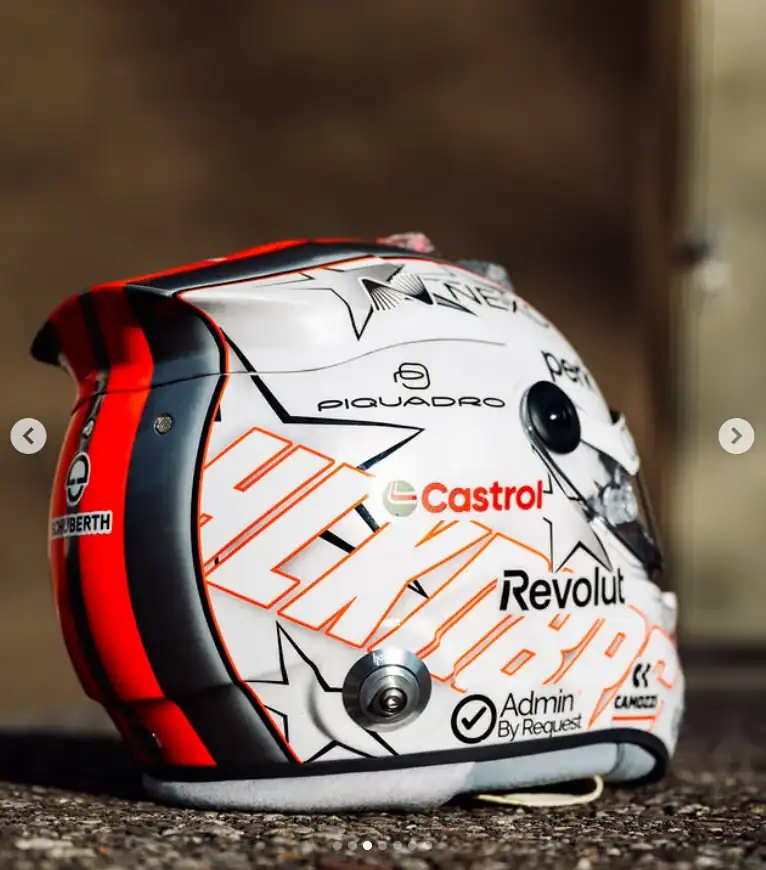
Piastri’s 2026 McLaren helmet design is one of the most requested collector display replicas of the current season, reflecting his rising profile in the championship.
Blue Skies and a Statement Friday
Oscar Piastri arrived at the Red Bull Ring on Saturday morning under clear blue skies, with Lily alongside him — a relaxed entrance that matched the confidence McLaren had reason to carry after Friday’s running. The Oscar Piastri camp had genuine momentum: second fastest in Free Practice 2 put the Australian at the sharp end of the timing sheets before a single qualifying lap had been set.
Austria’s Red Bull Ring is one of the shortest stops on the 2026 F1 calendar. The circuit measures just 4.318 km, which means lap times are compact and the margins between positions are correspondingly thin. On a track this short, being P2 in FP2 rather than P8 is not a trivial difference — it signals that the underlying car balance is working, that tyre management is in good shape, and that the driver’s confidence is high enough to push consistently across a session.
For Piastri, Saturday’s FP3 was the final opportunity to refine that setup before qualifying began in the afternoon. Teams often use the third practice session to confirm rather than discover — running the qualifying simulation that FP2 hinted at, and locking in the aerodynamic and suspension settings that translate fast practice laps into competitive grid positions.
What Second in FP2 Actually Means
Second fastest in FP2 at a Formula 1 race weekend is a direct predictor of qualifying competitiveness, not just a Friday footnote. Practice sessions at the Red Bull Ring in Austria typically run across 60 minutes each, with drivers completing anywhere from 20 to 30 installation and flying laps depending on programme needs. A top-two finish in that window — against the full 2026 grid — tells you the car and driver combination is at or near the theoretical limit of the circuit’s performance envelope.
For McLaren specifically, the 2026 season has been defined by consistency rather than isolated peaks. Piastri sitting P2 in Austria continued a pattern of front-running practice results that the team has used as a foundation for genuine qualifying and race pace. The key question heading into Saturday afternoon was whether the same setup that delivered Friday’s time could handle the additional push of a single flying qualifying lap — where every tenth of a second matters more than it ever does across a 60-minute free practice run.
A trackside report shared on social media captured the mood well: clear skies overhead and a McLaren driver arriving with the kind of composure you see in athletes who know the car underneath them is ready. That composure, heading into a qualifying session at a circuit where pole position regularly converts to victory, was not incidental.
The Red Bull Ring and the 2026 Austrian GP
The 2026 Austrian Grand Prix takes place at the Red Bull Ring in Spielberg, a circuit that has consistently produced close racing due to its compressed layout and high-speed, low-downforce character. At 4.318 km with just nine corners, the track rewards pure car speed and strong traction out of the slow hairpin sections more than it rewards mechanical grip in extended medium-speed sequences.
In 2026, the Austrian Grand Prix sits as one of the European flyaways on the summer portion of the calendar, drawing large grandstand crowds to the hillside venue. The altitude of the circuit — located at approximately 678 metres above sea level — has a measurable effect on power unit cooling and aerodynamic downforce levels, factors that teams factor into their setup sheets from the moment they arrive on Thursday.
For collectors and F1 followers tracking the championship, Austria in 2026 represents a pivotal weekend. The title fight in the second half of the season often crystallises at circuits where the field is naturally compressed. A strong qualifying result for Piastri at the Red Bull Ring would not simply add points — it would send a message about McLaren’s pace across the coming string of European rounds.
Piastri’s 2026 Helmet: A Collector’s Perspective
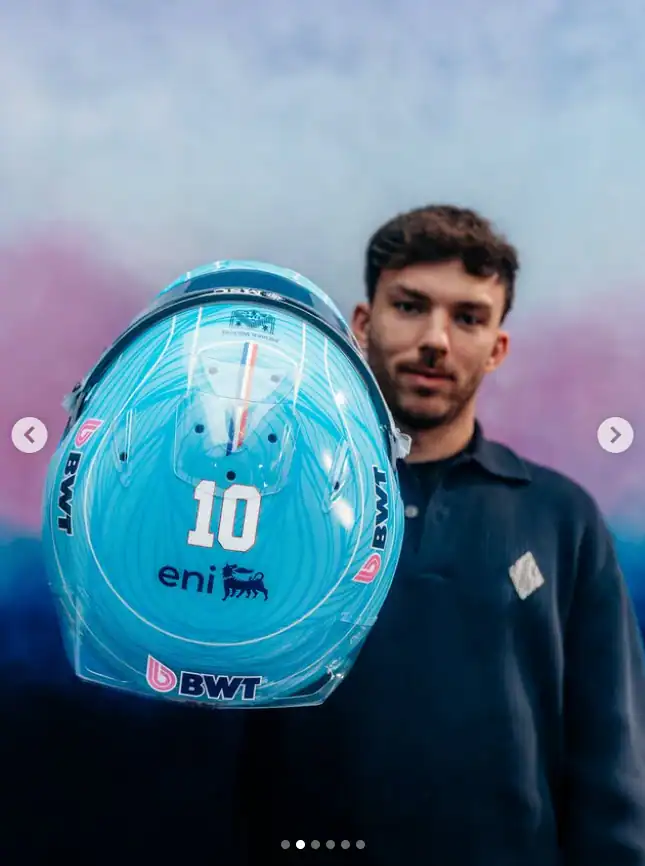
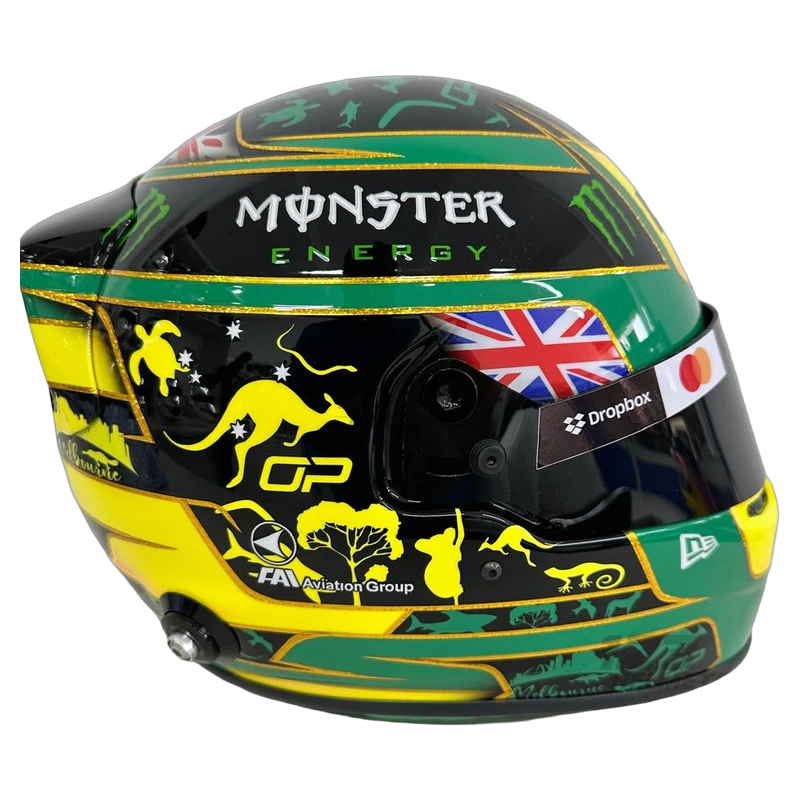
Oscar Piastri’s 2026 race helmet is one of the standout collector display pieces of the current season, drawing interest from fans across Europe, the Asia-Pacific region, and North America. The design reflects McLaren’s papaya and blue livery palette while incorporating Piastri’s personal graphic identity — a combination that has made the full-size 1:1 replica one of the most requested helmets in any premium F1 display collection this year.
Full-size 1:1 collector replicas are produced to match the exact external dimensions of the race helmets worn by drivers during the 2026 season. A standard F1 display helmet replica weighs approximately 1.2–1.5 kg and measures around 29 × 25 × 35 cm at its widest points, giving it the physical presence of an actual race helmet without any protective or certified function. These are display pieces — exhibition-quality collector items designed for shelves, cases, and dedicated display setups, not for road or track use.
The visor on a quality display replica typically sits at 3 mm thickness, replicating the visual depth of a real race visor in a format built entirely for presentation. Paint applications on premium replicas can run to 8 or more individual layers, each fired separately to achieve the gloss depth and colour accuracy that makes the finished piece recognisable on a display stand as belonging to a specific driver in a specific season.
For collectors building a 2026 championship narrative through helmets, Piastri’s Austrian GP weekend arrival — second fastest on Friday, clear skies on Saturday — is exactly the kind of moment that anchors a piece in a defined point in time. Display replicas tied to specific race weekends carry the weight of that context permanently.
Qualifying Outlook and What Comes Next
Piastri’s qualifying outlook at the 2026 Austrian Grand Prix was genuinely strong heading into Saturday afternoon. Second in FP2 at a 4.318 km circuit with a compressed field is a meaningful data point, but qualifying introduces variables — track evolution as more rubber goes down, the precise timing of a driver’s final push lap relative to other competitors, and the marginal setup adjustments made between FP3 and the qualifying hour itself.
McLaren’s 2026 car has shown the ability to convert practice pace into qualifying results consistently across the season. That consistency is what separates genuine title challengers from cars that flatter to deceive on Fridays. If Piastri and the engineering team found the same car on Saturday as they had on Friday, a front-row start — and a real shot at pole — was a realistic target.
The Austrian Grand Prix itself, run over a set number of laps on Sunday, would then determine whether practice and qualifying pace translates to race pace. The Red Bull Ring’s short lap length means pit stop strategy is amplified: every lap between stops counts in a way it simply does not on longer circuits. Piastri and McLaren arrived at that calculation from a position of strength — and the blue skies above Spielberg on Saturday morning felt like an appropriate backdrop to that position.
Why Moments Like This Matter to Collectors
Race weekend moments — a driver’s trackside arrival, a fastest practice lap, a pre-qualifying atmosphere — are precisely what collector display replicas capture for the long term. Decades from now, a full-size 1:1 replica of Piastri’s 2026 McLaren helmet will carry the whole weight of this season: the championship fight, the Austrian Grand Prix weekend, the papaya livery, and the driver’s trajectory through what has been a defining year in his career.
That is the core reason collector display helmets hold their value in a way that generic memorabilia does not. They are specific. They name a season, a team, a driver, and implicitly every race that season contained. A 2026 Piastri replica on a display stand is not simply a decorative object — it is a reference point for the season as it unfolded, fixed in the material form of the helmet he wore while doing it.
Collector display replicas of this type are produced in full 1:1 scale, built as exhibition-quality pieces for display purposes only. They carry no safety certification, no FIA homologation, and no protective function. Their purpose is entirely presentational — and for serious F1 collectors, that purpose is more than sufficient.
FAQ
Q: How did Oscar Piastri perform in FP2 at the 2026 Austrian Grand Prix?
Piastri was second fastest in Free Practice 2 at the 2026 Austrian Grand Prix. That result put him in a strong position heading into FP3 and Saturday afternoon qualifying at the Red Bull Ring.
Q: What circuit hosts the 2026 Austrian Grand Prix?
The 2026 Austrian Grand Prix is held at the Red Bull Ring in Spielberg, Austria. The circuit measures 4.318 km in length and features nine corners, making it one of the shortest tracks on the 2026 F1 calendar.
Q: What is a full-size 1:1 F1 display helmet replica?
A full-size 1:1 display replica is a collector item produced to match the exact external dimensions of a real F1 race helmet — typically around 29 × 25 × 35 cm and approximately 1.2–1.5 kg. These are exhibition-quality display pieces only, carrying no safety certification or protective function.
Q: Why do collectors seek helmets tied to specific race weekends?
Helmets tied to specific race weekends carry the context of a defined moment in a championship season, which gives them lasting reference value. A 2026 Piastri Austrian GP replica, for example, anchors a collection to a specific competitive milestone in his career.
Q: Where can I browse F1 display helmet replicas from the 2026 season?
Full-size 1:1 collector display replicas from the 2026 F1 season are available through the 123Helmets shop. Browse the current collection at /shop/ to find helmets by driver and team.
Browse F1 Helmet Collection
Display and collector replicas only. Not certified for protective use. Full-size 1:1 scale.
This article was written with the help of AI tools. Editorial policy