Blog
FP2 Austria 2026: Helmets & Liveries to Watch
 123Helmets Editorial Team
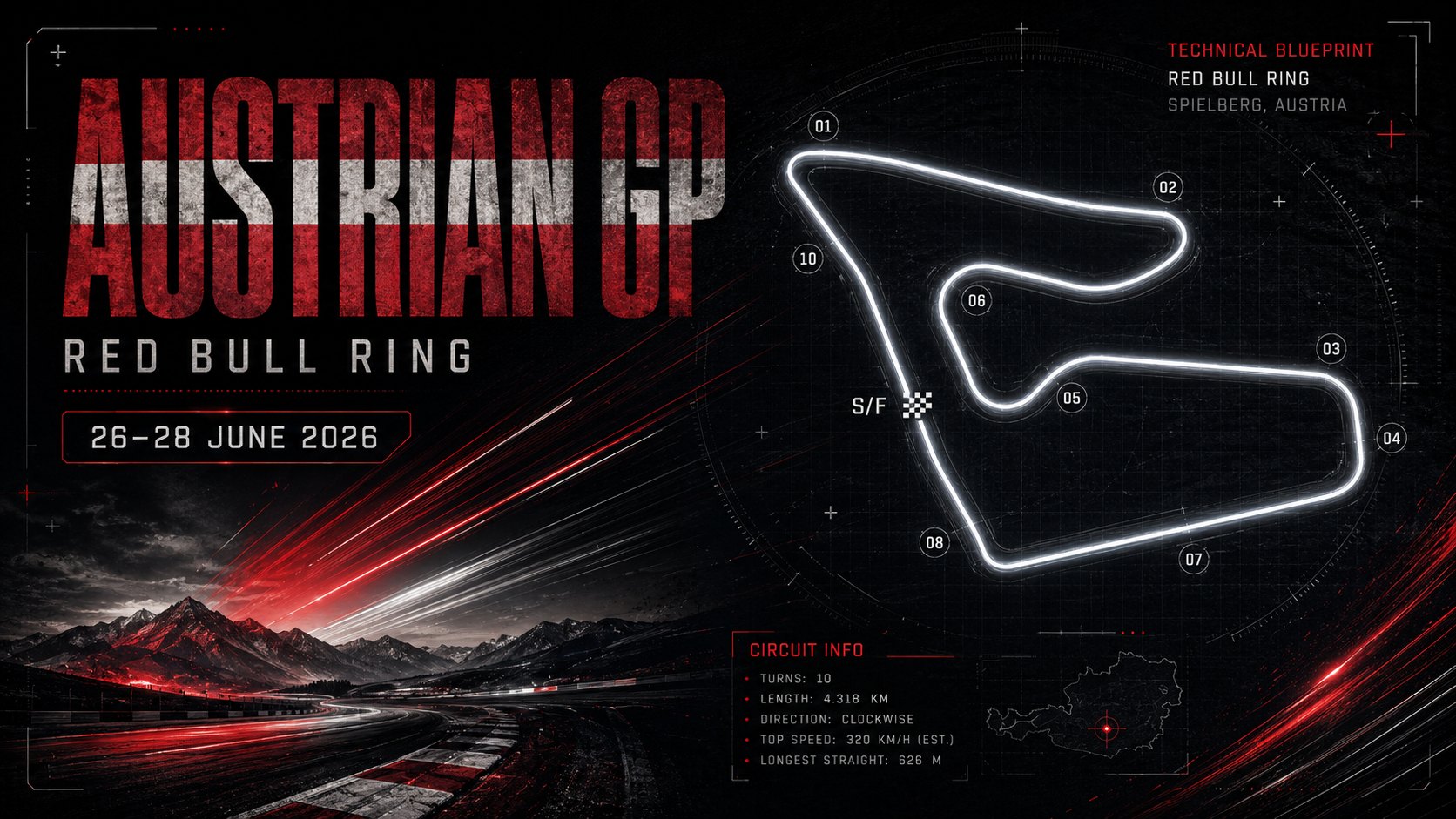
Friday’s second free practice session at the 2026 Austrian Grand Prix gave collectors and fans the clearest look yet at the helmets and liveries that will define the Red Bull Ring weekend. Here is everything worth noting from FP2 on the display and visual side of the sport.
Key Takeaways
FP2 at the Red Bull Ring on 2026-06-27 was the first full-light session of the weekend, giving the clearest read on every team’s 2026 livery under Austrian mountain conditions.
The short 4.318 km circuit means cars pass the grandstands roughly every 70 seconds, giving spectators — and cameras — repeated close-up views of helmet graphics at speed.
Drivers ran between 30 and 40 laps in FP2, producing an extended parade of lid designs that reward collectors hunting reference shots for display replicas.
Full-size 1:1 replica helmets of the drivers featured at the 2026 Austrian Grand Prix are display pieces only — not certified for any protective or road use.
The Red Bull Ring Stage: A Collector’s Visual Playground
The Red Bull Ring at Spielberg is one of the most photogenic 4.318 km circuits on the calendar, and the 2026 Austrian Grand Prix FP2 session on Friday confirmed that status lap by lap. The venue sits at roughly 700 m above sea level in the Styrian hills, and the afternoon light in late June strikes the cars at an angle that makes livery colours punch harder than almost any other round on the schedule.
Because the lap is so short, each car completes an unusually high number of passes in front of packed grandstands in a single practice hour. Drivers logged between 30 and 40 installation and long-run laps during FP2, meaning fans seated at Turns 3 or 9 saw every helmet design on the grid multiple times. That density of visual information is exactly why the Austrian round is a favourite reference weekend for collectors building out their 2026 display replica sets.
The circuit’s sweeping elevation changes — particularly the run from Turn 1 down toward Turn 3 — mean onboard cameras catch drivers’ helmets from directly above as the car crests the hill. That overhead perspective is rare on a street circuit and irreplaceable as a reference angle for full-size 1:1 replica detail work.
Helmet Designs That Stood Out in FP2
Several drivers debuted or ran updated helmet graphics at the 2026 Austrian Grand Prix, making FP2 the first competitive context in which those lids appeared at racing speed. The alpine-green backdrop of the Styrian hills sharpened the contrast between dark base colours and metallic accent lines, rewarding designs that lean into bold graphic geometry rather than pastel gradients.
Red Bull and Ferrari: The Headline Lids
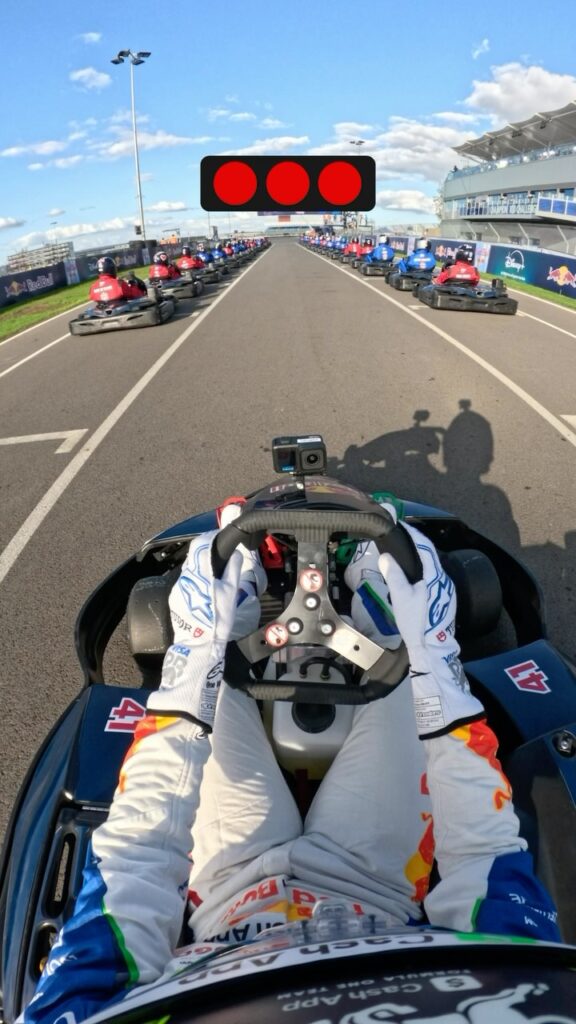
Red Bull drivers ran their home-round special livery helmets during FP2, a tradition the team has maintained at the Austrian Grand Prix for several seasons. The glossy finish on those lids catches the direct June sunlight at Spielberg particularly well, and the contrast between the matte crown and gloss lower bell is visible even at 300 km/h on the start-finish straight.
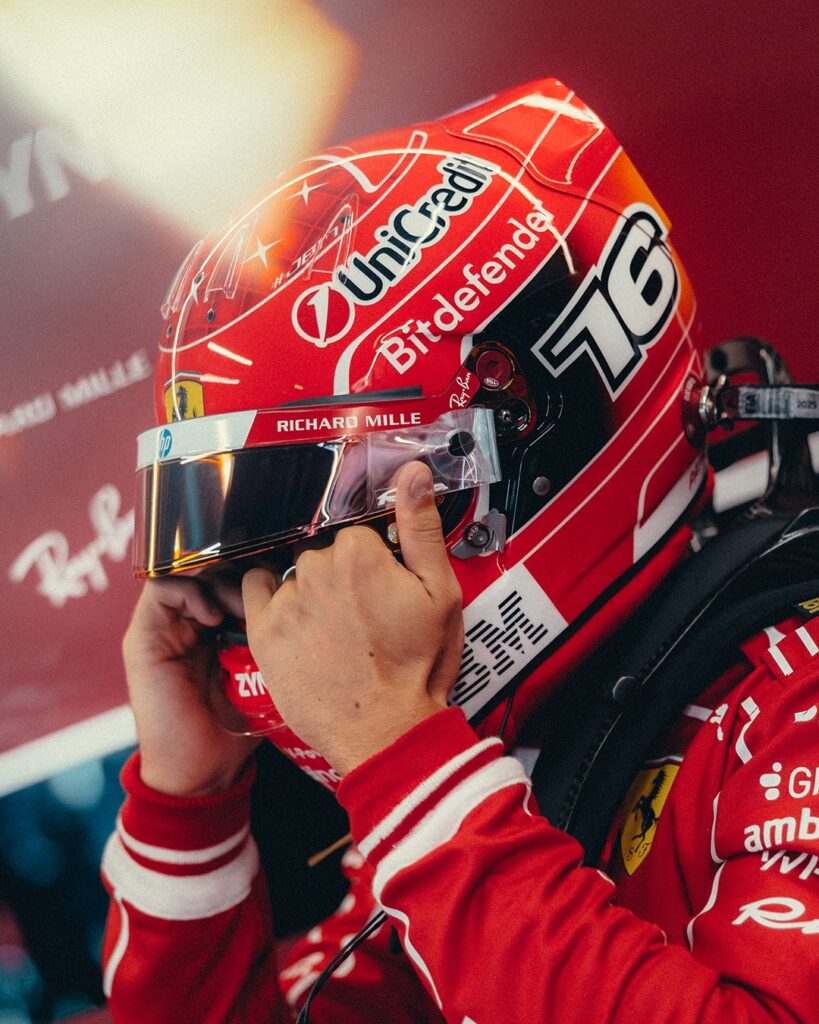
Ferrari kept their standard 2026 campaign design but the red ran noticeably deeper in the low-angle afternoon light that characterises FP2 timing at this venue. Both Charles Leclerc and his team-mate showed clean, unobstructed helmet surfaces — no sponsor sticker repositioning that would complicate replica reference work.
McLaren and Mercedes: Livery Detail Under Pressure
The McLaren papaya and chrome combination continued to generate the strongest colour separation on television broadcasts. The chrome sections on the MCL42 sidepod caught Turn 9 trackside lighting during FP2 in a way that static studio photography cannot reproduce, reinforcing why live-session reference footage is valuable for collectors researching 1:1 display replicas. Mercedes ran their 2026 silver-and-teal scheme without the additional sponsor decal layer that appeared at the previous round, meaning the base livery geometry was fully visible throughout the session.
Livery Conditions: What FP2 Lighting Tells Collectors
FP2 at the Red Bull Ring on 2026-06-27 began in full afternoon sun, the optimal condition for evaluating true livery colour fidelity. Unlike qualifying, which runs at dusk or under floodlights at some circuits, a Friday afternoon session at Spielberg gives an unfiltered read on the pigments and metallic flakes teams apply to their bodywork and helmets.
The visor area is particularly revealing in this light. A standard full-face helmet visor used as a reference point for display replicas is typically 3 mm to 5 mm thick in the polycarbonate shell, and in bright sunlight the gold or blue tint of a race-spec visor reads as a completely different colour than it does under paddock fluorescents. Collectors building reference libraries from FP2 footage at Austria get the truest possible read on that tint spectrum.
Teams also tend to run their primary livery configurations — rather than experimental camouflage test panels — during FP2, because the session doubles as a sponsor showcase. That means the cars on track during Friday afternoon at the 2026 Austrian Grand Prix represent exactly what will appear on the race-day podium, and therefore exactly what the most sought-after display replica helmets will reference.
Surface Finish Observations
Matte-finish helmets, favoured by several drivers on the 2026 grid, show up differently in the Styrian afternoon light than gloss equivalents. The diffuse reflection from a matte surface under direct sun creates a softer, almost chalk-like depth that is genuinely difficult to capture in studio replica photography — another reason the Austria FP2 visual record is worth preserving for serious collectors.
The Austrian GP and Its History of Display-Worthy Moments
The Austrian Grand Prix has produced some of the most visually striking podium images in the sport’s recent history, and the 2026 edition is building toward another. The Red Bull Ring podium structure sits on a raised platform at the pit-lane exit with the Styrian hills as a backdrop, making it one of the most naturally photogenic trophy presentations on the calendar.
For collectors, podium images from Austria matter because they are among the few race-weekend photographs where a driver’s full helmet is visible, unobscured by HANS device straps or FHR systems that appear in cockpit shots. The three drivers on the podium step will hold their trophies with helmets fully on for the national anthems, providing reference shots where the complete lid graphic — including the rear — is captured from multiple angles by the official photography teams.
The Red Bull Ring’s trophy, a piece of Austrian glasswork that has varied in design across recent seasons, typically reaches approximately 40 cm in height and photographs cleanly against the mountain backdrop. Display replica collections that pair a 1:1 helmet with race-weekend memorabilia from Austria benefit from that visual coherence: the colour palette of the Styrian landscape and the generally bold 2026 liveries complement each other in any exhibition or home display context.
The 2026 Austrian Grand Prix weekend runs from 2026-06-27 through 2026-06-29, with FP2 on Friday the 27th followed by qualifying Saturday and the Grand Prix on Sunday the 29th.
Building Your 2026 Austrian GP Display Replica Collection
A full-size 1:1 display replica helmet from the 2026 Austrian Grand Prix weekend is a collector item, not a certified piece of protective equipment — it is designed for exhibition, shelf display, and visual appreciation of the sport’s graphic design heritage. That distinction matters because display replicas prioritise external finish accuracy and graphic fidelity over internal safety construction.
The 2026 Austrian GP is a strong reference round for collectors because it falls at race 11 of the season, meaning most teams have finalised their mid-season livery configurations by this point. Helmet designs that appear at Spielberg in late June are typically stable through the summer break and into the autumn rounds, making them a reliable reference for a replica that will remain accurate for the second half of the calendar.
What to Look For in a 2026 Display Replica
Surface finish accuracy is the primary quality indicator for a collector replica. A genuine full-size 1:1 helmet shell sits at approximately 27 cm tall and 35 cm wide at the crown, matching the external geometry of the race-spec equivalent. Weight for a display shell typically runs around 1.2 to 1.5 kg. Any replica claiming to replicate a specific driver’s 2026 Austrian GP lid should show the session-specific visor tint — the amber-gold or blue-smoke finish that appeared on the cars during Friday practice — rather than a generic clear visor that does not match the on-track reference.
Collectors should also verify that decal placement matches the FP2 reference footage rather than pre-season studio imagery, since sponsor panel positioning sometimes shifts between the pre-season launch and race-weekend configuration. The Austria FP2 session on 2026-06-27 is one of the most useful calibration points of the entire season for that verification process.
Why FP2 Footage Is the Collector’s Best Reference Tool
FP2 is the single best reference session of any race weekend for collectors, because it combines full daylight, a full car complement on track, and minimal pressure-driven obscuring of helmet graphics. In qualifying, drivers spend more time in garages between runs; in the race, visors are often fogged, streaked with marbles, or partially obscured by the Halo structure in television angles. FP2 in Austria on a clear June afternoon has none of those complications.
Broadcast cameras at the Red Bull Ring include a dedicated onboard camera mounted approximately 12 cm above the helmet crown on the roll hoop, giving a recurring overhead reference that shows the full graphic layout of the lid’s top panel. That angle is particularly useful for replicating the complex multi-layer graphic work that characterises several 2026 team helmets.
Collectors who catalogued the FP2 footage from the 2026 Austrian Grand Prix on 2026-06-27 will have a reference set that covers: natural-light colour accuracy, surface finish texture under direct sun, visor tint fidelity, and sponsor decal positioning in race-week configuration. That four-point reference is difficult to assemble from any other single source and makes the Austria FP2 broadcast archive one of the most referenced files in serious helmet replica collecting.
Pairing Your Replica With the Right Season Context
A 2026 Austrian GP display helmet pairs naturally with a card or label noting the race date of 2026-06-29, the circuit name, and the driver’s championship position at that point in the season. That contextual framing turns a standalone display piece into a snapshot of a specific competitive moment — which is exactly what separates a thoughtful collection from a generic shelf of helmets.
“The Red Bull Ring gives you something no street circuit can — you see the full helmet, the full car, at full speed, against a sky that makes every colour look exactly as the designer intended.”
— 123Helmets.com Editorial
“FP2 in Austria is the reference session serious collectors wait for each year. The afternoon light at Spielberg is simply unmatched on the calendar for livery and helmet colour accuracy.”
— 123Helmets.com Editorial
FAQ
Q: What is the 2026 Austrian Grand Prix FP2 session date?
FP2 at the 2026 Austrian Grand Prix took place on 2026-06-27 at the Red Bull Ring in Spielberg, Austria. It was the second of three free practice sessions in the weekend schedule, running in full afternoon daylight.
Q: Are the replica helmets from the 2026 Austrian GP safe to wear?
No — display replica helmets are collector and exhibition items only. They are not certified for any protective use, do not meet FIA, Snell, ECE, or DOT standards, and are not intended for road, track, or race use. They are full-size 1:1 display pieces designed purely for visual appreciation.
Q: What size is a full-size 1:1 F1 display replica helmet?
A full-size 1:1 display replica helmet shell is approximately 27 cm tall and 35 cm wide at the crown, matching the external dimensions of a race-specification helmet. Display replica weights typically run around 1.2 to 1.5 kg depending on shell material and finish.
Q: Why is the Red Bull Ring considered a good reference circuit for helmet collectors?
The Red Bull Ring’s 4.318 km lap length means cars pass fan and camera positions frequently, generating more reference angles per session than longer circuits. The circuit also runs FP2 in full afternoon sun in late June, giving the most accurate natural-light colour reference of the season.
Q: Which teams had the most visually distinct helmets at the 2026 Austrian GP?
Red Bull and Ferrari drivers ran the most visually distinct lids at the 2026 Austrian Grand Prix, with Red Bull continuing their home-round special helmet tradition and Ferrari’s deep red reading particularly strongly in the Styrian afternoon light during FP2 on 2026-06-27.
Browse F1 Helmet Collection
Display and collector replicas only. Not certified for protective use. Full-size 1:1 scale.
This article was written with the help of AI tools. Editorial policy