Blog
Sainz Retirement: Williams Halts at 2026 Austrian GP
 123Helmets Editorial Team
Carlos Sainz’s 2026 Austrian Grand Prix ended on the main straight when his Williams came to a sudden halt, triggering a Virtual Safety Car and sending the Spaniard on the long walk back to the garage.
Key Takeaways
Carlos Sainz retired from the 2026 Austrian Grand Prix after his Williams stopped on the main straight, forcing a Virtual Safety Car period.
Sainz climbed out of the stricken car unaided and walked back to the Williams garage while marshals recovered the car.
The incident is a defining moment of Sainz’s 2026 season and adds historical weight to any replica helmet from this campaign.
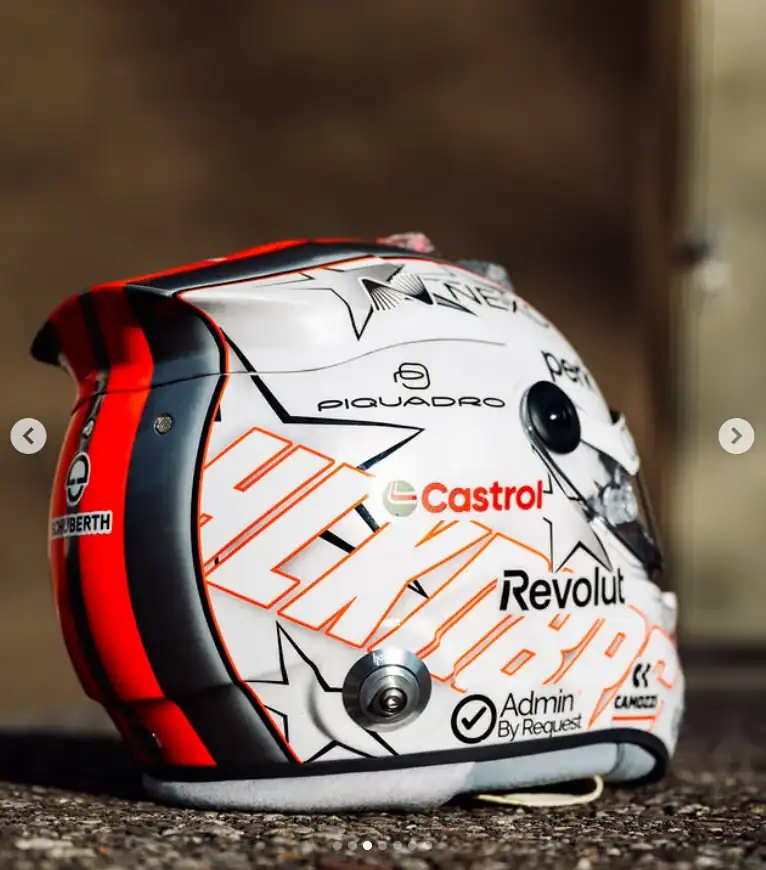
Full-size 1:1 display replicas of Sainz’s 2026 Williams helmet capture the exact livery worn during this memorable and difficult race weekend.
What Happened to Sainz at the 2026 Austrian GP
Carlos Sainz’s 2026 Austrian Grand Prix ended abruptly when his Williams car ground to a complete halt on the main straight, forcing race control to deploy the Virtual Safety Car on 2026-06-28. The stoppage was sudden enough that Sainz had no opportunity to nurse the car back to the pit lane, leaving him stranded in one of the most exposed and visible positions on the Red Bull Ring circuit.
The Spaniard climbed out of the Williams without assistance, removed his steering wheel as procedure requires, and began the walk back along the pit straight to the Williams garage. It was one of those moments in a race weekend that every F1 fan recognises immediately: a driver in full race suit, helmet still on, making the solitary march past the pit wall while the rest of the field circulates behind the Virtual Safety Car.
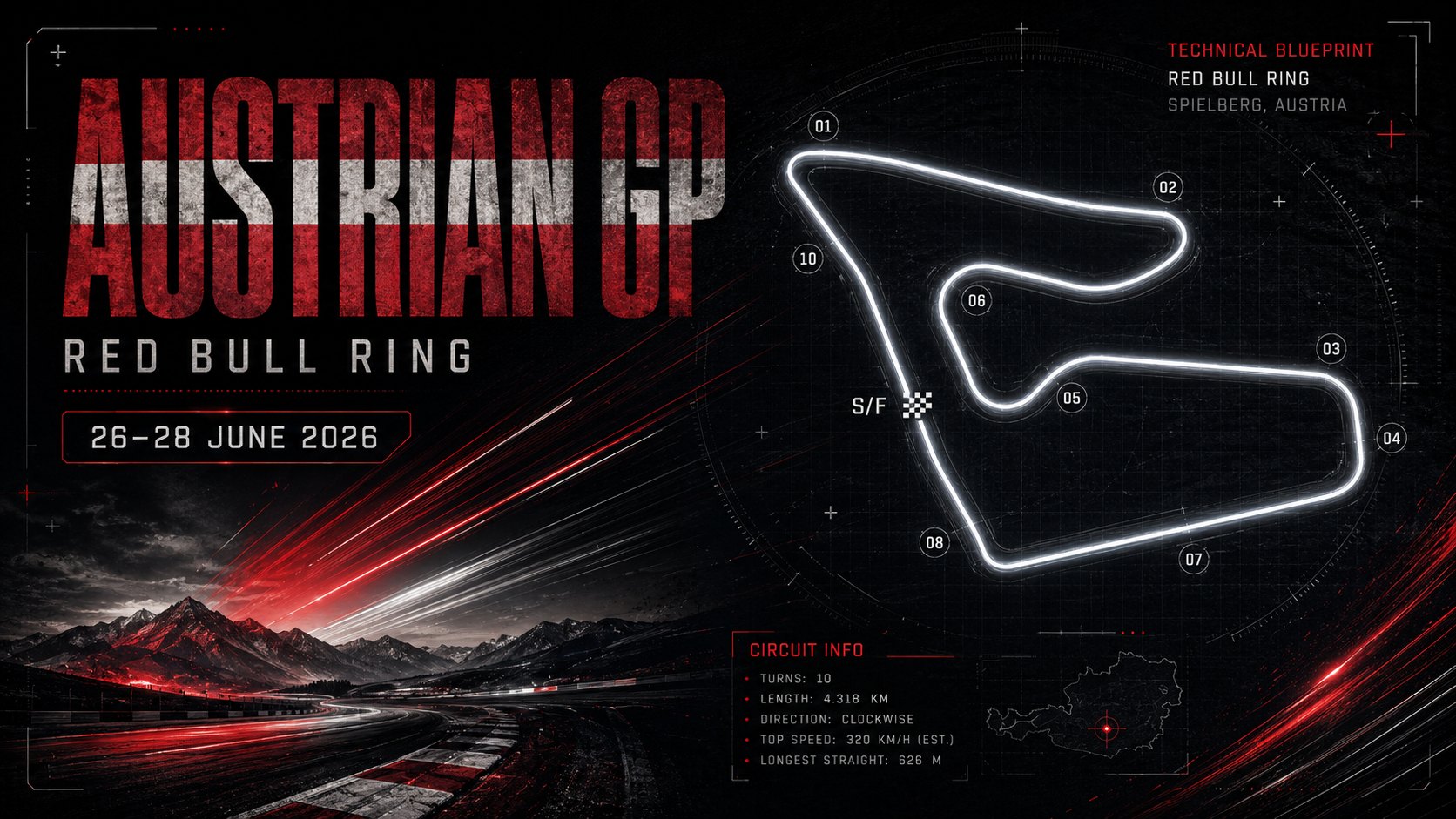
Williams personnel then coordinated the recovery of the car, which was wheeled back to the team’s garage for inspection. The exact technical cause was not confirmed in the immediate aftermath, but the result was unambiguous — zero points from a race weekend at the Red Bull Ring, a 4.318 km circuit that sits at roughly 670 metres above sea level in Spielberg, Austria.
Carlos Sainz’s 2026 Season Context at Williams
Carlos Sainz joined Williams for the 2026 season after his high-profile departure from Ferrari at the end of 2024, making this his second year with the Grove-based outfit. The Austrian GP retirement adds to the pressures of a season in which Williams has been working hard to translate its technical development into reliable race finishes.
Sainz is regarded as one of the most consistent qualifiers and race strategists on the grid, which makes a DNF caused by a mechanical stoppage particularly frustrating from a points-championship perspective. Every retirement costs not just the 10 to 25 points available for a strong finish, but also the momentum that comes from completing a clean race distance.
The 2026 F1 regulations introduced a significant aerodynamic and power unit overhaul, with all teams running the new 1.6-litre turbocharged hybrid architecture under revised technical rules from round 1. Williams, like every constructor, has been managing the reliability challenges that accompany a regulation reset of this scale. A retirement on the main straight at the Austrian GP is a hard data point in that development story.
Race position at retirement
Sainz was classified as a retirement (DNF) from the 2026 Austrian Grand Prix. The Virtual Safety Car was the immediate race-management consequence, compressing the field and affecting the strategy of every car still running at that point in the race.
The Virtual Safety Car: What It Means for a Race
A Virtual Safety Car (VSC) is deployed when a hazard on track requires marshals to work safely but a full Safety Car is not necessary to control the field. Under VSC conditions, all drivers must reduce their lap times by a prescribed delta — typically around 30 to 40 percent slower than racing pace — and are not permitted to overtake.
For strategists, a VSC is one of the most tactically complex moments in a race. Unlike a full Safety Car, the pit lane does not effectively close, and teams can execute low-cost pit stops because the field is spread rather than bunched. A driver who pits under VSC loses roughly 17 to 22 seconds less than a standard pit stop under green-flag conditions at a circuit like the Red Bull Ring, where a normal pit stop cycle costs approximately 22 to 24 seconds in track position.
That tactical dimension means Sainz’s retirement, while painful for the No. 55 car, directly shaped the race outcomes of every other competitor. Drivers on older tyre compounds could pit under the VSC and rejoin with fresher rubber and minimal position loss. The timing of when the VSC was called, and how long it ran, will be studied by analysts long after the race weekend ends — and it will appear in any detailed retrospective of the 2026 Austrian Grand Prix.
Why Moments Like This Define an F1 Season for Collectors
A retirement on the main straight at a Formula 1 Grand Prix is one of the most photographed and discussed moments a season can produce — and that visibility is exactly why helmet replicas tied to specific race weekends carry lasting interest for collectors and display enthusiasts.
When Sainz walked back to the Williams garage at the 2026 Austrian Grand Prix, his helmet was the most visible object in those images: the full livery, the Williams branding, the visor still down. A full-size 1:1 collector replica helmet reproduces that exact design at real-world scale, typically measuring 29 × 25 × 35 cm across the shell and weighing approximately 1.2–1.5 kg in display configuration. These are exhibition-quality display pieces, not certified for any protective or wearable use.
The appeal of a replica tied to a specific race weekend like the 2026 Austrian GP is straightforward: it anchors a piece of motorsport history to a precise date and event. Collectors who follow Sainz’s career at Williams will remember this retirement as a turning point — either a low point the team recovered from, or an early signal of a difficult season. Either way, the helmet worn at that event becomes a reference point.
What makes a 2026 Williams helmet replica collectible
The 2026 Williams livery reflects the team’s current sponsorship and colour architecture, distinct from the designs Sainz wore at Ferrari in 2023 and 2024. A display replica produced to match the 2026 season specification captures that visual identity at the correct 1:1 scale, with paint layering and finish detail that reference the actual race helmets. Display pieces like these are intended purely for exhibition — on a shelf, in a cabinet, or as part of a broader F1 memorabilia collection.
The Red Bull Ring and Austrian GP in F1 History
The Red Bull Ring in Spielberg, Austria, has hosted the Austrian Grand Prix on the Formula 1 calendar for multiple eras, first as the Österreichring in the 1970s and 1980s, then in its current shorter, 4.318 km configuration from 1997 onward with interruptions. The 2026 edition continues a run of the event that has been one of the calendar’s most reliably dramatic race weekends.
At 4.318 km per lap, the Red Bull Ring is one of the shorter permanent circuits on the calendar, which means lap counts run high and racing is intense over a short distance. The main straight — where Sainz’s Williams came to a halt — runs from Turn 10 through the start/finish line and into Turn 1, making it one of the highest-speed and most exposed sections of the circuit. A stationary car on that straight is immediately visible to the entire grandstand and to the television cameras, which is why the footage of Sainz’s retirement circulated so quickly on social media on 2026-06-28.
Retirements at the Austrian GP have produced some of the most discussed moments in recent F1 history, and the 2026 edition adds Sainz’s walkback to that collection. For fans of the sport who also collect display helmets and memorabilia, the Austrian Grand Prix is a weekend worth marking.
Sainz Helmet Replicas: The 2026 Williams Design
Full-size 1:1 replica helmets of Carlos Sainz in his 2026 Williams specification are collector and display items produced to match the livery Sainz ran throughout this season, including at the Austrian Grand Prix. These are exhibition-quality display pieces only — not certified, not wearable, not intended for any protective use on road or track.
The shell of a standard full-size display helmet replica measures approximately 29 × 25 × 35 cm and sits at 1:1 scale with the helmets worn by drivers in the actual cars. Paint applications on high-quality replicas typically involve multiple layers — base coats, graphic layers, and clear lacquer — to reproduce the depth and finish of the race originals. Visor panels on display replicas are generally 3 mm to 4 mm in thickness, produced in the correct tinted or mirrored finish to match the race-weekend specification.
Sainz’s helmet design for 2026 incorporates the Williams team’s current colour language alongside his personal branding — a combination that became particularly associated with his Austrian GP appearance given the circumstances of his retirement. Collectors building a chronological display of Sainz’s career across teams will find the 2026 Williams design a distinct chapter, separable from his Ferrari years by colour, sponsor placement, and graphic architecture.
Display pieces are available at 123Helmets.com for collectors who want to mark the 2026 season — and the Austrian Grand Prix specifically — with a replica that sits permanently at full scale.
FAQ
Q: Why did Carlos Sainz retire from the 2026 Austrian Grand Prix?
Sainz retired after his Williams car stopped on the main straight, forcing a Virtual Safety Car. The technical cause was not immediately confirmed, but the car was recovered and wheeled back to the Williams garage.
Q: What is a Virtual Safety Car in Formula 1?
A Virtual Safety Car (VSC) requires all drivers to run at a reduced delta pace — typically 30 to 40 percent slower — without overtaking, allowing marshals to work safely without a full Safety Car deployment.
Q: How long is the Red Bull Ring circuit where the Austrian GP is held?
The Red Bull Ring measures 4.318 km per lap and is located in Spielberg, Austria, at approximately 670 metres above sea level.
Q: Are the Carlos Sainz 2026 Williams helmet replicas safe to wear?
No — these are display and collector replicas only, produced at full 1:1 scale for exhibition purposes. They carry no safety certification and are not intended for road or track use of any kind.
Q: What scale are the F1 helmet replicas sold at 123Helmets.com?
All replicas at 123Helmets.com are full-size 1:1 scale, with shells measuring approximately 29 × 25 × 35 cm and a display weight of around 1.2–1.5 kg — matching the real-world dimensions of a race helmet.
Browse F1 Helmet Collection
Display and collector replicas only. Not certified for protective use. Full-size 1:1 scale.
This article was written with the help of AI tools. Editorial policy