Blog
Verstappen’s Austrian GP Qualifying Crash & No Double Yellow
 123Helmets Editorial Team
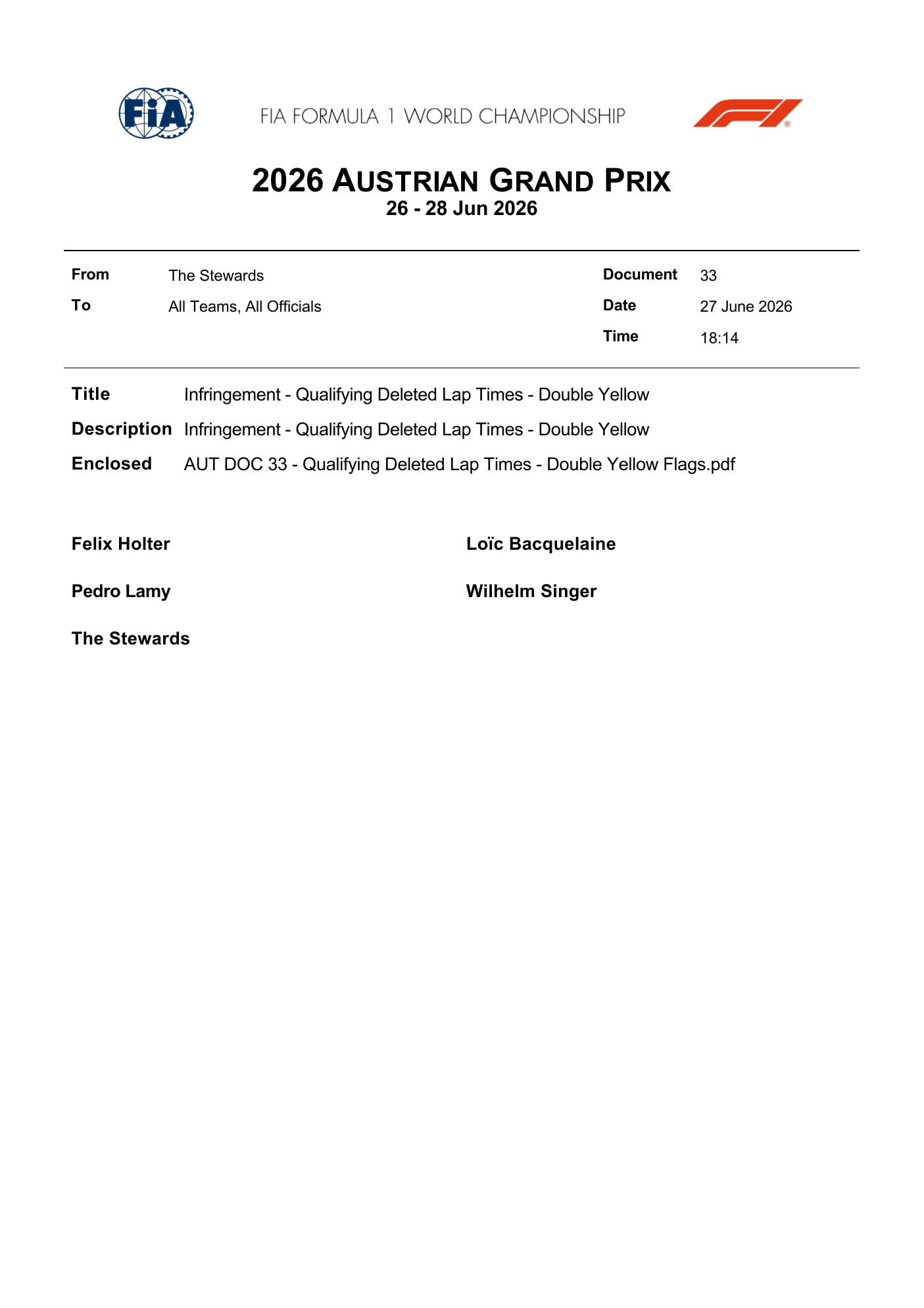
Max Verstappen’s qualifying crash at the 2026 Austrian Grand Prix left him frustrated on two fronts: the shunt itself, and the discovery that the incident failed to trigger a double yellow flag — a call he was far from satisfied with.
Key Takeaways
Verstappen crashed during 2026 Austrian Grand Prix qualifying and spoke openly about his frustration with the incident.
The crash did not generate a double yellow flag, a flag protocol decision that Verstappen found unacceptable from a safety standpoint.
The 2026 Austrian GP qualifying incident adds to a broader conversation about flag marshalling standards at high-speed circuits.
Collector replica helmets capturing Verstappen’s 2026 livery allow fans to own a display piece tied to this memorable championship moment.
What Happened in Austrian GP Qualifying
Max Verstappen crashed during qualifying at the 2026 Austrian Grand Prix at the Red Bull Ring, ending his session early and drawing immediate attention from the paddock. The Red Bull Ring’s 4.318 km layout is one of the shortest on the F1 calendar, which concentrates action — and incidents — into a compact sequence of corners that cars navigate at extremely high speed. Verstappen’s car left the road and made contact with the barriers, bringing his qualifying run to an abrupt halt.
Verstappen addressed the crash directly in post-qualifying media, as reported by journalist Adam Cooper. His account covered both the mechanics of the accident and his reaction to what followed — specifically, the flag protocol that was applied, or rather not applied, in response to his stricken car on track.
The 2026 Austrian Grand Prix weekend falls at a circuit that has hosted F1 since 1970, with the modern configuration bringing cars through Turns 3, 4, and the sweeping Remus corner complex at speeds where a stationary or slow-moving car in a marshal zone represents a significant hazard to any car arriving behind it at full qualifying pace.
The Double Yellow Flag Question
A double yellow flag is the highest standing warning marshals can display short of a safety car or red flag, signalling that drivers must slow significantly and be prepared to stop because there is a dangerous obstruction or marshal on track. Verstappen was not impressed when he discovered that his 2026 qualifying crash did not result in double yellows being shown in the relevant marshal sector.
Under the FIA’s flag regulations, a double yellow is mandated when there is an immediate hazard on or beside the track that requires drivers to reduce speed and hold off any overtaking. A single yellow signals a hazard but without the same urgency. The distinction matters enormously at a circuit like the Red Bull Ring, where approach speeds into certain marshal sectors can exceed 280 km/h and a driver has very limited time to react to a car sitting in or near the barriers.
Verstappen’s public dissatisfaction with the decision highlights a recurring tension in modern F1 between the desire to keep sessions running and the obligation to protect drivers, marshals, and circuit workers from harm. When a car is stranded in a marshal zone after an accident, the expectation from drivers is that double yellows are automatic — not a judgement call made after assessing severity.
This is not a new debate. The deployment — and sometimes non-deployment — of flag signals has been scrutinised after several incidents in recent F1 seasons, and Verstappen’s comments in 2026 keep that conversation active at a critical phase of the championship.
Verstappen’s Championship Context in 2026
The 2026 Austrian Grand Prix qualifying incident arrives at a point in the season when Verstappen and Red Bull are navigating one of the most technically demanding regulatory transitions in F1 history, with the 2026 technical regulations introducing new power unit architecture and revised aerodynamic rules that have reshuffled the competitive order. A qualifying crash is therefore doubly costly: it forfeits track time that teams need to fine-tune setups under the new regulations, and it can mean a grid position deficit that is difficult to recover from at a short circuit.
The Red Bull Ring’s race format means qualifying positions carry real strategic weight. With a lap length of 4.318 km and typical race laps running to around 71 circuits of the track, grid position at Austria has historically provided a tangible advantage — particularly in the opening stint before undercut opportunities develop. Losing a clean qualifying run to a crash therefore has direct points implications across a 24-race calendar.
Verstappen has been at the centre of the 2026 title fight throughout the season. Every qualifying session is a potential gap-building or gap-closing opportunity, which makes his frustration at both the crash and the flag decision understandable within its competitive context. Beyond the sport, incidents like this one cement specific moments in the historical record of a driver’s career — moments that collector communities track closely when considering which helmet liveries carry the strongest narrative weight.
Flag Protocols and Driver Advocacy
F1 drivers have consistently pushed race stewards and the FIA to apply flag protocols uniformly and automatically, rather than leaving local marshal teams to interpret whether a situation warrants a single or double yellow. Verstappen’s public statement following his 2026 Austrian qualifying crash is part of a pattern of driver advocacy for clearer, more automatic flag rules.
The GPDA (Grand Prix Drivers’ Association) has raised flag-related safety matters in multiple rounds of dialogue with the FIA over the past several years. The core request from drivers is consistent: when a car is stationary or moving slowly in a marshal zone following an accident, a double yellow should be deployed without discretion. A single marshal or a car making contact with barriers at any point on a 4.318 km track represents a potential danger to the next car arriving at 280+ km/h, regardless of how dramatic the incident looks from a distance.
What makes the 2026 Austrian incident particularly pointed is the location. The Red Bull Ring’s elevation changes and relatively compact layout mean marshal zones can appear quickly for drivers on fast laps, with limited sight lines in certain sections. Verstappen’s frustration was not performative — it was grounded in a genuine concern about the standard of information available to drivers on a hot qualifying lap when a car is sitting against the barriers.
Race officials and stewards typically review flag deployment as part of post-session analysis, and incidents where the protocol is questioned by drivers often lead to formal clarification requests from team management. Whether the 2026 Austrian case produces any regulatory response remains to be seen as the season moves forward.
Collector Perspective: Verstappen’s 2026 Helmet
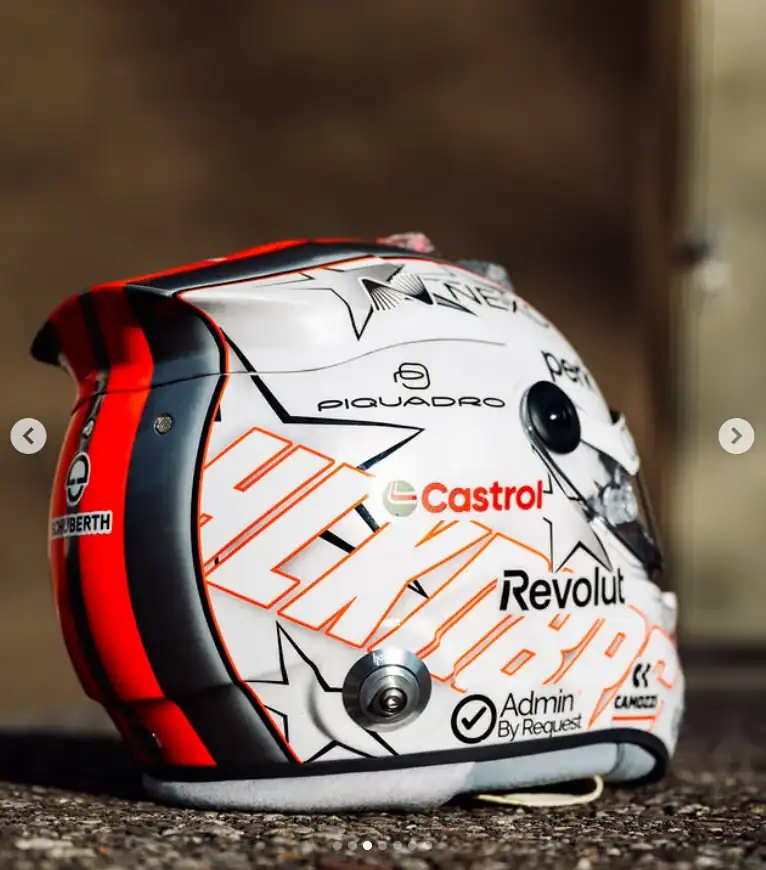
Verstappen’s 2026 race helmet, produced in the livery he wears across the new-regulations season, is among the most tracked designs in the full-size 1:1 display replica market. For collectors, a qualifying crash at a named Grand Prix — particularly one accompanied by a public driver statement — creates a documented moment that sharpens the historical identity of any display piece associated with that weekend.
Full-size 1:1 collector replica helmets are display pieces, not certified for protective use. At 123Helmets.com, replicas are produced as exhibition-quality items scaled to the exact dimensions of a competition helmet — typically around 29 × 25 × 35 cm depending on size, and weighing approximately 1.2–1.5 kg in standard display configuration. These are collector items intended for shelf, cabinet, or wall display, capturing the livery detail of a specific driver’s race season.
The 2026 season has introduced new helmet livery considerations for several drivers as they adapt to new team arrangements and sponsor requirements under the regulation reset. Verstappen’s design for 2026 retains his well-established colour palette while incorporating elements that reflect the new commercial and technical environment around the Red Bull programme. A display replica from the 2026 Austrian GP weekend carries the narrative of one of the season’s more contentious qualifying sessions — a detail that adds provenance to any serious F1 collection.
Collector pieces tied to specific incidents tend to attract sustained interest, because they represent not just a driver’s likeness but a documented point in the championship record. The 2026 Austrian qualifying crash is now part of Verstappen’s season narrative, and display replicas from this period of his career carry that context.
What Collectors and Fans Should Know
The 2026 Austrian Grand Prix qualifying incident will appear in the season’s official records and in any authoritative account of the championship year. For those who follow F1 closely — whether as fans, historians, or collectors — the combination of a documented crash and a public driver protest about flag protocol makes this one of the more memorable qualifying sessions of the 2026 calendar.
When assessing a display replica for a collection, provenance and narrative context are two of the main factors that distinguish a meaningful piece from a generic one. A Verstappen 2026 helmet replica connected to the Austrian GP weekend carries both: it represents a specific livery from a technically transformative season, and it links to a session that generated genuine discussion about safety standards and flag management in the sport’s governing circles.
For new collectors, the Austrian Grand Prix has been held at the Red Bull Ring on the current site since 2014. The 2026 edition continues a run of Austrian GPs that have regularly produced dramatic qualifying sessions given the circuit’s power-sensitive layout and the close proximity of the barriers to the racing surface. The weekend’s compact format — with practice, qualifying, and the race compressed into a dense schedule — means that incidents in qualifying carry outsized significance because there is limited time to recover a car or recalibrate strategy before the grid locks in.
Display replicas of helmets worn during seasons featuring major regulatory transitions, like 2026, typically attract stronger long-term collector attention than those from stable regulatory periods — the helmets visually document a turning point in the sport’s technical history as well as the competitive one.
“Max Verstappen on his Austrian GP qualifying crash — and why he wasn’t impressed when he found out that it didn’t generate a double yellow.”
— Adam Cooper (@adamcooperF1), 2026
FAQ
Q: What happened to Verstappen in 2026 Austrian GP qualifying?
Verstappen crashed during qualifying at the 2026 Austrian Grand Prix at the Red Bull Ring, ending his session early. He subsequently spoke to media about the crash and about his dissatisfaction when he learned the incident had not produced a double yellow flag in the relevant marshal sector.
Q: What is a double yellow flag in F1?
A double yellow flag is the highest standing marshal warning in F1, requiring drivers to slow significantly and prepare to stop due to a dangerous obstruction or marshal on or near the track. It differs from a single yellow, which signals a hazard but with less urgency, and is typically mandatory when a car is stationary following an accident in a marshal zone.
Q: Why was Verstappen unhappy about the flag decision at Austria 2026?
Verstappen was unhappy because he believed his crashed car on track warranted a double yellow flag and one was not shown. At the Red Bull Ring, approach speeds in certain marshal sectors can exceed 280 km/h, meaning cars arriving behind a stationary vehicle have very limited reaction time — making correct flag deployment a direct safety matter.
Q: Are the Verstappen 2026 helmet replicas available as display pieces?
Full-size 1:1 Verstappen 2026 display replica helmets are collector items produced at exhibition quality, typically around 29 × 25 × 35 cm and approximately 1.2–1.5 kg. They are display pieces only — not certified for protective, road, or race use — and capture the livery detail of his 2026 season helmet.
Q: How long is the Red Bull Ring circuit used for the Austrian Grand Prix?
The Red Bull Ring measures 4.318 km per lap. The Austrian Grand Prix race distance typically covers around 71 laps of the circuit. Its compact, power-sensitive layout makes it one of the shorter tracks on the F1 calendar and gives qualifying grid positions significant strategic value for the race.
Browse F1 Helmet Collection — explore full-size 1:1 display replica helmets from the 2026 season and beyond at 123Helmets.com. Each piece is an exhibition-quality collector item, not certified for protective use.
Display and collector replicas only. Not certified for protective use. Full-size 1:1 scale.
This article was written with the help of AI tools. Editorial policy