
Blog
F1 Replica Helmets: The 2026 Collector’s Guide
 123Helmets Editorial Team
Full-size 1:1 replica F1 helmets are the most recognized display pieces in motorsport collecting. This guide covers what makes a replica worth owning, how modern liveries from the 2026 season translate into exhibition-quality pieces, and what to look for before you add one to your collection.
Key Takeaways
Full-size 1:1 replica helmets are display and collector pieces only — not certified or intended for any protective use.
The 2026 season’s new aerodynamic regulations prompted several drivers to redesign their helmet liveries, making this a landmark year for collectors.
A quality replica shell replicates the external geometry of a race helmet within 2 mm tolerance, capturing every graphic panel at true 1:1 scale.
Proper display conditions — away from direct UV light and kept between 15 °C and 25 °C — extend the finish life of a painted replica significantly.
What a 1:1 F1 Replica Helmet Actually Is
A full-size 1:1 replica F1 helmet is a display piece manufactured to the exact external dimensions of the helmets worn by Formula 1 drivers, reproduced for collector and exhibition purposes with no protective function whatsoever. The shell profile, visor aperture, and all graphic artwork are scaled at true 1:1 — meaning every centimetre of the original design is preserved on the collector piece you place on your shelf.
It is worth being precise about what that means in practice. Race helmets used in the 2026 F1 season are engineered to meet strict FIA safety standards and weigh approximately 1.25 kg to 1.45 kg depending on construction. Replica display helmets mirror only the outer geometry and paint scheme — they are not produced to any safety certification standard, carry no FIA, Snell, ECE or DOT rating, and are never intended for road or track use. Their entire value is visual and commemorative.
The shell of a well-made collector replica is typically formed to within 2 mm of the original helmet’s external profile. That precision matters because even small deviations in crown curvature or chin-guard angle distort the graphic panels — a cheek stripe that should be 27 mm wide at the temple can look noticeably wrong if the geometry shifts even slightly. When manufacturers get it right, the result is an object that reads as authentically as a framed photograph, but in three dimensions.
The visor on a display replica is ordinarily a fixed panel, approximately 3 mm in thickness, tinted to match the look of the driver’s race-day choice. It serves a presentational role, not a functional one — there is no anti-fog coating, no tear-off compatibility, no ventilation flow behind it. What it does is complete the silhouette so that the piece looks whole on a display stand.
Why 2026 Is a Landmark Year for F1 Helmet Collecting
The 2026 F1 season is a landmark for collectors because sweeping technical regulation changes — including revised power unit architecture and significantly altered aerodynamic rules — prompted nearly every team and many drivers to adopt new liveries and personal helmet designs simultaneously, producing the largest single-season refresh of collectible imagery in over a decade.
When regulations change this dramatically, teams rebrand. When teams rebrand, drivers often take the opportunity to redesign their personal helmets as well. In 2026 that alignment happened across the grid at the same time, meaning collectors are not chasing one or two standout redesigns — they are choosing from a near-complete refresh of the visual identity of the sport.
The season opened at the Australian Grand Prix in Melbourne on 2026-03-15, and by the time qualifying concluded in Bahrain on 2026-04-19, it was already clear that the new livery generation had produced some of the most graphic-forward helmet designs in years. Several drivers introduced helmets with full-wrap base colours, moving away from the split-colour schemes that dominated 2024 and 2025. That is a meaningful shift for replica collectors, because full-wrap designs tend to read more dramatically on a display stand viewed from any angle.
From a purely collecting standpoint, season-opening helmet designs carry historical weight if a driver goes on to perform well. A piece dated to the 2026-03-15 Australian Grand Prix opener captures a specific moment in the sport’s evolution — the first race under the new technical formula — which gives it a narrative context that later-season variants do not share.
How Replica Helmet Liveries Are Reproduced
High-quality F1 replica helmet liveries are reproduced through a layered paint and decal process that can involve between 8 and 14 individual applications depending on the complexity of the original design, with each layer cured before the next is applied.
The process begins with a base coat — usually a solid primer in the dominant background colour — applied to the formed shell. From there, the reproduction method depends on the design’s geometry. Simple block-colour designs can be masked and sprayed in successive passes. Complex designs that include photographic-quality gradients, carbon-look textures or fine sponsor typography are more often produced using precision-cut vinyl or water-transfer decal sheets, positioned with alignment guides accurate to within 1 mm.
Clear-coat finishing is applied over the completed graphic layer to protect the artwork and produce the high-gloss appearance associated with race helmets. A minimum of two clear-coat layers is standard on exhibition-quality pieces; premium replicas use three or more, which deepens the apparent colour saturation and provides better resistance to the minor surface contact that occurs during routine display adjustments.
Sponsor and manufacturer logos on replica helmets require licensing agreements between the replica producer and the relevant brand. The presence of correct, properly licensed logos — rendered at the exact size and pantone reference used on the original — is one of the clearest indicators separating an exhibition-quality replica from a lower-grade reproduction. A miscoloured logo or a logo rendered at the wrong scale immediately signals a compromise in the production process.
Visor and trim details
The visor surround, chin strap attachment points, and any venting detail on a display replica are ordinarily moulded directly into the shell rather than added as separate components. On the best pieces, the visor aperture edge is finished to a 0.5 mm radius to match the soft-rolled edge of a production race helmet, which catches light in the same way as the original when displayed under gallery-style spot lighting.
Key Drivers and Helmet Designs Worth Collecting in 2026
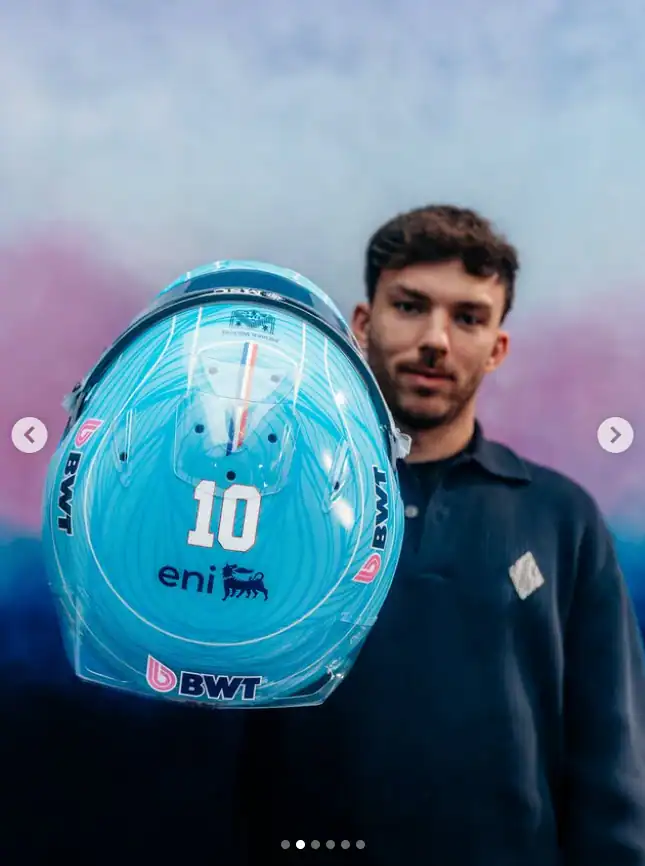
The most sought-after replica helmet designs in the 2026 season belong to drivers who combine on-track success with visually distinctive personal liveries — a combination that makes the display piece both historically significant and aesthetically compelling.
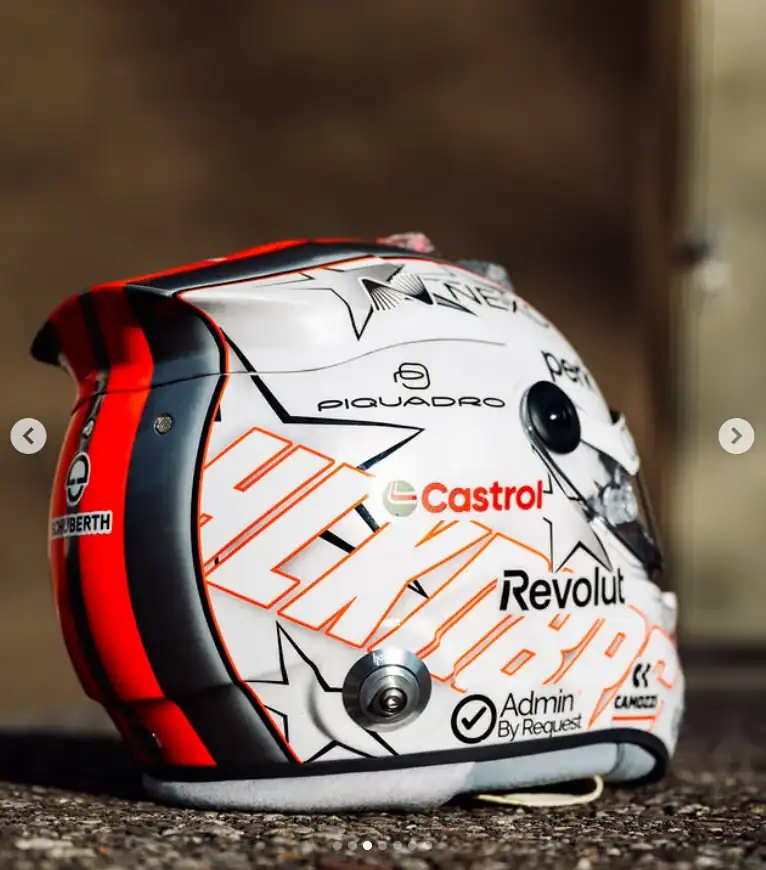
Max Verstappen‘s 2026 helmet continues the lion-motif design language he has used since his Red Bull championship years, but the 2026 version incorporates a deeper navy base to align with the team’s revised livery. The contrast between the base colour and the orange graphic elements is particularly effective on a 1:1 replica viewed at the 35 cm to 40 cm eye-to-helmet distance typical of a desk or shelf display.
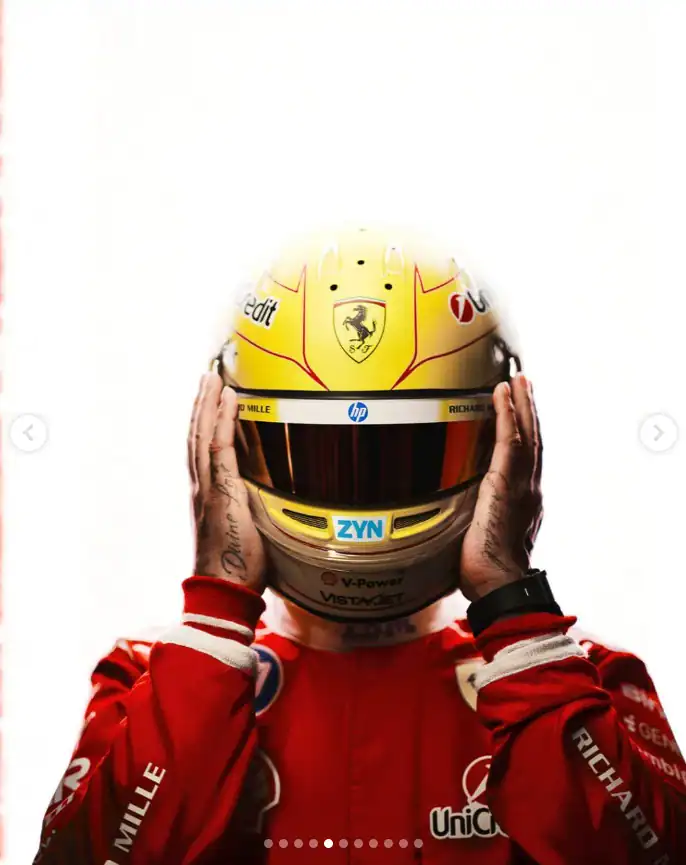
Lewis Hamilton, now at Ferrari, has developed a helmet that merges his signature stealth-black graphic style with Ferrari red in a way that makes the piece striking from any viewing angle. The Ferrari transition in 2025 already made his first Scuderia helmet collectible; the 2026 iteration — updated for the new car era — adds a fresh layer of historical context.
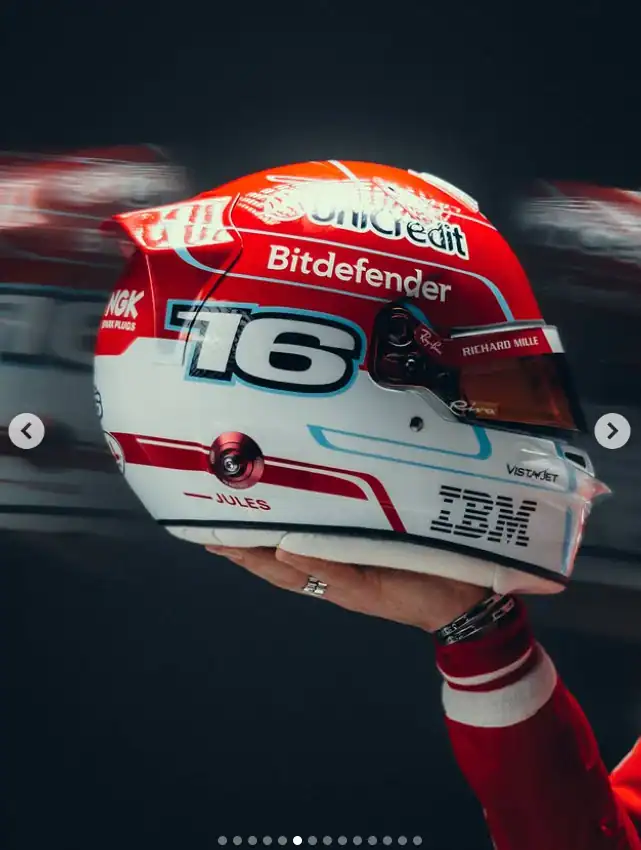
Charles Leclerc‘s 2026 design retains the Monégasque red-and-white references central to his personal identity while adopting cleaner graphic geometry that suits the 1:1 replica format well. His helmet is among the cleaner designs on the grid, which means the artwork reads accurately even at a viewing distance of 60 cm or more.
For collectors interested in the midfield, McLaren drivers have continued to benefit from one of the most recognisable team colour schemes in the sport — papaya orange at 1:1 scale is immediately legible as a McLaren piece, which gives replica helmets from that garage broad display appeal regardless of which driver they represent.
Mercedes and Aston Martin pieces offer strong contrast — the silver-and-black of Mercedes against the British Racing Green of Aston Martin — that suits different interior aesthetics. Both read well in display cases with neutral or dark backgrounds.
Displaying and Preserving Your Replica Helmet
A collector replica F1 helmet lasts longest when stored away from direct ultraviolet light and kept in an environment maintained between 15 °C and 25 °C, with relative humidity below 60 percent — the same basic conditions recommended for fine art prints and signed memorabilia.
UV is the primary enemy of painted finishes. A helmet positioned in direct sunlight for six to eight hours per day can show perceptible colour shift in the most saturated graphic areas within twelve to eighteen months. Even indirect natural light accelerates this process. The most practical solution for a displayed piece is a UV-filtering acrylic case, which blocks approximately 98 percent of UV radiation while keeping the helmet fully visible. Case dimensions of 29 × 25 × 35 cm × 27 cm typically accommodate a full-size 1:1 helmet with clearance for the display stand without the piece appearing cramped.
Display stands matter more than most collectors initially expect. A three-point chin-support stand distributes the helmet’s weight across the jaw line and rear of the shell, which prevents the paint on the crown from developing pressure marks over long display periods. Avoid single-post neck stands if the helmet will remain stationary for more than a few weeks — the contact point tends to be too small for stable long-term support.
Cleaning should be limited to a soft microfibre cloth, dry or very lightly dampened with distilled water. Solvent-based cleaners dissolve clear coat. Abrasive cloths and even paper towels introduce micro-scratches visible under raking light. If the visor surface accumulates dust, a lens blower used from 10 cm to 15 cm distance is safer than any contact method for removing loose particles before wiping.
Rotation and handling
If you own multiple replicas and rotate them on display, handle each helmet by the chin guard or rear lower shell — never grip the visor surround, which is typically the thinnest moulded area on a display piece. Nitrile gloves prevent finger oils from transferring to the clear coat, which over time can produce faint clouding in areas touched repeatedly.
Building a Focused F1 Helmet Collection
The most coherent private F1 helmet collections are built around a single clear principle — one driver’s career, one team’s lineage, one era of the sport — rather than assembled as an accumulation of individual purchases with no connecting thread.
A career-spanning collection of one driver’s helmets traces the evolution of their visual identity alongside their results. Consider that a driver who enters F1 in their early twenties and competes into their mid-thirties may produce 10 to 15 meaningfully distinct helmet designs across that period. A display of those pieces in chronological order tells a story legible to anyone who knows the sport, and to many who do not.
A team-lineage collection operates differently. Teams rarely change their core colour identity more than two or three times in a decade, but the graphic treatment of that colour — the typography, the geometric structure of sponsor placement, the finish type — shifts season by season. Collecting one helmet per season from a single constructor produces a set that documents the team’s commercial and aesthetic history in a way that no poster or photograph quite replicates.
Era collecting — one piece from each decade of F1 — requires the widest knowledge but produces the most visually diverse display. The difference between a replica of a 1980s full-face design and a 2026 piece is striking: modern helmets are more complex in graphic terms, more symmetrical in construction geometry, and dramatically different in the proportions of chin guard to crown. That contrast, when displayed together, captures something true about how the sport has changed.
Whatever principle you choose, establish it before your third purchase. The collections that hold their narrative power over time are the ones built with intention from an early stage, not reorganised retrospectively around pieces acquired without a plan.
“The helmet is the most personal object in Formula 1. It is the one piece of equipment a driver controls completely — its design, its colours, its story. That is precisely why a 1:1 replica of it is the most personal thing a collector can own.”
— 123Helmets.com Editorial
“In a season where almost everything on the car changed, the helmet was the one place drivers could plant their own flag. 2026 will be remembered as a year of reinvention — and the helmets document that better than anything else.”
— 123Helmets.com Editorial
FAQ
Q: Are 1:1 replica F1 helmets safe to wear?
No — 1:1 replica F1 helmets are display and collector pieces only, carrying no safety certification of any kind. They are not produced to FIA, Snell, ECE, DOT or any other protective standard and must never be used on a road, race track or in any situation where head protection is required. Their sole purpose is exhibition and collection display.
Q: What does 1:1 scale mean for a replica helmet?
1:1 scale means the replica is manufactured at full human-head size — identical in external dimensions to the helmet worn by the driver it represents. There is no reduction in size, unlike 1:2 or mini-replica formats. Every graphic panel, visor aperture and surface contour is reproduced at true life size.
Q: How many paint layers does a quality replica helmet have?
A quality exhibition-grade replica helmet typically involves between 8 and 14 individual paint and graphic application stages, depending on design complexity. This includes base coats, graphic layers, decal application and at least two clear-coat finishing passes. Premium pieces use three or more clear coats for deeper colour and better surface durability.
Q: Which 2026 F1 helmet designs are most popular with collectors?
In the 2026 season, helmets from Max Verstappen, Lewis Hamilton at Ferrari and Charles Leclerc have drawn the most collector interest, combining strong visual design with high on-track profile. McLaren pieces are also consistently popular due to the immediate recognisability of the papaya orange team colour at 1:1 scale.
Q: What is the best way to display a full-size replica F1 helmet?
The best display method is a UV-filtering acrylic case — which blocks approximately 98 percent of UV radiation — placed away from direct sunlight, in an environment between 15 °C and 25 °C with relative humidity below 60 percent. A three-point chin-support stand inside the case distributes weight correctly and prevents long-term pressure marks on the painted shell.
Ready to start or expand your display collection? Browse F1 Helmet Collection at 123Helmets.com and find the 2026 replica that belongs in your space.
Display and collector replicas only. Not certified for protective use. Full-size 1:1 scale.
This article was written with the help of AI tools. Editorial policy