Blog
Wolff: Mercedes Has F1’s Strongest 2026 Engine, ADUO Returns
 123Helmets Editorial Team

Toto Wolff has confirmed what rivals long suspected — Mercedes carries the most powerful power unit on the 2026 grid — reopening the ADUO monitoring debate that Red Bull-Ford Powertrains has fought since the FIA’s original benchmark ruling, and giving collectors fresh reason to look closely at the silver-arrow helmets carrying that story into every 2026 round.
Key Takeaways
Toto Wolff publicly stated Mercedes has the most powerful power unit on the 2026 grid while discussing George Russell’s straightline speed issue at Spa.
The ADUO monitoring system, built around the FIA’s original Red Bull-Ford Powertrains benchmark, remains politically contested even though Red Bull accepts it cannot overturn past results.
Red Bull fears rival manufacturers can quietly upgrade engine components without the FIA raising their comparative ADUO standing, keeping Red Bull artificially at the top.
The 2026 power unit generation channels roughly half its output through the electrical component, a technical shift that has amplified reliability and performance disparities between manufacturers.
Wolff’s Admission Reignites the ADUO Debate
Toto Wolff said out loud in 2026 what several rival principals had been implying since preseason: Mercedes has the strongest power unit on the grid. He made the comment to Sky Sports F1 while explaining why George Russell lost significant ground on the straight at Spa-Francorchamps, contact that ended with Lewis Hamilton retiring from the Belgian Grand Prix.
“We’re trying our best as a team, we have the most powerful power unit, we have a strong car that is capable of winning,” Wolff said, framing the admission inside a wider point about reliability rather than outright bragging. The timing matters because it landed just as the FIA’s Additional Design and Operational Understanding process — ADUO — was drawing fresh scrutiny from Red Bull-Ford Powertrains.
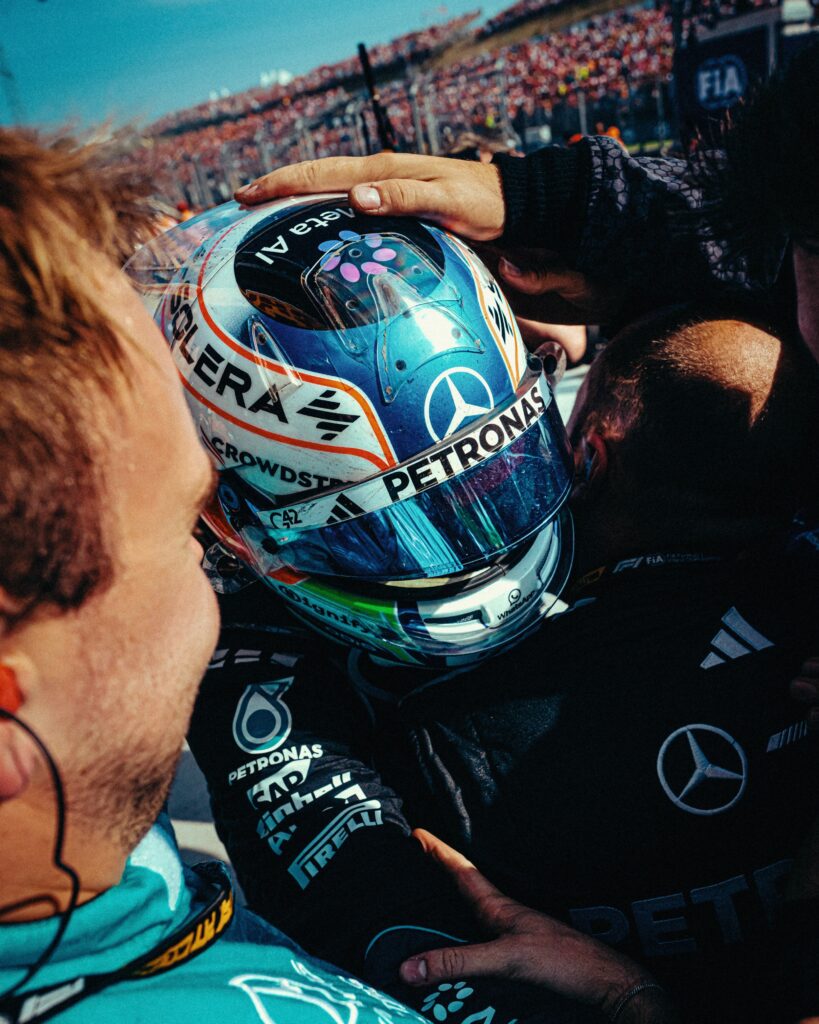
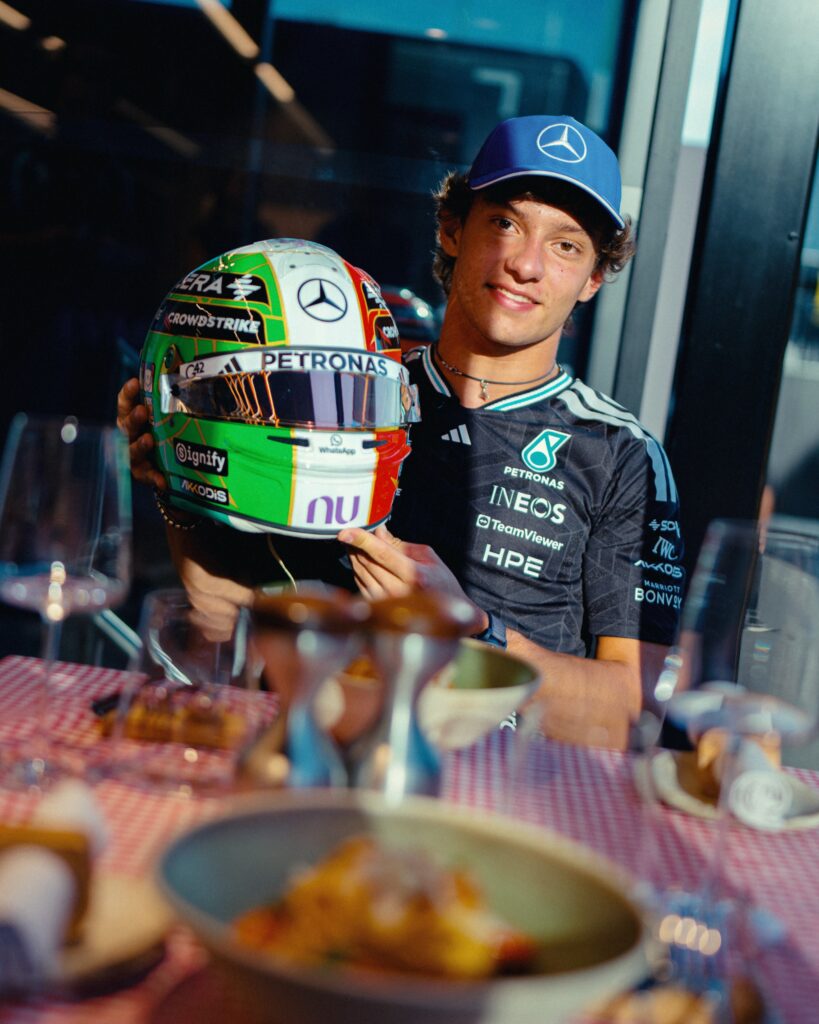
For collectors following the 2026 season, Wolff’s words carry weight beyond the paddock microphone. Every Mercedes driver helmet on track this year, from Russell’s to Kimi Antonelli’s, is now tied to a manufacturer publicly acknowledged as the pace-setter on power, even while the team’s own reliability numbers tell a rockier story.
What ADUO Means for the 2026 Power Unit Order
ADUO is the FIA’s monitoring framework used to compare power unit performance across manufacturers under the new 2026 engine regulations. Early in the process the FIA identified Red Bull-Ford Powertrains as the benchmark unit rather than Mercedes, a conclusion drawn primarily from V6 internal combustion engine data rather than the full hybrid picture the FIA had originally intended to assess.
That method mattered because the 2026 regulations pushed the power unit formula toward a near 50/50 split between the electrical component and the turbocharged V6, a sharp jump from the roughly 20% electrical contribution under the previous hybrid formula. Judging manufacturers mostly on ICE output alone, rather than the full electric-plus-combustion package, is exactly what Red Bull pressed the FIA to review.
Red Bull has since accepted it cannot have the original ADUO results overturned. It remains adamant, however, that Mercedes holds the stronger overall power unit and has raised concern that rivals could refine components incrementally without the FIA repositioning them above Red Bull in the comparative standing — effectively freezing Red Bull at a benchmark position it no longer believes it deserves.
Red Bull’s Reaction and Mekies’ Concerns
Red Bull team principal Laurent Mekies has echoed Wolff’s assessment that Mercedes fields the strongest power unit, even as his own team keeps its official ADUO benchmark status. The concern from Red Bull’s side is less about the headline ranking and more about the mechanism behind it: if upgrades from Mercedes, Ferrari or other manufacturers are not fully reflected in future ADUO reassessments, Red Bull could be locked in as the reference point while trailing in real terms.
That dynamic explains why Wolff’s Spa comments landed as more than casual honesty. When the team publicly acknowledged as fastest in a straight line also volunteers that it has the strongest power unit, it removes any ambiguity for the FIA and for rivals pushing for a formal ADUO review before the second half of the 2026 calendar plays out.
The 2026 grid now includes six power unit manufacturers — Mercedes, Ferrari, Red Bull-Ford Powertrains, Honda, Audi and Renault — the widest spread of engine suppliers the sport has run in years. That breadth is part of why ADUO has become such a flashpoint: more manufacturers means more competing claims about where the real performance ceiling sits.
Russell, Antonelli and the Reliability Cost
Mercedes’ 2026 season has been defined by a gap between raw power unit strength and race-day results, according to Wolff himself. He pointed to a string of setbacks: Kimi Antonelli’s issue at Silverstone that handed George Russell a podium finish Wolff described as “maybe better than the result should have been,” followed by a retirement for one driver in Montreal and another in Barcelona.
“It’s a technical sport, mechanical sport,” Wolff said, summing up a campaign where the fastest power unit on paper has not always converted into the smoothest weekends. The Spa incident between Russell and Hamilton, triggered by the straightline speed deficit Wolff blamed entirely on the team, is the clearest single example of that gap between potential and execution this year.
For anyone building a 2026 Mercedes helmet collection, that context adds meaning to specific race-weekend liveries. A Silverstone-spec Antonelli design or a Spa-weekend Russell shell now documents a season where the strongest engine on the grid still produced retirements and compromised results — the kind of narrative detail that separates a generic replica from one tied to a specific, well-documented race story.
Collector Angle: Reading the Story Through the Helmets
Full-size 1:1 replica helmets from the 2026 Mercedes lineup let collectors hold a physical piece of the ADUO storyline rather than just read about it. Each display piece mirrors the shell dimensions and finish of the real race helmet, with 123Helmets replicas built to the standard 27 × 35 cm shell profile and roughly 1.45 kg display weight used across the current F1 helmet range, making them substantial exhibition pieces rather than scaled-down novelties.
The livery details worth studying closely on a Mercedes 2026 helmet include the sponsor placement changes introduced with the new power unit era, the visor surround graphics that echo the car’s revised aero identity, and the driver-specific number treatment that shifts subtly race to race. On a Spa-spec or Silverstone-spec shell, those design choices sit alongside the season’s power unit narrative in a way that gives the piece extra collector value beyond pure aesthetics.
Because Wolff’s admission and the Mekies response both arrived mid-season, helmets produced around the Belgian Grand Prix weekend carry a specific historical marker: they represent the exact point in 2026 when the sport’s engine hierarchy stopped being paddock speculation and became an on-record statement from a team principal.
Design Breakdown: What to Look for on a 2026 Mercedes Shell
The clearest visual cues on a 2026 Mercedes display helmet are the black-and-silver base, the driver-specific crown graphic, and the visor trim finished to match the car’s livery revisions for the new power unit regulations. Collectors comparing shells from different race weekends should check the sponsor decal layout first, since 2026 has brought incremental branding changes round to round that make certain weekend-specific replicas more distinctive than others.
Paint and finish quality matters as much as graphic accuracy on a full-size exhibition piece. A well-produced replica reproduces the layered clear-coat sheen of the real racing shell and keeps edge lines crisp around the visor aperture and vents, details that are easy to get wrong on lower-quality reproductions but are central to why exhibition-grade replicas hold their value with serious collectors.
For fans following the ADUO story specifically, the most collectible 2026 Mercedes pieces are likely to be those tied to marked moments — Russell’s Spa weekend, Antonelli’s Silverstone podium run, or any shell worn during a race where Wolff’s power unit comments were made public. Those weekends give a display helmet a documented place in the season’s power unit narrative, not just a livery snapshot.
“We’re trying our best as a team, we have the most powerful power unit, we have a strong car that is capable of winning, everybody gives its maximum to minimise the mistakes and still it happens because we are humans at work.”
— Toto Wolff, Mercedes Team Principal, Sky Sports F1
“It’s a technical sport, mechanical sport.”
— Toto Wolff, Mercedes Team Principal
FAQ
Q: What is ADUO in Formula 1?
ADUO is the FIA’s monitoring framework for comparing power unit performance across 2026 manufacturers, originally set with Red Bull-Ford Powertrains as the benchmark based largely on V6 internal combustion data.
Q: Did Toto Wolff really say Mercedes has the strongest engine?
Yes, Wolff told Sky Sports F1 that Mercedes has the most powerful power unit on the 2026 grid while explaining George Russell’s straightline speed deficit at the Belgian Grand Prix.
Q: Why is Red Bull unhappy with the ADUO ranking?
Red Bull accepts it cannot overturn the original ADUO results but argues rivals could quietly upgrade components without the FIA repositioning them above Red Bull, keeping Red Bull fixed at a benchmark it no longer believes reflects reality.
Q: How many power unit manufacturers are on the 2026 F1 grid?
Six manufacturers supply engines in 2026 — Mercedes, Ferrari, Red Bull-Ford Powertrains, Honda, Audi and Renault — the widest field the sport has run in recent seasons.
Q: What size are 123Helmets full-size Mercedes replicas?
123Helmets full-size 1:1 display replicas follow a standard 27 × 35 cm shell profile with a display weight of roughly 1.45 kg, matching the scale of the real race helmets worn on the 2026 grid.
Shop Mercedes Helmets
Display and collector replicas only. Not certified for protective use. Full-size 1:1 scale.