Blog
Hungaroring Turn 1 Resurfaced Overnight for 2026 F1 GP
 123Helmets Editorial Team
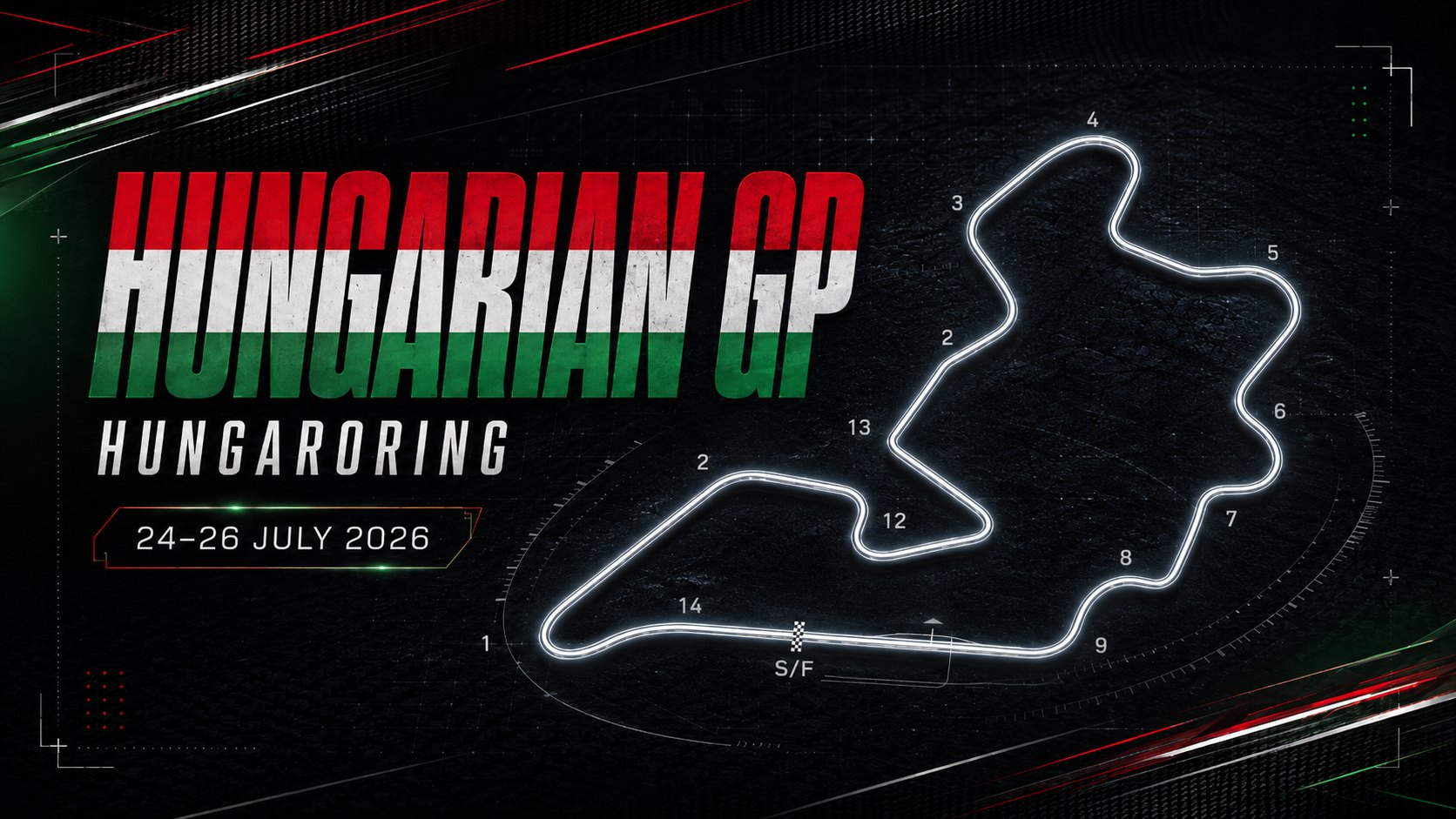
The Hungaroring’s Turn 1 was partially resurfaced overnight after drivers reported breaking track surfaces and unexpectedly low grip during opening practice for the 2026 Hungarian Grand Prix, with the FIA ordering repairs before Saturday’s FP3 and qualifying.
Key Takeaways
Turn 1 at the Hungaroring was resurfaced overnight following driver complaints during Friday practice for the 2026 Hungarian Grand Prix.
Track surface issues were most pronounced at Turns 1, 12 and 13, with Pirelli measuring grip levels lower than in the previous year.
Franco Colapinto crashed at Turn 12 in FP2 on one of the previously resurfaced but unexpectedly slippery sections.
The FIA directed repairs to be completed before FP3 and qualifying on Saturday, with Turn 1 prioritized as a key overtaking zone.
What happened at the Hungaroring
Turn 1 at the Hungaroring was partially resurfaced overnight after drivers reported the track surface breaking up during the opening day of practice for the 2026 Hungarian Grand Prix. The corner is one of the circuit’s main overtaking points, making the damage a priority for organizers heading into the second half of the weekend.
Some sections of the track had already been resurfaced within the past two years, but a hot, dry summer caused sub-surface settlement that worsened existing bumps. The problem was most visible at Turn 1, Turn 12 and Turn 13, where the surface had begun to open up under load from cars running at full speed.
Drivers found workarounds for the final corner, adjusting their line to avoid the worst of the damage. Turn 1 offered no such alternative, since the racing line itself was where the surface was deteriorating fastest.
Why the surface broke up
The Hungaroring’s surface problems trace back to a combination of resurfacing work, weather and prior track use. Pirelli measured grip levels on Wednesday ahead of the race weekend and found them lower than expected, and lower than the equivalent reading from the previous year’s Hungarian Grand Prix.
It is understood that the surface issues were first observed during the International GT Open meeting held at the circuit two weekends before the Formula 1 event, giving early warning that conditions had shifted before the paddock even arrived. The newer sections of track were reported as worn rather than actively breaking apart, a distinction that still made them difficult to read for drivers pushing near the limit.
That combination of low grip and physical surface breakup created a rare situation where a circuit needed emergency repair work between practice sessions rather than during a standard off-season resurfacing program.
Driver reactions from the paddock
Drivers described Friday practice as unusually difficult to read, with several citing the resurfaced sections as the biggest challenge. “It was quite a strange day out there I think for everybody,” said Mercedes’ George Russell after practice, adding that Budapest remains “an amazing track to drive” despite the surface concerns.
Oscar Piastri of McLaren, who missed FP1 to accommodate a mandatory rookie session, said the new sections lacked grip without literally falling apart. “The new parts of the track are not very grippy and they’re kind of not breaking apart but they’re very worn,” he said. Piastri also noted that missing a practice session made adapting to the conditions harder heading into FP2.
Alpine’s Franco Colapinto crashed at Turn 12 in FP2, one of the resurfaced areas that caught drivers out with unexpectedly low grip. Leonardo Fornaroli ran in Piastri’s McLaren during FP1 as part of the rookie session requirement, meaning Piastri had less track time than most rivals before conditions worsened further.
The FIA’s overnight repair order
The FIA ordered repairs to Turn 1 to be completed overnight ahead of FP3 and qualifying on Saturday. Given the corner’s role as a key overtaking zone, officials prioritized it over the other affected sections at Turns 12 and 13, where drivers had already found alternative lines to manage the worst of the bumps and breakup.
Track repair work between practice sessions is uncommon in Formula 1, and the decision reflects how significant the safety and competitive concerns had become after just one day of running. With grip levels already below the previous year’s readings before a wheel had turned in anger, the overnight fix aimed to restore a usable racing line through the circuit’s most important passing zone before qualifying determined Sunday’s grid.
What comes next at the Hungaroring
FP3 and qualifying on Saturday will be the first real test of whether the overnight repairs solved the Turn 1 problem. Teams and drivers will be watching closely to see whether the resurfaced patch holds up under full-speed running, and whether the remaining worn sections at Turns 12 and 13 cause further issues once cars are pushing to the limit in qualifying trim.
The situation adds an extra layer of unpredictability to a circuit already known for producing tight, technical racing. Teams that adapt fastest to the altered grip levels could find an advantage heading into a Hungarian Grand Prix where track conditions, not just car performance, are shaping the weekend narrative.
“It was quite a strange day out there I think for everybody. Budapest is an amazing track to drive but they’ve resurfaced half of the track, super bumpy, a lot of it’s breaking up around the last couple of corners, which is making it quite strange to drive on.”
— George Russell, Mercedes
“The new parts of the track are not very grippy and they’re kind of not breaking apart but they’re very worn. So, it’s just a very challenging circuit at the moment and, yeah, obviously missing a practice session has made it pretty tough.”
— Oscar Piastri, McLaren
FAQ
Q: Why was the Hungaroring resurfaced overnight during the 2026 Hungarian Grand Prix weekend?
The Hungaroring’s Turn 1 was resurfaced overnight because the track surface began breaking up on the racing line during Friday practice, prompting the FIA to order repairs before FP3 and qualifying on Saturday.
Q: Which corners were most affected by the Hungaroring track surface problems?
Turns 1, 12 and 13 showed the most noticeable surface breakup, with Turn 1 prioritized for repair because it is a key overtaking point on the circuit.
Q: Did any driver crash because of the Hungaroring surface issues?
Yes, Franco Colapinto of Alpine crashed at Turn 12 during FP2, one of the resurfaced areas that proved unexpectedly slippery.
Q: How did grip levels at the Hungaroring compare to the previous year?
Pirelli measured grip levels as lower than expected on the Wednesday before the 2026 Hungarian Grand Prix, and lower than the equivalent measurement from the prior year’s event.
Q: Who drove for McLaren in FP1 at the 2026 Hungarian Grand Prix?
Leonardo Fornaroli drove Oscar Piastri’s McLaren during FP1 as part of a mandatory rookie session, meaning Piastri had less running time before conditions worsened in FP2.
Browse F1 Helmet Collection
Display and collector replicas only. Not certified for protective use. Full-size 1:1 scale.
This article was written with the help of AI tools. Editorial policy