
Blog
Why Sainz Escaped With Only 5s Penalty at Hungarian GP
 123Helmets Editorial Team
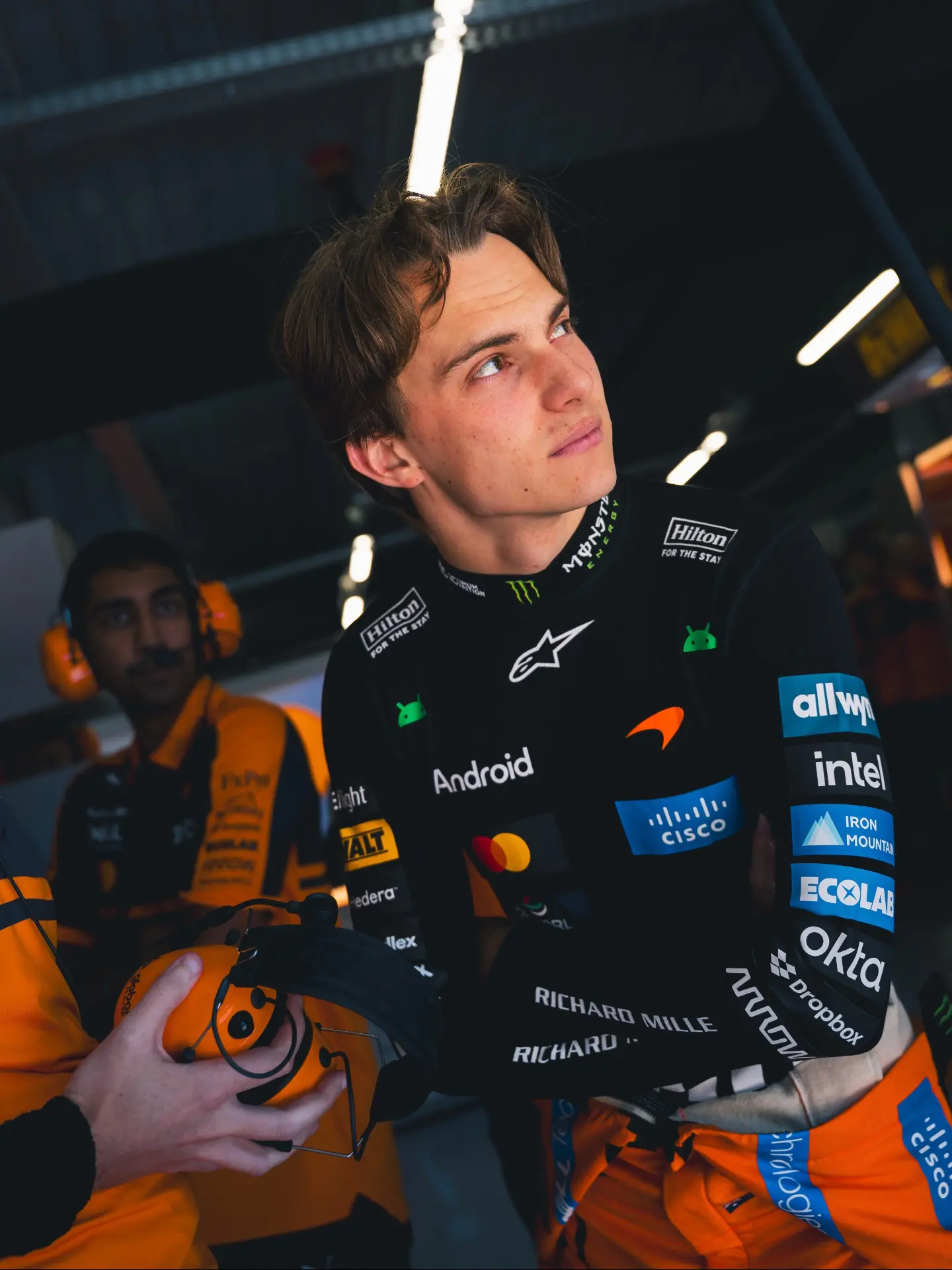
The Hungarian Grand Prix stewards handed Carlos Sainz only a five-second penalty, rather than the standard ten, for his lap 38 collision with Oscar Piastri, citing a specific visibility problem at Turn 3 that changed the entire picture of blame.
Key Takeaways
Sainz was found ‘wholly responsible’ for the lap 38 collision but received a five-second penalty instead of the standard ten.
Stewards ruled Piastri ‘was not visible’ to Sainz, given where the Williams was on track, immediately before the attempted overtake into Turn 3.
The contact came as Sainz, racing Fernando Alonso, was being lapped by Piastri under blue flags at the Hungaroring.
Piastri continued undamaged but lost track position to Lando Norris in the aftermath of the incident.
What Happened on Lap 38
On lap 38 of the Hungarian Grand Prix, Carlos Sainz and Oscar Piastri made contact at Turn 3 as Piastri attempted to lap the Williams driver while leading the race in Budapest. At the time, Sainz was locked in a fight with Fernando Alonso and had been told by his team that blue flags were out for the approaching McLaren. As Piastri went for the move, the two cars collided, with the stewards later confirming Sainz was “wholly responsible for the collision.”
Piastri escaped the moment without visible damage and was able to continue, but the disruption played a part in him surrendering the race lead to teammate Lando Norris shortly afterward. What could have been a straightforward blue-flag pass instead became one of the defining flashpoints of the Hungaroring weekend.
Why the Penalty Was Five Seconds, Not Ten
The penalty was reduced to five seconds because stewards identified a mitigating factor around visibility, not because they doubted Sainz caused the crash. The standard sanction for causing a collision on track is a ten-second time penalty, and the stewards confirmed that baseline applied in principle. However, they found that “the positioning of Car 55 relative to the circuit and the other cars meant that Car 81 was not visible to the driver of Car 55 prior to the attempted overtake” — in plain terms, Piastri was outside Sainz’s sightlines in the critical moment before contact.
Despite Sainz having been informed by his team that Piastri was approaching under blue flags, the stewards accepted that a verbal warning is not the same as a clear visual picture of where the overtaking car actually is on track. That distinction was enough to move the penalty from the standard ten seconds down to five.
The Blue Flag Confusion at the Hungaroring
A malfunction or inconsistency in the blue flag system meant several drivers did not get clear signals during the Hungarian Grand Prix, and this incident became the clearest example of the fallout. Sainz’s team had radioed that blue flags were showing for Piastri’s approach, which technically satisfied the information requirement, but the stewards drew a clear line between being told a car is near and being able to see it. That gap is exactly what tipped their decision toward leniency.
The stewards’ written explanation named the cars involved as Car 55 (Sainz), Car 14 (Alonso) and Car 81 (Piastri), before laying out how the positioning on the circuit obscured Piastri from Sainz’s view in the seconds before the pass was attempted into Turn 3. It is a rare case of a driver being fully blamed for a collision yet only receiving half the standard sanction.
Podium Visuals from the Hungaroring
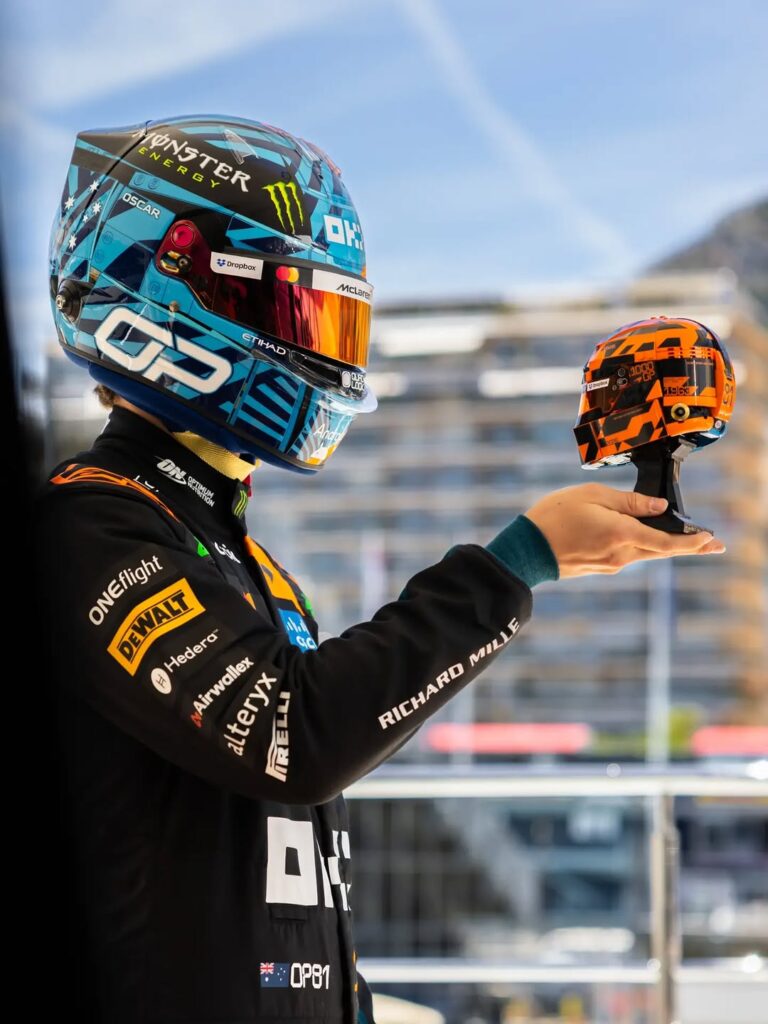
The Hungarian Grand Prix produced sharp color contrasts on the podium and across the grid, with McLaren’s papaya-and-blue scheme standing out against Williams’ navy-and-white livery through the Turn 3 sequence where the incident occurred. Piastri’s helmet, carrying his signature dark blue and orange palette, was visible throughout the multiple onboard replays used by stewards to review the contact, giving fans a close look at the design under genuine racing pressure rather than in a paddock walkabout.
Lando Norris inherited the lead in the wake of the clash, and the shift in race order added another chapter to the ongoing intra-team story between the two McLaren drivers this season. For collectors following the visual side of the sport, race weekends like this one — where helmet designs are captured mid-battle on cars fighting for position — tend to produce some of the most memorable imagery of the season.
What It Means for the Championship Picture
The five-second penalty did not restore Piastri’s track position, meaning the net effect of the incident favored Norris regardless of the sporting sanction applied to Sainz. Losing the lead at the Hungaroring, even with a penalty issued against the driver who caused the contact, shows how a five-second time penalty served after the fact does not always undo the on-track consequences of a collision. For Piastri, the outcome adds another data point to a season where small margins at individual corners have repeatedly shaped the wider title fight.
For Sainz, the incident is now a matter of record: found wholly responsible, but sanctioned at half the standard penalty because of a documented visibility gap rather than any dispute over fault.
“The Stewards determined that the driver of Car 55 was wholly responsible for the collision with Car 81. While the standard penalty for causing a collision is a 10-second time penalty, the Stewards identified a mitigating factor.”
— Hungarian Grand Prix Stewards’ Statement
“At the point of the incident, the positioning of Car 55 relative to the circuit and the other cars meant that Car 81 was not visible to the driver of Car 55 prior to the attempted overtake.”
— Hungarian Grand Prix Stewards’ Statement
FAQ
Q: Why did Sainz only get a five-second penalty instead of ten?
Stewards reduced the penalty because Piastri was not visible to Sainz, given where the Williams was on track, immediately before the attempted overtake at Turn 3 on lap 38, despite Sainz being told by his team that blue flags were showing.
Q: Was Sainz found at fault for the collision with Piastri?
Yes, the stewards stated Sainz was ‘wholly responsible for the collision with Car 81,’ which is Piastri’s McLaren, even though the penalty applied was lower than the standard sanction.
Q: Did Piastri lose the race lead because of the incident?
Yes, the contact contributed to Piastri losing the lead of the Hungarian Grand Prix to his McLaren teammate Lando Norris, even though his car sustained no visible damage.
Q: What is the standard penalty for causing a collision in F1?
The standard sanction is a ten-second time penalty, which stewards confirmed applied here in principle before reducing it to five seconds due to the visibility mitigating factor.
Q: Who else was involved near the Sainz-Piastri incident?
Fernando Alonso was racing directly against Sainz at the time, which was part of why Sainz’s attention was split when Piastri arrived to lap him under blue flags.
Shop Oscar Piastri Collection
Display and collector replicas only. Not certified for protective use. Full-size 1:1 scale.
This article was written with the help of AI tools. Editorial policy