
Blog
Vasseur: Ferrari Pace ‘Stronger Than Mercedes’ at Zandvoort
 123Helmets Editorial Team

Fred Vasseur says Ferrari’s race pace at the Dutch Grand Prix was stronger than Mercedes’, but a rough qualifying session and a slow pit stop stopped Lewis Hamilton and Charles Leclerc from turning that pace into a better result at Zandvoort on 2026-08-23.
Key Takeaways
Fred Vasseur told Sky Sports Ferrari’s race pace was ‘stronger than Mercedes’ across both the sprint and main races at Zandvoort.
Both Ferrari drivers, Lewis Hamilton and Charles Leclerc, qualified no better than the third row, undermining their race-day strategy options.
Charles Leclerc lost a position to Oscar Piastri at the second start, beaten on soft tyres by a car running hards, then suffered a slow pit stop.
Vasseur says Ferrari must review its qualifying preparation, singling out a flawed out-lap in Saturday’s session as a key issue.
What Vasseur Said After Zandvoort
Fred Vasseur said Ferrari’s pace at the Dutch Grand Prix weekend was better than Mercedes’, but the team let the advantage slip through a poor qualifying session and shaky race execution. Speaking to Sky Sports after the race at Zandvoort, the team principal was blunt about the gap between potential and result: “I think the pace was strong, I think at least stronger than Mercedes, but it is like it is, that we have to now have a deep look on what we did and what we did wrong.”
Lewis Hamilton and Charles Leclerc finished right behind George Russell of Mercedes, close enough to suggest Ferrari had the tools to challenge for more had the weekend come together. Vasseur’s comments frame the Dutch Grand Prix as a missed opportunity rather than a genuine step back for the team’s competitiveness heading into the closing stretch of the 2026 season.
Where Qualifying Went Wrong
Ferrari’s Saturday qualifying was the root of its Zandvoort trouble, according to Vasseur, who pointed to a flawed preparation lap as the specific issue. “If we missed something this weekend it’s more the quali first. Not in the sprint quali, but in the [main] quali, we had a poor preparation with an out-lap and so on,” he said.
Neither Lewis Hamilton nor Charles Leclerc managed better than the third row of the grid, a result that limited their strategic options once the lights went out. Starting further back meant both drivers had to fight through traffic rather than control the race from the front, a difference that mattered even with race pace on their side.
The Second Start and the Slow Stop
Charles Leclerc lost a position to Oscar Piastri at the second start of the Dutch Grand Prix, beaten around the outside of Turn 1 despite Piastri running harder compound tyres against Leclerc’s softs. Vasseur called the swap unexpected: “in the second start we lost position with soft compared to some hard competitors, and this is unexpected.”
Ferrari compounded the problem with a slow pit stop for Leclerc later in the race, and the team also missed a chance to pass George Russell after Leclerc had cleared Piastri again. Vasseur was direct about the sequence: “And then we had a poor pitstop and then it was difficult.” Each individual error was small, but stacked together they turned a car with strong underlying pace into a result that finished just behind Mercedes rather than ahead of it.
Podium Visuals and Display-Worthy Moments
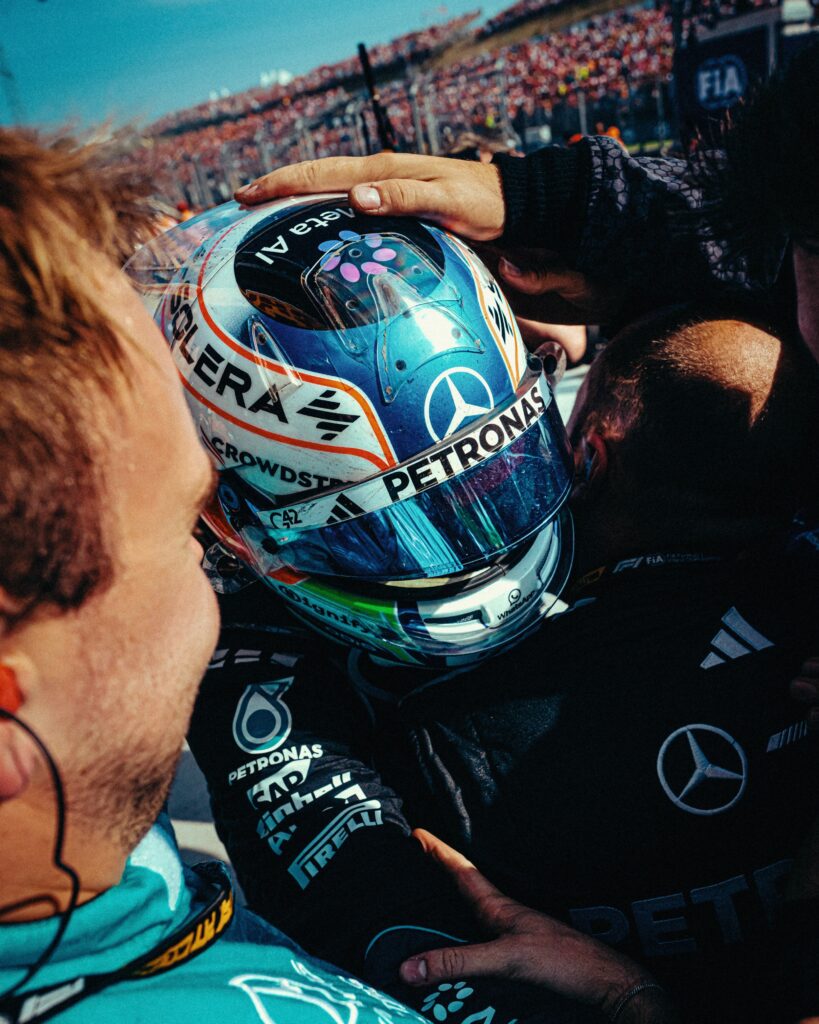
The closing laps at Zandvoort put Hamilton, Leclerc and Russell within seconds of each other, producing the kind of tight helmet-to-helmet racing that collectors look to relive through full-size display pieces. Ferrari’s Scuderia livery, running under the low, changeable coastal light of the Dutch circuit, photographed well through every phase of the weekend, from the sprint grid to the final laps behind Russell.
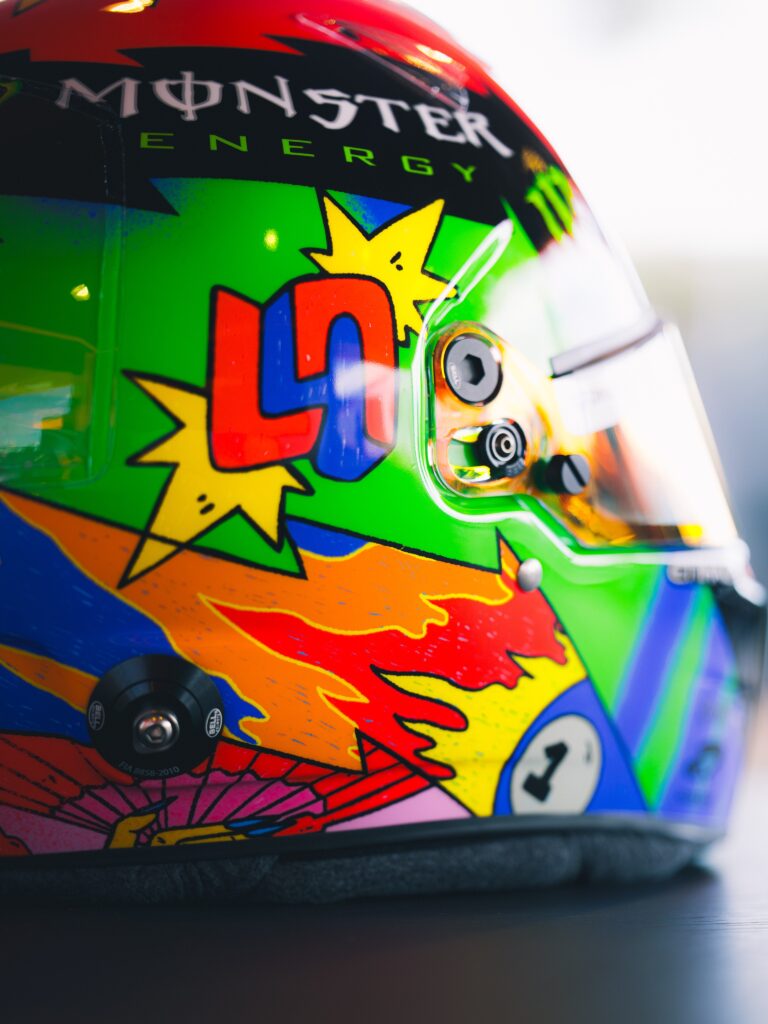
For fans who want to mark this stretch of the 2026 season, a full-size 1:1 replica of either driver’s helmet design captures the detail that television cameras only catch in passing: the paint layering, the sponsor liveries, and the finish that defines each driver’s identity on track. These display pieces are built to exhibition quality, making them a fitting way to commemorate a weekend defined by pace that outran the result.
What Comes Next for Ferrari
Ferrari’s next target, in Vasseur’s own words, is a full review of qualifying preparation and race execution before the next round of the 2026 season. “We have to now have a deep look on what we did and what we did wrong,” he said, signaling that the team sees Zandvoort as fixable rather than a sign of a genuine pace deficit against Mercedes.
With both Hamilton and Leclerc showing race pace that Vasseur rates above Mercedes’, the priority for Ferrari is translating Saturday potential into Sunday grid slots. A cleaner out-lap, a cleaner second start, and a quicker pit stop are the three concrete fixes Vasseur flagged, and closing those gaps could be the difference between finishing behind Russell and finishing ahead of him at the next race.
“I think the pace was strong, I think at least stronger than Mercedes, but it is like it is, that we have to now have a deep look on what we did and what we did wrong.”
— Fred Vasseur, Ferrari Team Principal, to Sky Sports
“In the second start we lost position with soft compared to some hard competitors, and this is unexpected. And then we had a poor pitstop and then it was difficult.”
— Fred Vasseur, Ferrari Team Principal
FAQ
Q: What did Fred Vasseur say about Ferrari’s pace at the Dutch Grand Prix?
Vasseur said Ferrari’s race pace at Zandvoort was stronger than Mercedes’, calling it good in both the sprint and main races, though the team failed to convert that pace into a better finishing result.
Q: Why did Ferrari struggle in qualifying at Zandvoort?
Vasseur pointed to a poor preparation out-lap in Saturday’s main qualifying session as the main issue, which left both Lewis Hamilton and Charles Leclerc starting no better than the third row of the grid.
Q: What happened to Charles Leclerc at the second start?
Charles Leclerc lost a position to Oscar Piastri at the second start, overtaken around the outside of Turn 1 despite running soft tyres against Piastri’s harder compound.
Q: Did Ferrari finish ahead of or behind Mercedes at Zandvoort?
Lewis Hamilton and Charles Leclerc finished right behind George Russell of Mercedes, despite Vasseur rating Ferrari’s underlying pace as stronger over the weekend.
Q: What is Ferrari’s next priority after the Dutch Grand Prix?
Vasseur said Ferrari must review its qualifying preparation and race execution in detail, targeting the out-lap issue, the second-start tyre mismatch, and the slow pit stop as concrete areas to fix.
Shop Ferrari Helmets
Display and collector replicas only. Not certified for protective use. Full-size 1:1 scale.