Blog
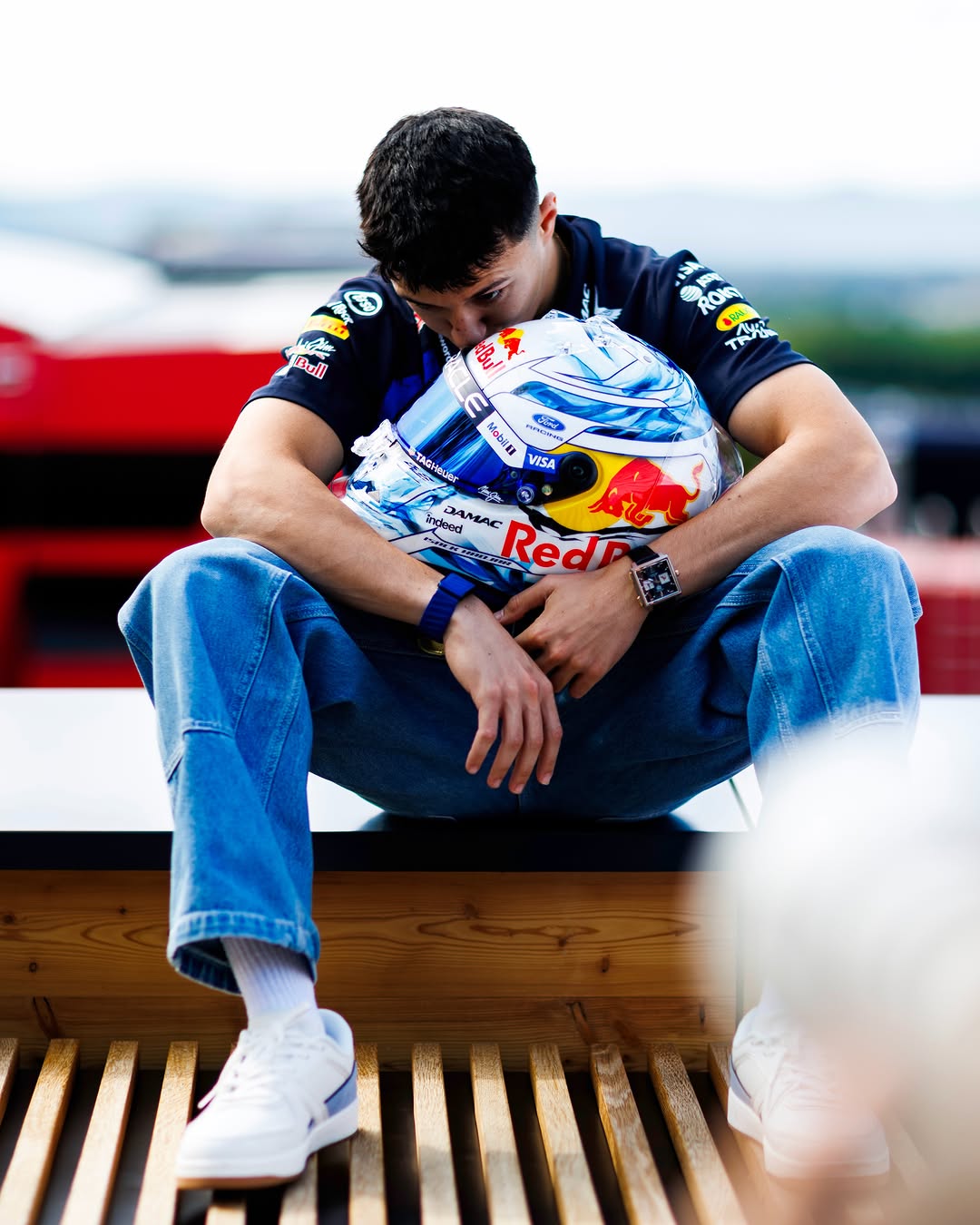
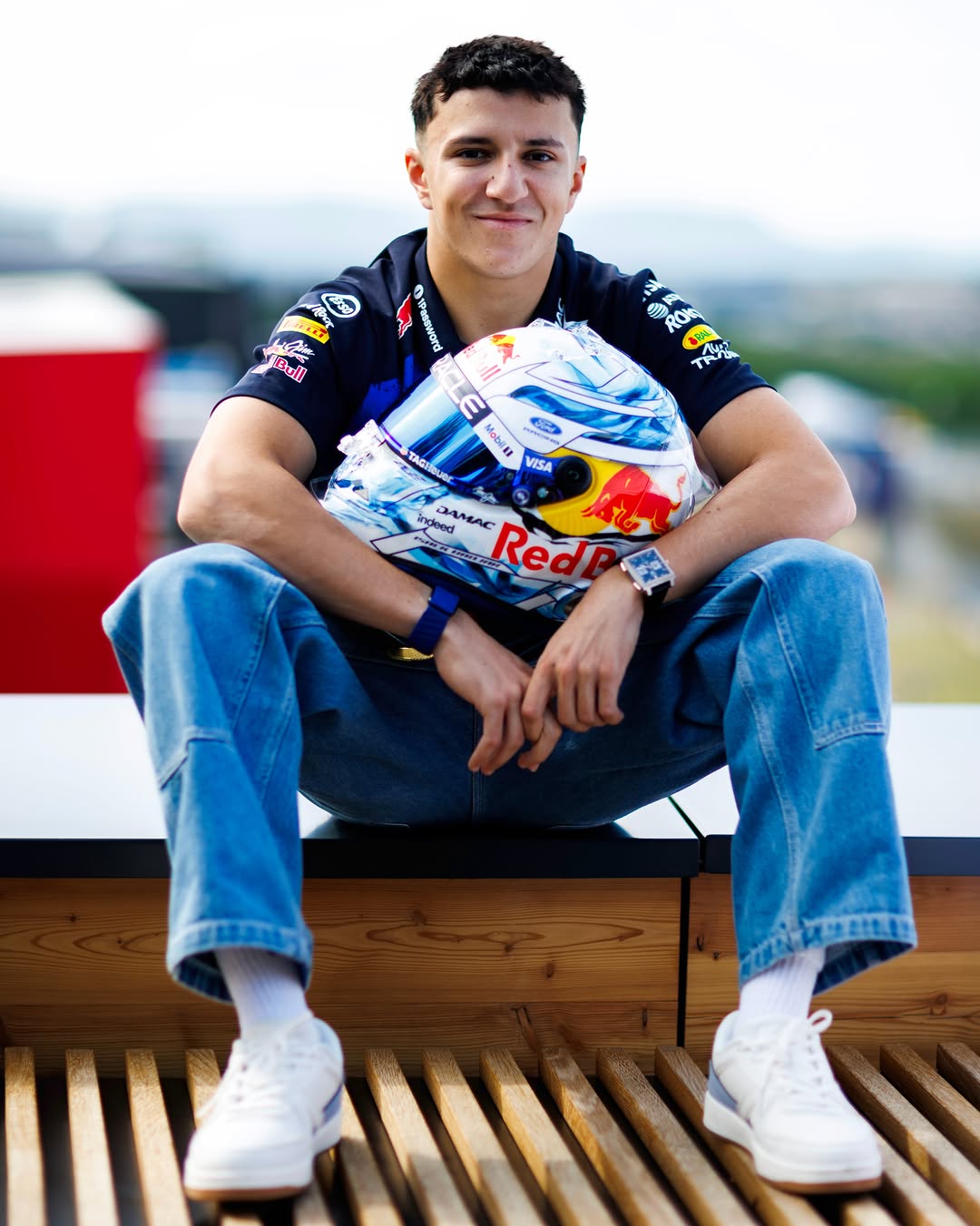
Hadjar’s Dutch GP Helmet Honors Maiden 2025 Podium
 123Helmets Editorial Team
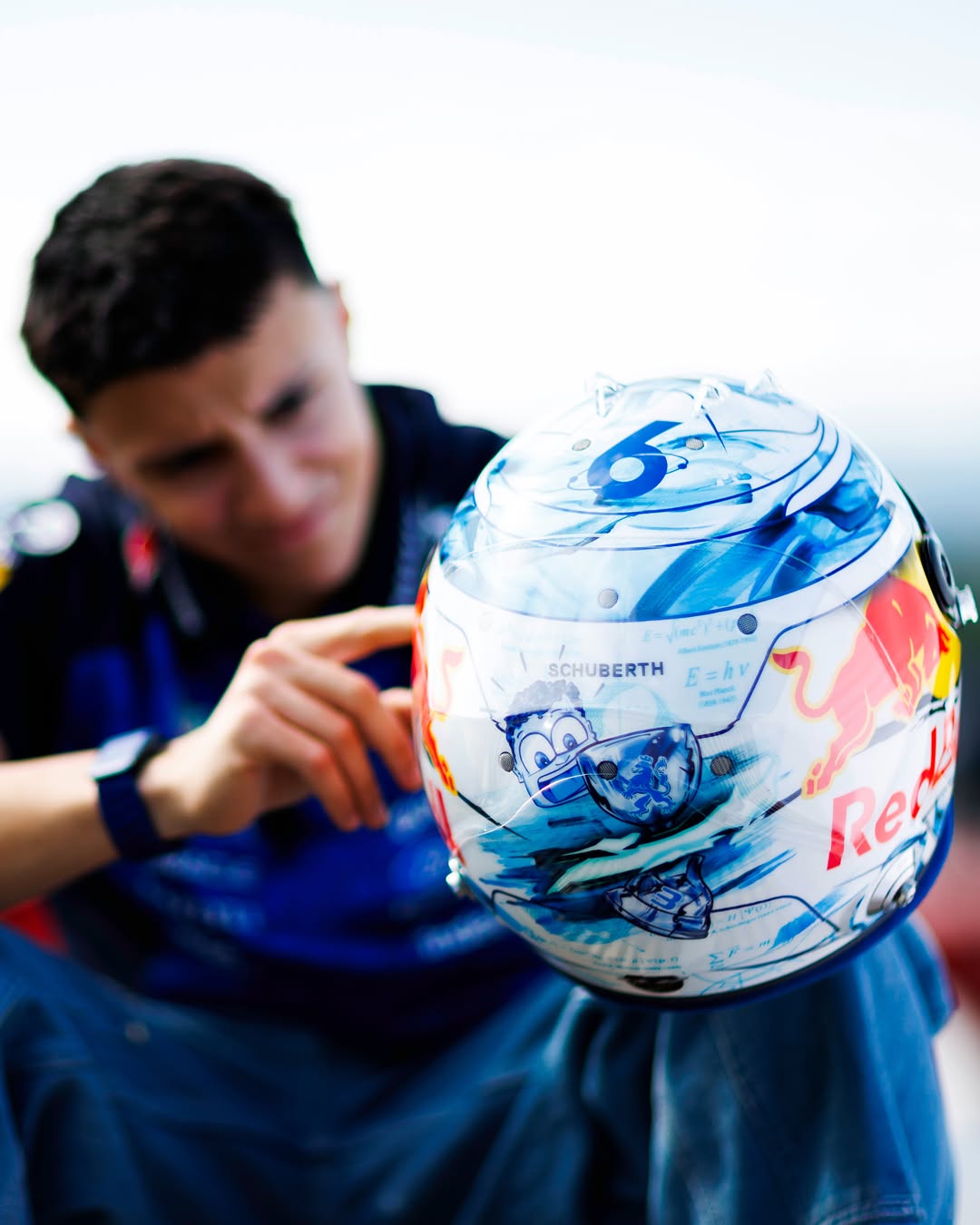
Oracle Red Bull Racing unveiled the Hadjar Dutch GP helmet on 17 August 2026, a white-and-blue design built around the memory of his maiden Formula 1 podium at the 2025 Dutch Grand Prix and a tribute to his father, a quantum physicist.
Key Takeaways
Revealed 17 August 2026 via Oracle Red Bull Racing’s official channels, the design marks Isack Hadjar’s third-place finish at the 2025 Dutch Grand Prix, his maiden F1 podium in his 15th career start.
The white shell is covered in hand-painted cobalt and pale-blue brushwork that echoes the Delft Blue ceramic of the trophy Hadjar received, and accidentally broke, at Zandvoort in 2025.
The rear of the shell carries physics equations attributed to Albert Einstein (1879-1955) and Max Planck (1858-1947), alongside Newton’s force equation, a tribute to Hadjar’s quantum-physicist father.
A hand-drawn cartoon on the rear shows Hadjar hugging an oversized trophy decorated with a rampant lion, his caricatured shoe numbered ‘3’, replaying the podium moment in comic form.
A Design Built Around One Broken Trophy
Isack Hadjar’s new helmet is a direct tribute to his maiden Formula 1 podium, third place at the 2025 Dutch Grand Prix at Zandvoort, and to the ceramic trophy he broke moments after receiving it. Oracle Red Bull Racing revealed the design on 17 August 2026, captioning the reveal video simply: “Handle with care. Isack’s latest helmet celebrates his first podium in F1.”
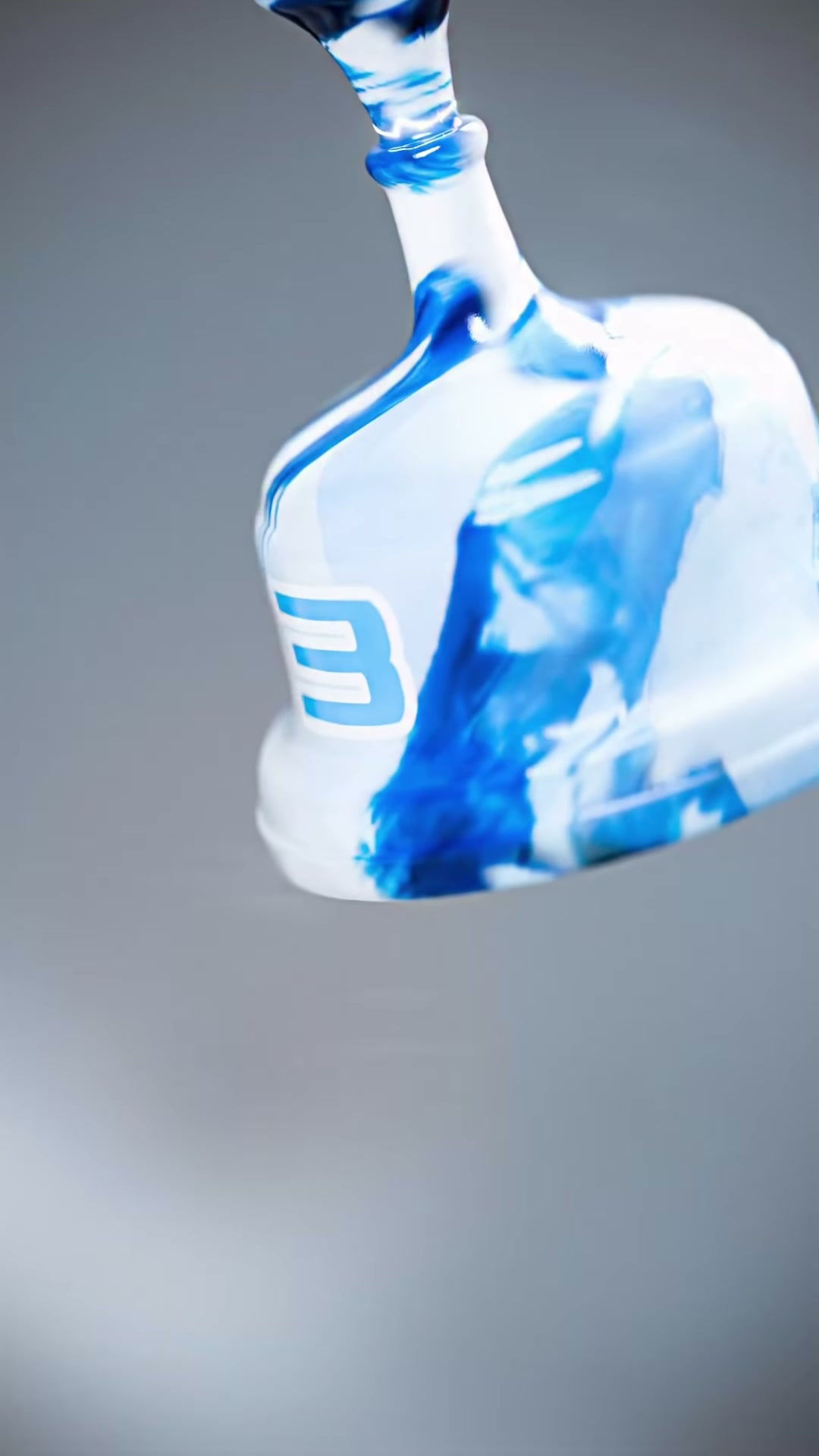
The reveal opens on a white ceramic trophy with blue brushwork, marked “3”, before cutting to the helmet, and the sequencing is deliberate. The trophies for that 2025 Zandvoort weekend were handmade ceramic pieces, hand-painted by Royal Delft with floral Delft Blue decoration, and it is that specific object, cobalt brushwork on white ceramic, that the entire shell now visibly echoes. The connection reads as an observation of the paintwork itself rather than a statement issued by the team.
That the podium being marked came in the 2025 season, while the helmet debuts in 2026, matters for reading this piece correctly. Hadjar now races for Oracle Red Bull Racing alongside Max Verstappen carrying number 6, a step up from the Racing Bulls seat he held during his breakthrough result in the Netherlands.
White Shell, Cobalt Brushwork
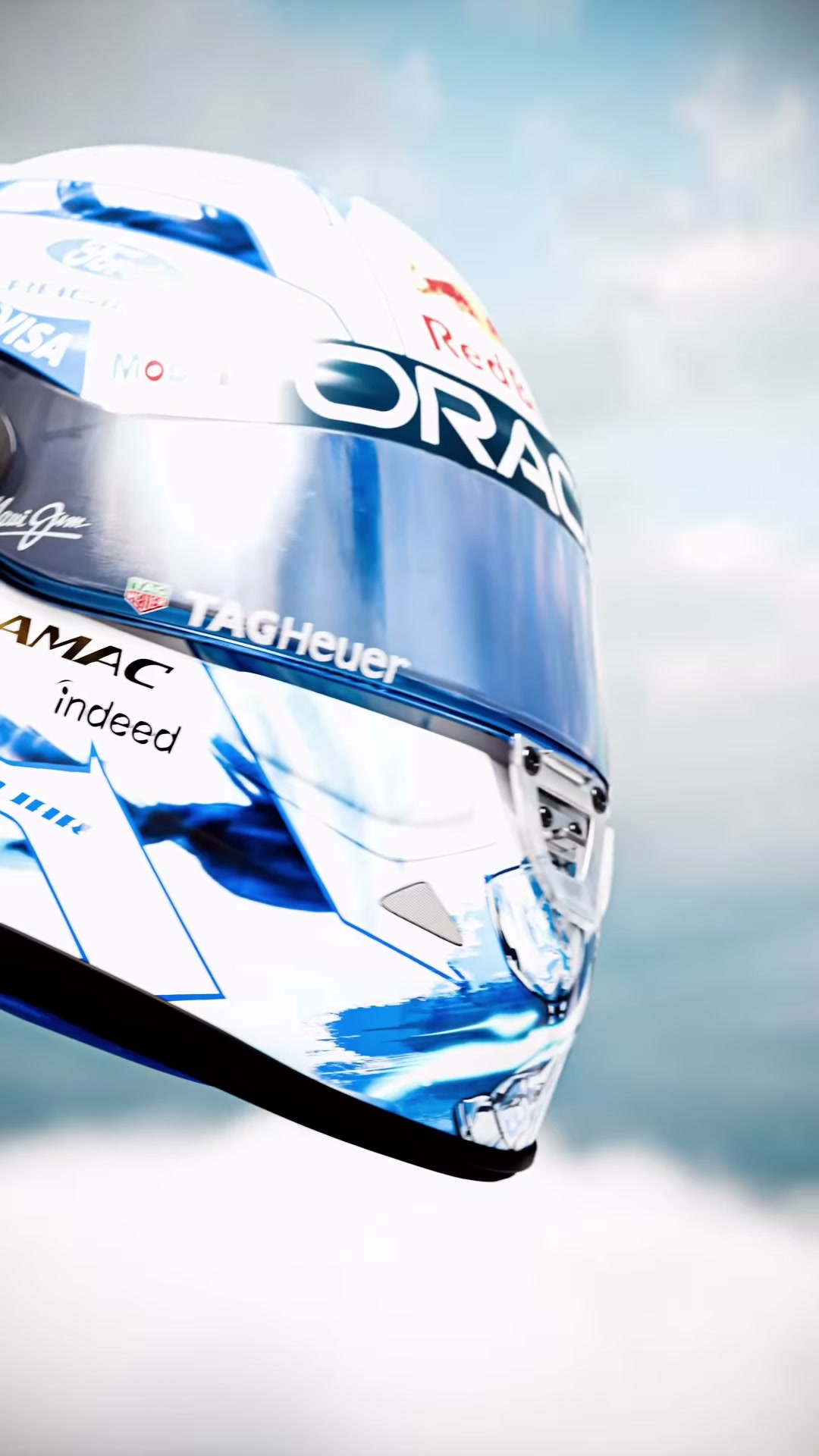
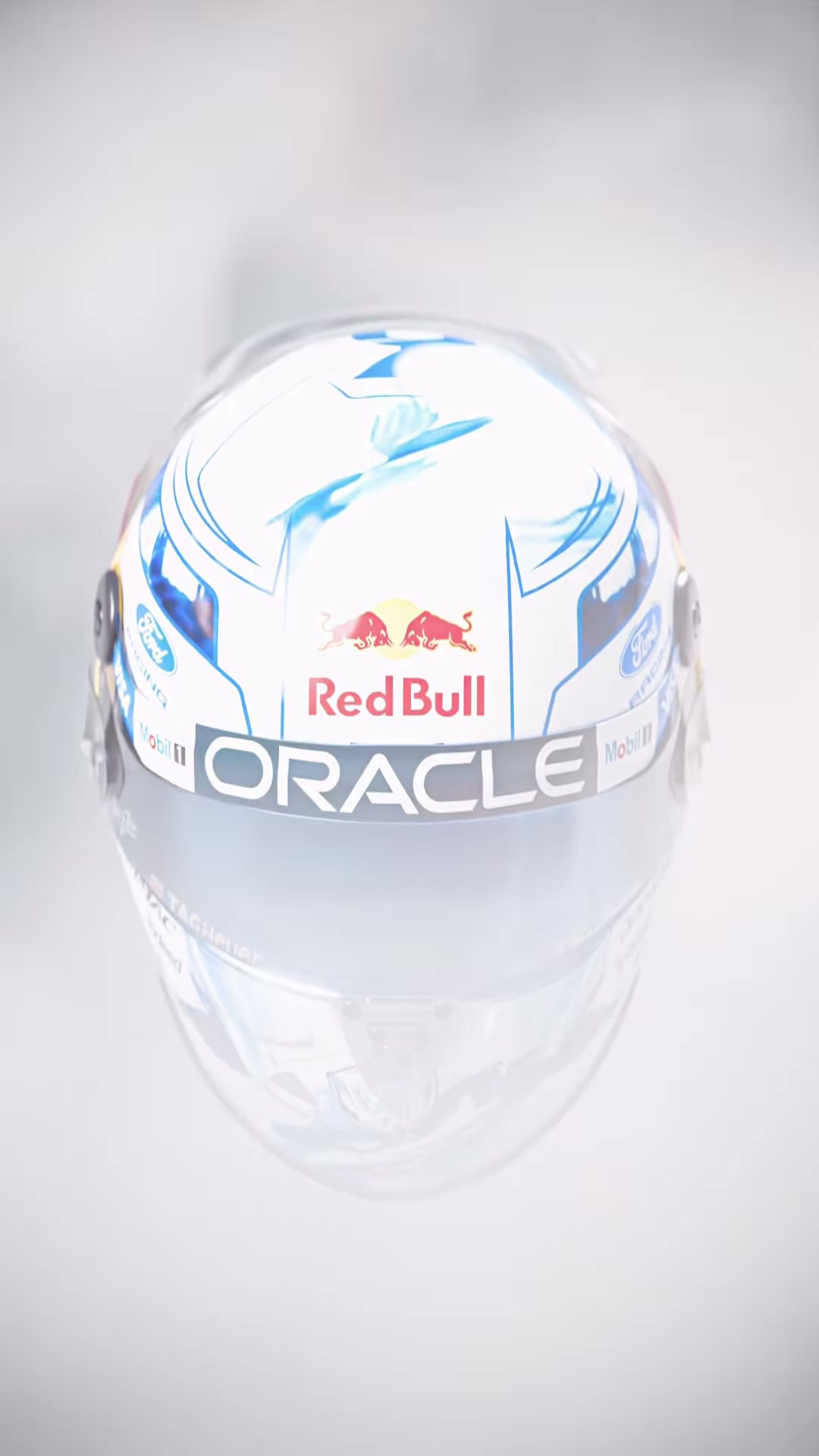
The base of the helmet is a white SCHUBERTH shell, covered almost entirely in hand-painted cobalt and pale-blue brushwork that reads like painted ceramic rather than a conventional racing livery. The strokes are irregular and layered, closer to decorative pottery than the flat geometric panels typical of a modern F1 lid, which is precisely the effect the Delft Blue reference calls for.
Race number 6, Hadjar’s number at Oracle Red Bull Racing in 2026, sits on the crown in blue, kept simple against the busier brushwork surrounding it. A deep-blue visor surround frames the design and ties the top of the shell to the darker blue tones used lower down, giving the whole helmet a consistent, cohesive palette from crown to chin.
The Red Bull charging-bull logo appears in its familiar red and yellow on both sides of the shell, the one element of bold, saturated color set against the otherwise blue-and-white composition. Against the ceramic-style brushwork, the logo reads almost like a seal stamped onto porcelain.
Physics on the Rear: A Tribute to Hadjar’s Father
The rear of the shell carries hand-painted physics equations, a personal tribute to Hadjar’s father, a quantum physicist who was at Zandvoort to watch his son’s podium in 2025, as reported by Autosport. Albert Einstein (1879-1955) appears alongside his relativistic energy relation, and Max Planck (1858-1947) is credited beside E = h v, both painted in the same blue used across the rest of the design.
Newton’s sum of forces equals mass times acceleration is also present, along with further formulae worked into the same rear panel. Einstein’s and Planck’s equations each carry the scientist’s name and dates beneath them, turning the back of the helmet into something closer to a handwritten notebook page than a standard sponsor panel.
Placing hard science alongside a racing helmet is an unusual choice, and it gives this design a personal register that goes beyond marking a result. It reads as a family reference first, a racing souvenir second.
The Cartoon on the Back
A hand-drawn cartoon caricature of Hadjar himself sits on the rear of the shell, showing him hugging an oversized trophy that carries a rampant lion motif. The cartoon figure’s shoe is marked with the number “3”, a direct nod to the third-place finish being celebrated, and the trophy in the drawing echoes the white ceramic, blue-brushwork trophy shown at the start of the reveal video, which is itself marked “3”.
The cartoon sits deliberately close to the Einstein and Planck equations, mixing a light, comic register with the more academic tribute alongside it. That contrast, playful caricature next to serious physics, is one of the more distinctive choices on the shell, and it is consistent with the caption’s own wry tone: “Handle with care.”
Sponsor Livery and Finish
Sponsor branding is worked into the design without disrupting the ceramic-style brushwork underneath it. ORACLE runs across the top of the shell, with TAG Heuer, DAMAC, indeed, VISA, Mobil 1, Maui Jim and Ford placed around the surface in their standard positions for the 2026 Oracle Red Bull Racing livery.
SCHUBERTH branding is visible on the shell itself, identifying the manufacturer beneath the paintwork. The overall finish keeps the brushwork as the dominant visual element throughout, with sponsor marks reading as secondary detail rather than competing panels, a balance that is not always achieved on liveries this densely decorated.
Looking Ahead to the 2026 Dutch Grand Prix
This helmet is a tribute to a result already on the record, not a preview of what is to come. Hadjar could not race it at Zandvoort: a wrist injury picked up during the summer break ruled him out of the 2026 Dutch Grand Prix on 23 August, and Liam Lawson took his Red Bull seat for the weekend. He brought the helmet to his return race instead, the Azerbaijan Grand Prix in Baku on 26 September 2026, and finished third.
What the reveal does show is the shell itself, and the story it tells: a maiden podium from 2025, a broken ceramic trophy, and a family tribute worked into blue brushwork on white. For fans following the number 6 car through the rest of the 2026 season, it is one of the more personal designs to appear on the grid this year.
“Handle with care. Isack’s latest helmet celebrates his first podium in F1.”
— Oracle Red Bull Racing, official Instagram caption, 17 August 2026
FAQ
Q: What does Isack Hadjar’s new helmet celebrate?
It celebrates his maiden Formula 1 podium, third place at the 2025 Dutch Grand Prix at Zandvoort, which came in his 15th career F1 start while driving for Racing Bulls.
Q: When was the helmet revealed?
It was revealed on 17 August 2026 through Oracle Red Bull Racing’s official Instagram channel, ahead of the 2026 Formula 1 season’s continuing races.
Q: Why does the helmet reference Delft Blue ceramic?
Because the 2025 Zandvoort podium trophies were handmade ceramic pieces hand-painted by Royal Delft, and the helmet’s white shell with cobalt and pale-blue brushwork visibly echoes that same style. The reveal video opens on an intact trophy object — white ceramic with blue brushwork, marked “3” — before cutting to the helmet.
Q: Whose equations appear on the back of the helmet?
The rear carries equations attributed to Albert Einstein (1879-1955), Max Planck (1858-1947) and Isaac Newton, a tribute to Hadjar’s father, a quantum physicist who attended the 2025 podium at Zandvoort.
Q: Does this helmet reveal anything about the 2026 Dutch Grand Prix result?
No. This helmet only marks the 2025 podium. A wrist injury ruled Hadjar out of the 2026 Dutch Grand Prix, run on 23 August, where Liam Lawson replaced him at Red Bull; the helmet made its race debut at the Azerbaijan Grand Prix on 26 September 2026, where Hadjar finished third.
Browse F1 Helmet Collection
Display and collector replicas only. Not certified for protective use. Full-size 1:1 scale.
This article was written with the help of AI tools. Editorial policy