Blog
1987 British GP: Williams’ Greatest Duel Remembered
 123Helmets Editorial Team
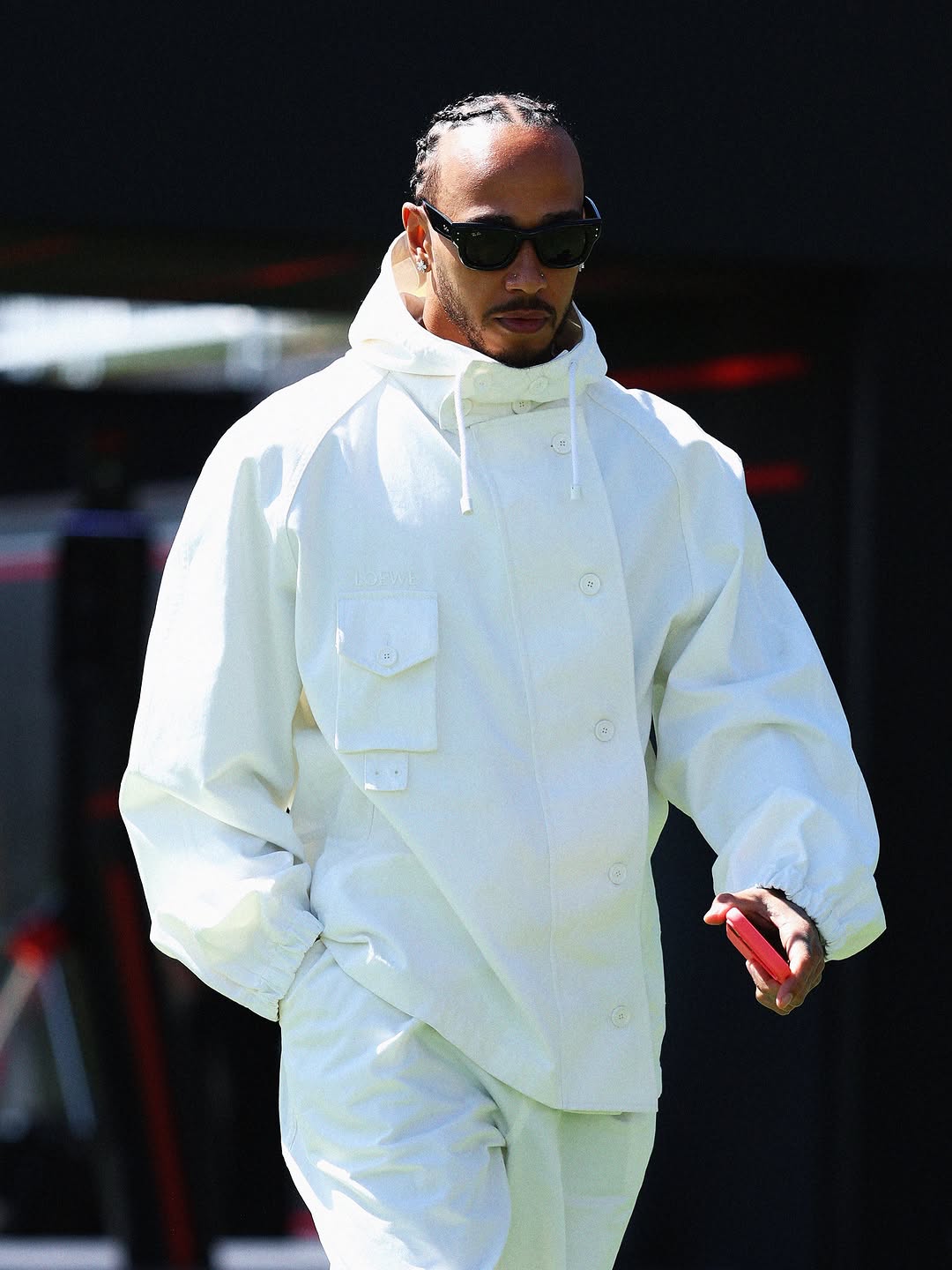
The 1987 British Grand Prix at Silverstone remains one of Formula 1’s most talked-about races — a wheel-to-wheel fight between Williams team-mates Nelson Piquet and Nigel Mansell that produced one of the sport’s most celebrated overtakes. Autosport’s From the Archive series revisits that July afternoon, and for collectors who follow Lewis Hamilton and the Williams legacy, the race sits at the very root of the team’s greatest era.
Key Takeaways
The 1987 British Grand Prix produced one of F1’s most celebrated overtaking moves, between Williams team-mates Nigel Mansell and Nelson Piquet at Silverstone.
Williams dominated the 1987 season with the turbocharged FW11B, a car notorious for brutal throttle response and the mechanical fragility that came with 1,000+ bhp outputs.
Autosport’s From the Archive episode features eyewitness accounts from Maurice Hamilton and Damien Smith, both present at Silverstone in July 1987.
Heritage Williams display helmets from the 1987 championship-era livery are full-size 1:1 collector replicas — not certified for protective use — and represent a direct link to that iconic season.
Why the 1987 British GP Still Matters
The 1987 British Grand Prix at Silverstone is widely regarded as one of the defining moments in Williams Formula 1 history. It was July 1987, and the race delivered a fight between team-mates Nelson Piquet and Nigel Mansell that transcended the usual language of sport — it was personal, it was fast, and it ended with a pass that people who were trackside that day can still describe corner by corner.
Autosport’s ongoing From the Archive series, hosted by Kevin Turner and featuring journalists Maurice Hamilton and Damien Smith — both present at Silverstone in July 1987 — revisits that afternoon with the detail that only eyewitnesses can provide. Hamilton and Smith had different vantage points on the day, which gives the episode a layered quality: two reporters, the same race, contrasting memories.
For the collector community, this episode is a reminder of why the Williams heritage represents some of the most evocative display pieces in F1 memorabilia. The Williams name carries the weight of that 1987 season and everything that came before and after it.
The Williams FW11B: A Car Built on the Edge
The Williams FW11B was a turbocharged machine known for melted pistons, massive throttle lag, and power outputs that made it genuinely dangerous to drive at the limit — facts that Autosport’s archive coverage makes plain in its accompanying feature on how Mansell tamed 1980s F1 machinery.
In 1987 Formula 1, turbo engines were producing figures that teams barely dared publish. The Honda RA167E unit powering the FW11B was capable of generating around 1,000 bhp in qualifying trim, delivered through a throttle response that gave drivers almost no warning between understeer and sudden oversteer. Mansell’s ability to control that behaviour on a high-speed circuit like Silverstone — with its long-radius corners and minimal run-off by modern standards — made his performances in the 1987 season particularly striking.
The Silverstone lap record at the time reflected those speeds. The circuit in its 1987 configuration demanded that drivers commit to corners before the turbo spooled, meaning the car’s attitude at the apex was often set before full power was available. That mechanical characteristic shaped every overtaking opportunity in the race and made Mansell’s decisive move on Piquet even more calculated than it appeared from the grandstands.
As a collector display object, the Williams livery from that period — the Canon-sponsored white and yellow — is one of the most recognisable in the sport’s history. A full-size 1:1 replica helmet finished in the 1987 Williams colour scheme sits as an exhibition-quality piece that communicates the era immediately, without a word of explanation needed.
Piquet vs Mansell: The Duel in Detail
Nigel Mansell’s pass on Nelson Piquet at the 1987 British Grand Prix is one of Formula 1’s most analysed overtaking moves, executed at Stowe Corner after Mansell had closed a gap that looked insurmountable just laps earlier.
Both drivers were on the same Williams machinery, which made the battle a genuine test of racecraft rather than equipment. Piquet led for much of the race, managing his tyres and pace in the way that characterised his approach to championship racing. Mansell, running in front of his home crowd, pushed a different strategy — attacking Piquet’s advantage lap by lap rather than waiting for a mechanical error or a pit-stop delta to change the picture.
The critical moment came when Mansell used the slipstream down Hangar Straight and committed to a move into Stowe that Piquet could not defend without risking contact. Maurice Hamilton, covering the race for the press, and Damien Smith, watching from elsewhere in the circuit, describe the moment differently in Autosport’s episode — which is part of what makes the archive footage valuable. Eyewitness sport coverage rarely agrees on exactly how something happened, and the disagreement itself tells you how much was happening at once.
The race was the 10th round of the 1987 FIA Formula 1 World Championship, held at Silverstone on 12 July 1987. It drew one of the largest British Grand Prix crowds of the decade, an audience that greeted Mansell’s move with a reaction that commentators at the time described as the loudest they had heard at a motorsport event.
The Williams Legacy and Lewis Hamilton
Lewis Hamilton‘s connection to Williams is foundational: it was Frank Williams who gave Hamilton his first Formula 1 test opportunity, and it was Hamilton’s early performances that confirmed what McLaren already suspected before they signed him for 2007.
That lineage matters to collectors. The Williams story runs from the 1980s turbo era through to the ground-effect regulations of 2026, and Hamilton’s career sits across a significant portion of that timeline — not as a Williams driver in the race seat, but as someone whose path into Formula 1 was shaped by the team’s willingness to give a teenager track time.
A display collection that places a 1987 Williams-era replica helmet alongside a Hamilton-era piece tells that story visually. Both are full-size 1:1 collector replicas, exhibition quality, and neither is certified for protective use — they are display pieces in the strictest sense, designed to represent the history of the sport on a shelf or in a cabinet rather than on a circuit.
The 1987 season also represents Williams at a specific technical peak. The FW11B was 595 mm in overall height at the roll hoop, and the car’s dimensions reflected the tight packaging demands of the Honda turbo installation. A display helmet scaled to 1:1 from that era sits in proportion to those cars in a way that a smaller-scale replica simply cannot replicate — the size communicates the period as much as the colour scheme does.
What Autosport’s Archive Series Reveals for Collectors
Autosport’s From the Archive series does something specific and useful: it puts named journalists who were physically present at historic events on camera to discuss what they saw, heard, and felt.
Host Kevin Turner’s approach with Maurice Hamilton and Damien Smith in the 1987 British GP episode is to let the disagreements surface. Two people at the same race, decades later, remember it differently — which is exactly how live sport works. That texture is what separates archive journalism from simple results tables, and it is the same texture that makes a display helmet more than a moulded shell.
When a collector displays a full-size 1:1 replica helmet from the 1987 Williams season, the object carries the weight of everything that happened on 12 July 1987 at Silverstone. The Canon livery, the turbo-era proportions of the visor opening (typically 26 mm of acrylic thickness in road-use versions of the period’s helmets, though display replicas use non-protective materials), the colour blocking that appeared on television screens across Europe — all of it is compressed into an object that weighs approximately 1.2–1.5 kg in its display form.
Autosport’s archive work and 123Helmets’ display replica work are, in this sense, doing the same thing from different directions: preserving the material and visual record of seasons that defined what Formula 1 became. The 1987 British Grand Prix is one of the events that both forms of preservation keep alive.
Displaying the 1987 Williams Era Today
A 1987 Williams heritage display helmet is a 29 × 25 × 35 cm exhibition-quality collector piece that places the Canon-era livery at eye level in any room where it is displayed.
The colour specification for the FW11B’s Canon scheme — white base with yellow and blue detailing — translates directly to a helmet shell finished to match the race livery of Mansell and Piquet during the 1987 championship. These are full-size 1:1 replicas: not scaled down, not decorative approximations, but objects that represent the actual dimensions of a race helmet from the period.
For collectors building a Williams heritage display, the 1987 British GP episode from Autosport’s archive series provides the narrative context that turns a display piece into a conversation point. The helmet on the shelf is connected to a race that happened on 12 July 1987, to a pass at Stowe Corner, to Mansell’s home-crowd celebration, and to a Williams team that was at the centre of Formula 1’s most technically extreme era.
That connection is what display collecting is about. The replica is not a functional object — it carries no protective certification, it is not designed for any form of use on a circuit or road — but it is a precise visual record of a moment in the sport’s history. Placed alongside an Autosport archive episode running on a screen nearby, it completes the picture that journalism alone cannot.
“Melted pistons and massive turbo lag: how Mansell tamed 1980s F1 monsters.”
— Autosport From the Archive series, 2026
“The 1987 British Grand Prix provided a dramatic duel between Williams team-mates and championship rivals Nelson Piquet and Nigel Mansell, culminating in one of Formula 1’s greatest passes.”
— Autosport From the Archive — 1987 British GP episode
FAQ
Q: What happened at the 1987 British Grand Prix?
The 1987 British Grand Prix at Silverstone, held on 12 July 1987, produced a celebrated wheel-to-wheel battle between Williams team-mates Nigel Mansell and Nelson Piquet. Mansell overtook Piquet at Stowe Corner in one of Formula 1’s most discussed passing moves, in front of one of the largest British Grand Prix crowds of the decade.
Q: What car did Williams use at the 1987 British GP?
Williams used the FW11B chassis with a Honda RA167E turbocharged engine at the 1987 British Grand Prix. The unit was capable of approximately 1,000 bhp in qualifying configuration and was known for severe throttle lag and mechanical fragility — characteristics that Nigel Mansell’s driving style was particularly suited to managing.
Q: What is the Autosport From the Archive series?
Autosport’s From the Archive is a video series that revisits historic Formula 1 races using eyewitness testimony from journalists and insiders who were present at the events. The 1987 British GP episode features host Kevin Turner alongside Maurice Hamilton and Damien Smith, both of whom covered the race at Silverstone in July 1987.
Q: What does a 1987 Williams heritage display helmet look like?
A 1987 Williams heritage display helmet is finished in the Canon livery — a white base with yellow and blue detailing — that appeared on the FW11B race cars of Mansell and Piquet during the 1987 championship. As a full-size 1:1 collector replica measuring approximately 29 × 25 × 35 cm, it is an exhibition-quality display piece and carries no protective certification of any kind.
Q: What is Lewis Hamilton’s connection to Williams?
Williams gave Lewis Hamilton his first Formula 1 test opportunity before he signed with McLaren for the 2007 season. That test was a key step in confirming Hamilton’s readiness for the top level of the sport, making Williams a foundational part of his career history even though he never raced for the team in a championship season.
Shop Lewis Hamilton Collection
Display and collector replicas only. Not certified for protective use. Full-size 1:1 scale.
This article was written with the help of AI tools. Editorial policy