Blog
Williams Plans New Car by Baku 2026
 123Helmets Editorial Team
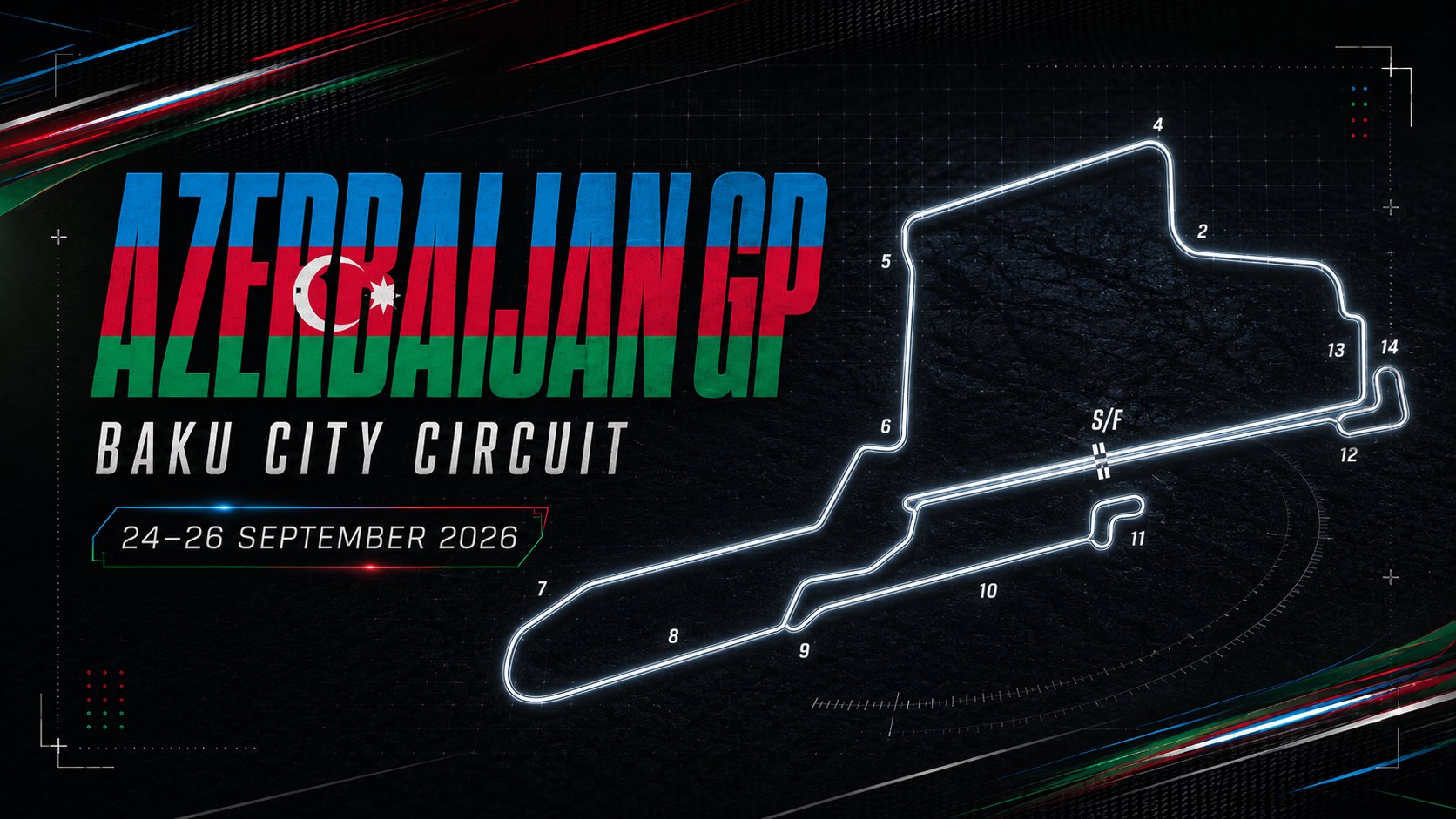
Williams team principal James Vowles has confirmed that the FW48 will be effectively rebuilt by the Azerbaijan Grand Prix in late September 2026, describing what arrives in Baku as ‘almost an entirely new car’ — a statement that marks one of the most candid mid-season rebuild announcements in recent F1 history.
Key Takeaways
Williams sits eighth in the 2026 constructors’ standings on just 11 points, ahead only of Audi, Aston Martin and Cadillac.
The FW48 was completed late and overweight for 2026, and Williams delivered zero upgrades at the Austrian GP.
Vowles has mapped a staged upgrade path: medium package at Silverstone, smaller items at Spa and Budapest, weight reduction at Zandvoort, and a near-complete rebuild for Baku.
The Azerbaijan GP in late September 2026 is Williams’ internal performance milestone — the moment the team expects to be truly competitive in the new-regulations era.
A Blunt Assessment from the Top
Williams will arrive at the 2026 Azerbaijan Grand Prix in Baku with what James Vowles himself calls ‘almost an entirely new car’ — a level of candour from a team principal that is rare at any point in a Formula 1 season, let alone mid-year. Vowles made the admission while speaking to Sky Germany, laying out a specific upgrade timeline that runs from Silverstone at the start of July through to the Baku street circuit in late September 2026.
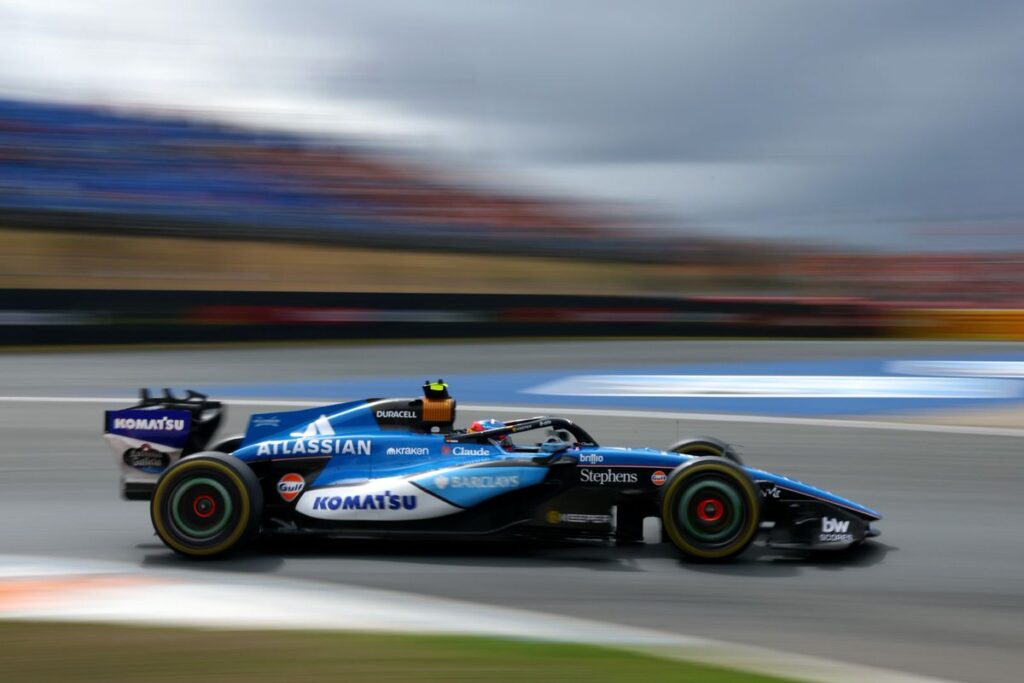
The backdrop is a painful one for a team that invested so heavily in the new-regulations cycle. Williams’ FW48 was completed late and arrived overweight, two structural problems that have compounded each other throughout the opening half of the 2026 season. The car has not been fast enough to mask those issues, and without a steady stream of updates — the Austrian GP weekend passed with zero new parts fitted — the gap to the midfield has widened rather than closed.
On 11 points after the Austrian GP, Williams sits eighth in the constructors’ standings, ahead of only Audi, Aston Martin and Cadillac. That number is the clearest indicator of just how far the team has fallen from where its pre-season ambitions placed it.
What Went Wrong with the FW48
The FW48’s two core problems — a late completion date and an overweight chassis — trace directly back to the scale of the 2026 regulation change and the pressure Williams was under to redirect resources toward the new car as early as possible in 2025. The team pushed hard to be ready for the new era, but the car that arrived at the first race of 2026 was not the weapon it needed to be.
Weight is a persistent issue in Formula 1 because every kilogram above the minimum weight target translates into lap time that cannot be recovered by setup or driver skill alone. When a car is overweight at the start of a season, the engineering team faces a dual challenge: they must develop performance upgrades while simultaneously stripping mass from the structure, meaning resources are split rather than focused on outright speed.
Hot conditions have exposed those weaknesses further. Both Alex Albon and Carlos Sainz have been outspoken about the lack of progress. In Austria, Albon finished 17th, two full laps down on the race leaders, while Sainz did not reach the finish at all, retiring with an engine failure. Corner profiles at recent circuits have also worked against the FW48’s current characteristics, compounding the effects of the weight and development deficit.
Vowles acknowledged directly that rivals running updates in Austria while Williams stood still caused a measurable further drop in relative performance. When the entire field moves and you do not, the gap does not stay the same — it grows.
The Upgrade Roadmap: Silverstone to Baku
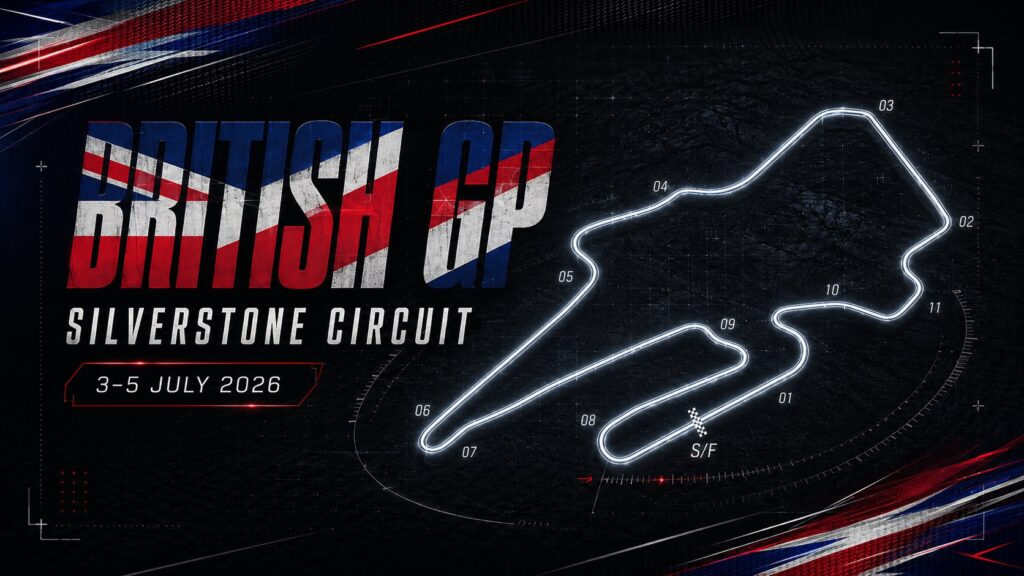
Williams’ upgrade plan between July and late September 2026 is structured in four distinct phases, each building toward the near-complete redesign that Vowles has targeted for Baku. The first phase is the British Grand Prix at Silverstone, where Vowles described a ‘medium-sized’ package — meaningful in scope, though not transformative on its own.
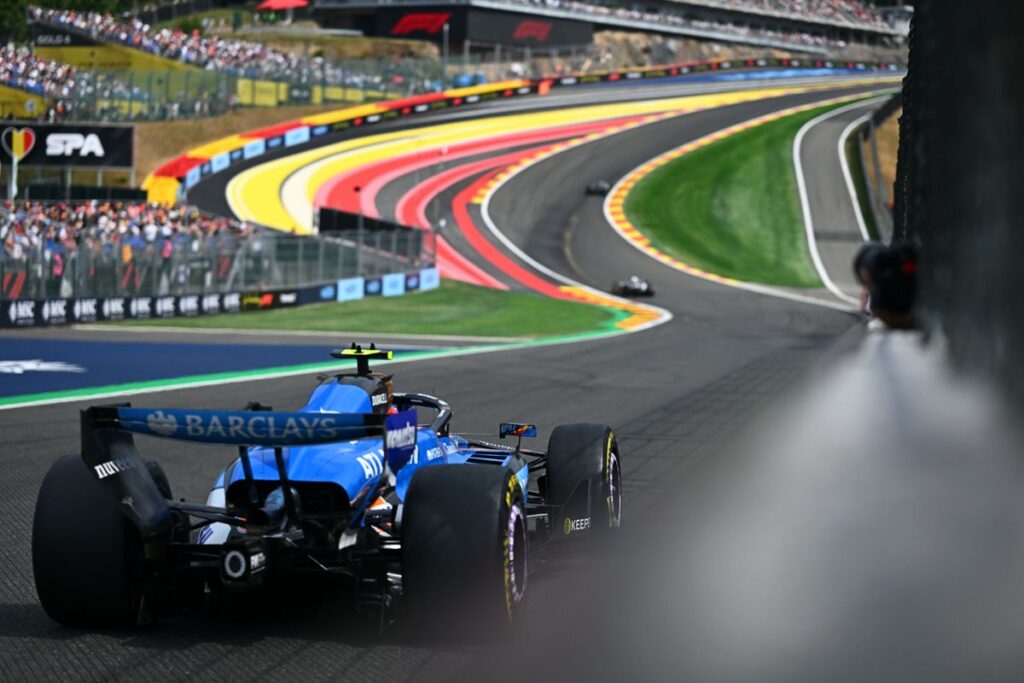
The second phase covers Spa-Francorchamps and the Hungarian Grand Prix at Budapest, where smaller incremental items will be introduced. These are refinements rather than step changes, but they keep the development momentum moving rather than allowing another update-free weekend of the kind that hurt the team so visibly in Austria.
The third phase targets Zandvoort, where Vowles specifically flagged weight reduction as part of the package. This is the most structurally significant development before Baku, because trimming mass from the car addresses the root cause of the FW48’s performance deficit rather than simply adding downforce or aerodynamic efficiency on top of an already heavy platform.
The fourth and final phase is Baku itself — the Azerbaijan Grand Prix in late September 2026 — where Vowles says the car will be ‘almost entirely new.’ At that point, the team expects to have resolved the weight problem and introduced enough new aerodynamic and mechanical components that the FW48 will look and perform significantly differently from the car that lined up on the Austrian GP grid.
Why Baku as the Target Date?
Baku’s street circuit characteristics — long straights, tight corners, and a premium on mechanical grip — suit a car that has been properly optimised rather than a machine carrying excess weight. Targeting a full rebuild for that round also gives the engineering team the maximum amount of time to manufacture, test and validate parts before the circuit demands arrive.
What This Means for the Rest of 2026
Williams’ realistic expectation is that the European summer stretch of the calendar — Silverstone, Spa, Budapest, Zandvoort — will produce incremental gains rather than a sudden leap into the points-scoring positions that the team needs. The Baku package is the true reset point, and everything between now and then is about keeping the car competitive enough to gather data and avoid falling further behind in the constructors’ standings.
With 11 points on the board and the calendar moving into its second half, the arithmetic is not comfortable. Audi, Aston Martin and Cadillac — the three teams currently behind Williams — are each at different stages of their own development trajectories, and none of them can be assumed to stand still while Williams waits for its Baku rebuild.
Sainz and Albon are experienced enough to extract the maximum from a difficult car, but frustration has been clear from both drivers. Sainz’s Austria retirement removed any chance of a points score that weekend, and Albon’s two-lap deficit tells a story about a car that is not merely slow in qualifying but genuinely struggling with race pace and tyre management across a full distance.
The team’s hope is that the Silverstone package provides enough of a signal — both internally and to the outside world — that the upgrade process is real and delivering. A strong British GP weekend, even a single points score, would change the tone considerably going into the Spa–Budapest double-header.
Williams Heritage and the Weight of Expectation
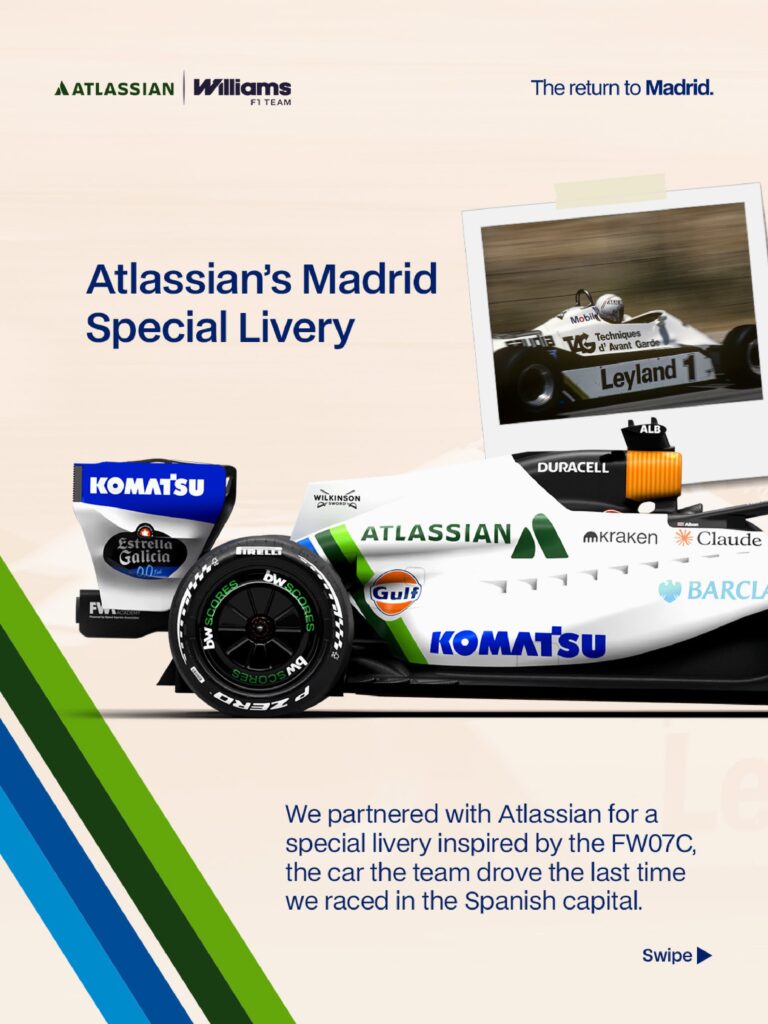
Williams is one of the most decorated constructors in Formula 1 history, with nine constructors’ championships won between 1980 and 1997, a record of achievement that makes the current eighth-place standing particularly sharp for the people inside the Grove factory. That history is not just a source of pride — it shapes the standard against which every current result is measured, internally as much as externally.
The team’s recovery from years of difficulty under previous ownership has been gradual but real. The arrival of Vowles as team principal brought a structured approach to rebuilding the operation’s technical foundations, and the signing of Sainz alongside Albon was a significant signal that the team intended to compete for points regularly, not just occasionally. The 2026 regulation change was meant to be Williams’ inflection point — the moment the rebuilt infrastructure could produce a car designed from scratch to a strong specification.
The FW48’s overweight, late-completion reality has delayed that inflection point rather than cancelled it. Vowles’ commitment to a near-complete car for Baku reflects confidence that the engineering solutions exist and are being manufactured, not that the team is searching for answers it does not yet have.
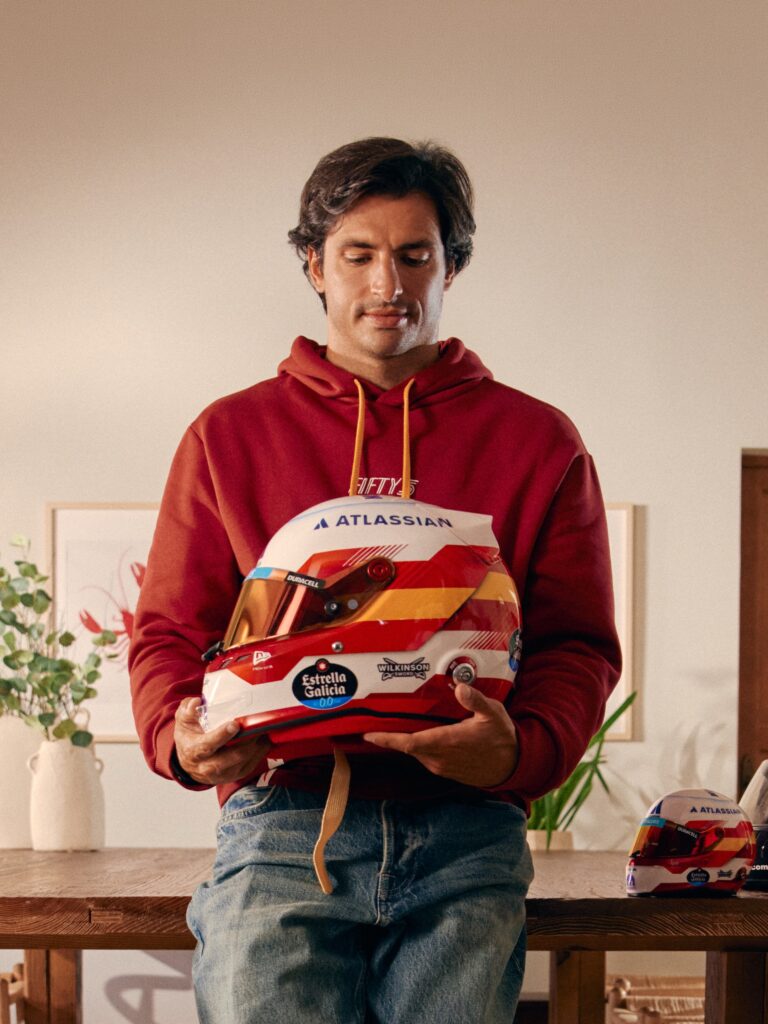
For collectors who follow Williams across its decades of competition, this specific moment — the mid-season rebuild, the candid acknowledgement of difficulty, the structured plan to recover — is exactly the kind of narrative that defines a team’s character as much as its championship trophies do. The helmets worn by Albon and Sainz during this period carry the livery and identity of a team fighting its way back, which gives them a particular place in the arc of Williams’ story.
Collecting the Williams 2026 Season
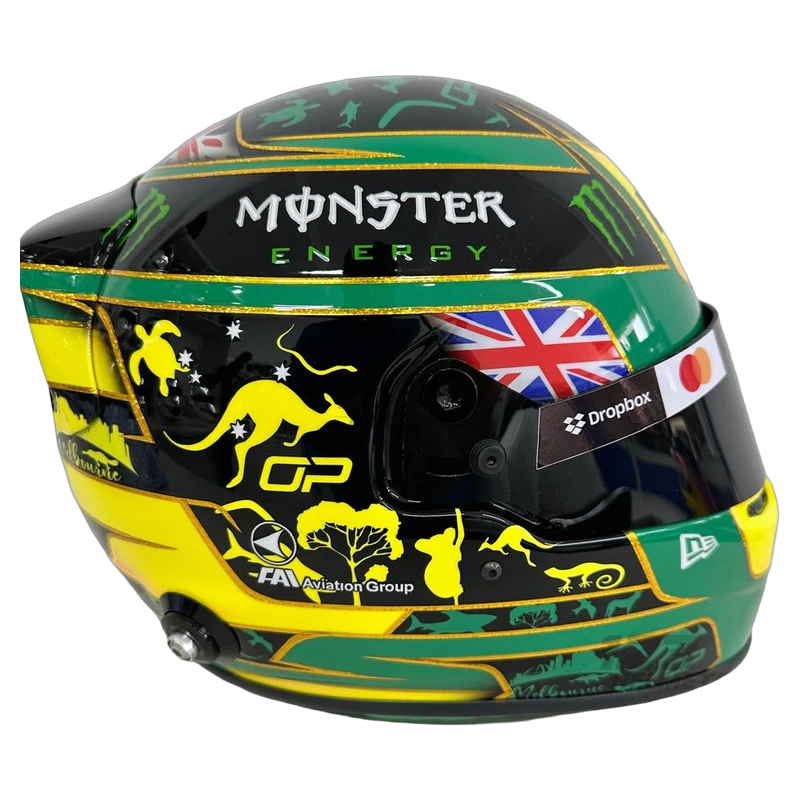
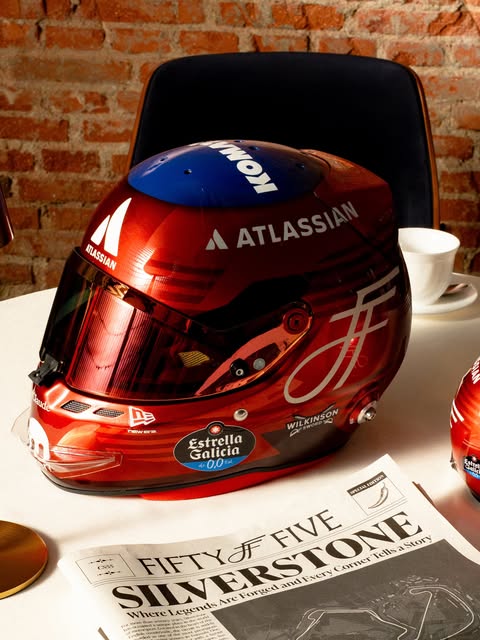
A full-size 1:1 display replica of a Williams driver helmet from the 2026 season captures a moment of significant transition for one of Formula 1’s most storied constructors. These are exhibition-quality collector pieces, built to the same external dimensions as the helmets worn at race weekends, and finished with the livery and colour scheme that Albon and Sainz have worn throughout the FW48’s debut campaign.
The 2026 season has particular documentary value precisely because it is the opening chapter of the new-regulations era. The challenges Williams has faced — the overweight car, the staged rebuild, the frank admissions from Vowles about the competitive gap — will be part of how this period is remembered and discussed when the team’s history is written. A display replica from this year sits at the start of a new chapter rather than in the middle of one.
Williams helmet replicas at 123Helmets.com are produced as display and collector items only. They are not certified for protective use, not intended for road or track wear, and carry no FIA, Snell, ECE or DOT certification. They are display pieces: full-size, 1:1 scale, exhibition quality, designed to be shown rather than worn.
Browse the full Williams helmet collection to find replicas from across the team’s history, including the 2026 season designs carried by Alex Albon and Carlos Sainz.
“Our upgrade plans, we’ve got what I call a medium-sized for Silverstone, so just in one week’s time. And then there’ll be small bits, Spa. Budapest, small bits as well. And then slightly bigger elements, including weight reduction to Zandvoort. And then really for us, it’s almost an entirely new car for Baku.”
— James Vowles, Williams Team Principal, speaking to Sky Germany, 2026
FAQ
Q: When will Williams introduce its major 2026 upgrade package?
Williams’ biggest upgrade of the 2026 season is targeted at the Azerbaijan Grand Prix in Baku in late September, which team principal James Vowles has described as ‘almost an entirely new car.’ Smaller packages are planned for Silverstone, Spa, Budapest and Zandvoort in the weeks before Baku.
Q: Why has Williams struggled in the 2026 F1 season?
Williams’ FW48 arrived late and overweight at the start of the 2026 season, two problems that have compounded each other throughout the year. The team has also run with few updates — including zero new parts at the Austrian GP — while rivals have continued to develop, causing the performance gap to widen.
Q: Where does Williams sit in the 2026 constructors’ standings?
Williams is eighth in the 2026 constructors’ championship with 11 points after the Austrian GP, ahead of only Audi, Aston Martin and Cadillac. The team has failed to score in its last two races.
Q: What happened to Williams’ drivers at the 2026 Austrian GP?
Alex Albon finished 17th, two full laps behind the race leaders, while Carlos Sainz retired from the Austrian GP with an engine failure, meaning Williams scored no points from that round.
Q: Are the Williams 2026 helmet replicas at 123Helmets.com safe to wear?
No — these are display and collector replicas only, not certified for protective use of any kind. They carry no FIA, Snell, ECE or DOT certification and are not designed for road or track use. They are full-size 1:1 scale exhibition pieces intended for display and collection.
Shop Williams Helmets — browse our full range of full-size 1:1 display replica helmets from Williams Racing, including 2026 season designs worn by Alex Albon and Carlos Sainz. Exhibition-quality collector pieces, not for protective use.
Display and collector replicas only. Not certified for protective use. Full-size 1:1 scale.
This article was written with the help of AI tools. Editorial policy