Blog
Austrian GP 2026: KTM X-Bows Replace Parade Lorry
 123Helmets Editorial Team

The 2026 Austrian Grand Prix drivers’ parade ditched the traditional flatbed lorry in favour of a fleet of KTM X-Bows, each wrapped in the full 2026 livery of its passenger’s F1 team — a vivid display of team branding that carries real implications for helmet and livery collectors.
Key Takeaways
All 22 drivers rode in KTM X-Bows wrapped in their team’s exact 2026 F1 livery around the 4.318 km Red Bull Ring circuit.
The KTM X-Bow is an ultra-lightweight car — 790 kg kerb weight, 330 hp, 0–100 km/h in 3.9 seconds — built on a Dallara carbon fibre monocoque.
The team-liveried X-Bows are the latest in a line of bespoke parade moments, following the team-liveried LEGO cars at the 2025 Miami Grand Prix.
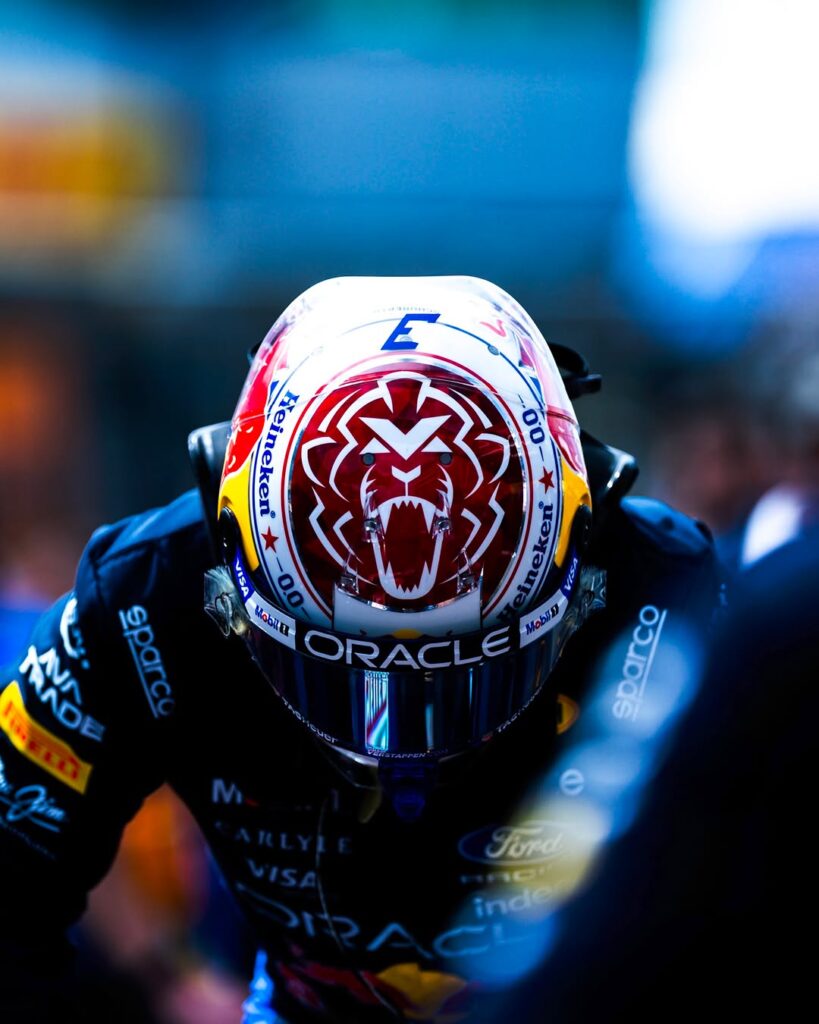
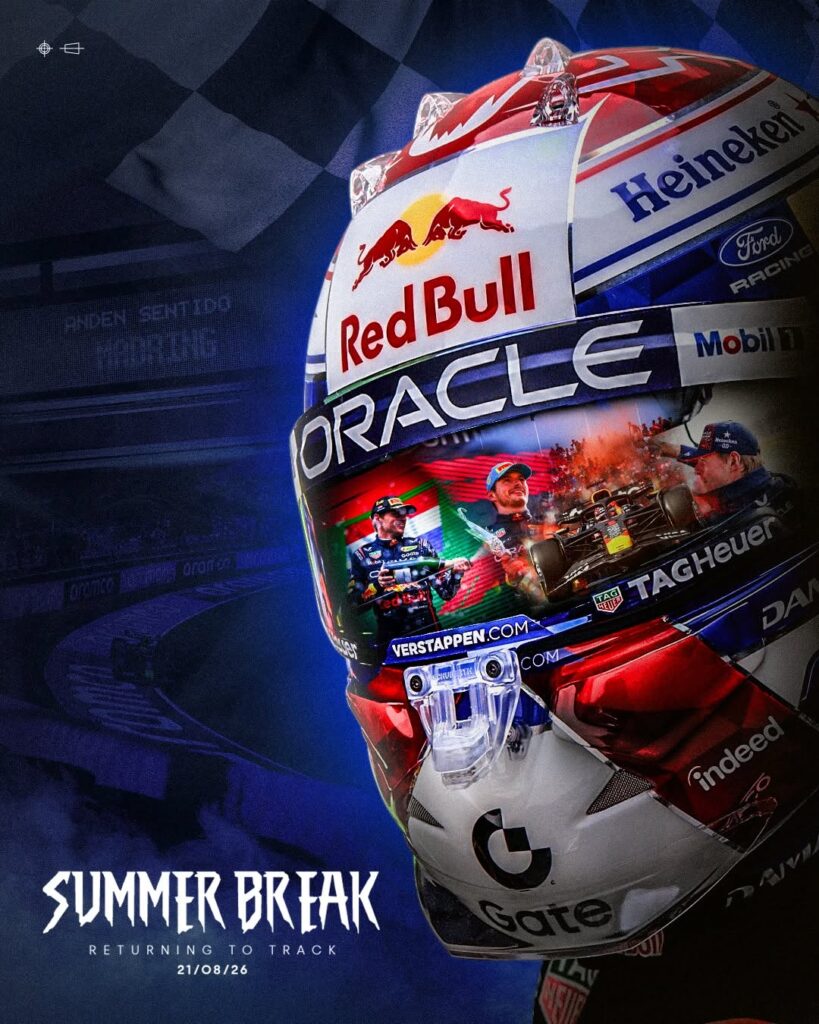
For collectors, the parade is a snapshot of every team’s confirmed 2026 livery in one place — a direct reference point for full-size 1:1 replica helmet colourways.
A New Format for the Drivers’ Parade
The 2026 Austrian Grand Prix drivers’ parade replaced the conventional flatbed lorry with a fleet of KTM X-Bows, each car wrapped in the confirmed 2026 livery of the driver’s respective Formula 1 team. All 22 drivers on the grid were chauffeured around the Red Bull Ring’s 4.318 km Styrian circuit in the Austrian-manufactured machines ahead of the race. It was the most visually distinctive parade format seen at a European round in recent memory, and it put every team’s current livery on full public display simultaneously — something that rarely happens in a single, controlled setting outside of a season-launch event.
The departure from tradition drew immediate attention online. One Lando Norris fan posted on X: “That KTM is awesome think LN1 should get one.” Others went further, suggesting the drivers should have been allowed to race the X-Bows themselves. “It could have been like the LEGO race!” one fan wrote, referencing the life-sized LEGO cars that featured in the drivers’ parade at the 2025 Miami Grand Prix — a chaotic, fan-favourite moment where The LEGO Group partnered with F1 to build 10 bespoke, team-liveried cars, one for each garage on the grid. The Austrian edition had a more composed feel, but the energy from fans watching 22 low-slung, wrapped sports cars thread through the circuit was unmistakable.
For anyone who follows F1 branding closely — whether as a fan, a photographer, or a collector of display helmets — the parade provided a rare simultaneous look at all 10 team liveries in motion, under Styrian sunlight, on the same piece of tarmac.
What Is the KTM X-Bow?
The KTM X-Bow is the Austrian motorcycle manufacturer’s flagship four-wheeled track vehicle, first introduced in 2008 and still produced at KTM’s facility in Graz. It is built around a Dallara-designed carbon fibre monocoque — the same Dallara that supplies chassis expertise to multiple single-seater racing series — which keeps the kerb weight at just 790 kg. Power comes from a rear-mounted, turbocharged Audi engine producing 330 horsepower, giving the car a power-to-weight ratio that translates directly into a 0–100 km/h sprint time of 3.9 seconds.
The Red Bull Ring itself hosts a KTM X-Bow driving experience, which means the circuit and the car have an established relationship that predates the parade. The specification figures quoted here — 790 kg, 330 hp, 3.9 seconds — align with the driving experience models available at the venue, and the cars used for the drivers’ parade are assumed to be of the same build standard.
Wrapping a car of this profile in a team’s F1 livery is not a trivial exercise. The X-Bow’s exposed monocoque flanks and open-wheel architecture mean the wrap designer has to account for compound curves and structural recesses that a conventional road car’s flat panels never present. The result, when done correctly, is a three-dimensional rendering of a team’s colour scheme that behaves differently in light than a flat graphic or a printed poster — which is part of what made the parade such a useful livery reference for collectors and designers alike.
The 2026 Team Liveries on Show
Every current Formula 1 team’s 2026 livery appeared on a KTM X-Bow during the parade, giving the clearest real-world view of this season’s colour schemes outside of the cars themselves. For collectors of full-size 1:1 display replica helmets, that matters because livery accuracy is what separates a credible replica from a generic approximation. When a team updates its colour palette — even by a few degrees of hue or a repositioned sponsor logo — a faithful replica helmet must reflect that change.
The Red Bull X-Bow carried the team’s 2026 dark navy and red scheme around a circuit that shares its name with the energy drink brand — a detail not lost on the crowd in the grandstands at Spielberg. Ferrari‘s Scuderia red appeared on the car carrying Charles Leclerc, while Lewis Hamilton‘s X-Bow wore the same livery. The Mercedes Silver Arrow colours wrapped the car for George Russell, who heads into the Austrian GP weekend from pole position.
McLaren‘s papaya and carbon geometry, Alpine‘s blue and pink combination, Aston Martin‘s British racing green, Williams‘ blue-and-white, Haas‘s monochrome scheme, Racing Bulls‘ dark navy and yellow, and Audi‘s livery all featured across the fleet. Seeing all ten colour palettes on identical bodywork, moving at the same speed, in the same lighting conditions, is precisely the kind of reference that informs decisions about which replica to acquire and how accurately it should match the on-car scheme.
How the Parade Fits Into the Wider 2026 Branding Story
The KTM X-Bow parade is the second major team-livery activation at an F1 race weekend in the space of two seasons, and it signals that the sport is treating the pre-race parade as genuine brand real estate rather than a logistical formality. The 2025 Miami LEGO parade set a precedent: build something physical, bespoke, and immediately shareable, wrap it in team colours, and the footage and photographs will circulate far beyond the race broadcast itself. The Austrian edition follows the same logic, but with a car that carries genuine performance credentials of its own — 330 hp and a Dallara monocoque are not props.
For the collector market, this pattern has a concrete effect. Each time a team’s livery appears in a high-profile, non-race context — on a LEGO car, on an X-Bow, in a season-launch installation — it reinforces the visual identity associated with that season. A full-size 1:1 replica display helmet tied to the 2026 Austrian Grand Prix is not just a reference to a race result; it is connected to a broader visual moment that includes the parade, the circuit’s KTM partnership, and the specific combination of drivers and teams that made up the 2026 grid at Spielberg.
The Red Bull Ring at Spielberg also holds a particular place in F1 collector culture. The circuit has hosted grands prix continuously since 2014, and the combination of Red Bull’s home-race livery activations and the compact, camera-friendly layout of the 4.318 km track has produced some of the most-photographed helmet and car livery combinations of the hybrid era. The X-Bow parade adds another layer to that visual archive.
Collector Implications: Livery Accuracy in 2026 Display Replicas
Display replica helmets tied to specific 2026 race weekends derive a significant part of their value from livery precision — the closer the replica matches what a driver actually wore at a given event, the more meaningful it is as a collector piece. The Austrian GP parade, by presenting all ten 2026 team liveries on identical objects under consistent natural light, functions as an unintentional but highly useful colour-accuracy reference.
Full-size 1:1 replica helmets in the 123Helmets collection are exhibition-quality display pieces, not items certified or intended for any protective use. Their purpose is accurate visual representation: the exact helmet shell geometry, the correct visor profile, and the specific livery that a driver wore at a documented moment in a Formula 1 season. When that season includes a parade moment as visually rich as the KTM X-Bow fleet at the 2026 Austrian GP, collectors gain a sharper point of reference for what “correct” looks like in that year’s colour language.
The X-Bow’s geometry also happens to complement helmet photography well. The car’s low, open cockpit places a driver’s helmet at roughly the same height as an observer standing at track level, meaning the helmet-and-car combination is captured cleanly in thousands of images from the Spielberg grandstands. Those images will circulate through the collector community as season documentation, reinforcing the connection between the 2026 Austrian GP and the specific liveries that appeared on track that weekend.
What to Look for in a 2026 Austrian GP Replica Helmet
When evaluating a 2026 Austrian GP display replica, focus on three elements: the accuracy of the team’s 2026 livery colourway as confirmed by the race-weekend parade, the helmet’s graphic placement relative to the driver’s documented 2026 design, and the quality of the visor finish on a full-size 1:1 shell. These are the details that distinguish a collector piece from a generic souvenir, and the KTM X-Bow parade provides unusually clear photographic evidence against which to check all three.
The Red Bull Ring, KTM, and the Austrian Connection
The Red Bull Ring and KTM share more than geography — both are Austrian brands with global motorsport reach, and the X-Bow driving experience at the Spielberg circuit formalises a commercial relationship between the two that the 2026 drivers’ parade made visible to a worldwide audience. The circuit’s full loop measures 4.318 km and contains a compact, elevation-rich layout that has made it one of the most overtaking-rich venues on the modern calendar.
KTM’s X-Bow first appeared in 2008, which means the car has now been in production for 18 years — long enough to have built its own collector following in the lightweight sports car market. The Dallara monocoque and Audi engine combination is unusual for a production road-legal vehicle, and it gives the X-Bow a motorsport pedigree that most manufacturer-branded track cars lack. Wrapping a machine with that kind of heritage in the liveries of the ten current F1 teams is a more considered choice than it might appear: both the car and the liveries it carries have documented histories worth preserving.
For collectors watching from home or from the Spielberg grandstands, the 2026 Austrian GP parade delivered something genuinely useful: a complete, simultaneous, full-colour display of every team’s identity in a single, documented moment. That is the kind of visual record that anchors a season in memory — and that gives every full-size 1:1 display replica helmet from the 2026 Austrian round a specific, traceable context to sit within.
“That KTM is awesome think LN1 should get one.”
— Lando Norris fan, posted on X during the 2026 Austrian Grand Prix weekend
“It could have been like the LEGO race!”
— F1 fan, posted on X, referring to the 2025 Miami Grand Prix LEGO car parade
FAQ
Q: What replaced the traditional lorry in the 2026 Austrian GP drivers’ parade?
A fleet of KTM X-Bows, each wrapped in the 2026 livery of the respective driver’s F1 team, replaced the conventional flatbed lorry. All 22 drivers were chauffeured around the 4.318 km Red Bull Ring circuit in the Austrian-manufactured cars ahead of the race.
Q: What are the key specs of the KTM X-Bow used in the parade?
The KTM X-Bow has a kerb weight of 790 kg, produces 330 horsepower from a rear-mounted turbocharged Audi engine, and accelerates from 0 to 100 km/h in 3.9 seconds. It is built around a Dallara-designed carbon fibre monocoque and was first introduced in 2008.
Q: Why does the KTM X-Bow parade matter to F1 helmet collectors?
The parade put every team’s confirmed 2026 livery on identical vehicles under consistent natural light simultaneously, giving collectors a precise visual reference for the colour schemes used this season. Full-size 1:1 display replica helmets tied to the 2026 Austrian GP derive accuracy from exactly this kind of documented, on-circuit livery appearance.
Q: What was the LEGO parade that fans compared it to?
The 2025 Miami Grand Prix drivers’ parade featured 10 life-sized, team-liveried LEGO cars — one per garage — built in partnership between The LEGO Group and Formula 1. The chaotic, fan-favourite moment was widely cited by supporters watching the 2026 Austrian edition unfold.
Q: Are the display replica helmets at 123Helmets certified for racing or protective use?
No — 123Helmets display pieces are full-size 1:1 collector and exhibition replicas only, not certified or intended for any protective, safety, or on-track use. They are designed for display and collection purposes, accurately representing the liveries and designs worn by drivers during documented F1 race weekends.
Browse F1 Helmet Collection
Display and collector replicas only. Not certified for protective use. Full-size 1:1 scale.
This article was written with the help of AI tools. Editorial policy