Blog
Has Haas Actually Been Outdeveloped in F1 2026?
 123Helmets Editorial Team
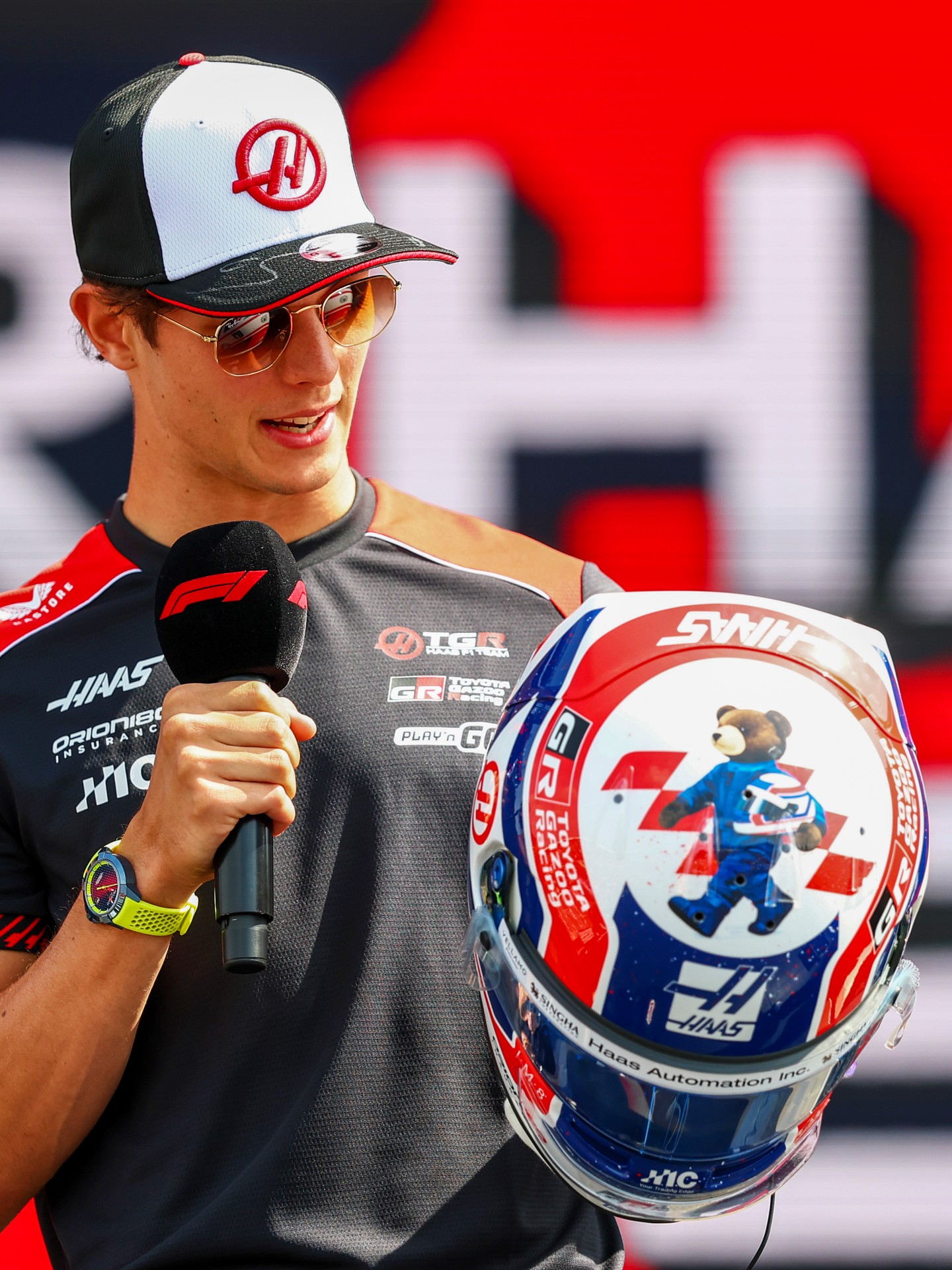
Oliver Bearman’s fifth in China and seventh in Melbourne made Haas look like the surprise story of the 2026 season, but a run of just three points since the April break has turned that narrative on its head — and even team principal Ayao Komatsu admits his rivals have simply out-built the VF-26.
Key Takeaways
Haas scored points with Bearman fifth in China and seventh in Melbourne early in the 2026 season, briefly sitting above Red Bull in the constructors’ table
Since the April break, Haas has taken only three points — fewer than every team except Cadillac and Aston Martin
Bearman says 2026’s regulation cycle rewards teams that can bring ‘massive overhauls… almost on a weekly basis’, a pace Haas cannot match
Team principal Ayao Komatsu conceded the outdeveloped narrative is ‘a fair statement’ when comparing Haas to Racing Bulls and the frontrunners
A promising start to the 2026 rules reset
Haas opened the new regulation era as one of the form teams on the grid. Oliver Bearman delivered seventh place in Melbourne and then fifth in China, results strong enough to put Haas fourth in the constructors’ championship after the season’s first two grands prix — ahead of Red Bull. For a squad that has spent recent seasons fighting for scraps in the midfield, briefly outscoring a team with Red Bull’s resources felt like validation of a genuinely competitive VF-26 package under the new technical regulations. Early in a rules reset, correlation between simulation and track performance is unpredictable, and Haas appeared to have nailed that window better than most.
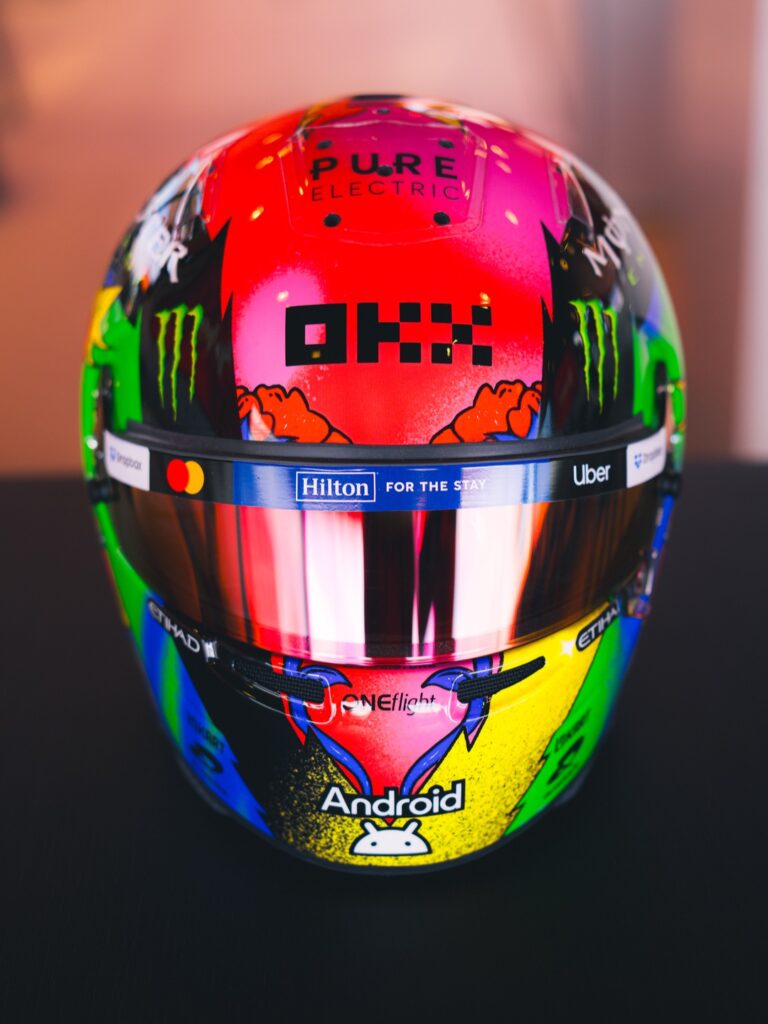
That early form matters for how collectors and fans view a season’s helmets and liveries — a driver’s breakout weekend often becomes the moment a display piece gets built around. Bearman’s China result in particular is the kind of early-season high point that display-focused fans tend to commemorate with a full-size 1:1 replica of the helmet worn that weekend, since it marks the high-water mark of the team’s form before the slide began.
The post-April collapse in points
Since the April break, Haas has scored just three points, fewer than every team on the grid apart from the struggling Cadillac and Aston Martin outfits. That is a stark reversal from a team that was briefly fourth in the standings. The contrast with 2025 makes the drop-off even more pointed: last year Haas averaged 2.5 points per round before the summer break but actually improved to 4.4 points per round in the second half of the season, as smart, well-timed upgrades under a mature rulebook kept paying off deep into the year.
In 2026, that trend has inverted. A car that was initially a Q3 contender now regularly fails to escape Q1, a qualifying regression that speaks to a car whose relative pace has fallen away even as rivals refine theirs. Points that were coming from both cars in Melbourne and China have all but dried up in the months since, and Haas has gone from a team beating Red Bull on the table to one fighting to stay off the very bottom.
Bearman’s explanation: development gradient, not driver form
Bearman attributes the slump to the sheer rate of development other teams can sustain in a first-year regulation cycle, not to any change in his own driving. “If you look at last year, the regulations were incredibly mature, and across the year we didn’t really add much performance to the car, but we bought [upgrades] at the right time and everybody was adding small amounts,” he explained. “But now if you look at the gradient of development, it’s much higher. People are bringing massive overhauls to their cars almost on a weekly basis.”
His point is that 2025’s stable rulebook rewarded precision timing of small updates — exactly the trick Haas pulled off to lift its points-per-round average from 2.5 to 4.4 across that season. A brand-new regulation set in 2026 instead rewards raw development bandwidth: the ability to design, build and validate large aerodynamic and mechanical overhauls at a pace smaller teams cannot match. “First of all, that’s something that we simply couldn’t do,” Bearman said. “But second of all, I think looking compared to our competition, we’ve just been overtaken in terms of development. We haven’t brought enough to the car compared to them. On top of that, what we’ve bought to the car hasn’t really worked, let’s say. We’ve been a bit disappointed by that.”
Komatsu’s admission and the Racing Bulls comparison
Ayao Komatsu does not dispute that Haas has been outdeveloped by its 2026 rivals. “I think the first statement is a fair statement,” Komatsu said when put to him directly, before pointing to Racing Bulls as the clearest example of a midfield team executing its development program better this season. Haas has not stood still — the team has brought updates to every single race since the April break, including a substantial package introduced in Canada — but volume of parts has not translated into lap time, echoing Bearman’s comment that what the team has brought “hasn’t really worked.”
The honesty from both driver and team principal is notable. Rather than blaming reliability or circumstance, Haas is openly acknowledging a competitive gap that opened up specifically because of how the 2026 rules reward continuous, large-scale development — an area where teams with deeper resource pools, including Red Bull, can simply outspend and outpace a smaller operation like Haas.
Why the early-season helmets still matter to collectors
A driver’s form curve across a season directly shapes which helmet designs become the most sought-after display pieces from that year. Bearman’s Melbourne and China weekends represent the peak of Haas’ 2026 story so far, and for collectors that makes the livery and helmet graphics worn during those two rounds the natural centerpiece of any Bearman display build, regardless of how the second half of the season unfolds on track. A full-size 1:1 replica built to match a specific race weekend captures a moment in a season’s narrative in a way that a generic team helmet cannot.
Whether Haas manages to reverse its development slide before the year is out or not, the story of a young driver briefly outscoring a big-budget team before the sport’s biggest teams reasserted their development advantage is exactly the kind of narrative that gives an exhibition-quality helmet its lasting value on a shelf or in a cabinet.
“If you look at the gradient of development, it’s much higher. People are bringing massive overhauls to their cars almost on a weekly basis.”
— Oliver Bearman, Haas driver
“I think the first statement is a fair statement.”
— Ayao Komatsu, Haas team principal
FAQ
Q: Why has Haas fallen behind in the 2026 F1 constructors’ championship?
Haas has fallen behind because rival teams are sustaining a much faster rate of development under the new 2026 regulations than Haas can match. Bearman says opponents are bringing ‘massive overhauls’ almost weekly, while Haas has scored just three points since the April break after sitting fourth in the standings following the opening two rounds.
Q: How many points has Haas scored since the April break in 2026?
Haas has scored just three points since the April break, fewer than every team on the grid except Cadillac and Aston Martin, a sharp drop from its fourth-place standing after Melbourne and China.
Q: What were Oliver Bearman’s best results early in the 2026 season?
Bearman finished seventh in Melbourne and fifth in China, results that helped put Haas fourth in the constructors’ championship, ahead of Red Bull, after the season’s first two grands prix.
Q: Did Haas stop developing the VF-26 after its early success?
No, Haas has brought updates to every race since the April break, including a substantial package in Canada, but team principal Ayao Komatsu admits those updates have not delivered the expected performance gains compared to rivals.
Q: Is a full-size 1:1 Oliver Bearman helmet replica available to collectors?
Yes, 123Helmets.com offers full-size 1:1 collector and display replicas from Oliver Bearman’s 2026 season, including designs from his standout Melbourne and China race weekends, built as exhibition-quality display pieces only.
Shop Oliver Bearman Collection
Display and collector replicas only. Not certified for protective use. Full-size 1:1 scale.