- Keke Rosberg
- Nigel Mansell
- Jenson Button
- Nico Rosberg
- Gilles Villeneuve
- Mika Hakkinen
- Jackie Stewart
- Mika Salo
- Emerson Fittipaldi
- Charles Leclerc
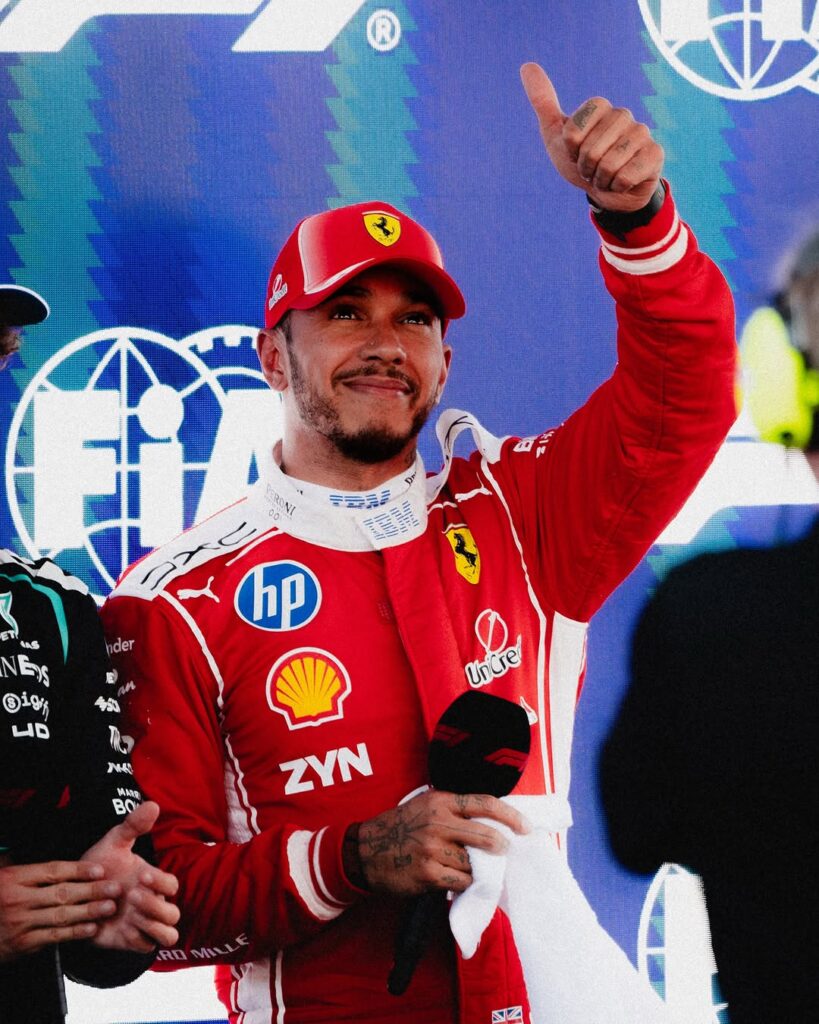
- Lewis Hamilton
- Max Verstappen
- Lando Norris
- Ayrton Senna
- Michael Schumacher
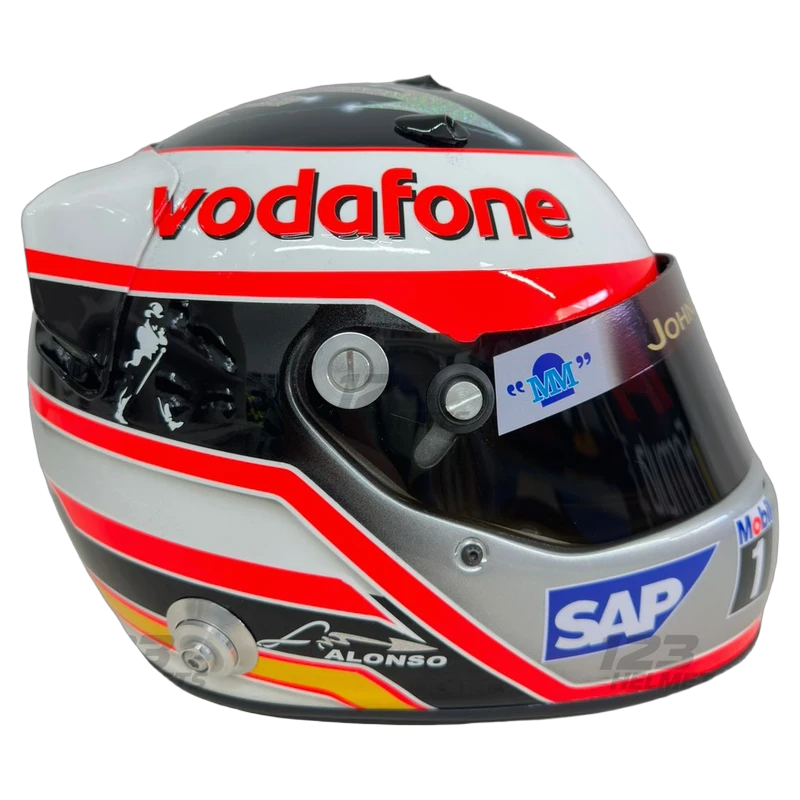
- Fernando Alonso
- Oscar Piastri
- George Russell
- Kimi Antonelli
- Nico Hülkenberg
- Gabriel Bortoleto
- Pierre Gasly
- Franco Colapinto
- Carlos Sainz
- Oliver Bearman
- Sergio Pérez
- Valtteri Bottas
- Isack Hadjar
- Alain Prost
- James Hunt
Verstappen ‘Fed Up’ After Second Rear-Wing Crash at Silverstone
Posted by
 123Helmets Editorial Team
123Helmets Editorial Team
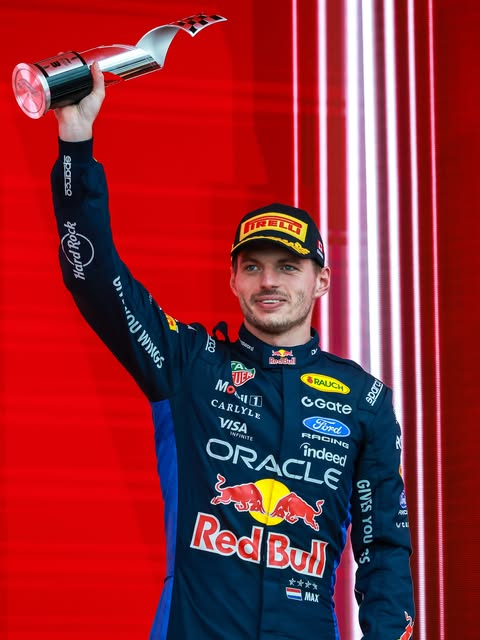
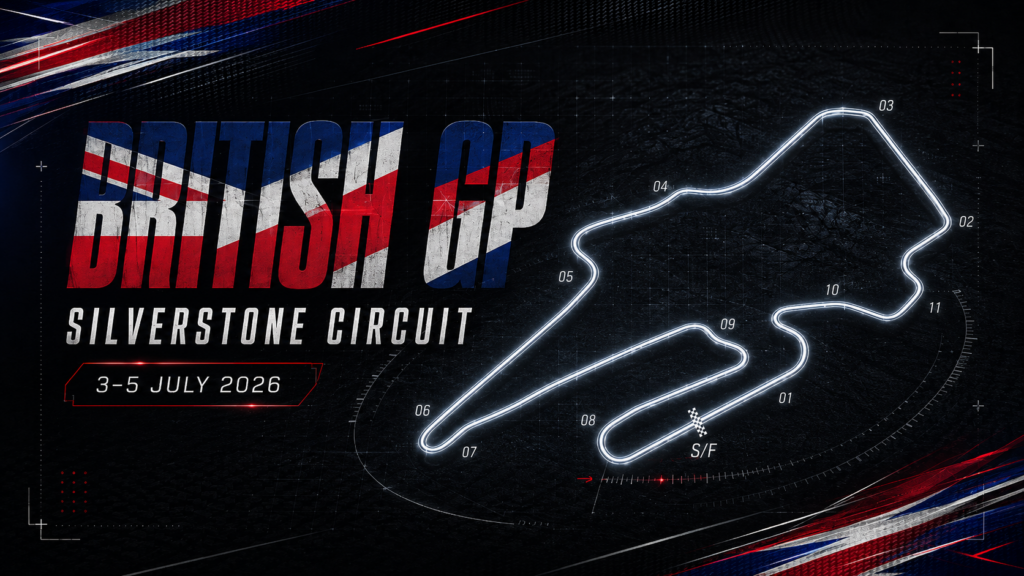
2026 British Grand Prix
A rear wing that would not fully close pitched Max Verstappen into the Stowe gravel with four laps left at Silverstone, ending a podium bid and leaving the four-time champion openly frustrated after the second identical failure in as many race weekends.
Key Takeaways
Verstappen spun into the gravel at Stowe with four laps remaining while running third, triggering a late Safety Car that froze the order for the finish.
The 52-lap British Grand Prix ended behind the Safety Car, with Charles Leclerc taking the win after the late caution period.
Verstappen said the fault was identical to the one that put him in the barriers during Austrian GP qualifying a week earlier, calling the repeat failure ‘super dangerous.’
The active rear wing design used on 2026-spec cars closes before braking zones; a partial closure removes rear downforce almost instantly at high-speed corners like Stowe.
Stowe Spin Ends a Building Podium Charge
Max Verstappen’s race ended in the Stowe gravel trap with four laps remaining in the 52-lap British Grand Prix, a spin that arrived without warning while he was running third and closing on the podium places. Verstappen had used a pit stop taken under a Virtual Safety Car earlier in the race, a window where pit-lane time loss is reduced, to gain track position and keep himself in the fight for a top-three finish.
The spin at Stowe, one of Silverstone’s fastest corners, triggered a Safety Car that ran to the finish. That caution froze the order behind race winner Charles Leclerc, closing out a Grand Prix that had been shifting shape lap by lap. George Russell had been closing on Verstappen for third before a slow puncture dropped him down the order, while Kimi Antonelli had been reeling in Leclerc for the lead before a wheel-guard problem intervened. Two separate mechanical issues on two different cars, on top of Verstappen’s own retirement, turned a straightforward afternoon into one decided as much by reliability as by pace.
For a driver who had spent the race managing tires and traffic to keep a podium in range, the ending was abrupt. One moment Verstappen was pushing to close a gap; the next, he was parked in the gravel with the session effectively over for him.
The Rear-Wing Fault: Identical to Austria
The cause of Verstappen’s Silverstone spin was the same active rear-wing failure that put him in the barriers during Austrian Grand Prix qualifying one week earlier. 2026-spec cars run active rear wings that open on the straights for extra top speed and close again ahead of braking zones to restore downforce for the corner. When the wing does not fully close, the car loses rear downforce at the exact moment a driver is asking the rear tires to hold through a high-speed direction change.
“The same as Austria, the rear wing just doesn’t fully close,” Verstappen said. “I saw the analysis. It looks like it closes, but it doesn’t. It closes but it’s just a little bit open and you lose a lot of rear downforce. And that’s why the car just spins off the track.”
The mechanism is unforgiving because it leaves almost no margin for correction. Approaching Stowe at high speed, a partially open wing removes rear downforce in a fraction of a second, and the resulting snap is closer to a mechanical failure than a driving error. That distinction matters for how the team and the FIA will look at the incident, since it points to a component issue repeating across two separate Grand Prix weekends rather than a one-off setup problem.
Verstappen’s Reaction: ‘You Get Really Fed Up’
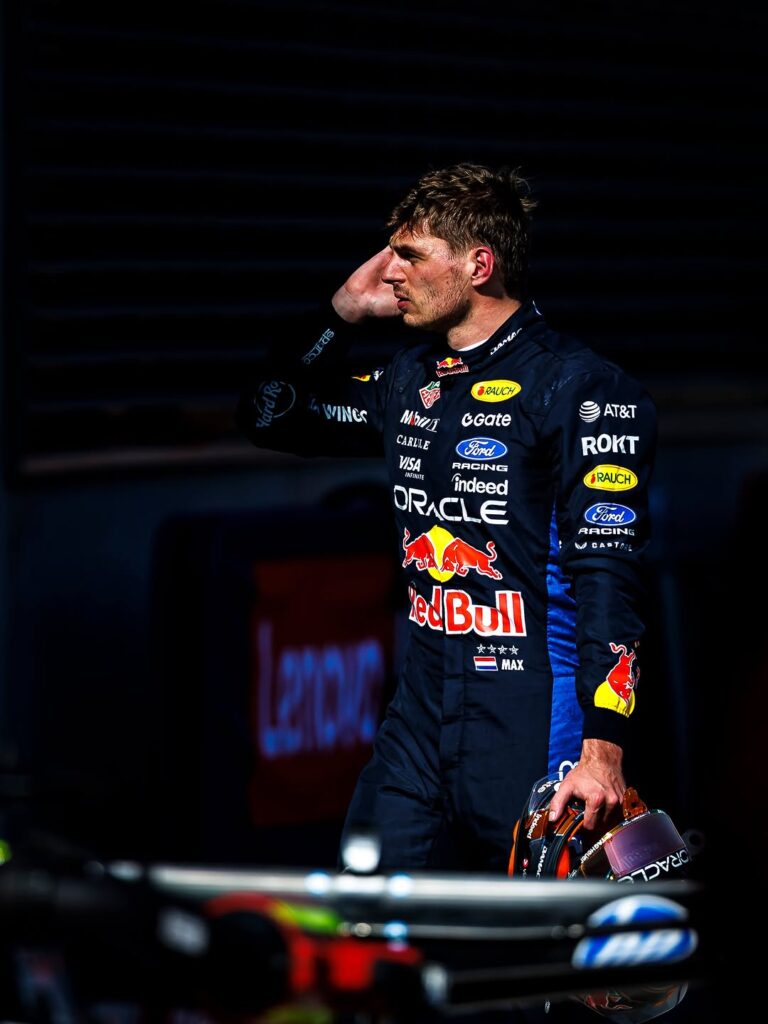
Verstappen said the repeat nature of the fault made it harder to accept than a single incident would have been. Two failures in as many weekends left him openly frustrated in his post-race comments to Sky Sports F1, and he did not soften the language when describing the risk involved.
“I was lucky in Austria, I was lucky here, but that’s why you get really fed up with it,” he said. He went further on the safety implications of a wing failing at speed, describing the situation as “super dangerous” and warning that a driver could “really hurt yourself” if the same fault struck again at a high-load corner.
The tone was different from a driver simply venting about a lost result. Verstappen’s language centered on the mechanical reliability of the part itself — a wing that showed as closed in the data but was not physically sealed shut — which is the kind of gap between telemetry and reality that teams treat as a priority to close before the next event.
Podium Visuals: Leclerc’s Helmet Under Safety Car Yellow
Charles Leclerc crossed the line as winner of the 2026 British Grand Prix, a result confirmed under caution after Verstappen’s late spin froze the running order for the final four laps. Race footage from those closing laps is exactly the kind of moment that photographs well for a display case: a winning helmet design caught under Safety Car lights, cameras tracking the car through Silverstone’s final sequence of corners as the gap to the chasing pack stays locked.
Antonelli’s late fade after his wheel-guard issue and Russell’s puncture-hit afternoon add extra texture to how this weekend will be remembered — a race where the final order was shaped as much by component failures as by raw pace. For collectors, weekends like this tend to produce some of the most requested replica helmet designs of a season, since the story behind the paint scheme (a near-miss for the lead, a late-race gremlin, a winning livery under yellow flags) becomes part of what makes the piece worth displaying.
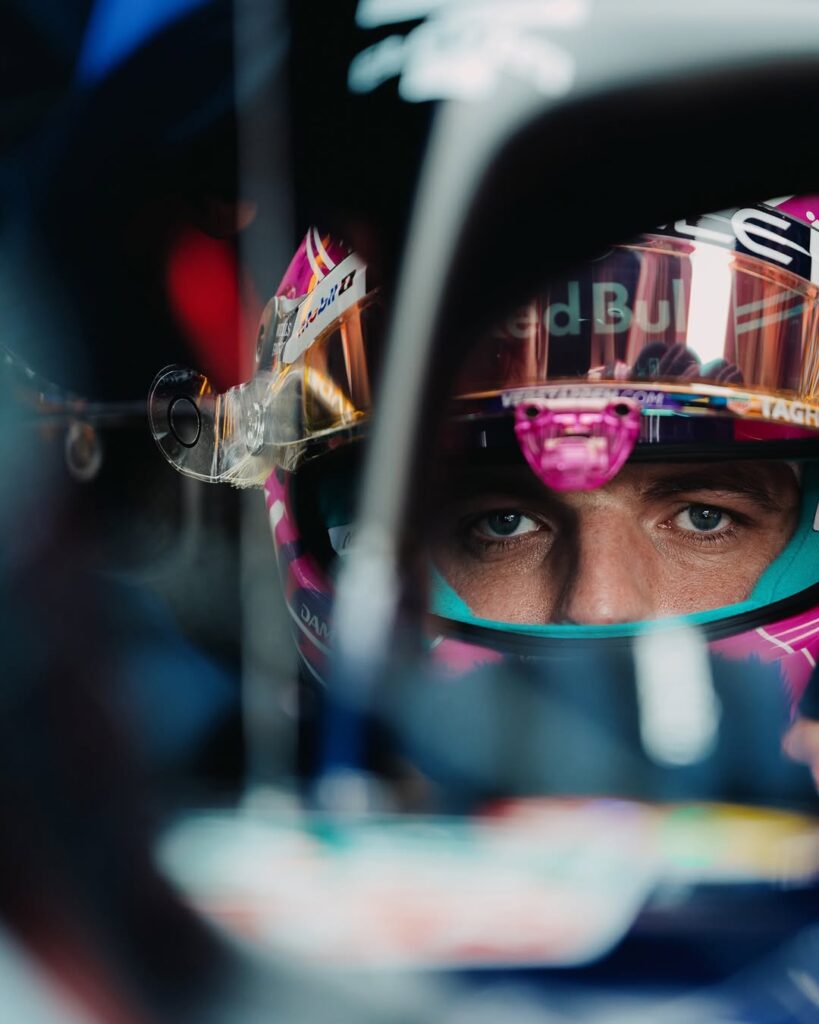
Verstappen’s own helmet, visible in the broadcast right up to the moment of the spin, is part of that same visual record — a design that was in genuine podium contention until the final laps, which is precisely the kind of near-miss race story that collectors gravitate toward when choosing a full-size replica for a display case.
Why This Weekend’s Helmets Belong in a Display Case
A full-size 1:1 replica helmet from a weekend like this captures a specific, documented moment rather than a generic livery. Each collector piece is built as an exhibition-quality display item, matched panel-for-panel to the graphics worn in the car during the race — right down to the sponsor placement and paint layering used on the day.
These are not intended for on-track use; they are built and finished as display and collector pieces, with the same visor geometry, shell shape, and multi-layer paint finish drivers wore when the cameras caught them mid-race. For a weekend defined by a rear-wing failure, a late Safety Car, and a photo-finish under yellow flags, the helmets connected to that story carry a specific talking point that a generic design simply doesn’t have.
Whether the interest is in Leclerc’s winning design from Silverstone or Verstappen’s helmet from a race he was leading into the podium places before the spin, both pieces represent a single, dated moment in the 2026 season — the kind of specificity that separates a collector-grade replica from a mass-market souvenir.
“The same as Austria, the rear wing just doesn’t fully close. I saw the analysis. It looks like it closes, but it doesn’t. It closes but it’s just a little bit open and you lose a lot of rear downforce.”
— Max Verstappen, Sky Sports F1
“I was lucky in Austria, I was lucky here, but that’s why you get really fed up with it.”
— Max Verstappen, Sky Sports F1
FAQ
Q: Why did Max Verstappen crash at Silverstone in 2026?
His active rear wing failed to fully close approaching Stowe with four laps left in the 52-lap British Grand Prix, causing a sudden loss of rear downforce that sent the car spinning into the gravel.
Q: Was this the same issue Verstappen had in Austria?
Yes, Verstappen said the Silverstone spin was caused by the identical rear-wing fault that put him in the barriers during Austrian Grand Prix qualifying one week earlier.
Q: Who won the 2026 British Grand Prix?
Charles Leclerc won the race, which finished under Safety Car conditions after Verstappen’s late spin triggered the caution with four laps remaining.
Q: What is an active rear wing in 2026 F1 cars?
It is a movable rear wing that opens on straights for extra speed and closes again before braking zones to restore downforce; a partial closure, as happened to Verstappen, causes an abrupt loss of rear grip at high speed.
Q: Are these Verstappen and Leclerc helmet replicas made for on-track use?
No, they are full-size 1:1 display and collector replicas built as exhibition-quality pieces, not for on-track or protective use.
Shop Max Verstappen Collection
Display and collector replicas only. Not certified for protective use. Full-size 1:1 scale.