
Blog
Coulthard Slams F1 Safety Car Rules After Silverstone
 123Helmets Editorial Team
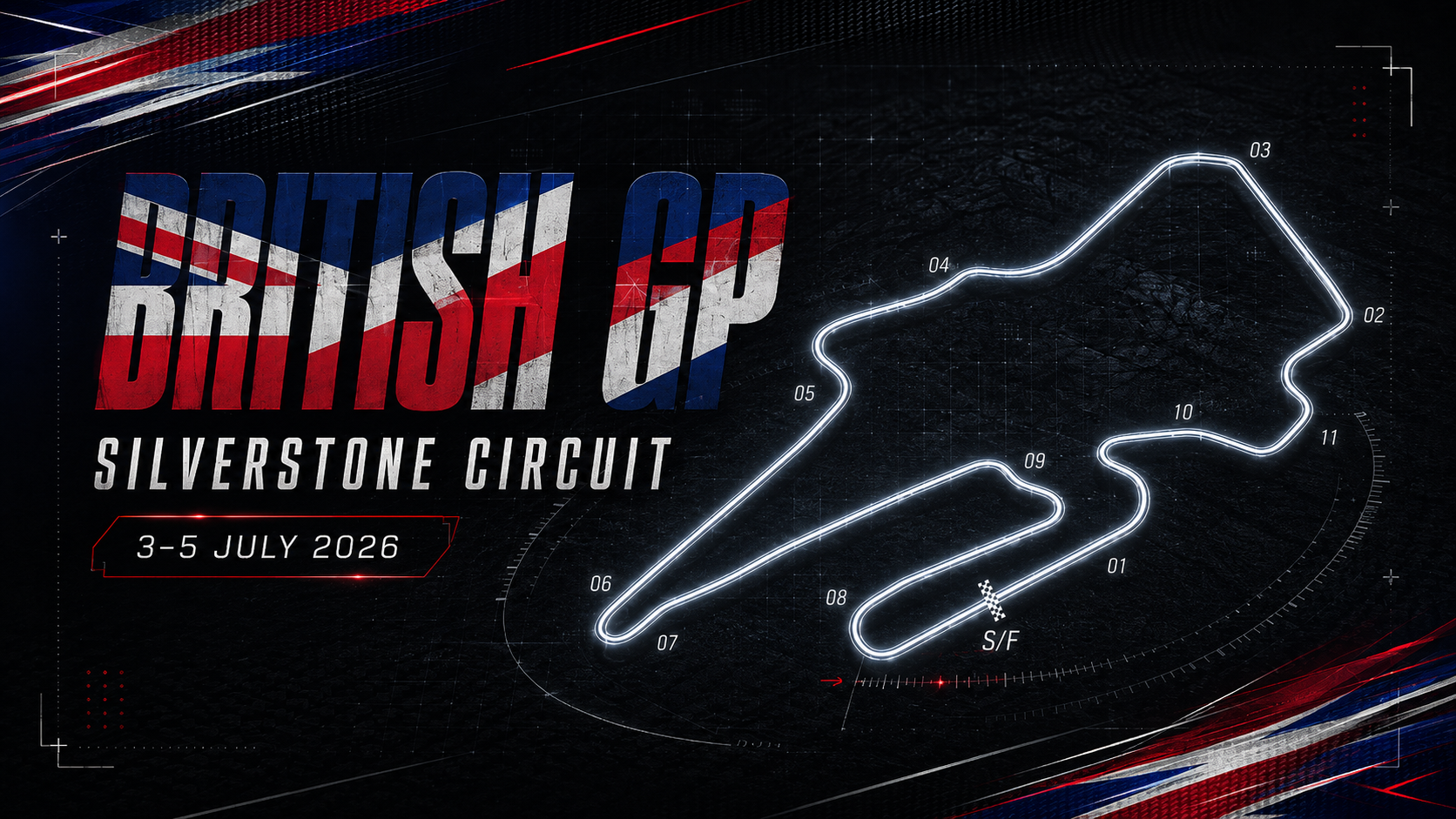
David Coulthard has called for F1 to overhaul its safety car procedures after the 2026 British Grand Prix ended behind the safety car on lap 52, denying Silverstone a green-flag finish and leaving Charles Leclerc to take a muted victory over George Russell and Lewis Hamilton.
Key Takeaways
The safety car came out on lap 48 of 52 after Max Verstappen beached his Red Bull at Stowe, and the race never restarted before the checkered flag.
Charles Leclerc won ahead of George Russell and Lewis Hamilton, with Russell jumping Hamilton by staying out on old tyres during the stoppage.
David Coulthard wants automatic red flags mandated for incidents inside the final 10 laps to guarantee a green-flag finish.
Coulthard argues F1’s pit crews change wheels in around 2.2 seconds, so the sport has the technical capability to restart racing far quicker than current procedures allow.
What Happened At Silverstone
The safety car was deployed on lap 48 of 52 after Max Verstappen’s Red Bull became beached in the gravel at Stowe corner, and the race concluded behind the safety car without a restart. Ferrari’s Charles Leclerc and Lewis Hamilton both pitted for fresh tyres during the stoppage, while Mercedes’ George Russell elected to stay out on worn rubber. That single strategic split decided the final podium order, as Russell emerged ahead of Hamilton once the pit cycle completed.
A television graphic briefly suggested a final-lap sprint to the flag was coming, raising the crowd’s hopes of a last-gasp battle for the win. Instead, race control confirmed there were not enough laps remaining to complete the safety car withdrawal procedure, and the 2026 British Grand Prix ended under caution. Leclerc crossed the line first, with Russell second and Hamilton third, but the anticlimactic ending left a sold-out Silverstone crowd audibly frustrated.
Coulthard’s Criticism Explained
David Coulthard says F1’s safety car process is too slow and needs a structural fix, not just faster reactions from race control. Speaking on the Up To Speed podcast, the 13-time grand prix winner described the Silverstone finish as “so dull and so kind of something that we must be able to find a way around.”
Coulthard broke down the sequence that eats up laps: the safety car deploys once officials confirm a stranded car cannot rejoin, the pack then spends several laps closing up to the safety car, and only after that does the race director clear drivers to overtake it and resume racing. On a circuit like Silverstone, which runs close to 6 kilometers per lap, that entire chain can consume most of the laps left in a race distance of 52.
“We have an almost 6km race track. We have an incident in one corner of that race track. It all just takes way too long,” Coulthard said.
The Case For Automatic Red Flags
Coulthard’s proposed fix is a mandatory red flag for any incident occurring within the final 10 laps of a race, removing the guesswork from whether a green-flag finish is achievable. Under his logic, stopping the race outright resets the field, allows marshals to clear an incident without the lap-count pressure of a rolling safety car period, and guarantees at least a short restart sprint to the checkered flag.
He also pointed to F1’s own operational speed as evidence the sport can move faster when it wants to. Pit crews now change all four wheels in around 2.2 seconds, down from a previous benchmark closer to 1.8 seconds at the outer limit of what teams have achieved. Coulthard argued that with GPS tracking pinpointing every car’s exact position on track, the safety car withdrawal process could begin much sooner, provided drivers respect the reduced speed limits through the double-yellow zone around the incident.
Why It Matters For Race Directors
The debate now sits with F1’s race control and the FIA, who will weigh whether a rule change on red flag timing is worth adding to an already dense regulatory calendar for the 2026 season.
Podium Visuals And Display-Worthy Moments
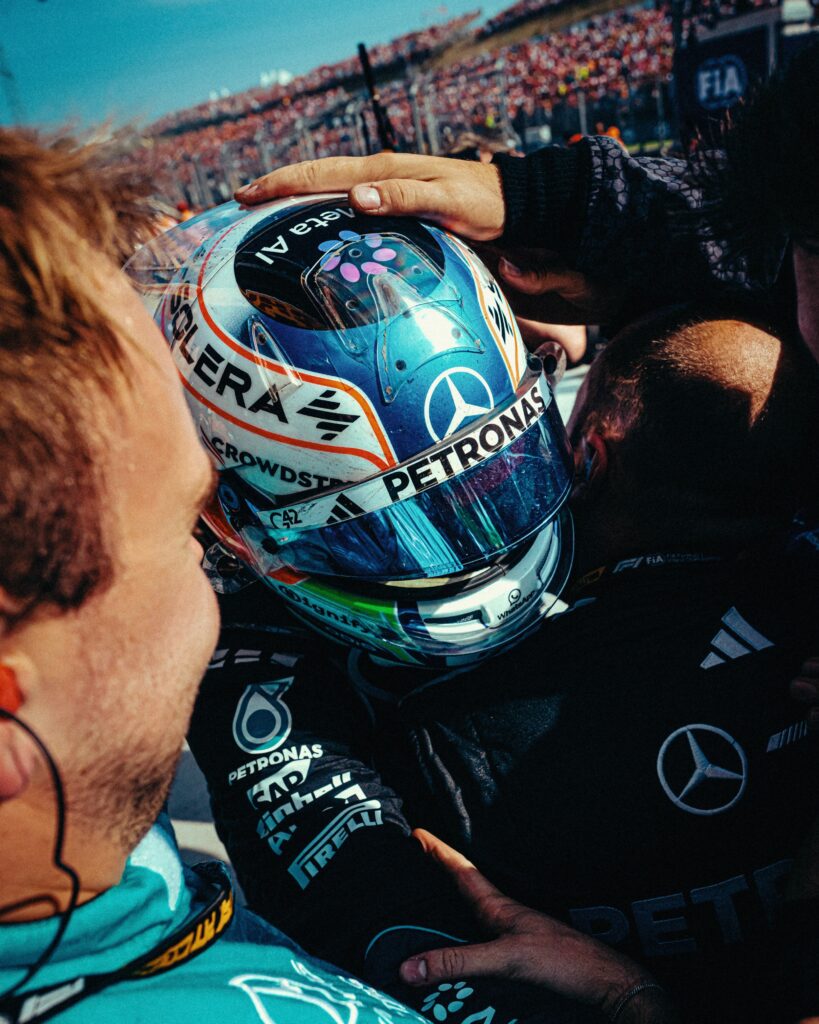
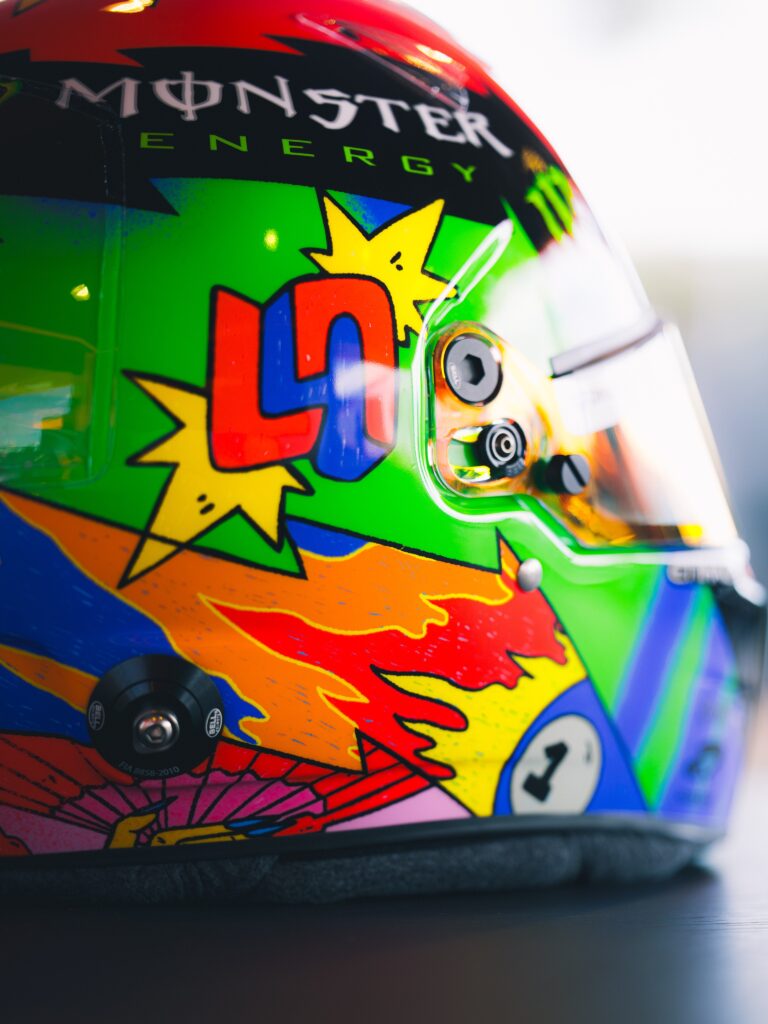
Leclerc’s win produced a podium lineup built around three of the grid’s most recognizable helmet designs, even if the finish itself lacked drama. His Ferrari-red shell, paired with Russell’s Mercedes silver-and-teal design and Hamilton’s personal scheme, gave collectors three contrasting liveries from a single afternoon at Silverstone, a circuit whose high-speed corners like Copse and Stowe already make it a favorite backdrop for helmet photography.
Race-worn and commemorative replicas from days like this tend to hold particular value for collectors precisely because the on-track story, however subdued, is tied to a specific date, circuit, and podium order. A full-size 1:1 display helmet finished in any of the three 2026 British Grand Prix podium liveries makes for an exhibition-quality centerpiece regardless of how the race itself played out on track.
For fans following Charles Leclerc, George Russell, and Lewis Hamilton, the Silverstone weekend adds another chapter to each driver’s 2026 helmet history, alongside team liveries from Ferrari and Mercedes.
What Comes Next For F1 Safety Procedures
F1’s next opportunity to address safety car timing will come through the sport’s ongoing sporting regulation reviews, where proposals like Coulthard’s automatic red-flag trigger could be formally discussed. No rule change has been confirmed following the British Grand Prix, but the public criticism from a former grand prix winner adds pressure on race control ahead of the remaining 2026 calendar.
Verstappen’s stranded Red Bull at Stowe on lap 48 remains the direct cause of the Silverstone stoppage, and any future fix will need to account for similar late-race incidents without compromising driver safety during recovery operations. Until a change is made, drivers and fans alike face the possibility of more races settled under caution rather than a green-flag sprint to the line.
“So dull and so kind of something that we must be able to find a way around. We have an almost 6km race track. We have an incident in one corner of that race track. It all just takes way too long.”
— David Coulthard, Up To Speed podcast
“We’re Formula 1. We change wheels in 2.2 seconds. As soon as the safety car is out there, they could start that process.”
— David Coulthard, Up To Speed podcast
FAQ
Q: Why did the British Grand Prix end under the safety car?
There were not enough laps remaining to complete the safety car withdrawal procedure after it was deployed on lap 48 of 52. Max Verstappen’s Red Bull became stranded at Stowe corner, and race control determined a restart could not be safely completed before the checkered flag on lap 52.
Q: Who won the 2026 British Grand Prix?
Charles Leclerc won the race for Ferrari, with George Russell second for Mercedes and Lewis Hamilton third. Russell moved ahead of Hamilton after choosing to stay out on worn tyres while both Ferrari and Hamilton pitted during the safety car period.
Q: What rule change is David Coulthard proposing?
Coulthard wants F1 to mandate an automatic red flag for any incident occurring within the final 10 laps of a race. He argues this would guarantee a green-flag restart rather than leaving races to end anticlimactically behind the safety car.
Q: How fast can F1 pit crews change tyres?
Current pit crews change all four wheels in around 2.2 seconds, with a previous benchmark closer to 1.8 seconds at the fastest recorded stop. Coulthard cited this speed as proof F1 has the operational capability to restart races faster than current safety car procedures allow.
Q: Is a display helmet from the 2026 British Grand Prix worth collecting?
Yes, a full-size 1:1 display replica in any of the podium liveries from Leclerc, Russell, or Hamilton makes for an exhibition-quality piece tied to a specific dated race. Collector value often centers on the circuit, date, and finishing order rather than how dramatic the race finish itself was.
Browse F1 Helmet Collection
Display and collector replicas only. Not certified for protective use. Full-size 1:1 scale.