Blog
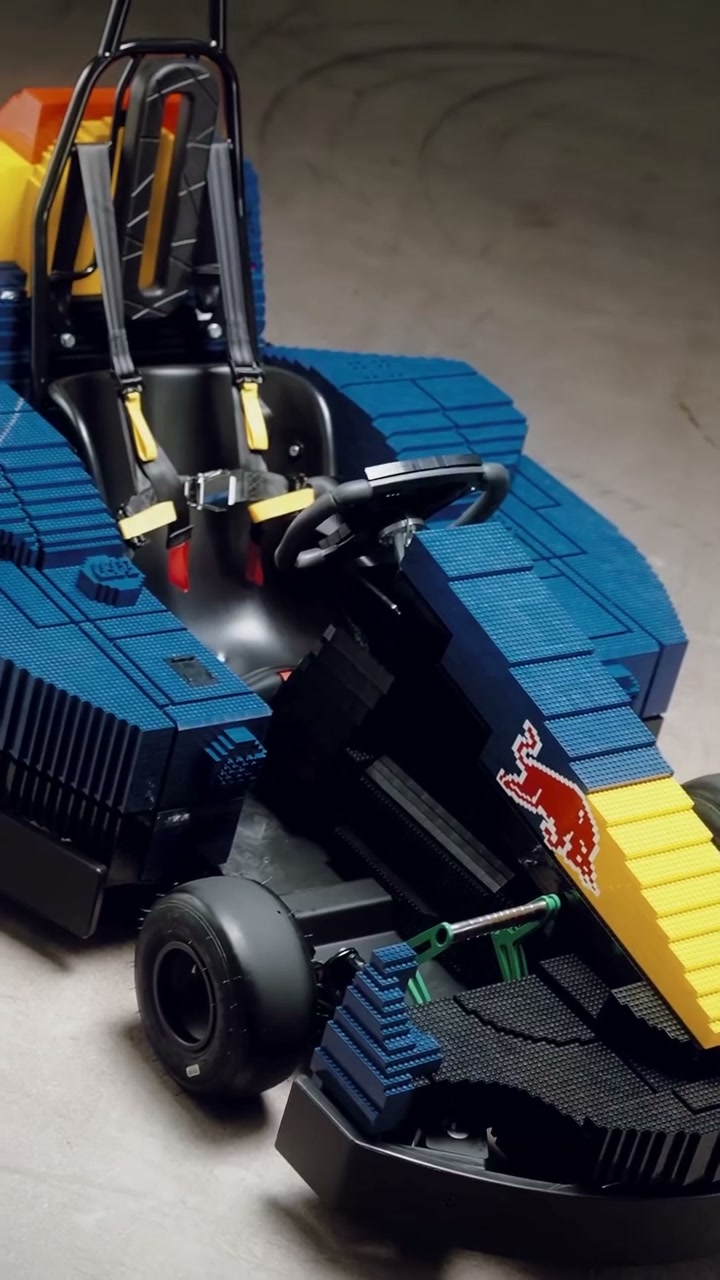
Red Bull 2026 British GP Livery Reveal: Brick by Brick
 123Helmets Editorial Team
On 2 July 2026, Oracle Red Bull Racing dropped a teaser that stopped the F1 internet cold — a LEGO brick motif paired with a pair of eyes emoji and the unmistakable hashtag #BritishGP. Here is everything a collector needs to know about what just landed.
Key Takeaways
Oracle Red Bull Racing confirmed a special livery update for the 2026 British Grand Prix via a teaser posted on 2 July 2026.
The reveal creative features a LEGO brick motif — a strong signal of a co-branded or themed one-off livery for Silverstone.
Special one-race liveries increase the collector value of any matching full-size 1:1 replica helmet produced in that same design window.
Silverstone is the backdrop: the British GP is one of the most heritage-rich rounds on the 2026 calendar, amplifying the cultural weight of any Red Bull livery change there.
What Red Bull Actually Revealed on 2 July 2026
Oracle Red Bull Racing posted a teaser on 2 July 2026 showing a LEGO brick alongside a pair of eyes and the hashtag #BritishGP — the team’s signature format for a livery or partnership announcement in the hours or days before a race weekend begins. The post contained no additional copy beyond the emojis, which is itself a deliberate creative decision: Red Bull has historically let visual cues do the announcing before a formal livery drop lands on social media or at the track.
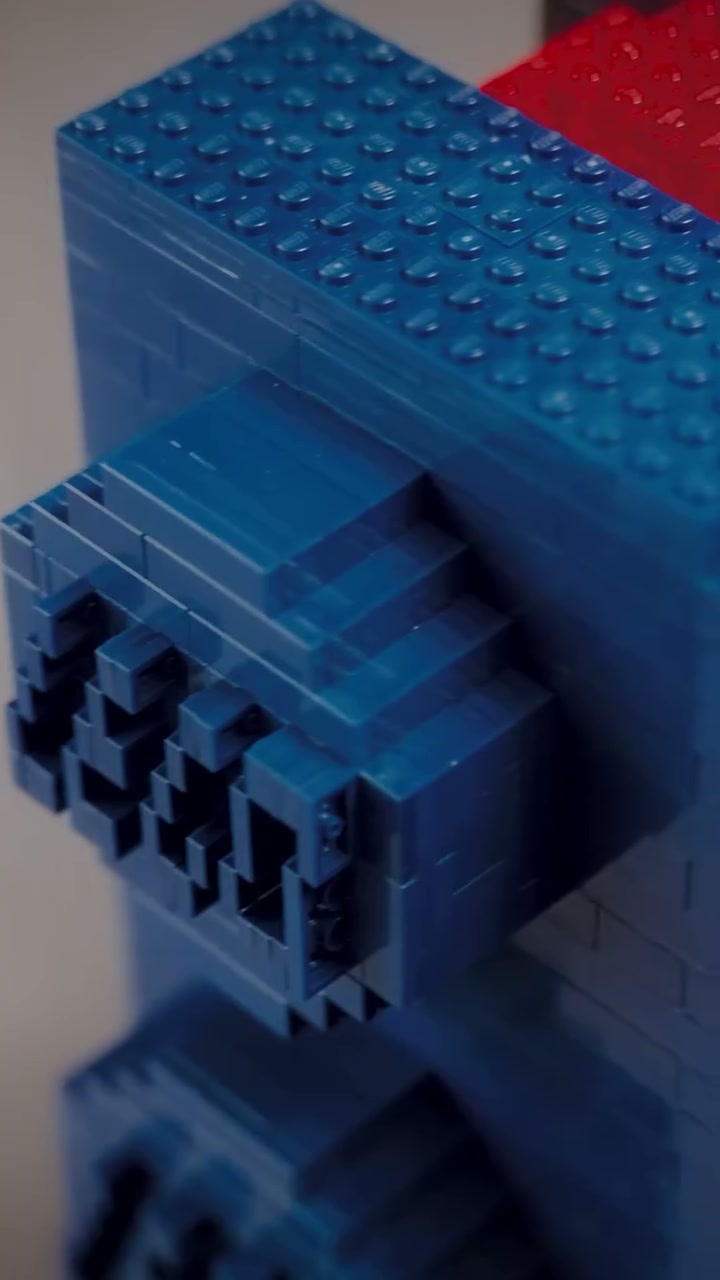
The LEGO connection is significant. LEGO and Formula 1 have a growing commercial relationship, and a Red Bull–LEGO co-branded livery for Silverstone would fit squarely into the pattern of limited-edition, single-race designs the team has deployed at headline events. The brick graphic in the teaser is blocky, primary-coloured and unmistakably on-brand for both parties.
What the post does not yet confirm: exact colour breakdowns, which car panels carry the new design, or whether driver helmet wraps accompany the car livery. Those details are expected to land closer to — or at — the Silverstone paddock gate for the 2026 British Grand Prix weekend.
Why Silverstone Is the Right Stage for This
The British Grand Prix at Silverstone is one of the oldest rounds on the Formula 1 calendar, first held in 1950 and now running its 77th edition in 2026. That heritage gives any livery change at this venue an outsized cultural footprint compared with a mid-season flyaway race. Teams know this. McLaren, Mercedes and Red Bull have all used Silverstone as the backdrop for special liveries, home-market campaigns and partner activations in recent seasons because the British GP draws the largest single-event crowd of any round in Europe.
For Red Bull specifically, the British GP sits in the middle of a demanding European stretch on the 2026 calendar — and landing a livery story on 2 July, well ahead of the race weekend, maximises the press cycle. The teaser goes out, media picks it up, the full reveal lands 24–48 hours later, and the car arrives on track carrying the new skin with full global attention already primed.
LEGO as a partner also resonates particularly strongly in the UK market. The brand has a flagship store in London and is deeply embedded in British popular culture — making a LEGO × Red Bull × Silverstone moment an efficient three-way brand alignment for a single weekend.
Reading the LEGO Brick: What the Visual Language Tells Us
The LEGO brick in Red Bull’s 2 July 2026 teaser is the primary clue to the livery’s visual direction. LEGO’s brand palette is built around primary colours — red, yellow, blue — and the classic brick outline is itself a modular, geometric form that translates well onto the flat planes and engine covers of a modern F1 car.
Red Bull’s own baseline livery for 2026 uses the team’s navy, red and yellow; a LEGO overlay would not need to fight that palette. More likely, additional panel areas — the engine cover, halo surround or bargeboard zones — gain brick-pattern graphics or LEGO logo placement in a contrasting yellow or white. Helmet wraps, if included, could adopt a stud-pattern texture across the shell, a treatment that photographs well under the Silverstone cloud cover and under artificial studio lighting alike.
For collector replica purposes, this matters. Any matching full-size 1:1 display helmet that reproduces the LEGO × Red Bull colour story needs accurate panel-by-panel fidelity to the real race helmet. The brick stud pattern, if present, is a small-detail test: at 1:1 scale — meaning a helmet shell roughly 27 cm across the widest point — individual stud impressions would measure approximately 3–4 mm in diameter to remain proportionally accurate.
Collector Implications of a One-Race Livery
A single-race or single-weekend livery is, by definition, time-limited — and that scarcity is the core driver of collector interest in any matching replica helmet. The 2026 British GP LEGO × Red Bull design will appear on the cars for one race weekend at Silverstone, then the standard livery returns. That narrow production window means only helmets made in that design period carry the authentic 2026 British GP identity.
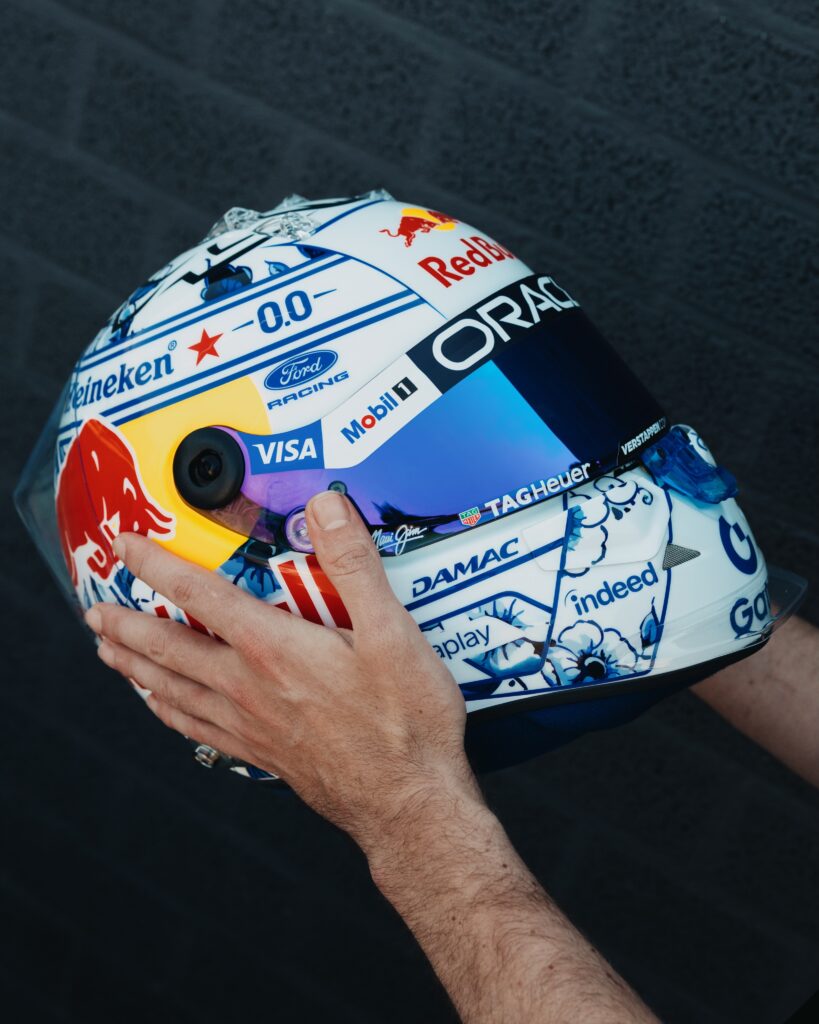
Full-size 1:1 display replica helmets that reproduce a special livery capture the exact design at the moment it existed in the sport — the specific paint layers, logo placement, visor tint and decal arrangement tied to that weekend. A standard 2026 Red Bull season helmet is a different object from a 2026 British GP special edition, even if they share 80 percent of the same graphic elements.
The collector market consistently prices British GP editions above comparable mid-season items for two reasons: the heritage of Silverstone itself and the photographic volume a race at Silverstone generates. More images, more broadcast hours and more archive material mean a British GP special livery enters the permanent visual record of the 2026 season in a way that a race in, say, a flyaway calendar slot rarely achieves. Display pieces tied to high-visibility races hold their contextual story more firmly over time.
For display purposes, a full-size 1:1 replica helmet weighing approximately 1.2–1.5 kg sits correctly in a standard acrylic display dome or on a pedestal stand without modification — the proportions of a real race helmet ensure it reads as authentic at shelf or cabinet scale, unlike scaled-down 1:2 miniatures.
What to Watch For When the Full Reveal Lands
The full Red Bull 2026 British GP livery reveal is expected in the 24–72 hours following the 2 July teaser, most likely timed to the team’s arrival at Silverstone or to a coordinated press moment with LEGO. When it does land, here is a structured checklist of what to note if you are assessing collector relevance:
- Panel coverage: Does the LEGO design cover the full car, or is it restricted to specific zones (engine cover, halo, nose)?
- Helmet match: Are driver helmets — specifically Max Verstappen and his Red Bull teammate — updated to match the car livery, or do they run standard 2026 designs?
- Logo lock-up: Where does the LEGO wordmark sit relative to the Oracle and Red Bull logos? Co-branding hierarchy affects how a replica’s decal sheet must be laid out.
- Colourway shift: Does the primary navy body gain any brick-red or classic LEGO yellow accents beyond what the baseline 2026 livery carries?
- Visor spec: Any change to visor strip colour or tint for the British GP is a collector detail — standard visor strips on the 2026 Red Bull helmets run in team red; a LEGO-themed strip in yellow would be a meaningful variation.
Each of these details feeds directly into how a display replica should be assessed and described. A collector piece that captures the helmet as it appeared on the Silverstone grid on race day 2026 is a different — and more specific — object than one built from the team’s generic 2026 press-release photography. Specificity is value in this market.
Red Bull Livery History at the British GP: A Collector Context
Oracle Red Bull Racing has used the British Grand Prix as a canvas for notable livery moments throughout the team’s history. The Red Bull Racing team has a documented pattern of deploying partner-led special designs at Silverstone, from the team’s early energy-drink-heavy schemes to the more restrained, sponsor-panel co-branding of the 2020s era. Each of those moments now exists in the secondary market as a collector reference point.
The LEGO partnership, if confirmed for the 2026 British GP, would be one of the more visually distinct co-branded moments in the team’s recent livery history — because LEGO’s visual grammar (primary colours, geometric block forms, the iconic stud pattern) is more graphically assertive than many financial or tech sponsors whose logos integrate quietly into an existing livery. A LEGO panel on a Red Bull car is meant to be seen, and seen clearly, from the grandstands at Silverstone and on a broadcast feed.
That visual assertiveness is exactly what makes such liveries strong collector subjects. A replica helmet that accurately reproduces a bold, high-contrast LEGO × Red Bull scheme reads immediately on a shelf or in a glass cabinet — it does not require a label to explain what it is. The design carries its own story, tied to one specific weekend in the 2026 season, at one of the sport’s most storied venues.
The British GP 2026 race weekend at Silverstone places the F1 paddock on the famous 5.891 km circuit — a track whose Copse, Maggotts and Becketts sequence has defined driver bravery benchmarks for over seven decades. Any livery worn by a Red Bull car lapping that sequence in July 2026 joins a lineage that stretches back to the very first World Championship round.
“Anyone for a livery reveal? 🧱👀 #F1 #RedBullRacing #BritishGP”
— Oracle Red Bull Racing — official social post, 2 July 2026
FAQ
Q: What did Red Bull reveal on 2 July 2026?
Oracle Red Bull Racing posted a teaser on 2 July 2026 hinting at a special livery for the 2026 British Grand Prix, featuring a LEGO brick motif and the hashtag #BritishGP. The full livery details had not yet been disclosed at that point.
Q: Is the Red Bull 2026 British GP livery a LEGO collaboration?
The teaser strongly indicates a LEGO partnership livery: the post showed a LEGO brick graphic alongside #BritishGP and #RedBullRacing. An official confirmation with full design details was expected within 24–72 hours of the 2 July 2026 teaser.
Q: Why do special one-race liveries matter for helmet collectors?
Special one-race liveries matter because they exist for a single event window, making any replica that reproduces them a time-stamped collector piece tied to one specific race weekend. A 2026 British GP Red Bull edition is a different object from a standard 2026 season Red Bull helmet, and rarity directly affects collector interest.
Q: What is a full-size 1:1 replica helmet and how does it display?
A full-size 1:1 replica helmet is a display and collector piece built to the same external dimensions as a real race helmet — roughly 27 cm across the widest shell point — and weighing approximately 1.2–1.5 kg. It is not certified for protective use; it is an exhibition-quality display piece for shelves, cabinets or pedestals.
Q: When is the 2026 British Grand Prix at Silverstone?
The 2026 British Grand Prix takes place at Silverstone Circuit, a 5.891 km track in the UK. The livery teaser was posted on 2 July 2026; the race weekend follows in early-to-mid July 2026 on the current F1 calendar.
Browse F1 Helmet Collection
Display and collector replicas only. Not certified for protective use. Full-size 1:1 scale.
This article was written with the help of AI tools. Editorial policy