Blog
Red Bull One Year After Horner: Verstappen Helmet Collectors Weigh In
 123Helmets Editorial Team
One year after Christian Horner’s sacking ended a 20-year reign at Red Bull, the team has moved through a new championship near-miss, a management reshuffle, and a driver market storm around Max Verstappen. We look at where the team stands now and why the helmets from this era are becoming some of the most sought-after display pieces on the market.
Key Takeaways
Christian Horner was removed as Red Bull team principal after 20 years in charge, with Laurent Mekies installed as his replacement.
In the 2025 season under the new leadership structure, Max Verstappen finished two points short of a fifth world title.
Yuki Tsunoda’s demotion and Isack Hadjar’s promotion mark the latest chapter in Red Bull’s long search for a stable second seat alongside Verstappen.
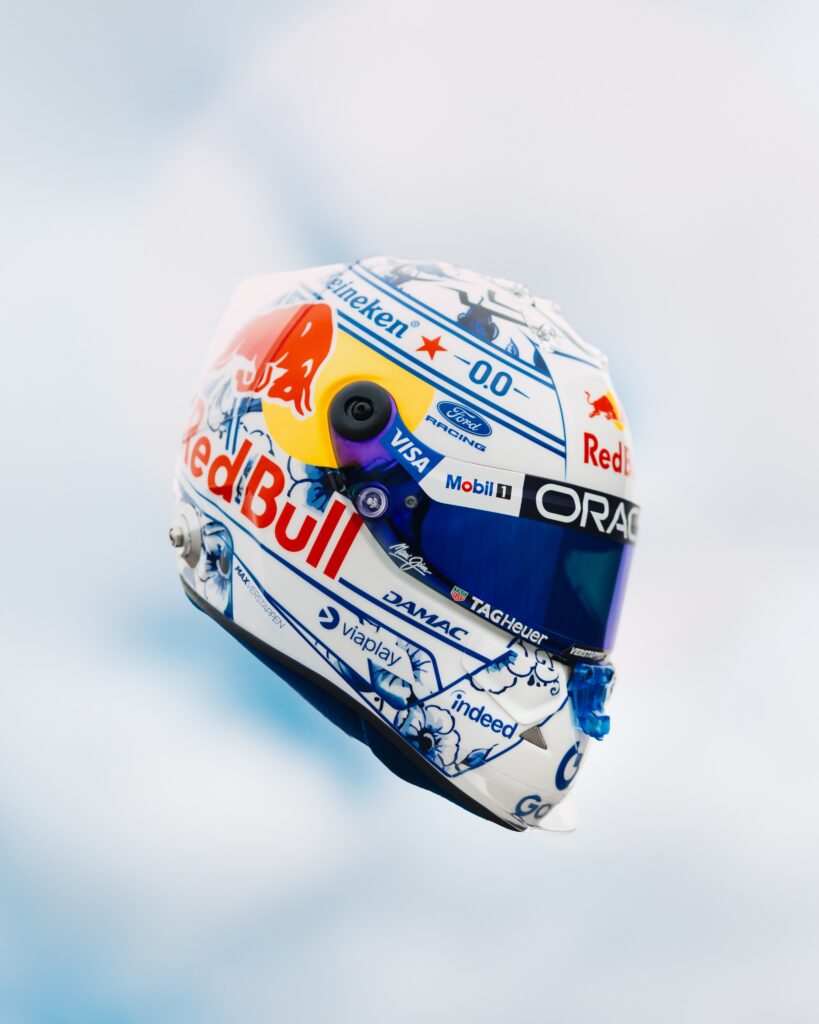
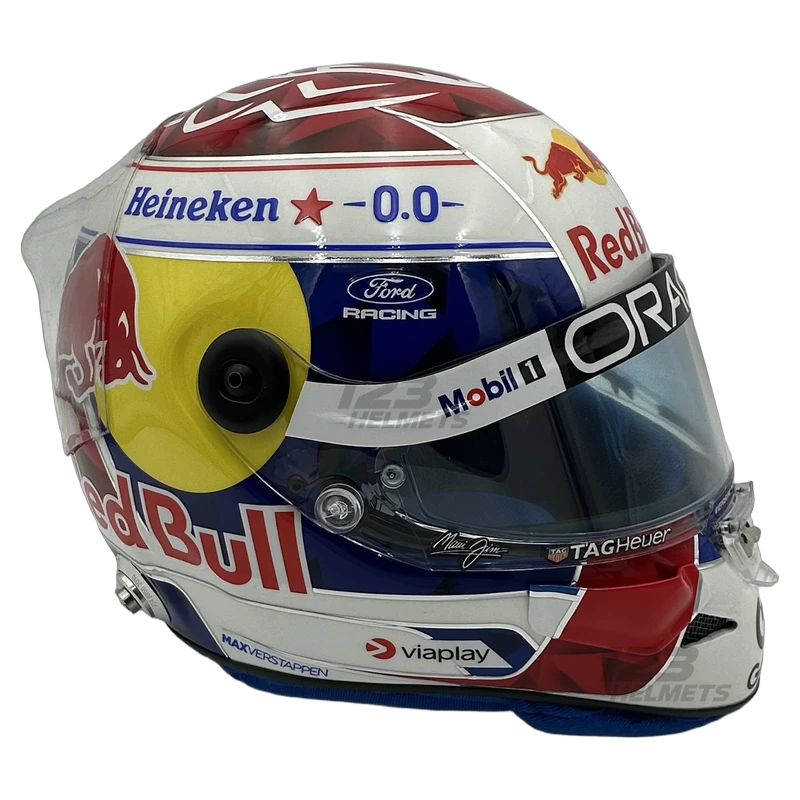
Full-size 1:1 replica helmets from Verstappen’s Red Bull years remain a benchmark item for collectors tracking the team’s transition period.
What changed at Red Bull after Horner’s sacking
Christian Horner was removed as Red Bull team principal after 20 years running the operation, with Laurent Mekies stepping in to lead the team into its next phase. The change ended one of the longest tenures held by any team principal on the current grid and arrived alongside the team’s shift to Red Bull Ford Powertrains, a new engine partnership that reshaped the technical direction of the organization at the same moment its leadership changed.
A shift in team principal after two decades under one voice inevitably exposes habits built into a factory’s daily operations. Mekies arrived with a different working style than Horner, and that transition has not been without friction. Personnel losses to rival squads followed, a familiar pattern whenever a long-serving leadership group is replaced, and the team has had to rebuild parts of its internal structure while still competing at the front of the field.
The driver lineup reshuffle
Yuki Tsunoda’s demotion and Isack Hadjar’s promotion into the second seat alongside Max Verstappen represent the latest attempt to solve a seat that has proven difficult to hold for years. The second Red Bull seat has churned through drivers regularly since Verstappen became the team’s clear number one, and Hadjar’s arrival is the newest test of whether Red Bull can finally stabilize that side of the garage.
Did Verstappen and Red Bull get closer to the title in 2025
Max Verstappen came within two points of a fifth world title in the 2025 season, the first full campaign under Red Bull’s new leadership and powertrain arrangement. That margin, two points, is close enough to suggest the team’s competitive package held up despite the upheaval behind the scenes, yet far enough away that it left open questions about what cost the title in the closing stages of the year.
A two-point deficit over an entire season is one of the tightest margins in recent championship history, and it puts real weight behind the argument that Red Bull’s on-track performance did not collapse after Horner’s departure. The counterargument from skeptics is that a team with Red Bull’s resources should have closed that gap outright, and that the same off-track disruption that cost key personnel may have also cost the handful of points that separated Verstappen from the title.
Red Bull is undergoing a painful transition, but a two-point championship margin says the car and driver combination is still capable of winning it all.
Is Verstappen’s future at Red Bull still uncertain
Max Verstappen is reportedly weighing his future both at Red Bull and in Formula 1, a situation that has developed alongside the team’s broader leadership transition. This uncertainty is arguably the most consequential storyline to emerge from the past 12 months, more significant in the long run than any single technical regulation or personnel change, because Verstappen has been the fixed point around which Red Bull’s entire competitive identity has been built since Horner’s era.
For collectors, this period carries particular weight. Every season Verstappen spends in Red Bull colors while his long-term future remains unsettled adds to the significance of the helmets and liveries produced during this transitional stretch. A full-size 1:1 replica from a season this uncertain becomes a marker of a specific, unrepeatable chapter in the team’s story, whether or not Verstappen eventually moves on.
Why this matters for the second seat
Isack Hadjar’s promotion alongside Verstappen adds another layer to that uncertainty, since the pairing itself is unproven at this level. If Verstappen’s tenure at Red Bull does end, the identity of the team’s next generation of leadership on track, both technical and on the driver side, becomes even more important to track from a collecting standpoint.
How collectors are responding to the Red Bull transition
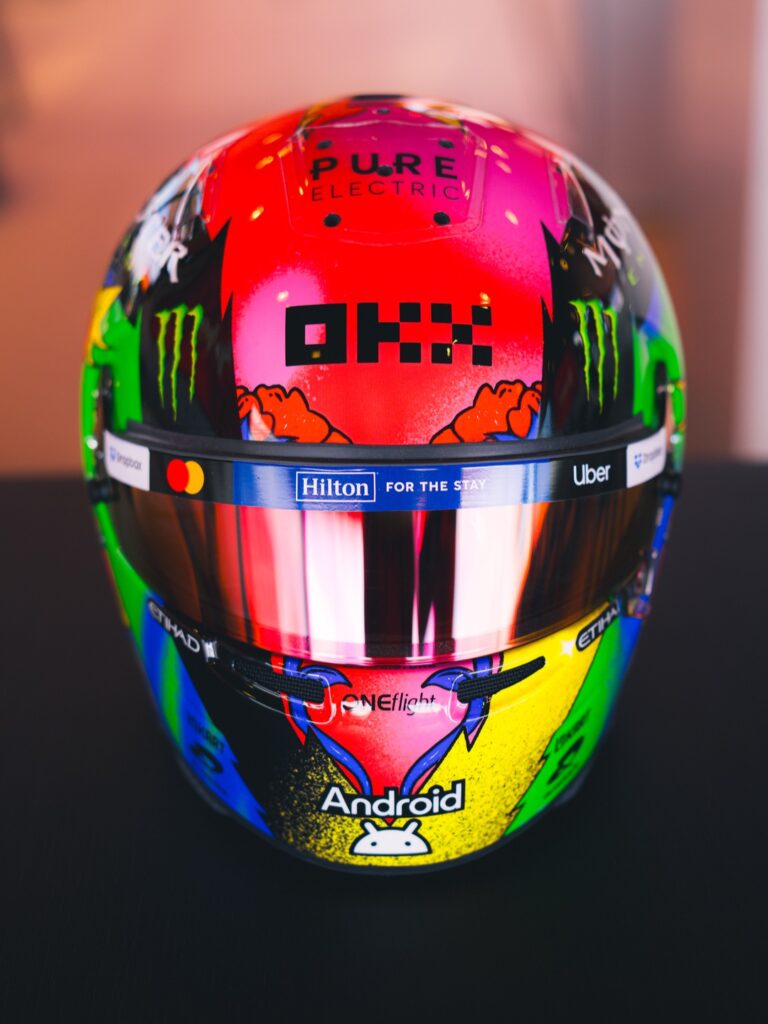
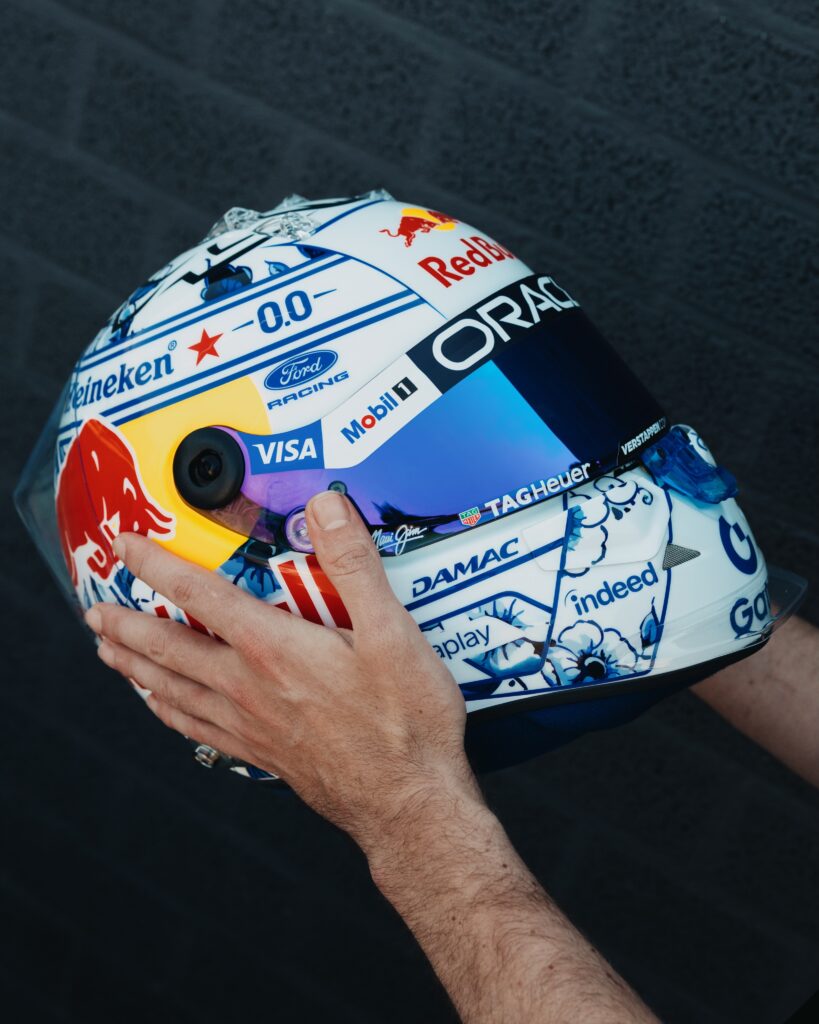
Display replicas from the Horner-to-Mekies transition period are drawing increased attention because they mark a defined before-and-after moment in Red Bull’s history. A full-size 1:1 collector helmet from this window, typically finished at dimensions around 27 × 35 cm and weighing near 1.45 kg, captures the exact livery and branding used during the season when the team’s leadership, engine supplier, and driver lineup all shifted at once.
This kind of concentrated change rarely happens across three areas of a team simultaneously. Collectors interested in Max Verstappen memorabilia are treating the 2025 and 2026 helmet designs as a matched pair documenting the exact period when Red Bull moved from two decades of Horner-era stability into an entirely new operational model under Mekies and Red Bull Ford Powertrains.
What to look for in a display piece
Buyers should prioritize helmets that clearly correspond to the correct season livery, since Red Bull’s visual identity shifted alongside its leadership and powertrain changes. A well-documented exhibition-quality piece from this transitional era, distinct from both the earlier Horner years and whatever comes after Verstappen’s next decision, holds its significance regardless of how the driver market situation eventually resolves.
Is Red Bull better or worse off one year on
Red Bull is arguably no worse off competitively than it was under Horner, given Verstappen finished two points from the 2025 title, but it is clearly less stable structurally, with key staff departures and an unresolved driver future hanging over the team. The honest answer depends on which measure matters most: results on track, where the team stayed within two points of a championship, or organizational continuity, where a 20-year leadership era has been replaced by a still-settling new structure.
What is certain is that this 12-month stretch, from Horner’s sacking through the Mekies appointment, the Tsunoda-Hadjar swap, and Verstappen’s ongoing uncertainty, has produced one of the most eventful periods in Red Bull’s history since it entered Formula 1. For those tracking the team through display and collector pieces, it is also one of the most collectible.
“Red Bull is undergoing a painful transition, but a two-point championship margin says the car and driver combination is still capable of winning it all.”
— 123Helmets Editorial Team
FAQ
Q: When was Christian Horner removed as Red Bull team principal
Christian Horner was sacked roughly one year before this article, ending a 20-year tenure as Red Bull’s team principal. Laurent Mekies was installed as his replacement shortly after.
Q: How close did Max Verstappen come to a fifth world title in 2025
Verstappen finished two points short of the 2025 world title, the first full season under Red Bull’s new leadership and Red Bull Ford Powertrains arrangement.
Q: Who replaced Yuki Tsunoda as Verstappen’s teammate
Isack Hadjar was promoted into the second Red Bull seat alongside Max Verstappen after Tsunoda’s demotion, continuing the team’s long search for a stable driver pairing.
Q: Is Max Verstappen leaving Red Bull
Verstappen’s future at Red Bull and in Formula 1 is reportedly under consideration, though no confirmed departure has been announced as of this writing.
Q: What makes a Verstappen helmet from this era collectible
A helmet from the season spanning Horner’s exit, the powertrain switch, and the Tsunoda-Hadjar swap marks a defined transitional chapter, and full-size 1:1 replicas near 27 × 35 cm and 1.45 kg document that exact livery period.
Shop Max Verstappen Collection
Display and collector replicas only. Not certified for protective use. Full-size 1:1 scale.