Blog
Russell, Leclerc & Hamilton: 2026 Austrian GP Front Row
 123Helmets Editorial Team

George Russell takes pole at the 2026 Austrian Grand Prix, with Charles Leclerc and Lewis Hamilton locking out the top three. Two Ferraris on the front three rows means the run to Turn 1 will decide everything — and for collectors, this is exactly the kind of moment that defines a helmet’s legacy.
Key Takeaways
George Russell starts the 2026 Austrian Grand Prix from pole position, leading a front three that spans three world championship-calibre drivers.
Charles Leclerc and Lewis Hamilton give Ferrari two cars in the top three, making the approach to Turn 1 the critical moment of the race.
The combined race starts of Russell, Leclerc and Hamilton represent one of the most experienced front-three grids of the 2026 season.
For helmet collectors, Austrian GP weekend liveries from pole-sitters and podium finishers are among the most historically documented pieces in the hobby.
The 2026 Austrian GP Front Three: Russell, Leclerc, Hamilton
George Russell will start the 2026 Austrian Grand Prix from pole position, with Charles Leclerc directly behind him in second and Lewis Hamilton third on the grid — placing two Ferrari cars in the front three for race day. The announcement, confirmed on 2026-06-27 ahead of Sunday’s race at the Red Bull Ring, sets up one of the most watched opening laps of the 2026 season. Russell has converted his qualifying pace into a grid slot that puts him in direct contest with Ferrari at a circuit where the sprint to Turn 1 routinely decides the first corner battle. For George Russell, pole at the Red Bull Ring is a statement of where Mercedes stands in the 2026 constructors’ fight.
The Red Bull Ring is a compact 4.318 km layout, and the distance between the grid and Turn 1 is short enough that a strong launch from second or third can realistically threaten the leader before braking. That makes the front three — not just the pole-sitter — the story of tomorrow’s race. Charles Leclerc and Lewis Hamilton are both proven at converting front-row slots into race leads, and Ferrari will be studying the data from every previous Austrian GP start to find the advantage.
What the Grid Positions Mean for Race Day
Starting position matters more at the Red Bull Ring than at almost any other circuit on the 2026 calendar because the track’s 10-turn layout offers limited overtaking windows beyond the Turn 3 and Turn 4 DRS zones. Russell in P1 controls the trajectory into Turn 1, but a drag-race start from Leclerc in P2 or Hamilton in P3 — running on whatever Ferrari’s preferred 2026 tyre compound proves to be — could cut that advantage to zero within the first 100 metres off the line. The run from the front of the grid to the braking zone at Turn 1 takes roughly 3 seconds at racing speed, and three tenths of a second at launch translates directly into track position.
Hamilton’s P3 start is particularly notable. Starting from the clean side of the grid on row two, he has the option of a straight-line dive toward the inside of Turn 1 if Leclerc and Russell make contact or run wide. Ferrari’s strategic intelligence at race starts has developed through the 2026 season, and placing two cars in the top three gives the Maranello team the option of using one driver to pressure Russell while the other picks a cleaner line. Whether team orders will play a part — or whether Leclerc and Hamilton are free to race each other — is the subplot every analyst will watch from the lights out.
For context on experience levels: Hamilton has more than 350 career race starts, Leclerc passed 150 starts during the 2026 season, and Russell has been a full-time constructor points scorer since 2022. The combined grid knowledge at the front of tomorrow’s Austrian GP is exceptional by any measure of the modern era.
Charles Leclerc: Ferrari’s Lead Card from Second
Charles Leclerc starts the 2026 Austrian Grand Prix from second on the grid, giving Ferrari its best chance of converting front-row pace into a race lead. Leclerc’s qualifying form through the 2026 season has been among the strongest on the grid, and P2 at a circuit where the Red Bull Ring’s fast, flowing corners suit a high-downforce setup means his race trim should be competitive from the opening stint. If he gets alongside Russell at Turn 1, the inside line at Turn 2 — a hard-braking right-hander — becomes the pass that decides the lead.
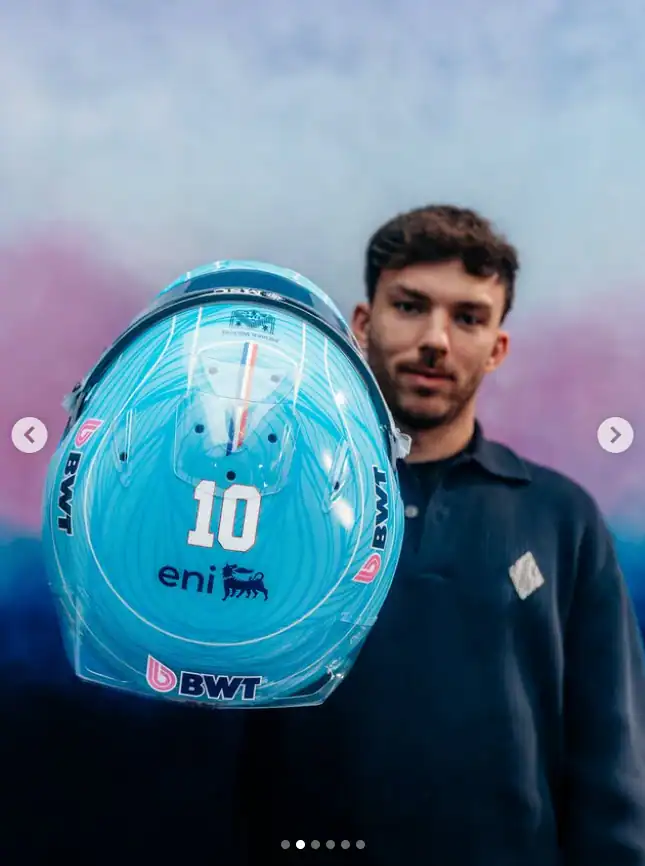
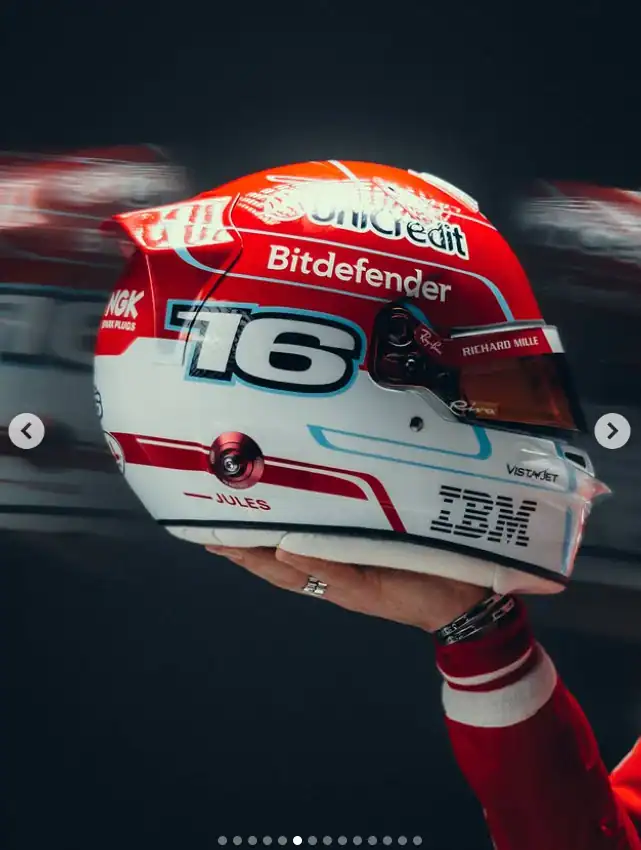
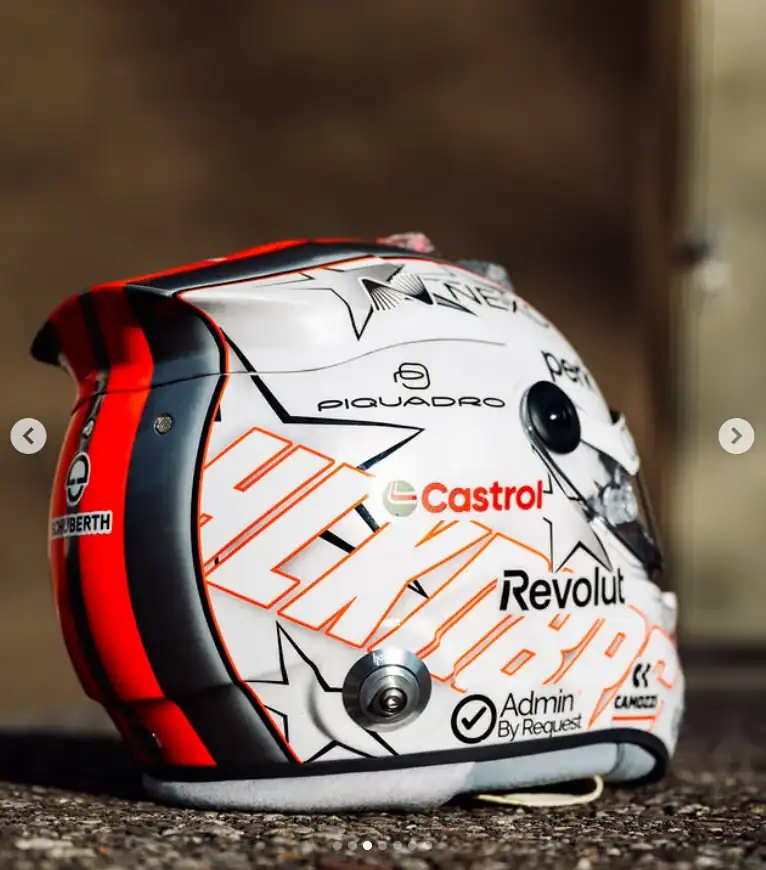
Leclerc’s helmet livery for the 2026 Austrian Grand Prix is part of what makes this weekend significant for display collectors. Austrian GP helmets carry an immediate narrative weight: red, white, and the Ferrari shield at a circuit that once hosted the Österreichring era of F1 history. Full-size 1:1 display replica helmets documented from race weekends like this one — with a confirmed P2 qualifying result and a realistic shot at victory — represent a specific chapter in a driver’s career arc. The 2026 Austrian GP falls on race weekend 10 of the season, meaning it sits at the midpoint where championship trajectories start to crystallise.
Lewis Hamilton at Ferrari: The Historic Dimension
Lewis Hamilton starts third for Ferrari at the 2026 Austrian Grand Prix, the latest entry in what is already one of the most documented driver-team transitions in the sport’s history. Hamilton’s move to Ferrari for 2026 brought one of the largest collector audiences in the hobby directly to the Scuderia’s livery, and every grid position, podium, and race result he records in red adds a data point to that historical record. P3 at the 2026 Austrian GP means Hamilton has the opportunity to finish on the podium and, depending on how the race unfolds, to take the lead if both Russell and Leclerc encounter problems ahead of him.
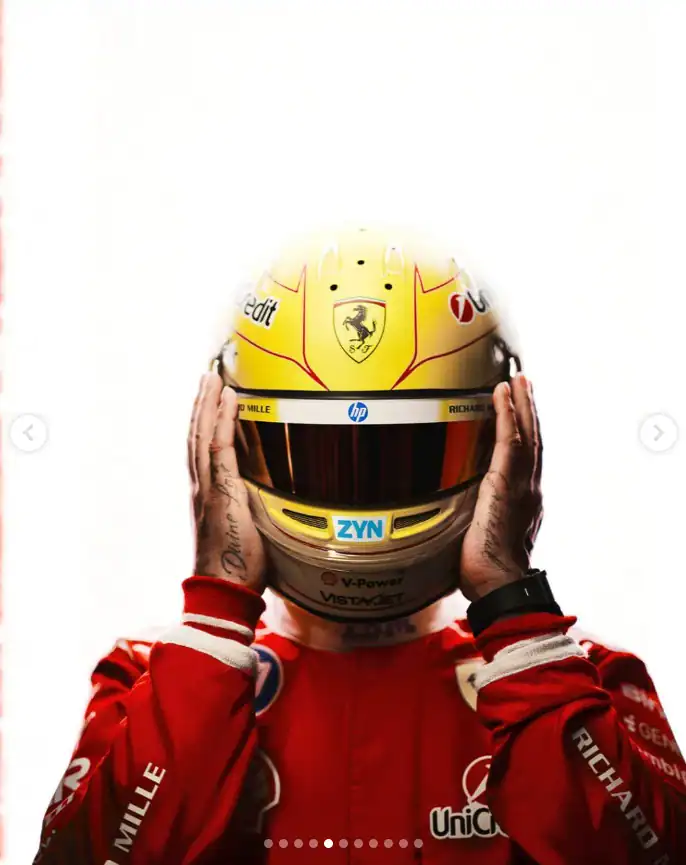
The Austrian Grand Prix has personal significance in the broader Hamilton career timeline. Racing in red at the Red Bull Ring, a circuit associated in modern memory with dominance by other teams, carries its own weight. For Lewis Hamilton replica helmet collectors, 2026 is the defining year: every livery he runs this season in Ferrari colours is, by definition, a first-year Ferrari piece. The helmet worn or replicated from a race where Hamilton starts P3 and challenges for the lead in his first Ferrari season is precisely the kind of documentation that serious collectors track. Full-size 1:1 scale display replicas from this season capture the shell shape, visor geometry — typically 26 mm visor thickness on exhibition-quality pieces — and the exact colour panel layout specific to each race weekend.
George Russell on Pole: Mercedes’ 2026 Statement
George Russell’s pole position at the 2026 Austrian Grand Prix is the headline result that defines this weekend’s grid, placing Mercedes at the front of a field that includes both Ferrari cars directly behind. Russell has developed into one of the most consistent qualifiers on the 2026 grid, and pole at the Red Bull Ring — a circuit that rewards mechanical grip in the slow sectors and aerodynamic efficiency through the high-speed sequences — reflects where the 2026 Mercedes package stands relative to Ferrari. The gap between his pole time and Leclerc’s P2 time determines the effective race lead he can maintain into Turn 1.
From a display and collector perspective, Russell’s 2026 Austrian GP helmet is the pole-sitter piece from race weekend 10 of the season. Pole helmets carry a specific classification in replica documentation: they are associated with Saturday’s session result, distinct from any race-day variant the driver might run. Full-size 1:1 collector replicas of Russell’s 2026 Austrian GP helmet capture the Mercedes Silver Arrow livery in its current 2026 specification — a design that differs from the 2025 iteration — at 29 × 25 × 35 cm display footprint, 1.2–1.5 kg finished weight for exhibition-grade shells. For George Russell collectors building a season-by-season archive, this is the Austrian GP entry for 2026.
The front three at the 2026 Austrian Grand Prix — Russell, Leclerc, Hamilton — is a grid that will be referenced in the season’s final narrative regardless of who wins. Three drivers, three teams’ worth of engineering effort, and one short sprint to Turn 1 on race day: the outcome will be documented in results tables, race reports, and in the collector pieces that mark each round of the 2026 season.
Why This Grid Is One for Collectors to Document
The 2026 Austrian Grand Prix front three — confirmed on 2026-06-27 — is a collector-grade grid entry because it pairs an exceptional race narrative with three of the most collected driver names in the current hobby. Russell on pole, Leclerc second, Hamilton third: any one of those names anchoring a front-row result would generate collector interest. All three together, with Ferrari holding two of the top three slots and Hamilton racing in red for his first full Ferrari season, creates a specific weekend that sits above the average race-day entry in terms of historical weight.
Display replica helmets documenting this weekend typically reference the confirmed qualifying result, the race-day livery specification, and the circuit context. At 1:1 full-size scale, a display piece from the 2026 Austrian GP captures the exact helmet shell profile each driver uses — the visor cut angle, the chin-piece geometry, and the colour panel layout that distinguishes a race-week version from a generic sponsor display piece. Exhibition-quality replicas are produced to the same external dimensions as the original equipment, typically displaying at a 29 × 25 × 35 cm footprint, and are finished with the race-specific decal set that identifies the Austrian GP round. These are display and collector items only — not certified for any protective or wearable use.
The Austrian Grand Prix has a long record of producing first-lap drama when strong qualifiers share the front rows. The combination of Russell’s pace, Leclerc’s Turn 1 aggression, and Hamilton’s experience reading starts means tomorrow’s opening 3 seconds of racing will generate the defining image of race weekend 10 in the 2026 F1 season — and the helmet documentation from this weekend will reflect that.
FAQ
Q: What is the starting grid order for the 2026 Austrian Grand Prix front three?
George Russell starts from pole position, Charles Leclerc is second, and Lewis Hamilton is third on the grid for the 2026 Austrian Grand Prix. This places two Ferrari cars in the top three positions heading into race day at the Red Bull Ring.
Q: Why does the run to Turn 1 matter so much at the 2026 Austrian GP?
The Red Bull Ring’s compact 4.318 km layout means overtaking opportunities are concentrated at the Turn 3 and Turn 4 DRS zones, making the launch from the grid to Turn 1 the primary moment where race lead changes. A driver starting second or third who out-drags the pole-sitter in the first 100 metres can realistically take the lead before the first braking zone.
Q: Is Lewis Hamilton’s 2026 Austrian GP result significant for collectors?
Yes — Hamilton’s 2026 season is his first full year racing for Ferrari, making every race result in red a documented first-year Ferrari entry. P3 on the grid for the 2026 Austrian GP, with a realistic shot at the lead, is a specific data point that collector-grade display replica helmets from this weekend reflect.
Q: What should I know about full-size 1:1 F1 display replica helmets from this race weekend?
Full-size 1:1 collector replica helmets from the 2026 Austrian Grand Prix are display and exhibition pieces only — not certified for any protective or wearable use. They are produced at 1:1 scale to match the external shell profile of the original equipment, typically finishing at a 29 × 25 × 35 cm display footprint and 1.2–1.5 kg for exhibition-grade shells, with race-specific decal sets identifying the Austrian GP round and the 2026 season livery.
Q: Which driver helmet is the most collectible from the 2026 Austrian GP front three?
All three drivers — Russell, Leclerc, and Hamilton — generate significant collector demand, but Hamilton’s 2026 Ferrari livery carries a unique classification as a first-year Ferrari piece. For display collectors building a season archive, the pole-sitter (Russell) piece documents the Saturday result, while Leclerc and Hamilton pieces document Ferrari’s strongest 2026 grid position as a pair.
Browse F1 Helmet Collection
Display and collector replicas only. Not certified for protective use. Full-size 1:1 scale.
This article was written with the help of AI tools. Editorial policy