

Blog
Aston Martin Runs Twin New-Spec Cars in 2026 FP1
 123Helmets Editorial Team
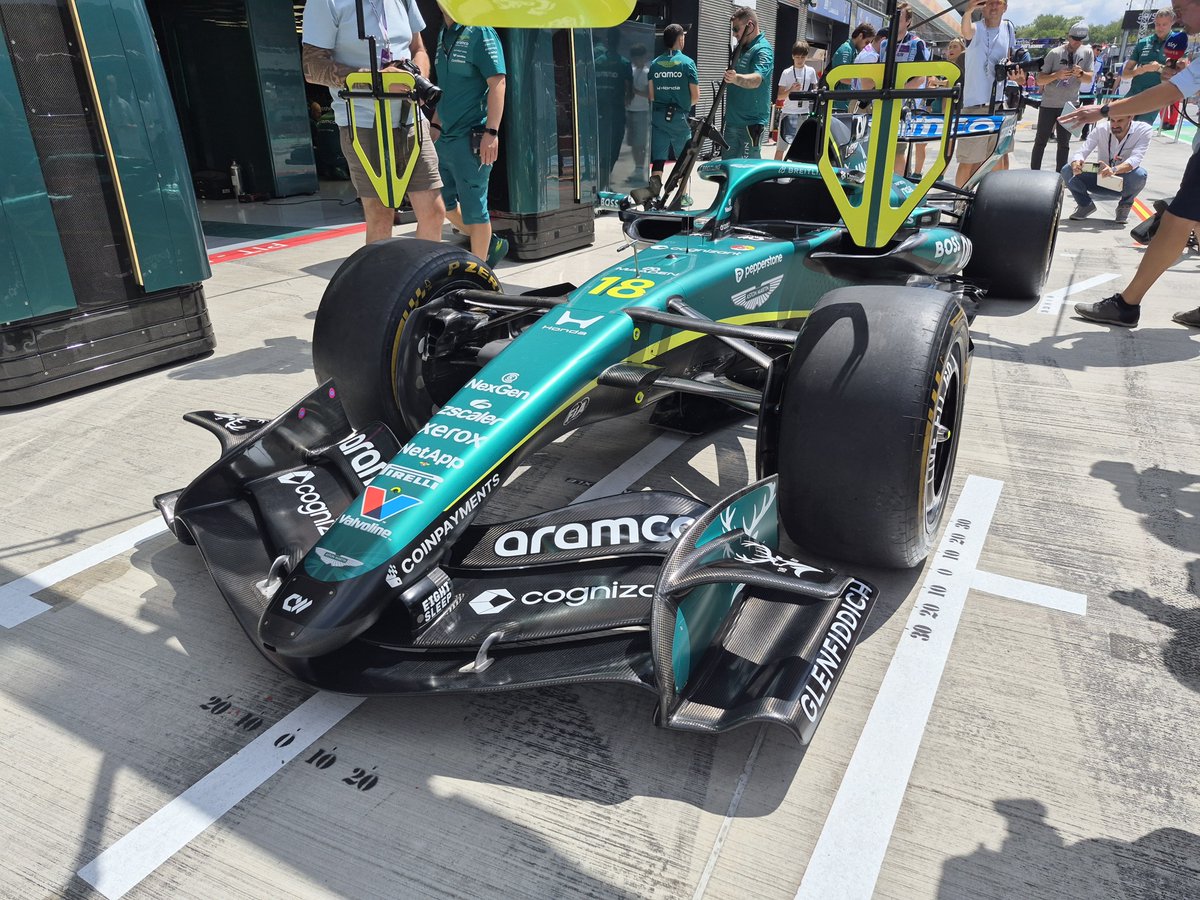
Aston Martin arrives at Friday practice with both cars built to an identical new specification, skipping the usual aero-rake correlation work in favor of straight mileage-building, according to a report from journalist Adam Cooper. The decision signals a team eager to bank clean running data rather than spend FP1 chasing sensor readings, a notable shift for a squad chasing form in the 2026 season.
Key Takeaways
Aston Martin brought two cars in matching new specification to FP1 rather than staggering upgrades between drivers.
The team skipped aero-rake sensor runs, a correlation tool usually deployed early in a Friday session, to prioritize track mileage instead.
FP1 sessions run 60 minutes, giving limited time to validate new parts before the tighter FP2 and qualifying preparation windows.
For collectors, a matched-spec upgrade weekend often lines up with updated livery detailing that later appears on full-size 1:1 replica helmets.
Two New Cars, Same Spec: What It Actually Means
Running two cars in identical new specification means Aston Martin has committed both chassis to the same upgrade package rather than splitting parts between drivers for A/B testing. This is a departure from the more cautious approach many teams use when introducing a significant new-spec car, where one driver often keeps the previous package as a reference point. By fielding matching machinery from the opening minutes of FP1, the team removes any variable between the two cars, meaning every lap time comparison between team mates reflects driving and setup differences rather than hardware differences.
According to Adam Cooper’s report, this approach was confirmed directly ahead of the Friday session, with no aero rakes fitted to either car. Aero rakes are the grid-like arrays of pressure sensors teams bolt to the front and sides of a car to map airflow, usually run in the early minutes of FP1 at low speed alongside a following car carrying a camera rig. Skipping that step outright suggests Aston Martin either already trusts its correlation data from wind tunnel and CFD work, or has decided that gathering raw mileage matters more this weekend than refining aerodynamic models further.
No Aero Rakes: Reading Between the Lines
Skipping aero-rake runs in FP1 typically indicates a team prioritizing race-simulation data or reliability mileage over aerodynamic correlation on that specific Friday. Teams generally schedule rake runs when they need to validate new floor edges, front wing elements or bargeboard-region parts against simulation predictions before locking in a setup direction for the rest of the weekend. Choosing not to run rakes with a brand-new specification car is a notable call, since most engineering groups would normally want that data as soon as new parts hit the track.
One likely explanation is confidence built from simulator and wind-tunnel work carried out at the team’s Silverstone campus before the parts were shipped to the circuit. Another is that Aston Martin’s priority for this particular Friday is banking lap count on new mechanical components, gearbox mapping or power unit software rather than refining bodywork airflow. Either way, the choice tells rivals and observers that the team sees this FP1 as a mileage exercise first, an aerodynamic data-gathering exercise second.
Building Mileage: Why It Matters Before Qualifying
Building mileage in FP1 means covering as many green-flag laps as possible to stress-test new parts under real track conditions rather than in a controlled aero-mapping exercise. FP1 sessions run for 60 minutes, a tight window once installation checks, tyre-pressure procedures and any red flags are factored in, so every lap not spent on rake runs is effectively reclaimed for representative running. For a team introducing new-specification chassis to both cars simultaneously, that extra track time is used to confirm structural integrity, cooling behavior and driveability across a range of fuel loads before FP2 and FP3 narrow the focus toward qualifying setup.
Reliability confirmation matters just as much as pace here. A brand-new specification car introduces components that have not previously seen full-load running at race speed, and any vibration, temperature or handling anomaly is far cheaper to discover during a Friday practice mileage run than during Saturday qualifying or the Grand Prix itself. Teams that skip aero data collection on introduction day are effectively betting that the car’s baseline behavior is already understood well enough that pure durability and drivability feedback is the higher priority.
From Garage to Display Case: Collecting Aston Martin’s 2026 Look
A matched-specification upgrade weekend for Aston Martin often coincides with refreshed livery detailing that eventually appears on full-size 1:1 display helmets modeled on the team’s race-worn designs. When both cars run identical new parts, sponsor branding, cooling louvre patterns and paint schemes typically get updated in step across the garage, giving collectors a clear visual marker for exactly which point in the 2026 season a helmet or livery design corresponds to. That kind of timeline detail is part of what makes race-specific replica pieces desirable for serious collectors rather than casual souvenir buyers.
Full-size 1:1 collector helmets replicating a driver’s race-weekend design are generally built to standard shell dimensions of roughly 27 × 35 cm and finished with multiple paint layers to reproduce metallic flake, gloss and matte sections accurately. Exhibition-quality pieces modeled on a specific season’s livery are display items, not equipment intended for on-track use, and they hold particular appeal when tied to a documented milestone like a new-spec chassis debut. For fans following Aston Martin through the 2026 season, this Friday’s mileage-focused FP1 is exactly the kind of dated, verifiable moment that gives a display helmet or model additional context and story value on a shelf.
What to Watch for the Rest of the Weekend
The key signal to watch next is whether Aston Martin’s Friday mileage strategy translates into a stable, well-understood setup by FP3, or whether the team still needs to catch up on aero correlation work it deferred. Because aero-rake data was skipped in FP1, it would not be surprising to see it appear in FP2 instead, once the mileage-building priority has been satisfied and baseline reliability confirmed. Teams sometimes split their two-part correlation and durability program exactly this way across the two Friday sessions.
Fans should also watch long-run pace during any FP2 race-simulation stints, since that will offer the first real read on whether the new-specification package has closed a competitive gap or simply matched prior levels while improving other characteristics like cooling or driveability. As with any new-spec introduction, definitive conclusions typically only arrive once the car has completed a full qualifying and race weekend cycle, so this Friday’s mileage-first approach should be read as the first data point of several rather than a verdict on the upgrade itself.
“Aston Martin ready to run in FP1 with two new cars in the same spec. No messing about with aero rakes today just straight into building up mileage.”
— Adam Cooper (@adamcooperF1)
FAQ
Q: What does it mean that Aston Martin ran two new cars in the same spec?
It means both team cars were fitted with identical new-specification parts for FP1 rather than one car keeping the previous package as a reference point, removing hardware as a variable between drivers’ lap times.
Q: Why would a team skip aero rake runs in FP1?
Skipping aero rakes usually means a team is prioritizing mileage, reliability checks or race-simulation data over aerodynamic correlation for that specific session, often because prior wind-tunnel and CFD work has already validated the new parts.
Q: How long is an F1 FP1 session?
FP1 sessions run for 60 minutes, a tight window that limits how much a team can accomplish once installation laps, tyre procedures and any red flags are accounted for.
Q: Are Aston Martin display helmets built to race-used specifications?
Collector helmets are full-size 1:1 display replicas modeled on a driver’s race-weekend design, typically built to shell dimensions around 27 × 35 cm with multiple paint layers, intended purely for exhibition rather than on-track use.
Q: Will Aston Martin’s aero data collection happen later in the weekend?
It is plausible, since teams that defer aero-rake correlation from FP1 sometimes shift that work into FP2 once mileage and reliability priorities from the new-spec introduction have been satisfied.
Browse F1 Helmet Collection
Display and collector replicas only. Not certified for protective use. Full-size 1:1 scale.