Blog
FIA Doc 20: Max Verstappen Turn 12 Incident, Hungarian GP 2026
 123Helmets Editorial Team

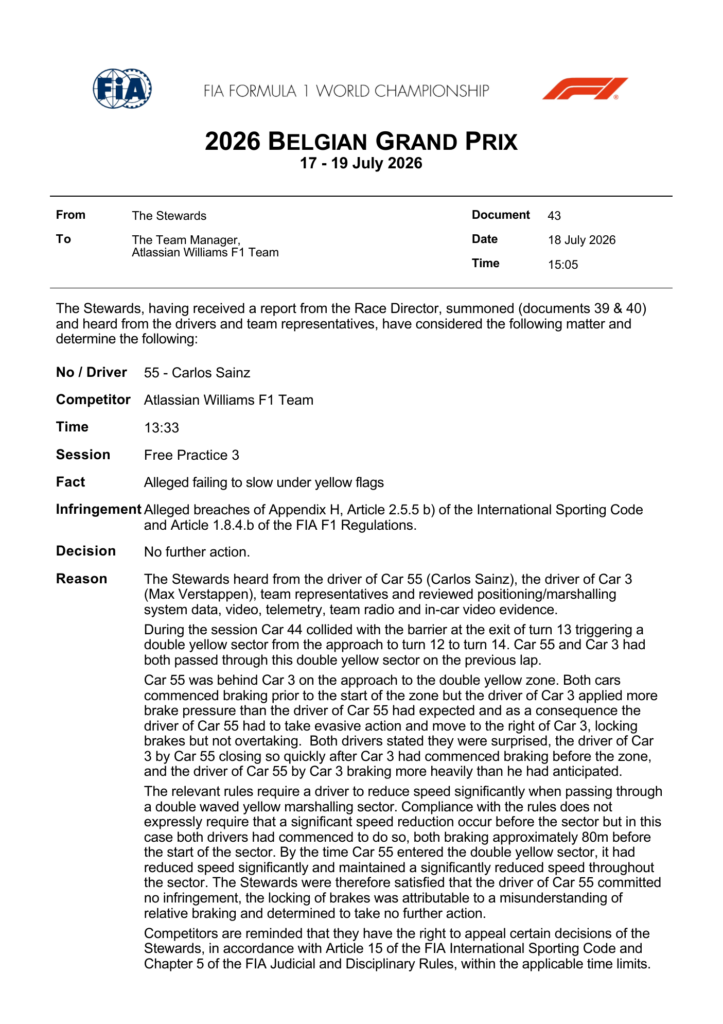
FIA Document 20 for the 2026 Hungarian Grand Prix addresses an alleged erratic driving incident involving Max Verstappen at Turn 12 of the Hungaroring, opening a formal stewards inquiry during the Friday practice sessions on 2026-07-24.

Key Takeaways
FIA Document 20 formally records a stewards investigation into Max Verstappen for alleged erratic driving at Turn 12 during the 2026 Hungarian Grand Prix weekend.
The Hungaroring is a 4.381 km, 14-turn circuit, and the Hungarian Grand Prix is run over 70 laps.
Stewards decisions are issued as sequentially numbered documents; Document 20 places this inquiry well into the weekend’s paperwork trail alongside earlier technical and sporting notices.
Penalty points from a proven erratic driving offense count toward the 12-point threshold that triggers an automatic one-race suspension under FIA superlicence rules.
What FIA Document 20 Actually Says
FIA Document 20 is the stewards’ formal notice opening or resolving an investigation into Max Verstappen for alleged erratic driving at Turn 12 during the 2026 Hungarian Grand Prix weekend at the Hungaroring. Stewards documents are numbered in the order they are issued across a race weekend, covering everything from track limits notices to technical infringements, and by the time a document reaches number 20 the weekend has typically generated a long paper trail of driver briefings, incident notes, and session classifications. This particular notice concerns Max Verstappen, and the wording ‘alleged erratic driving’ signals that the stewards had not yet confirmed a breach at the time the document was logged — it is an investigation, not automatically a penalty.
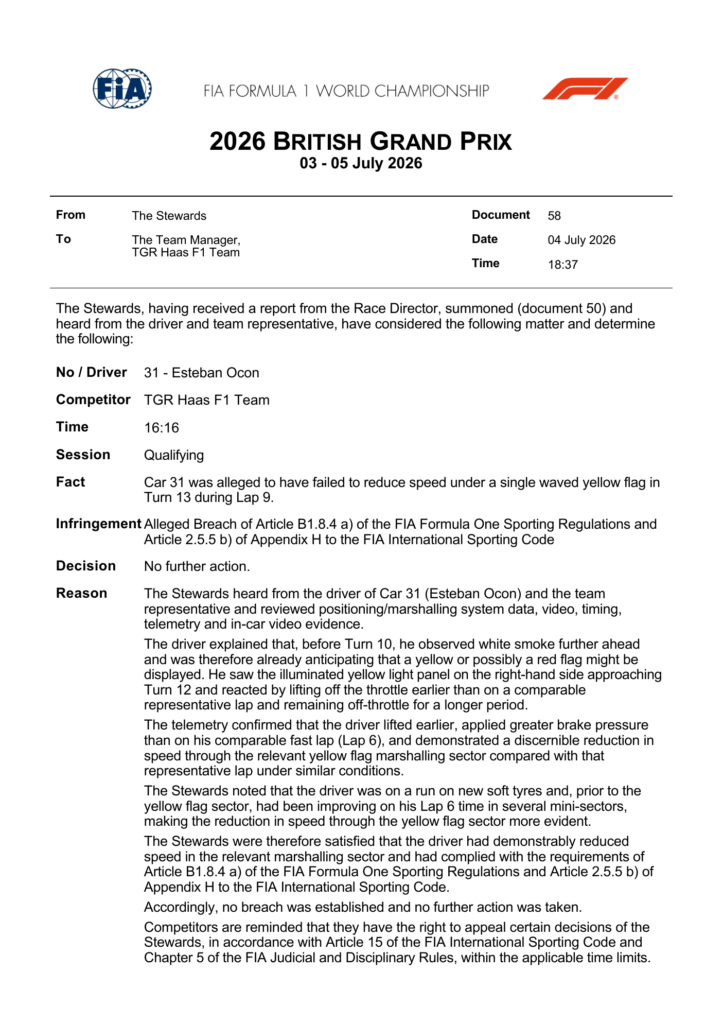
Under the FIA’s standard process, stewards review video evidence, marshal reports, GPS telemetry and team radio before deciding whether Article 12.2.1.f of the International Sporting Code — the catch-all provision covering conduct prejudicial to the interests of a competition — has been breached. A summons is typically issued to the driver and team representative, who then have the right to be heard before any penalty, reprimand, or dismissal of the case is confirmed in a follow-up document.
Turn 12 at the Hungaroring: Why This Corner Matters
Turn 12 is one of the technical infield corners on the Hungaroring’s 4.381 km layout, a track built with 14 turns and famously tight, low-grip characteristics that reward precision over raw power. The circuit hosts the Hungarian Grand Prix over a race distance of 70 laps, and its narrow, twisting middle sector — where Turn 12 sits — offers few clean overtaking lines, which is exactly why defensive or erratic movements through that section draw closer scrutiny from race control.
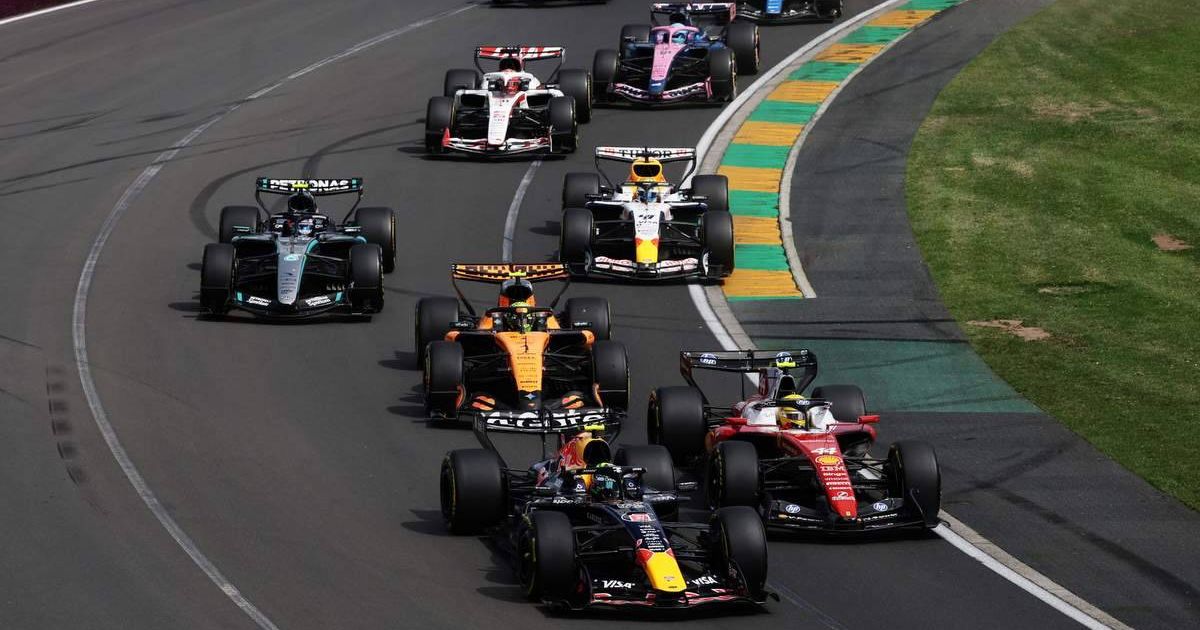
Because the Hungaroring has limited straights and a bumpy, dusty surface that rarely cleans up compared to purpose-built modern circuits, cars running close together through the infield corners are more exposed to sudden direction changes under braking. A single defensive move, a late brake or an unexpected line correction at Turn 12 can be enough to prompt race control to flag the sector for stewards review, which appears to be the trigger behind Document 20.
How Stewards Define ‘Erratic Driving’
Erratic driving in F1 stewarding language covers sudden, unpredictable changes of direction or braking that endanger other competitors, rather than any single codified maneuver. Unlike track limits, which are measured against white line boundaries, erratic driving allegations rely on judgment calls based on video angles, in-car footage and telemetry traces showing steering input, brake pressure and throttle position through the corner in question.
The stewards panel for a Grand Prix weekend typically includes a permanent FIA steward, a driver steward (often a former F1 competitor) and local representatives, and their rulings on incidents like the Turn 12 investigation become precedent for how similar defensive moves are treated later in the same season. A proven breach can result in a time penalty, a grid penalty for a future session, or — for repeat or serious offenses — the addition of penalty points to a driver’s superlicence.
Penalty Points and the Bigger Picture
Penalty points matter because they accumulate toward a hard limit: 12 points within a rolling 12-month period trigger an automatic one-race ban under FIA superlicence regulations. A single Document 20 finding rarely reaches that threshold on its own, but for any driver already carrying points from earlier incidents in the 2026 season, a confirmed erratic driving penalty at Turn 12 could bring them meaningfully closer to a suspension.
This is also why teams contest these documents closely. A dismissed investigation costs nothing beyond the weekend’s attention, but a confirmed penalty — even a modest five-second time addition — can shuffle a session result, a grid slot, or in cumulative terms, a championship position over a 24-race calendar. Stewards documents from mid-weekend sessions like Friday practice rarely change outcomes on their own, but they build the disciplinary record that shapes how a driver is treated in closer, higher-stakes incidents later in the year.
Why Fans Collect Moments Like This
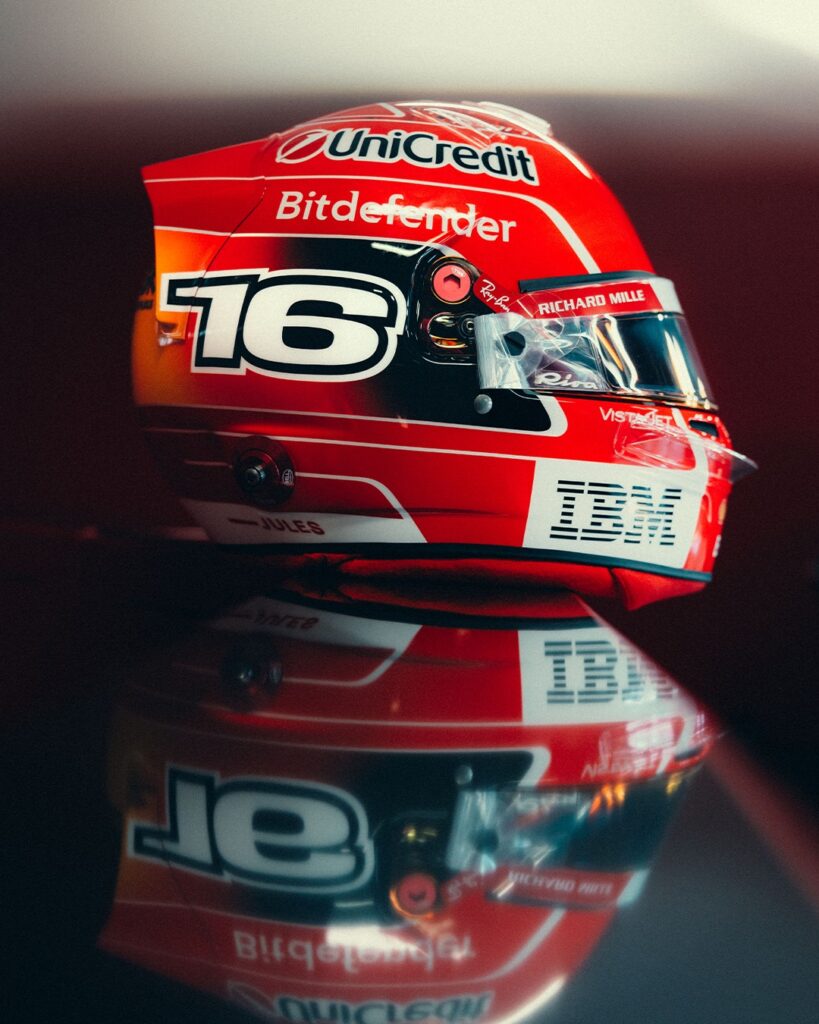
Incidents that generate stewards paperwork often become part of a driver’s season narrative, and that narrative is exactly what collectors chase when choosing a full-size 1:1 display helmet. A Turn 12 investigation at the Hungaroring, regardless of its final ruling, adds a specific data point — a date, a corner, a document number — that fans can tie to the livery and helmet design worn that same weekend.
For display and collector pieces, that context is part of the appeal: an exhibition-quality replica finished in the exact scheme raced during the 2026 Hungarian Grand Prix weekend carries more story than a generic design, whether or not the underlying incident resulted in a penalty. Collectors building a season-by-season wall display often look specifically for helmets tied to a driver’s most talked-about weekends, and a stewards inquiry — however minor — is precisely the kind of detail that gets remembered.
What Happens Next With Document 20
The next step is a follow-up document confirming either a penalty, a reprimand, or a ‘no further action’ outcome once the stewards complete their review of Max Verstappen’s Turn 12 incident. Because the Hungarian Grand Prix race itself had not yet been run at the time this notice was issued on 2026-07-24, any sporting consequence — whether a grid penalty applied to qualifying or the race — will appear in a subsequent numbered document later in the weekend.
Fans following the weekend closely should watch for the next stewards bulletin rather than assuming Document 20 alone settles the matter. FIA documents of this kind are procedural markers in an ongoing process, and the final classification of the incident will only be clear once the stewards issue their concluding ruling.
“The stewards will review video and telemetry evidence relating to the alleged erratic driving of Max Verstappen at Turn 12 before reaching a decision.”
— FIA Stewards Document 20, 2026 Hungarian Grand Prix
FAQ
Q: What is FIA Document 20 at the 2026 Hungarian Grand Prix?
It is the stewards’ formal notice opening an investigation into Max Verstappen for alleged erratic driving at Turn 12, issued during the Friday practice sessions on 2026-07-24 at the Hungaroring.
Q: Does Document 20 confirm a penalty for Max Verstappen?
No, the document records an investigation, not a confirmed penalty; stewards typically issue a follow-up notice after reviewing evidence and hearing from the driver and team.
Q: How long is the Hungaroring circuit?
The Hungaroring is 4.381 km long with 14 turns, and the Hungarian Grand Prix is run over 70 laps.
Q: What happens if a driver accumulates too many penalty points?
Twelve penalty points within a rolling 12-month period trigger an automatic one-race suspension under FIA superlicence regulations.
Q: Why do collectors care about stewards incidents like this one?
A documented on-track moment adds specific context — a date, a corner, a session — that collectors use to identify which weekend a full-size 1:1 display helmet represents.
Browse F1 Helmet Collection
Display and collector replicas only. Not certified for protective use. Full-size 1:1 scale.