Blog
Checo Pérez Qualifies Strong for Cadillac F1 Despite Strategic Tyre Conservation
 123Helmets Editorial Team
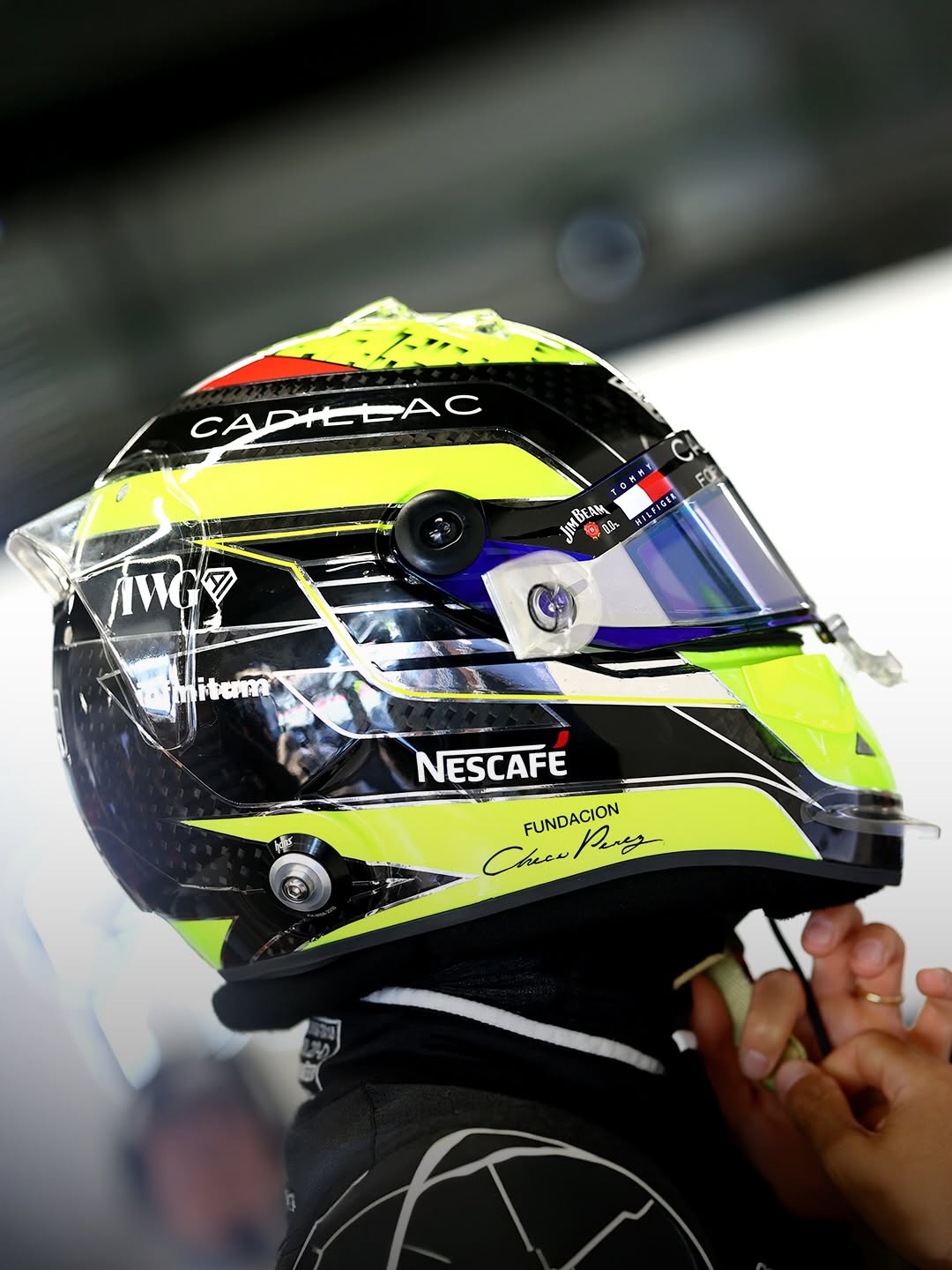
Sergio ‘Checo’ Pérez delivered another solid qualifying result for Cadillac F1, even after the team made a deliberate call to save a fresh set of soft tyres for the race — a decision that cost him one qualifying run compared to rivals, and an engine issue that stripped 0.15 seconds from his final lap.
Key Takeaways
Cadillac F1 chose to conserve a fresh soft tyre set for race day, giving Pérez only two qualifying sets against most rivals’ three.
An engine irregularity in the final corners of his last flying lap cost Pérez 0.15 seconds — a measurable chunk of time in a tight grid.
Despite those compromises, Pérez and the team felt they maximised the result available to them under the circumstances.
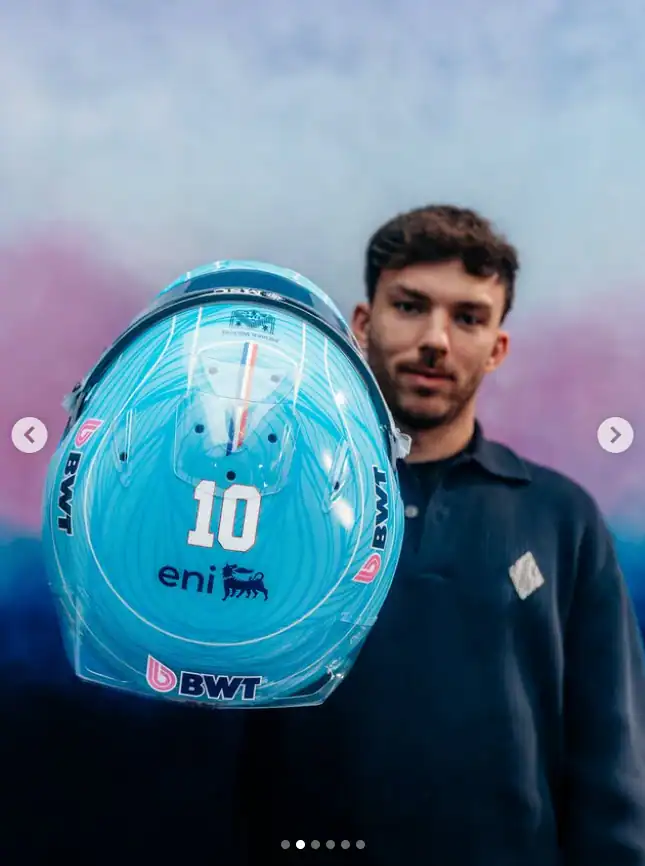
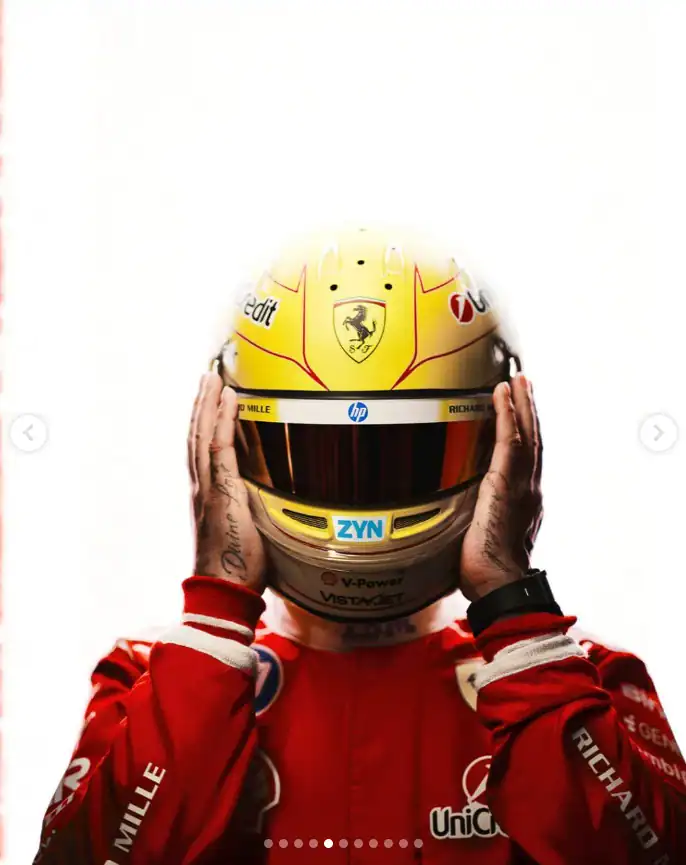
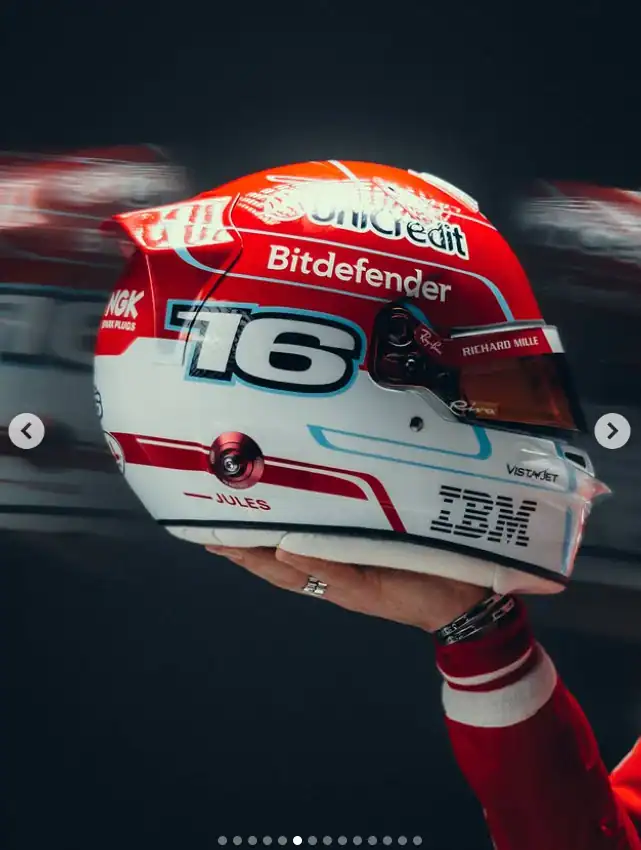
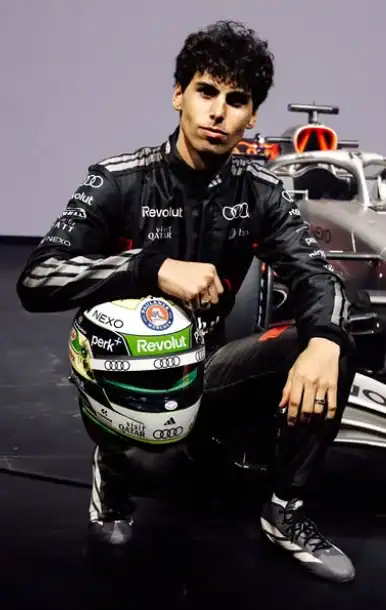
Pérez’s helmet livery from his Cadillac F1 era is already drawing collector attention as the team writes a new chapter in Formula 1 history.
A Qualifying Lap Built Around Race-Day Thinking
Qualifying in Formula 1 is almost never a pure sprint. Teams constantly weigh short-term grid position against long-term strategy, and at this race weekend Cadillac F1 made a call that put Sunday firmly ahead of Saturday. Sergio Pérez ran just two sets of soft compound tyres during the session while the majority of drivers around him used three. That single set saved represents a fresh, unused tyre going into the opening race stint — an asset that can swing the outcome of an entire afternoon.
Pérez was candid about what that decision meant for him personally in qualifying. “We focussed on the race, and also we focussed on saving that soft,” he explained. “You never know if you might need it, and having a new versus a used can be quite a bit of a difference. It made our qualifying life a little bit harder using two sets versus everyone around us three.”
The admission is a window into the level of pre-session planning Cadillac F1 is now operating at. Far from simply surviving on the grid, the team is making calculated compromises in qualifying — the kind of nuanced tyre management that separates mid-field contenders from also-rans.
The 0.15-Second Engine Issue That Hurt His Final Run
Even with only two tyre sets available, Pérez was on course to extract the maximum possible lap time — until the final two corners. An engine-related problem cost him a confirmed 0.15 seconds on that last flying lap. In qualifying trim, where the difference between positions can be three or four hundredths of a second, losing 0.15s in the closing sector is a significant blow.
“It’s a shame that we lost 0.15s with the engine in the last two co[rners],” Pérez said, his quote cut short in the original report but the frustration evident. The team has not yet disclosed the exact nature of the power unit irregularity, but the fact that it was measurable and localised to a specific part of the lap suggests a brief loss of deployment or combustion rather than a sustained mechanical failure.
What makes that 0.15s figure noteworthy is its precision. Pérez and the Cadillac F1 engineers clearly had enough telemetry to isolate exactly when and where the time was lost. That level of data resolution reflects how deeply the team is now embedded in competitive qualifying analysis — a long way from where Cadillac’s programme stood just a couple of years ago.
Cadillac F1’s Trajectory: From New Entry to Strategic Player
Cadillac F1’s presence on the Formula 1 grid represents one of the sport’s more talked-about new chapters. The American manufacturer fought a protracted regulatory and commercial battle to secure their entry, and having Sergio Pérez — a race winner with decades of top-flight experience — in the cockpit gives the programme immediate credibility.
The decision to trade a qualifying set of tyres for a race-day advantage is not something a team makes in its first weeks of existence. It requires confidence in the car’s race pace, trust in the strategy team’s modelling, and belief that the driver can make the most of whatever grid slot results. All three appear to be present at Cadillac F1 right now.
Pérez himself acknowledged that the overall session result still represented the maximum achievable given the constraints. “But still I think we managed to maximise it,” he said. That phrase — maximise it — is the language of a driver and team who understand exactly where they stand and are making peace with intelligent compromise rather than hoping for something the data does not support.
For followers of the sport who have watched Pérez across multiple team environments, the composure with which he handled a session affected by both a strategic tyre deficit and a late-lap power unit issue is characteristic. He has always been a driver who translates adversity into measured racecraft rather than radio frustration.
Why Tyre Allocation Strategy Defines Modern Qualifying
The soft compound tyre in Formula 1 is the fastest available across one lap, but it degrades quickly under sustained heat and load. Teams enter qualifying with a fixed allocation of sets, and every set used in Q1, Q2, or Q3 is one fewer available for the race — unless the regulations allow a return of certain compounds to the pool, which varies by event.
When Cadillac F1 chose to enter Pérez on two soft sets rather than three, they accepted that his rivals would have an extra attempt to improve. In a session where track evolution can add a tenth per lap as rubber is laid down and temperatures stabilise, having a third set also means a third shot at whatever the track gives late in the session. Pérez had to get his lap time right on fewer attempts.
The strategic logic cuts both ways, however. A fresh soft tyre at the race start — particularly if a safety car period clusters the field — can be worth far more than a marginal qualifying position gain. On circuits where undercut strategy is viable in the first stint, that new-versus-used tyre delta can be decisive. Cadillac F1 is clearly betting on exactly that scenario.
This kind of layered decision-making is what makes modern F1 genuinely compelling for those who follow the sport beyond the racing line. Every team principal, strategist, and driver press conference is a partial reveal of a much more complex game being played across a race weekend’s full 72-hour arc.
Pérez’s Cadillac Helmet Era — A Collector Moment in the Making
For helmet collectors and F1 display enthusiasts, a driver’s move to a new team is always a significant event. Livery changes, new colour palettes, updated sponsor panels, and revised visor tints mean that each team chapter in a driver’s career produces a distinct set of wearable — and collectible — designs. The Cadillac F1 era for Sergio Pérez is no different.
Full-size 1:1 replica helmets produced at collector and display grade capture the exact livery worn by a driver at a specific point in their career. A Pérez Cadillac F1 replica preserves the visual identity of this particular chapter: the American marque’s branding, the team’s colour language, and Pérez’s own personal helmet design elements that have evolved since his Force India days. Display pieces at this scale — full 1:1 collector replicas — sit at the intersection of motorsport history and precision manufacturing.
Exhibition quality replicas of this type are typically finished across multiple paint layers to replicate the depth and gloss of a race-used helmet shell. Visor panels on collector-grade replicas are generally produced to accurate thickness specifications — typically around 3 mm for the outer visor panel — and the overall shell dimensions mirror those of a genuine race helmet at 1:1 scale. These are display pieces only, not certified for any protective use, but as a permanent record of a specific race season and team pairing, they occupy shelf space that no photograph can quite replace.
The combination of Pérez’s continued strong performances and Cadillac F1’s growing reputation as a serious competitor means that helmets from this period have a documented story behind them — qualifying sessions with deliberate strategy, 0.15-second engine anomalies, tyre conservation decisions. Every race weekend adds another layer to the narrative that a collector helmet from this era will carry.
What to Watch in the Race
With the tyre strategy already set, the focal point for Cadillac F1 on race day is whether the conserved soft set delivers the advantage the team modelled. If the opening stint plays out as expected, Pérez should be in a position to either hold or improve on his grid slot through the first stop window. The 0.15s lost to the engine issue in qualifying is water under the bridge — what matters now is whether the power unit runs cleanly across race distance.
Pérez’s ability to manage tyre temperature over a long stint has been one of the most consistent strengths in his career. On circuits where rear tyre conservation in the middle phase of a stint determines whether an undercut or overcut is available, he typically ranks among the field’s most capable operators. That skill set aligns well with the strategic philosophy Cadillac F1 displayed in qualifying — save something now, use it precisely when it matters most.
For those watching from home, the early laps will be the clearest indicator of whether Saturday’s tyre conservation call was correct. If Pérez moves forward in the opening ten laps on a fresher compound than the drivers around him, the team’s qualifying compromise will have paid off exactly as intended. If the race takes an unexpected shape — a very early safety car, a rain shower, a first-lap incident — the unused soft set becomes a wildcard with its own set of possibilities.
Either way, the weekend so far has shown a Cadillac F1 team thinking at least one step ahead of the immediate session in front of them. That is the kind of forward planning that earns points in a sport where the gap between the right call and the wrong one is measured in tenths — exactly 0.15 of them, in this case.
“We focussed on the race, and also we focussed on saving that soft. You never know if you might need it, and having a new versus a used can be quite a bit of a difference. It made our qualifying life a little bit harder using two sets versus everyone around us three. But still I think we managed to maximise it.”
— Sergio Pérez, Cadillac F1 driver
“It’s a shame that we lost 0.15s with the engine in the last two corners.”
— Sergio Pérez, Cadillac F1 driver
FAQ
Q: Why did Cadillac F1 only give Pérez two sets of soft tyres in qualifying?
The team made a deliberate strategic choice to save a fresh soft tyre set for use in the race, accepting that Pérez would have one fewer qualifying run than rivals in exchange for a potential race-day advantage.
Q: How much time did the engine issue cost Pérez in qualifying?
Pérez confirmed the engine problem on his final flying lap cost him 0.15 seconds, specifically in the final two corners of the circuit.
Q: What is a full-size 1:1 replica F1 helmet?
A full-size 1:1 replica is a collector and display piece produced at the exact dimensions of a race helmet, finished to exhibition quality with accurate livery and visor panels. These are display items only and are not certified for any protective use.
Q: Why do collectors value helmets from specific team eras like Pérez at Cadillac F1?
Each team partnership produces a unique livery and design chapter in a driver’s career. A Cadillac F1 era Pérez helmet captures a specific moment in both the driver’s story and the team’s history as an F1 newcomer, making it a distinct collector display piece.
Q: Does saving a soft tyre set in qualifying always help in the race?
Not always — it depends on how the race unfolds. A fresh soft at the start can deliver a meaningful pace advantage, particularly if an undercut strategy is viable, but an early safety car or unexpected conditions can change the value of that tyre conservation entirely.
Browse F1 Helmet Collection — find full-size 1:1 display replicas from the sport’s most memorable driver and team eras at 123Helmets.com.
Display and collector replicas only. Not certified for protective use. Full-size 1:1 scale.
This article was written with the help of AI tools. Editorial policy