Blog
Verstappen Calls Qualifying ‘Better Than Expected’ — What It Means for Race Day and Your Collection
 123Helmets Editorial Team
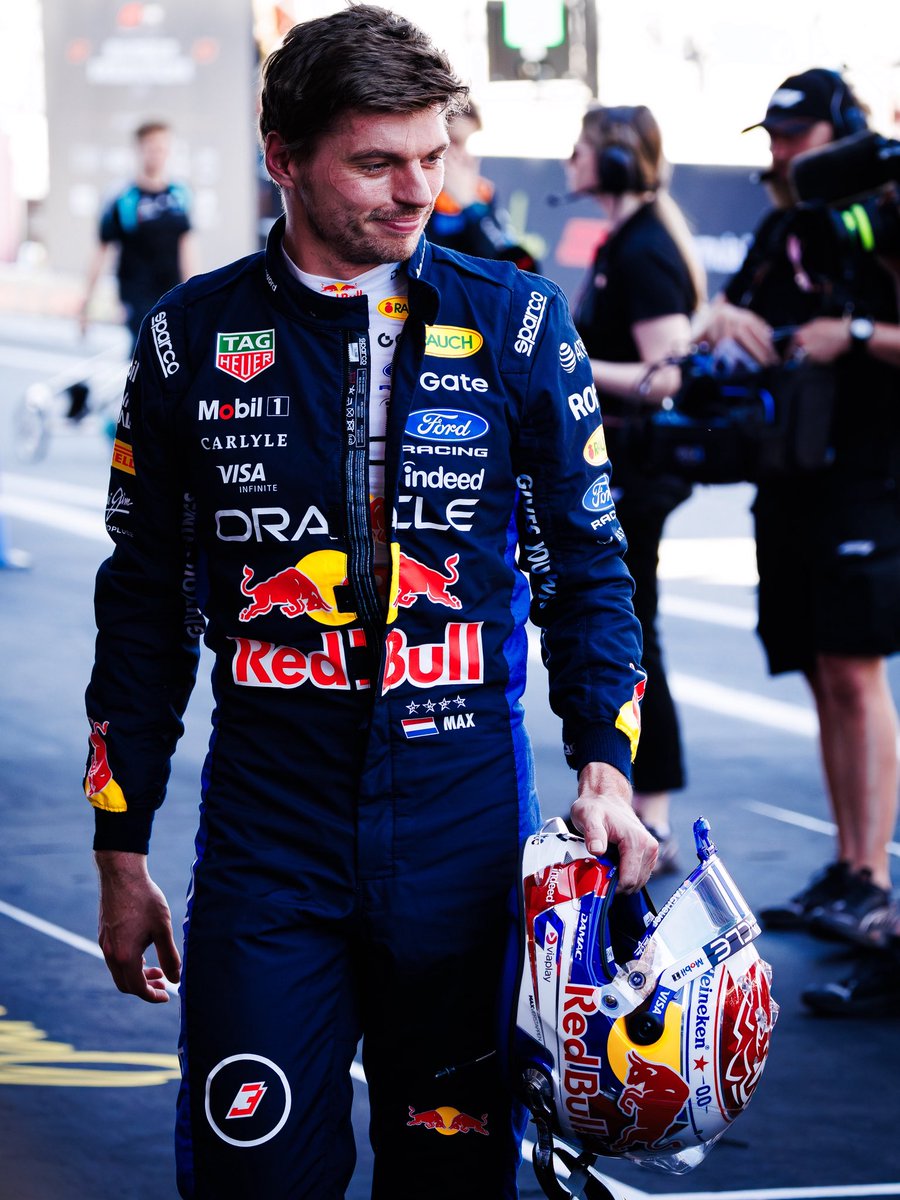
Max Verstappen posted a measured but confident message after qualifying, describing the session as ‘better than expected’ and signalling he is ready for a battle when the race gets underway. For collectors, every weekend like this adds another chapter to the story behind a Verstappen display helmet.
Key Takeaways
Verstappen described qualifying as ‘better than expected’, suggesting the team exceeded their own pre-session performance targets.
His post closed with a fist-pump emoji and a direct promise of a race battle, signalling genuine confidence in Red Bull’s race-day pace.
Weekends where Verstappen outperforms expectations are historically the most documented in collector communities — helmet replicas tied to standout rounds attract sustained interest.
Full-size 1:1 display replicas of Verstappen’s Red Bull helmet capture every livery detail from race weekends exactly like this one, making them permanent exhibition-quality records of the 2024–2025 era.
A Qualifying Post That Said More Than It Looked Like
On the face of it, a short post on X from @Max33Verstappen looks like routine social media housekeeping. ‘A better than expected qualifying today. Hoping we can have a good battle in the race 💪’ — that is the entire message, paired with a link to a photograph. But in the tightly read language of Formula 1 drivers, those two sentences carry a significant amount of meaning, and for anyone who follows Verstappen’s career closely enough to own or consider owning a collector helmet, it is worth unpacking exactly what was said and why it matters.
The phrase ‘better than expected’ is not false modesty from a four-time World Champion. It is, in fact, a precise technical signal. When a driver of Verstappen’s experience uses that framing rather than something like ‘happy with the car’ or ‘we nailed the setup’, he is telling you that the team’s own internal simulations and free-practice data pointed to a harder afternoon than the one they delivered. That gap between prediction and performance is where Red Bull has repeatedly found championship momentum.
The second sentence — ‘hoping we can have a good battle in the race’ — closes the loop. A driver who expects a straightforward Sunday does not use the word ‘battle’. Verstappen is acknowledging competition, and that acknowledgement from him, at this point in his career, is a mark of respect for whoever lines up alongside him on the grid.
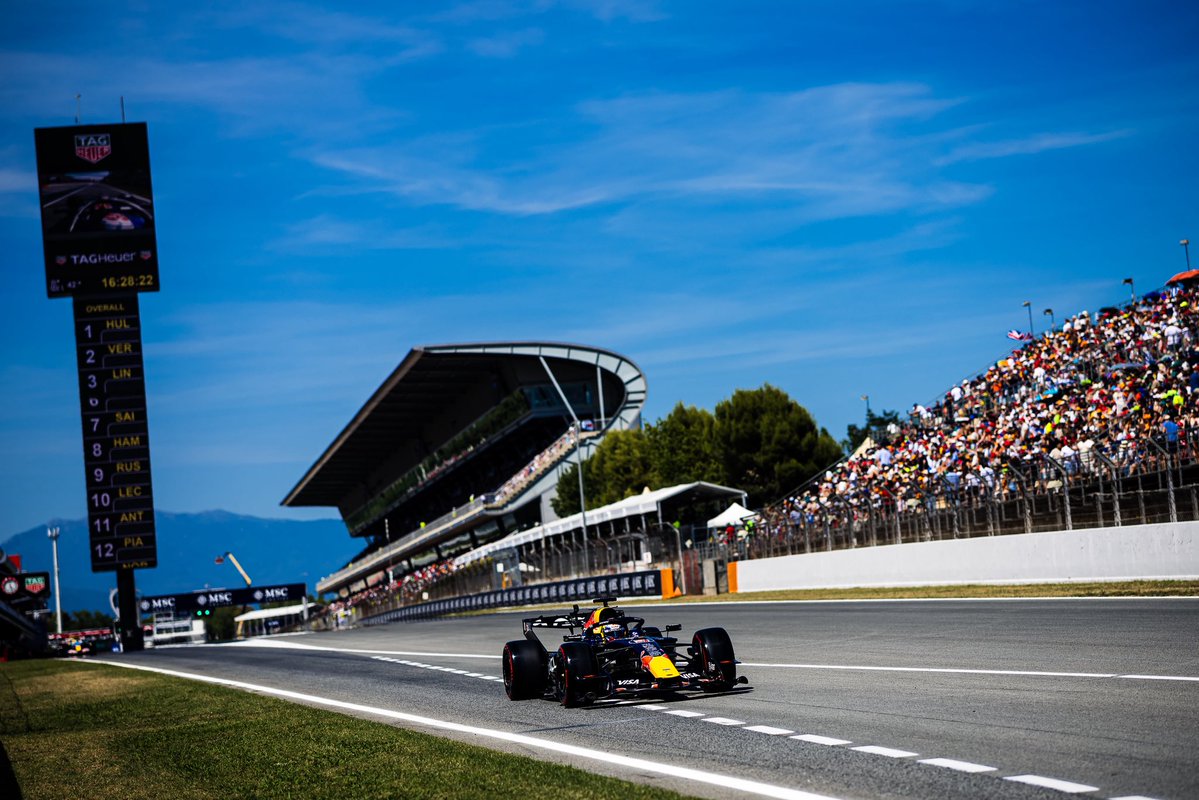
Red Bull’s Qualifying Position in Context
Red Bull Racing has been the reference team in Formula 1 since the 2022 regulation reset, but the 2024 and 2025 seasons have introduced a more competitive landscape than the team faced during Verstappen’s dominant 2023 run, when he secured 19 race victories in a single season — a record for wins in one calendar year. That context makes any qualifying session where Verstappen describes the outcome as exceeding expectations genuinely newsworthy.
The RB20 and its successor have required continuous development throughout the season, with aerodynamic updates arriving at most race weekends. Qualifying pace has at times lagged the car’s race-day strength, which is consistent with what Verstappen’s post implies: the team may have arrived at the circuit with conservative expectations for a single-lap performance, only to find more grip and more pace than their Friday data suggested.
For the collector community, this specific type of weekend — the comeback qualifying, the unexpected front-row lock, the session that rewrites the weekend narrative — is exactly the kind of moment that defines an era. Helmets tied to race weekends with a clear story behind them hold a different place in a collection than those from straightforward dominant rounds.
Why Qualifying Tone Matters to Collectors
Collectors who track driver communications alongside race results have long known that the emotional register of a driver’s post-qualifying statement is a reliable guide to what Sunday will deliver. ‘Better than expected’ from Verstappen in a season where the competition has genuinely closed the gap is a setup for a race that will be remembered. That is the kind of race that generates the most enduring collector interest.
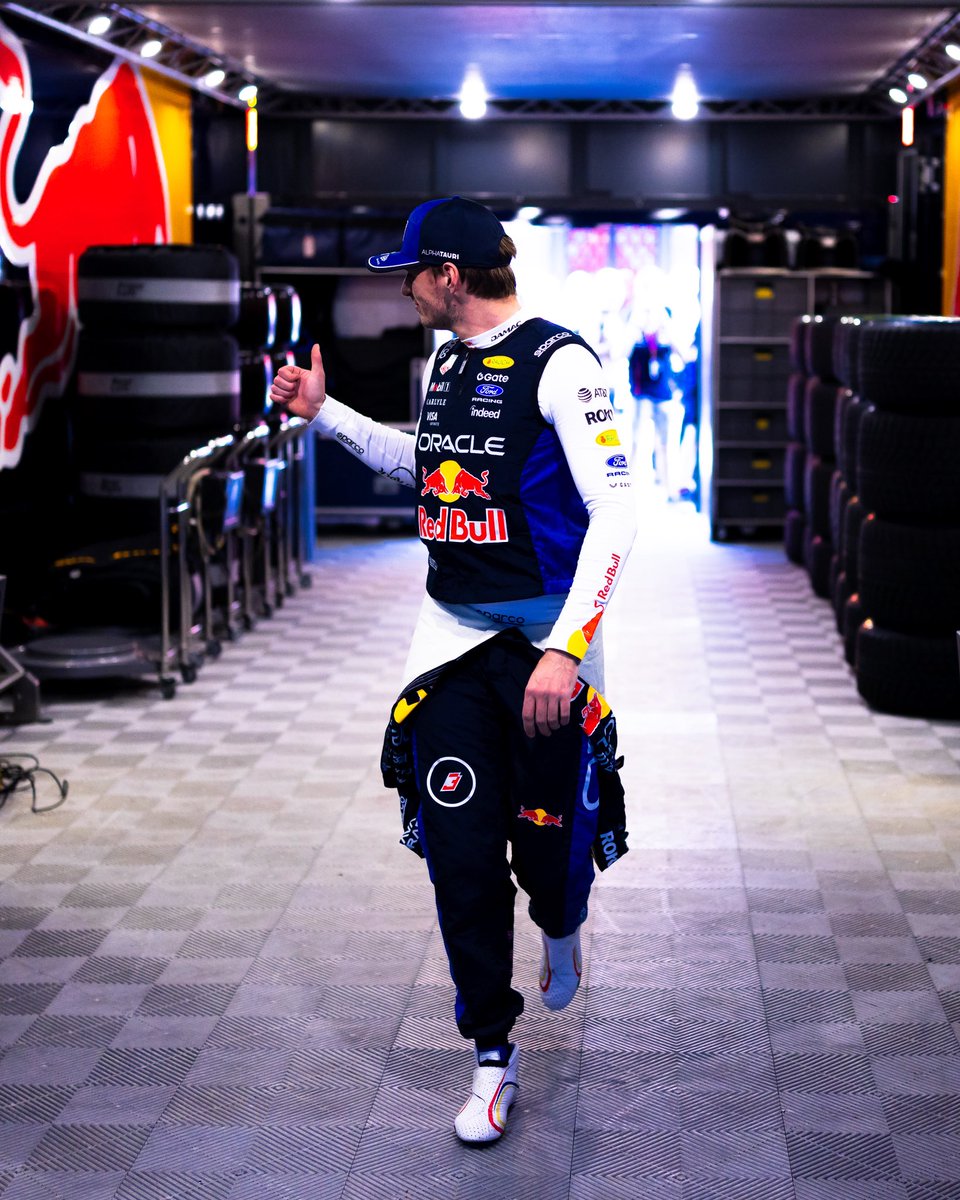
The Verstappen Helmet: A Design That Documents a Dynasty
No piece of Formula 1 memorabilia captures a driver’s era more precisely than a full-size 1:1 replica helmet. For Max Verstappen, the visual identity of his Red Bull helmets — the deep Dutch orange, the red and blue Red Bull branding, the number 1 that replaced his longstanding 33 after his first championship — is one of the most recognisable in the sport’s modern history.
Exhibition-quality display replicas of Verstappen’s helmet are produced at exact 1:1 scale, replicating the geometry of the original race helmet with precision. Standard display dimensions for a full-size adult replica sit at approximately 29 × 25 × 35 cm in profile, with a weight typically around 1.2–1.5 kg for a complete shell with internal padding — enough to feel substantial on a stand without the structural reinforcement required of a racing lid. The outer shell mirrors the layered paint application of the real item, with some high-end replicas using between 8 and 12 individual paint and lacquer layers to achieve the gloss depth visible on Verstappen’s actual lids.
The visor on a display replica is typically set at 3 mm thickness in a dark or mirrored finish, replicating the visual appearance of the smoked visors Verstappen favours in race conditions without the optical distortion correction or impact resistance engineering of a genuine race visor. This is a display piece and collector item — it is not certified for any protective use, and no safety rating applies.
The Number 33 to Number 1 Transition
One of the most documented shifts in Verstappen helmet design occurred after his 2021 championship win at the Abu Dhabi Grand Prix on 12 December 2021. From the 2022 season onward, Verstappen replaced the number 33 he had carried since his 2015 debut with the number 1, the permanent champion’s number he has retained through each subsequent title defence. Replicas from both eras represent distinct chapters in his career, and collectors who hold examples from before and after that transition own a visual record of the championship moment itself.
Race Day Expectations: What ‘A Good Battle’ Actually Sets Up
When Verstappen closes his qualifying post with the phrase ‘hoping we can have a good battle in the race’, he is drawing on a specific kind of Formula 1 shorthand. Drivers who have already decided they will simply drive away from the field do not use the word ‘battle’. The choice of that word, from a driver with 62 career race victories as of mid-2025, is a deliberate signal that the race will be contested.
For fans who will watch Sunday’s race live or on replay, that framing sets expectations correctly. Red Bull’s race pace has historically been stronger than their qualifying pace across circuits with high-degradation tyre characteristics, meaning a grid position that looks like a deficit on Saturday can translate into a dominant result by lap 30 or 40. Equally, circuits where tyre degradation is more linear tend to produce the kind of wheel-to-wheel racing Verstappen’s post hints at.
The fist-pump emoji — 💪 — that closes the post is not filler. Verstappen’s social media tone is typically restrained; he does not use motivational language for routine weekends. Its presence here reads as genuine anticipation rather than performed confidence.
Historical Pattern: Verstappen’s ‘Battle’ Weekends
Looking back across Verstappen’s championship seasons, the race weekends he has described in measured but optimistic terms before Sunday have frequently delivered the most dramatic races of each year. His 2022 Brazilian Grand Prix recovery drive from 14th on the grid to victory, completed in 71 laps, is one example of a weekend where pre-race framing understated what was about to happen. Collectors who document their replicas by race weekend reference those landmark rounds as anchor points in a broader collection.
Building a Verstappen Display Collection Around Race Weekends
A full-size 1:1 replica helmet is the centrepiece of any serious Verstappen display collection, but the weekend context transforms it from an object into a record. Collectors who acquire replicas tied to specific race weekends — identified by livery version, helmet number, or season year — are essentially building a visual timeline of Verstappen’s career in Formula 1.
The current Red Bull livery era, which has run in its recognisable dark blue and red form since the team’s partnership consolidation in 2022, has produced some of the most consistent helmet designs in recent F1 history. Verstappen’s personal lid has maintained the orange Dutch tricolour base with Red Bull branding as the constant, with individual race variants introduced for landmark rounds such as the Dutch Grand Prix at Zandvoort — a circuit that returned to the calendar on 4 September 2021 for the first time since 1985, and where Verstappen has raced in front of a home crowd of approximately 105,000 fans per day across the race weekend.
For a display piece to function as a genuine exhibition-quality collector item, the finish detail matters as much as the overall design. Replica helmets at the highest tier of production include silk-screened or digitally applied sponsor and livery graphics that match the exact pantone specifications of the race original, with clear-coat lacquer applied over the top to protect the finish from dust and UV exposure over years of display use.
Display Considerations for a Replica Helmet
A full-size Verstappen replica helmet displayed on a fitted acrylic or chrome stand typically occupies a footprint of approximately 20 × 20 cm on a shelf or cabinet surface, with the stand adding between 8 and 12 cm of total display height depending on the mount type. UV-filtering display cases are the preferred solution for long-term preservation, particularly for replicas with metallic finish elements that can oxidise under direct natural light over periods exceeding 24 months of continuous exposure.
Why This Qualifying Post Will Be Remembered
In ten years, Max Verstappen’s social media archive from his championship seasons will be a primary source document for anyone writing about this era of Formula 1. Short posts like this one — timestamped, attached to a specific race weekend, calibrated in tone by a driver who has won the championship four times and knows exactly what he is communicating — will tell the story of 2025 in ways that race results alone cannot.
That is why the collector and display replica market for drivers like Verstappen is not purely about aesthetics. It is about owning a physical object that belongs to the same chapter of the sport as these moments. A full-size 1:1 display helmet hanging on a wall next to a printed record of this qualifying post is not just decoration. It is a reference to a specific period in Formula 1 history when one driver redefined what sustained championship performance looks like.
Verstappen’s post said ‘better than expected’. The race, and the collector community’s response to it, will determine how that sentence reads in hindsight. Based on the history of similar weekends, the expectation is that it will read as an understatement.
All helmets referenced are full-size 1:1 display replicas and collector items. They are not certified for protective use and carry no safety rating of any kind. For display and exhibition purposes only.
“A better than expected qualifying today. Hoping we can have a good battle in the race 💪”
— Max Verstappen (@Max33Verstappen) via X
FAQ
Q: What did Verstappen say after qualifying?
Verstappen posted on X that qualifying was ‘better than expected’ and expressed hope for ‘a good battle in the race’, signalling optimism about Red Bull’s Sunday pace.
Q: Are the Verstappen replica helmets the same size as a real F1 helmet?
Yes. Full-size 1:1 display replicas match the external dimensions of a race helmet — approximately 29 × 25 × 35 cm in profile — and weigh around 1.2–1.5 kg. They are collector and display items only, not certified for any protective use.
Q: When did Verstappen switch from number 33 to number 1 on his helmet?
Verstappen adopted the permanent number 1 from the 2022 Formula 1 season onward, following his first World Championship win at the Abu Dhabi Grand Prix on 12 December 2021.
Q: How many paint layers does a high-end display replica helmet typically have?
Premium exhibition-quality replica helmets use between 8 and 12 individual paint and lacquer layers to replicate the gloss depth and colour accuracy of a genuine race lid. The visor is typically set at 3 mm thickness in a dark or mirrored finish for display purposes.
Q: Can I wear or race in a Verstappen replica helmet?
No. These are display pieces and collector items only. They carry no FIA, Snell, ECE, or DOT certification and are not suitable for road, track, or any protective use whatsoever.
Shop the Max Verstappen Collection — full-size 1:1 display replica helmets capturing every detail of his Red Bull championship era. Exhibition-quality collector items for fans who follow every race weekend.
Display and collector replicas only. Not certified for protective use. Full-size 1:1 scale.
This article was written with the help of AI tools. Editorial policy