Blog
Leclerc’s Q3 Crash Confession: The Honest Words Behind a Painful Weekend
 123Helmets Editorial Team

Charles Leclerc did not hide behind excuses after his Q3 crash left Ferrari’s qualifying hopes in pieces. Speaking directly to journalist Adam Cooper, Leclerc offered one of the most candid driver assessments of the 2024 season — a moment that reminds collectors exactly why his helmet has become one of the most sought-after display pieces in modern F1 memorabilia.
Key Takeaways
Leclerc admitted he deliberately released the brakes earlier to carry more corner entry speed, targeting what he identified as his only real weakness on the lap.
The rear was lost on the dirty side of the track after traction loaded up — a mechanical consequence of an aggressive tactical choice, not a random mistake.
Leclerc described himself as ‘very ashamed’ after what he called three particularly difficult weekends in a row, a rare public show of personal accountability from a Grand Prix winner.
Ferrari showed strong pace through the rest of qualifying, with Leclerc confident the car was fast in all corners — making the crash a driver-error moment on an otherwise competitive package.
What Leclerc Actually Said — and Why It Matters
When veteran F1 journalist Adam Cooper put the question directly to Charles Leclerc after the Q3 incident, the Ferrari driver did not reach for the usual catalogue of diplomatic non-answers. He explained the thought process, the execution, and the consequence in plain terms that any racing fan — or helmet collector who follows the man’s career — can respect.
“I tried to release the brakes earlier, trying to carry more speed, as I knew it was the main weakness — if not the only weakness, because we’re very fast in all corners,” Leclerc told Cooper. “I tried to carry more speed in, it worked out, but then I went on traction on the dirty side of the track, and lost the rear. But there’s not much to excuse myself.”
That final sentence is important. There was no mechanical blame, no suggestion of a setup anomaly, no team radio clip taken out of context. Leclerc identified a lap deficit, made a deliberate adjustment to fix it, and accepted the consequence when it went wrong. That kind of driver-first accountability is uncommon at this level of motorsport, where press responses are frequently filtered through PR layers before they reach the public.
The admission also tells us something about Ferrari’s actual qualifying position. If the car was, in Leclerc’s own words, “very fast in all corners” and the only weakness was brake release timing into one specific corner, the SF-24 arrived at this round in a genuinely competitive state. That makes the crash not just painful — it makes it one of the most costly single driver errors of the recent stretch of races.
The Technical Moment: Dirty Side, Traction, and Lost Rear
Leclerc’s explanation reads simply on the surface, but the physics underneath it are worth understanding. The “dirty side” of the circuit — the part of the track that receives less rubber from racing traffic — offers significantly reduced grip at the point of traction. When a driver attempts to carry elevated corner entry speed and then applies throttle on a surface with lower grip, the rear of the car has less purchase to absorb the torque. The rear steps out.
His plan had two separate components. First, release the brakes earlier to arrive at the apex with more momentum. Second, manage the exit cleanly. The first part worked — the brakes released on schedule, the entry speed increased. The second part failed because traction conditions on that side of the track did not match the level of grip that would have been available on the racing line. These two events happening in sequence, on a Q3 flying lap when every tenth is amplified, produced the crash.
This is not a rare scenario in qualifying. Many of the sport’s most memorable one-lap accidents have the same structure: a driver over-delivers on one part of the equation and finds the environment does not cooperate with the second part. What is rare is a driver narrating all of it with this level of clarity within minutes of the incident.
For anyone who follows Leclerc closely — including the collectors who display his helmets as a record of his career across seasons — this kind of moment represents a defining data point. It is not the crash itself that defines a driver’s character. It is the three sentences they say afterward.
Three Difficult Weekends: The Pressure Behind the Words
Leclerc’s post-qualifying comments did not stop at the technical explanation. He added context that put the crash inside a broader run of form, describing himself as “very ashamed after last three weekends that have been particularly difficult for me.” That phrase — coming from a driver who won the 2022 Bahrain Grand Prix from pole position and has established himself as one of the fastest qualifiers on the current grid — signals real internal pressure.
Three consecutive difficult weekends is a notable run in any championship context. It means race positions, championship points, and team standings have all been affected across multiple rounds. For Ferrari, a constructor that has not won a Drivers’ Championship since Kimi Räikkönen did so in 2007, every points loss in a competitive season carries compounded weight. Leclerc understands that arithmetic well.
The word “ashamed” is worth pausing on. It is not a word that F1 drivers use frequently in press settings. The more common vocabulary involves phrases about “learning,” “moving forward,” and “refocusing.” Shame implies a personal standard that has not been met — a self-assessment rather than an external one. That distinction matters because it tells you that Leclerc is not performing contrition for the cameras. He is expressing something he actually feels.
From a collector’s perspective, moments like this are part of what makes a driver’s arc worth following across seasons. The helmets displayed from a particular year carry the weight of that year’s story — the wins, the crashes, the press conferences, and the admissions. A Leclerc helmet from this season exists inside a story that includes this qualifying session, this admission, and whatever comes next.
Ferrari’s Qualifying Pace: Fast Everywhere Except One Moment
Strip the crash away and read Leclerc’s comments on the car’s performance, and the picture that emerges is of a Ferrari that arrived at this round in genuine shape. “We’re very fast in all corners” is not a throwaway qualifier. It is a direct assessment from the driver who has the most recent lap data in his hands and feet. When Leclerc describes brake release timing as “the main weakness — if not the only weakness,” he is effectively telling the paddock that the SF-24 was competitive across the entire circuit layout.
That context makes the crash simultaneously more painful and more optimistic. More painful because the pace was there for a strong grid position that did not materialise. More optimistic because the underlying car performance does not collapse after a qualifying incident — the race setup, the tyre strategy, and the race pace remain on the same technical foundation.
Ferrari’s qualifying record across the 2024 season has shown both the highs — multiple front-row starts and pole positions — and the fragility that comes when a driver pushes to extract every last hundredth of a second from a fast car. Leclerc has historically been among the best one-lap performers in the field. His qualifying average across his Ferrari tenure reflects that. Which is precisely why three difficult weekends in a row stand out so sharply against his own baseline.
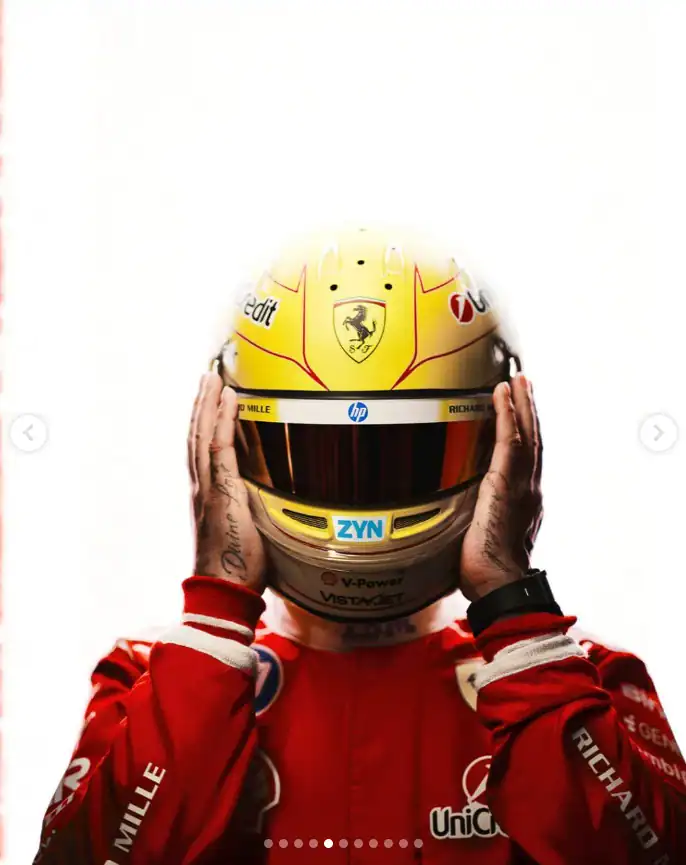
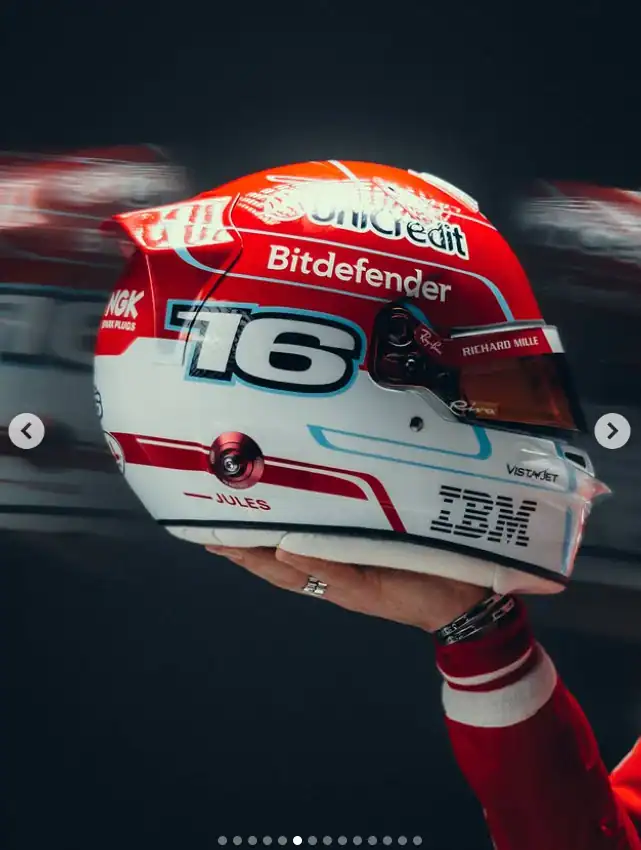
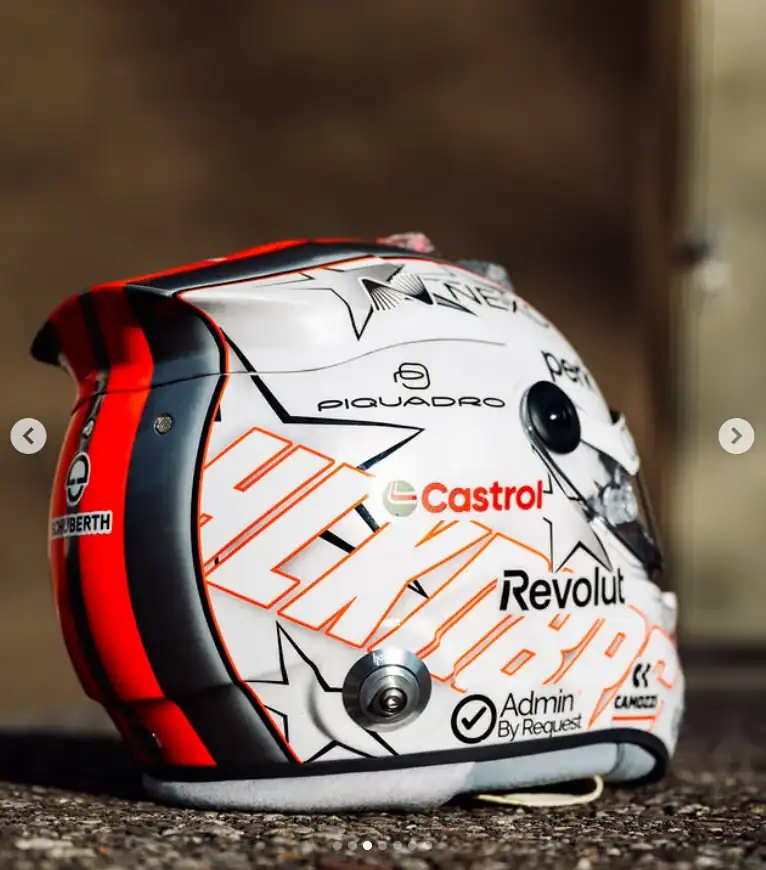
The display replicas of Leclerc’s helmets that collectors acquire each season carry the visual identity of a driver operating at the sharp end of the sport — the Ferrari red shell, the Monegasque flag detail, the design language that has evolved year on year. Behind each design is a season of qualifying laps, race battles, and moments exactly like this one.
Why Collector Replicas Capture More Than Just a Design
A full-size 1:1 display replica of a Charles Leclerc race helmet is not simply an object that replicates his paint scheme. It is a record of a specific point in a driver’s career — a season, a livery cycle, a chapter. The helmet design Leclerc ran in any given year was present for the moments that defined that year: the pole laps, the race wins, the qualifying sessions that went wrong, and the press conferences where he sat in front of cameras and said “there’s not much to excuse myself.”
Exhibition-quality collector replicas are produced at 1:1 scale — full-size, matching the exact dimensions of a race helmet worn in competition. The shells typically replicate the geometry of the race original, and the paint and decal layers are applied to match the livery as closely as possible to the driver’s on-track appearance. These are display pieces, produced and sold as collector items, not certified for any protective or safety function.
What they preserve is the visual record of a driver at a particular moment. When you display a Leclerc helmet from this season, you are displaying the object that represents the period when he sat in front of a journalist and described his own crash with precision and without deflection. That is part of what makes F1 helmet collecting a record of the sport’s human dimension, not just its technical one.
The Q3 incident, the admission of shame, and the identification of the specific corner and the specific surface condition — all of it happened under the livery that the display replica carries. For collectors who follow Leclerc’s career arc, this is a moment worth noting in the timeline.
What Comes Next for Leclerc and Ferrari
A Q3 crash ends qualifying but does not end a race weekend. Depending on the specific circuit and the stewards’ assessment of the incident, Leclerc’s grid position for the race will be set by the rules governing incidents during qualifying. The race itself remains an opportunity to recover ground — for his own standings, for Ferrari’s constructor position, and for his own sense of where his form sits after three rounds that have not gone to plan.
Leclerc has shown across his career that he can convert difficult qualifying positions into strong race results. His ability to manage tyres across long stints and his racecraft under pressure make him dangerous from further back on the grid. Whether this race weekend follows that pattern or adds to the difficult run he described is the open question heading into Sunday.
What is already settled is the honesty with which he approached the post-qualifying debrief. Adam Cooper’s question produced an answer that F1 journalists and fans rarely receive — a driver walking through his own decision-making process, naming the error, and attaching real emotion to the consequence. That kind of accountability tends to age well. Drivers who face difficult weekends this directly tend to correct them more quickly than those who don’t.
For followers of Ferrari and collectors who track Leclerc’s career through display pieces and memorabilia, this weekend sits inside a longer story that is far from finished. The crash was one lap. The response to it was something closer to a statement of intent.
“I tried to release the brakes earlier, trying to carry more speed, as I knew it was the main weakness — if not the only weakness, because we’re very fast in all corners. I tried to carry more speed in, it worked out, but then I went on traction on the dirty side of the track, and lost the rear. But there’s not much to excuse myself.”
— Charles Leclerc, post-qualifying interview via Adam Cooper (@adamcooperF1)
“I feel very ashamed after last three weekends that have been particularly difficult for me.”
— Charles Leclerc, post-qualifying interview via Adam Cooper (@adamcooperF1)
FAQ
Q: What caused Leclerc’s Q3 crash?
Leclerc explained that he deliberately released the brakes earlier than usual to carry more corner entry speed, targeting what he described as his only weakness on the lap. The plan worked on entry, but when he applied traction on the dirty — lower grip — side of the track, the rear of the Ferrari stepped out and he lost control.
Q: What did Leclerc say after the Q3 crash?
Speaking to journalist Adam Cooper, Leclerc gave a detailed technical account of the incident and accepted full personal responsibility, saying “there’s not much to excuse myself.” He also described feeling “very ashamed” after three consecutive difficult weekends.
Q: How was Ferrari’s overall pace in qualifying?
Leclerc described the SF-24 as “very fast in all corners,” identifying brake release timing into one corner as the car’s “main weakness — if not the only weakness” at this round. The crash was therefore a driver-error moment on an otherwise competitive car.
Q: What are Leclerc F1 helmet display replicas?
Leclerc helmet replicas available as collector items are full-size 1:1 scale display pieces that replicate the paint scheme and livery he runs in competition. They are exhibition-quality collector items and are not certified for any protective or safety use.
Q: Why do F1 collectors value helmets from specific race seasons?
Each season’s helmet design is visually tied to the events of that year — the race wins, the qualifying results, and the key moments in a driver’s career arc. A display replica from a specific season carries the livery present for all of those moments, making it a record of that chapter in the driver’s history.
Browse F1 Helmet Collection — explore full-size 1:1 display replicas from Ferrari and the rest of the grid at 123Helmets.com.
Display and collector replicas only. Not certified for protective use. Full-size 1:1 scale.
This article was written with the help of AI tools. Editorial policy