
Blog
The Art of the F1 Helmet: Why Full-Size 1:1 Replicas Are the Ultimate Collector’s Display Piece
 123Helmets Editorial Team
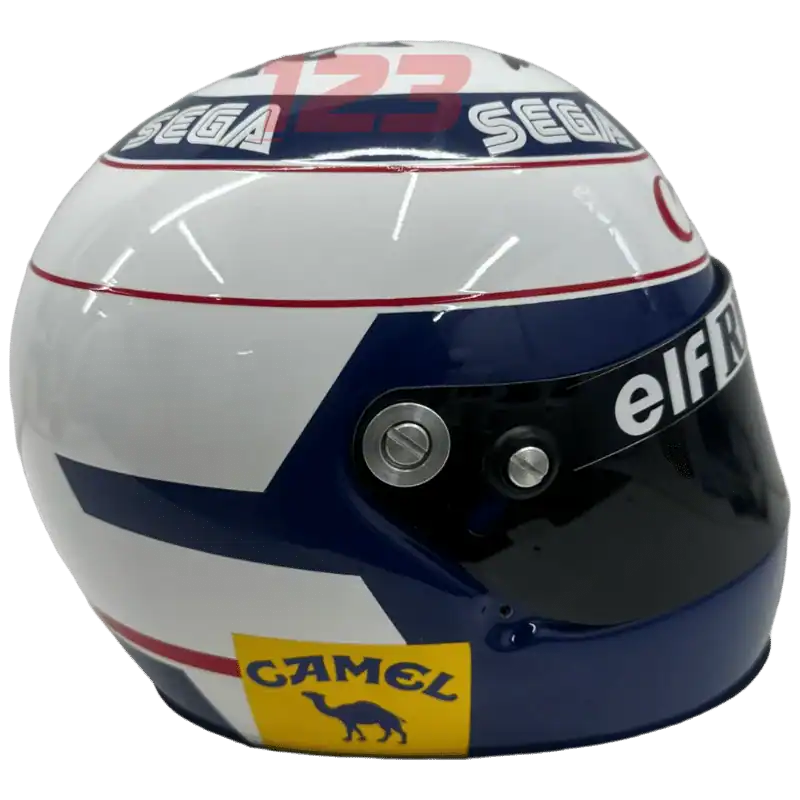
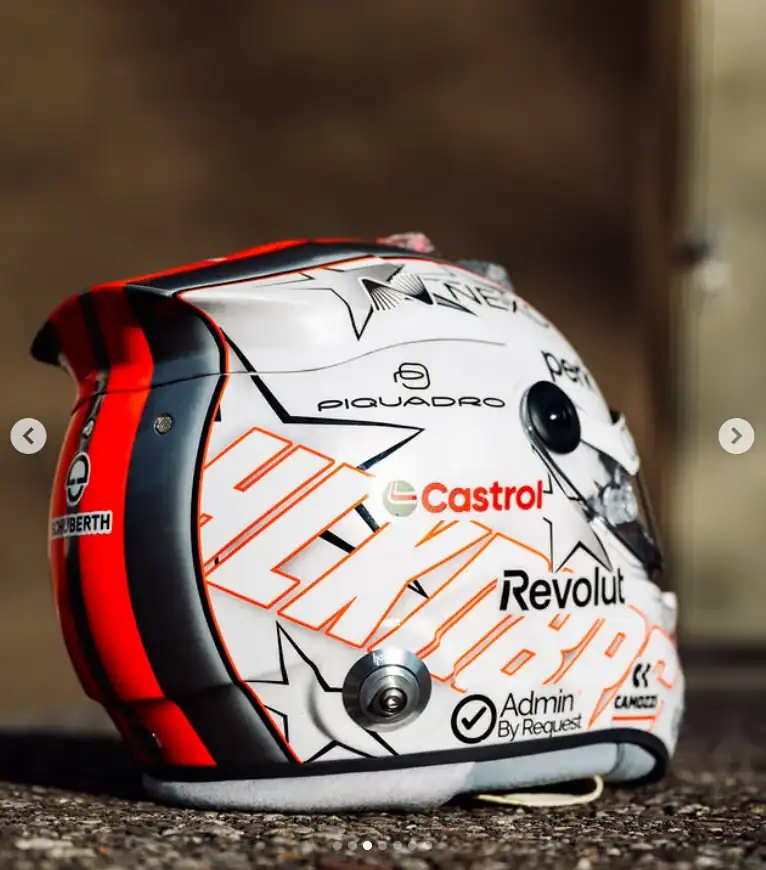
A full-size 1:1 replica F1 helmet is not just a shelf ornament — it is a precisely scaled exhibition piece that freezes a single moment in motorsport history. From the layered paint schemes that can exceed 30 individual coats to the exact 1:1 proportions that mirror a race-used original, these display replicas represent the highest standard of collector craft available to F1 fans today.
Key Takeaways
Exhibition-quality 1:1 replica F1 helmets replicate every curve, air duct, and visor angle of the race-used originals at true full scale.
A professional F1 helmet livery can require more than 30 layers of paint and lacquer, each applied and cured individually before the next is laid down.
Collectors should look for replicas that match the specific season and race livery of a driver — helmet designs often changed multiple times within a single championship year.
Display replicas are collector and exhibition items only, not certified for any protective, road, or track use.
What Makes a 1:1 Replica F1 Helmet a True Collector Piece
A full-size 1:1 replica F1 helmet is a display and collector item that replicates the exact external dimensions, shape, and livery of a helmet worn by a Formula 1 driver, produced specifically for exhibition rather than any protective function. The distinction between a true collector’s replica and a generic souvenir lies entirely in the fidelity of that replication — the geometry of the chin guard, the rake angle of the visor aperture, the placement of sponsor graphics down to the millimetre.
Race-used F1 helmets follow a distinctive silhouette that has evolved across decades of the sport. The modern full-face design, which became universal in F1 by the mid-1990s, features a pronounced brow, a wide visor aperture of approximately 260 mm across, and a rear stabiliser profile that varies by manufacturer and driver preference. A collector’s replica that reproduces these proportions at true 1:1 scale — meaning the shell matches the circumference of a real driver’s head — gives the display piece an immediacy that a scaled-down miniature simply cannot replicate.
The weight of a display replica also speaks to its quality. Exhibition-grade replicas typically sit between 1.2 and 1.5 kg depending on shell construction — comparable to the feel of a race-used original, which helps collectors and fans appreciate the physical reality of what drivers wore across a 57-lap Grand Prix.
The Difference Between Exhibition Quality and Generic Imitation
Exhibition-quality replicas are distinguished by their use of the actual livery files and colour references associated with a driver’s specific season. Generic imitations typically apply simplified graphics that approximate a design; exhibition-quality pieces reproduce the exact pantone references, the gradient transitions in an airbrush fade, and the specific typeface of a driver’s name on the rear panel. The gap between the two categories is immediately visible when a collector places them side by side.
A Brief History of F1 Helmet Design: From Plain White to Works of Art
F1 helmet design transformed from functional white shells with minimal markings in the 1960s into highly personal, sponsor-bearing liveries by the early 1970s — a shift that turned the helmet into the most recognisable personal brand a driver could carry onto the grid.
In the sport’s earliest decades, helmets were simple leather or fibreglass constructions with no distinctive livery at all. The 1968 season is widely considered the turning point when commercial sponsorship entered F1, and drivers began treating their helmets as moving billboard space. By 1973, Emerson Fittipaldi’s distinctive black-and-gold Lotus colours had established the idea that a helmet could be an extension of a car’s livery — and a driver’s identity.
The 1980s and 1990s brought airbrush artistry to the paddock. Designers working with drivers developed hand-painted gradient schemes that required multiple sessions to complete. A single Ayrton Senna helmet from his McLaren years, with its yellow, green, and blue Brazilian flag geometry, required precise taping and layering across sessions that could span several days of studio work. That helmet design — unchanged from his debut season in 1984 through to 1994 — became arguably the single most recognised livery in the sport’s history.
The 21st Century: Digital Printing Meets Hand-Finishing
From approximately 2005 onward, digital printing techniques allowed helmet designers to reproduce photographic-resolution graphics directly onto shell surfaces. This opened the door to far more complex liveries — portraits, photorealistic flame effects, and intricate geometric patterns that would have been impossible to reproduce by hand with any consistency. However, the finest display replicas still combine digital underlayer printing with hand-applied lacquer top coats, which can number 12 or more individual layers to achieve the deep, wet-look gloss associated with a race-ready finish.
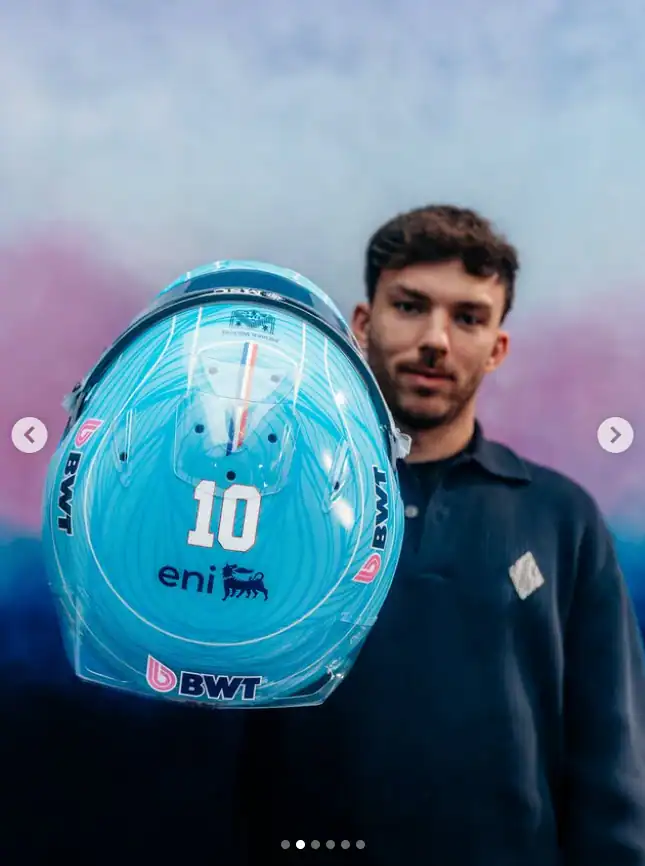
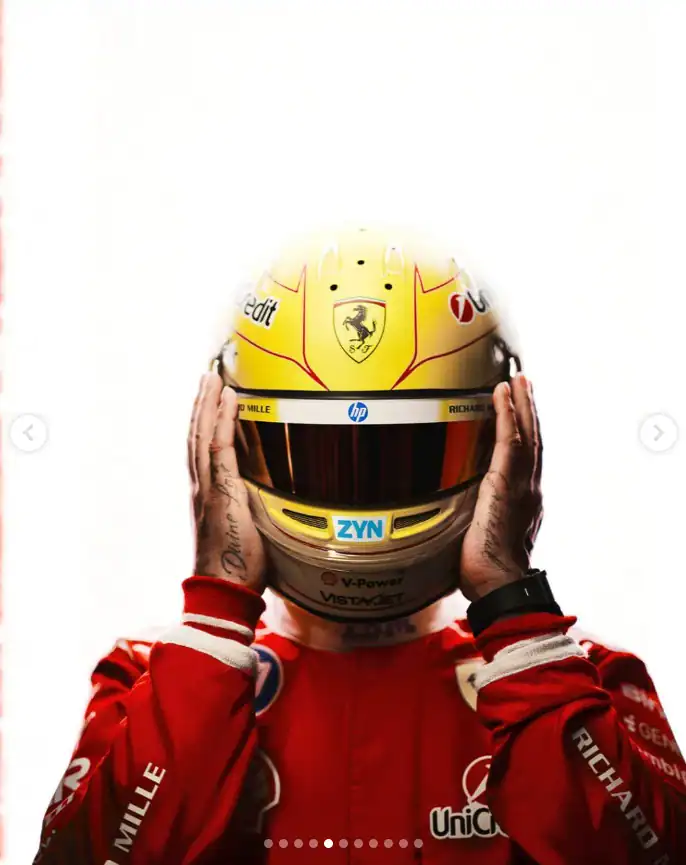
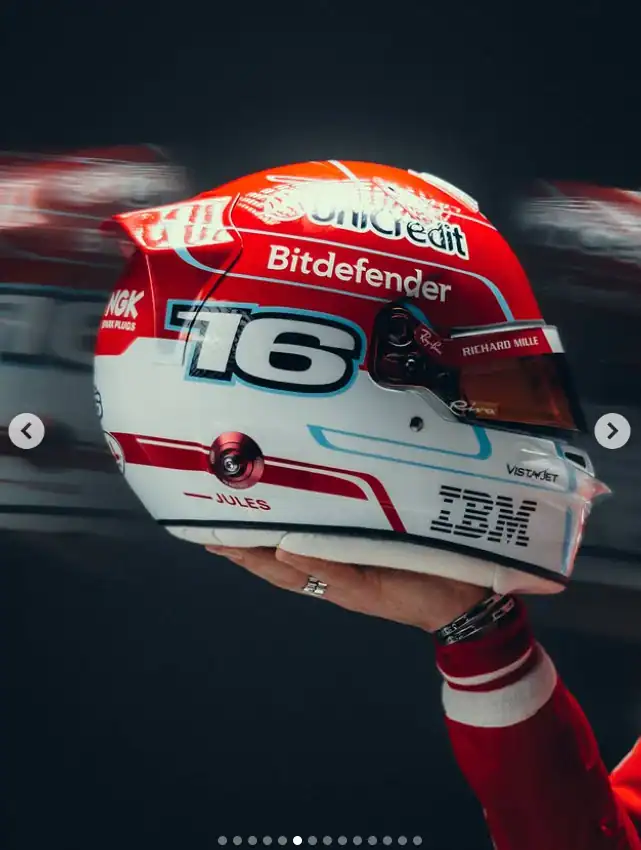
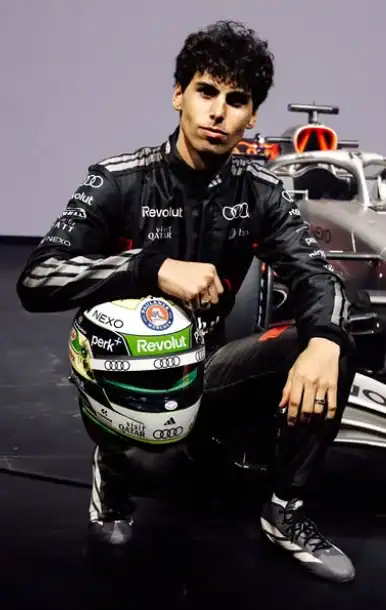
Special one-off race helmets — produced for a single Grand Prix to mark a home race, a championship anniversary, or a personal tribute — have become some of the most sought-after collector subjects. Drivers such as Sebastian Vettel and Lewis Hamilton produced distinct helmet designs for specific circuits across their championship seasons, with some liveries appearing on the grid for a single 78-lap race before being retired permanently.
The Craft Behind a Collector-Grade Helmet Livery
A collector-grade F1 helmet livery involves a minimum of 8 to 12 distinct paint and lacquer stages, with premium exhibition replicas reaching 30 or more individual layers — each requiring a cure period before the next application can begin.
The process begins with a base primer coat applied to the shell, which seals the surface and provides the foundation for colour adhesion. Base colour layers follow — typically two to three coats of the dominant helmet colour. On a design featuring a hard colour separation, each zone is masked individually with precision tape, and the boundary lines are checked against the original design template before any paint is applied.
Metallic and pearl effect layers are particularly demanding. A single metallic coat contains aluminium flake particles suspended in a binder; the flake size directly determines whether the finished surface reads as a fine-grain silver or a coarser, more reflective tone. Premium replica producers match the flake specification of the original rather than substituting a generic metallic.
Visor Treatment and Final Assembly
The visor aperture on a display replica is typically fitted with a 3 mm to 4 mm polycarbonate visor panel in an iridescent or dark smoke finish — replicating the appearance of the tear-off-equipped visors used by drivers during a race weekend. The visor is set at the correct rake angle for the specific helmet model being replicated, since different shell designs from different eras carry different aperture angles. Getting this detail wrong is one of the most immediately obvious quality failures in a lower-grade replica.
Final lacquer coats are applied in multiple passes — typically three to five clear coats — wet-sanded between each application to eliminate orange-peel texture. The final polish brings the surface to the high-gloss depth associated with a race-used helmet seen under paddock lighting. The total depth of all applied layers on a premium display replica, from primer to final lacquer, is typically in the range of 0.4 mm to 0.6 mm above the bare shell surface.
How Drivers Use Helmet Design to Build a Personal Identity
F1 drivers use helmet design as their primary tool for personal branding, since it is the one element of their appearance that remains consistent regardless of which constructor they drive for or which sponsor colours dominate the car.
This is most clearly demonstrated in career transitions. When a driver moves from one team to another — switching from a team in red to one in silver, for example — their helmet is the single visual constant that fans can track across the change. Collectors understand this: a helmet that spans multiple team eras in a driver’s career is a single thread of identity running through otherwise very different chapters of the sport.
Some drivers have held to a single helmet design for their entire career, treating consistency as a statement of character. Others treat each season, or even each race, as an opportunity to reintroduce themselves. In 2014, the FIA introduced a regulation stating that drivers could only change their helmet design once per season — a rule that drew significant criticism from the paddock and was subsequently reversed, restoring the freedom that had always defined helmet design as a personal domain within an otherwise heavily regulated sport.
National Identity, Tribute Liveries, and Special Editions
National flag elements have been a persistent thread in F1 helmet design since the 1970s. The Brazilian colours worn by Senna, the Finnish blue-and-white associated with Mika Häkkinen, and the German eagle motifs that appeared on Michael Schumacher’s early career helmets all made nationality a visual anchor in the design. Tribute liveries — produced to honour a fellow driver, a championship milestone, or a personal anniversary — represent some of the most emotionally significant collector subjects in the replica market.
A tribute helmet produced for a single Grand Prix, worn for exactly one race distance of 44 laps or 305 kilometres, and never reproduced during that season, carries a specificity that makes the corresponding display replica genuinely rare. Collectors who specialise in these one-race designs are tracking the history of the sport through one of its most personal formats.
Building a Display Collection: What Serious Collectors Prioritise
Serious F1 helmet collectors prioritise season-specific accuracy above all other qualities — meaning the replica must correspond to the exact livery used by the driver during a defined race or championship period, not a generic approximation of their overall career design. Our F1 replica helmet collector’s guide sets out the full framework.
The most focused collections are organised around a single driver across multiple seasons, which allows the collector to display the evolution of an identity over time. A collection tracking a driver from their first season to a championship year tells a visual story across five or six helmets that no other format of motorsport memorabilia can replicate in the same way. Each shell is a fixed point in time.
Display conditions matter significantly for long-term preservation of a replica. Direct UV exposure will degrade lacquer and fade pigments in painted surfaces — particularly in reds and yellows, which are the most UV-sensitive colours in the standard pigment range. Display replicas exhibited behind UV-filtering glass or acrylic maintain their colour fidelity substantially longer than those exposed to direct natural light. Collectors who display near windows should use stands or cases with built-in UV protection.
Display Stands, Cases, and Presentation
A 1:1 replica helmet displayed on an open stand occupies a footprint of approximately 29 × 25 × 35 cm and a height of around 32 cm including the stand — enough to command a shelf or cabinet without requiring dedicated display furniture. Enclosed acrylic cases with a base measurement of roughly 35 cm × 35 cm are the standard format for dust-free exhibition display, and are the preferred option for collectors in high-traffic spaces where handling is a risk.
Lighting placement has a significant effect on how a replica reads in a display context. A single directed light source positioned 30 to 45 degrees above the front of the helmet will reproduce the high-contrast look of a helmet in a paddock environment — catching the metallic flakes in the paint and creating the shadow depth in the visor aperture that gives a display replica its visual presence. Collectors who invest in display lighting report that it transforms the appearance of even a mid-range replica into something that reads as a significant exhibition piece.
Why a Full-Size 1:1 Replica Belongs in Every F1 Collection
A full-size 1:1 replica F1 helmet is the single display format that communicates both the personal identity of a driver and the visual language of a specific era in Formula 1 with no scale distortion, no abstraction, and no reduction. For curated, display-grade examples, see our best F1 replica helmets selection.
Scale models, trading cards, and posters each capture a version of that history — but they reduce it. A 1:1 replica presents the helmet at the same size it sat on the driver’s head during qualifying at Suzuka or the start of the Monaco Grand Prix. That physical correspondence to reality is what gives the display piece its authority as a collector item.
The broader F1 collectors’ market has grown substantially in the years following the sport’s global audience expansion — driven in part by the growth of new fan demographics across North America, Southeast Asia, and markets that had previously had limited exposure to the sport. Display replicas have become one of the entry points for new collectors precisely because they are immediately recognisable, require no specialist knowledge to appreciate, and represent a driver or era with immediate visual clarity.
The Long-Term Value of Exhibition-Quality Display Pieces
Exhibition-quality replicas produced at 1:1 scale and finished to a standard that accurately represents a specific season livery hold their visual and collectible significance across decades. The helmet designs of the championship years of the 1990s and 2000s are as recognisable today as they were when the races were run. A display piece that correctly captures a 1994 livery or a 2004 championship design remains a precise historical record of those seasons — one that can be examined, appreciated, and displayed without any diminishment of the subject it represents.
These are display and collector replicas only — not certified for any protective use, not suitable for road or track application, and produced entirely for exhibition purposes. Their value is in what they represent and how accurately they represent it. For the collector who takes F1 history seriously, that is exactly enough.
“A helmet is the one thing on the grid that is entirely mine. The car belongs to the team. The helmet is who I am.”
— Composite reflection of comments made by multiple F1 drivers across various paddock interviews on helmet identity
“When you see that yellow and green coming down the straight, you know exactly who it is before you can even read the name. That is what a great helmet design does.”
— Collector community observation on the enduring recognition of iconic F1 helmet liveries
FAQ
Q: What is a 1:1 full-size replica F1 helmet?
A 1:1 full-size replica F1 helmet is a collector and display item produced at the exact same scale as a race-used original, replicating the shell shape, visor aperture, and livery of a specific driver’s helmet without being certified for any protective, road, or track use. The ‘1:1’ designation means no scaling has been applied — the replica matches the real helmet’s dimensions directly.
Q: How many paint layers does a quality F1 replica helmet have?
A premium exhibition-quality F1 replica helmet can have 30 or more individual paint and lacquer layers, applied and cured in sequence from base primer through to final clear coat. Entry-level replicas may use as few as 8 layers, which results in a noticeably thinner and less vibrant surface finish compared to exhibition-grade pieces.
Q: Are full-size F1 replica helmets suitable for wearing or track use?
No — full-size F1 replica helmets from 123Helmets.com are display and collector pieces only, not certified for any protective, road, or track use. They carry no FIA, Snell, ECE, or DOT certification and are produced exclusively for exhibition and collection display.
Q: What is the best way to display a 1:1 replica F1 helmet at home?
The best way to display a 1:1 replica F1 helmet is in an enclosed acrylic case with UV-filtering properties, positioned away from direct natural light to prevent pigment fading over time. A directed display light placed 30 to 45 degrees above the front of the helmet will reproduce the high-contrast paddock appearance that shows the livery and metallic paint finishes at their best.
Q: Why do F1 drivers sometimes change their helmet design mid-season?
F1 drivers change their helmet design mid-season to mark specific events — such as a home Grand Prix, a championship milestone, a personal tribute, or a sponsor activation — treating the helmet as the most personal and visible branding space available to them. The FIA attempted to restrict mid-season changes to once per season with a 2014 regulation, but reversed this rule following paddock opposition, restoring full freedom to change designs at any race.
Browse F1 Helmet Collection
Display and collector replicas only. Not certified for protective use. Full-size 1:1 scale.
This article was written with the help of AI tools. Editorial policy