
Blog
Full-Size F1 Helmet Replicas: What Separates a True Collector Piece from a Cheap Copy
 123Helmets Editorial Team
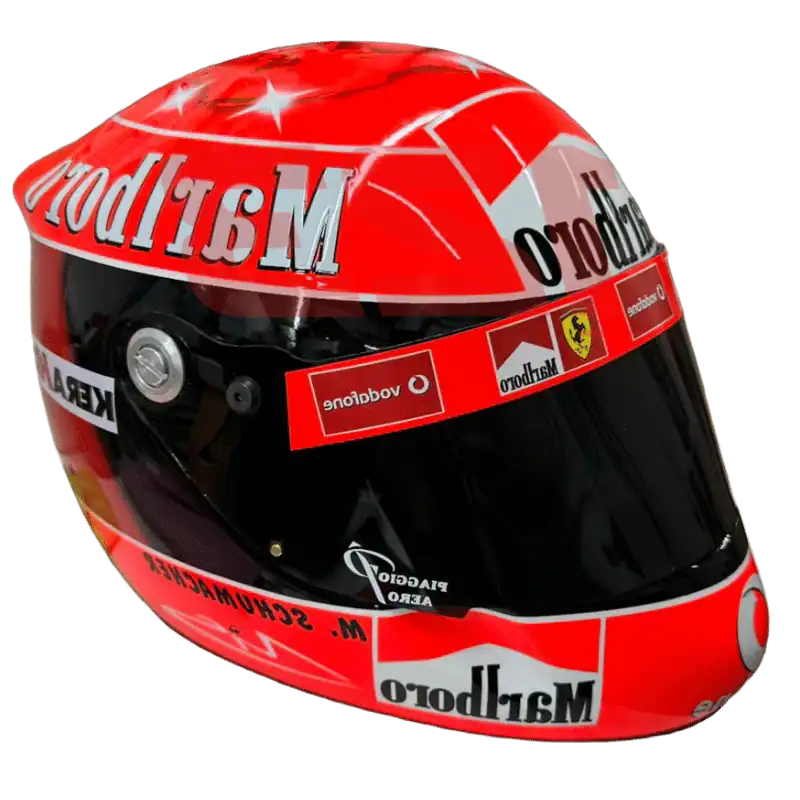
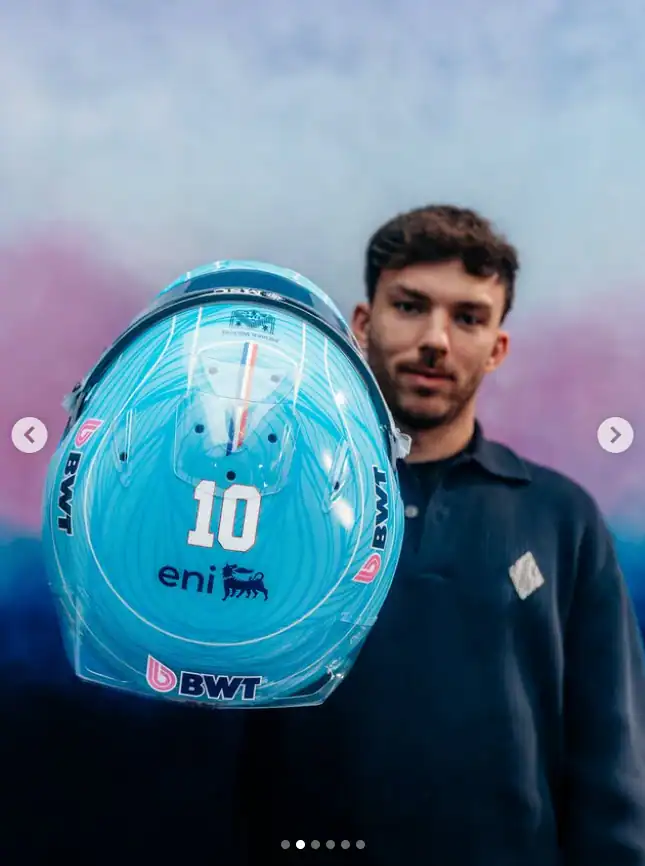
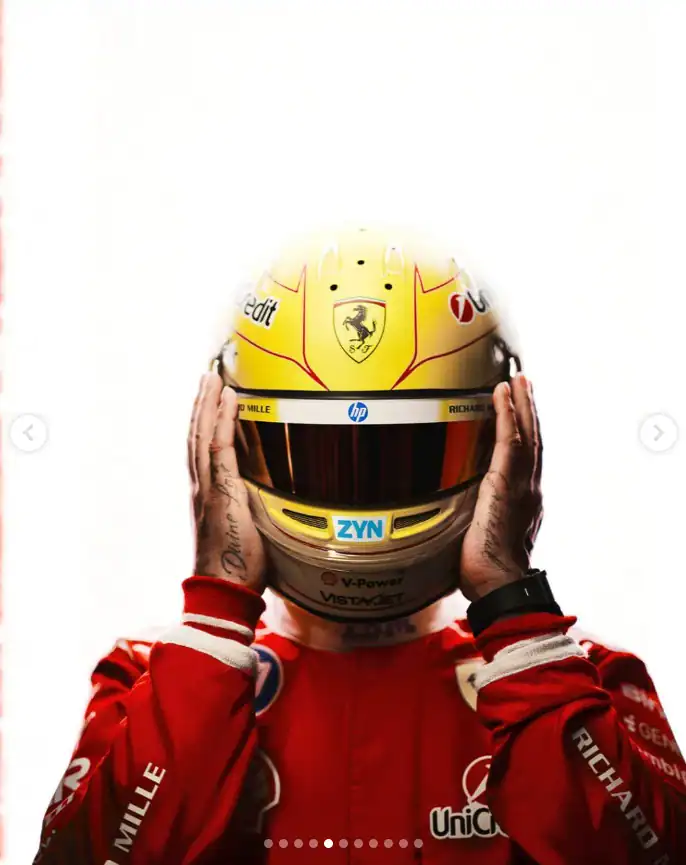
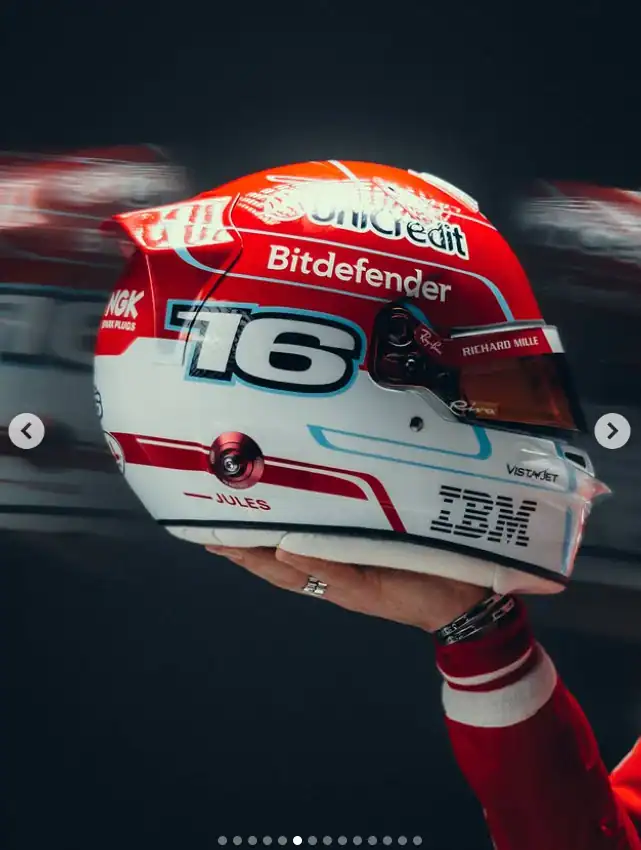
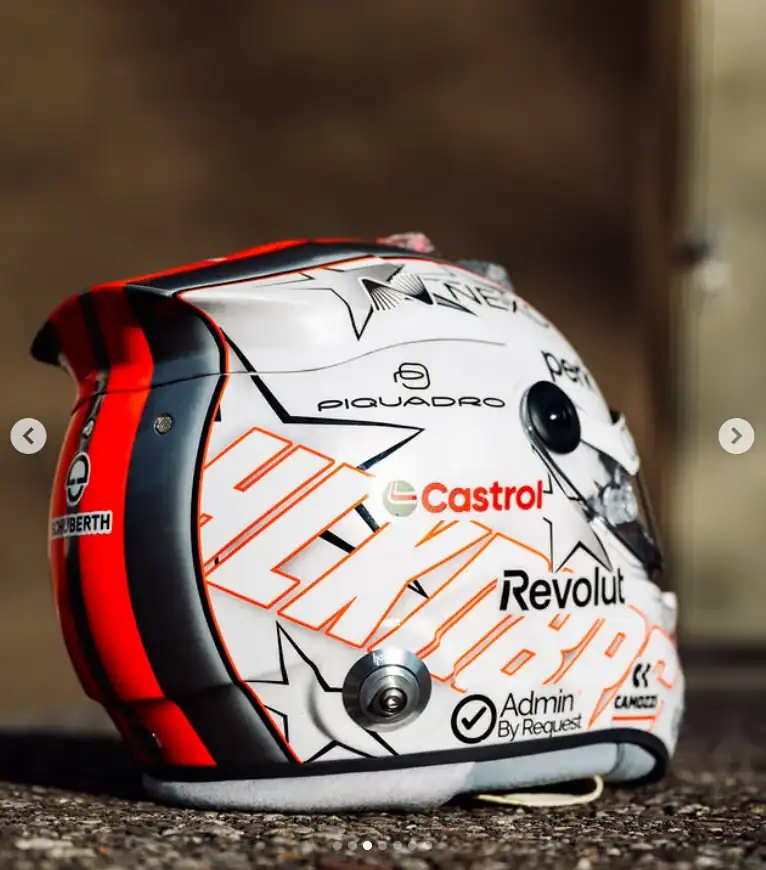
Not every helmet on a shelf deserves to be there. A genuine full-size 1:1 F1 display replica carries the geometry, livery accuracy, and finishing quality of the real article — and the gap between that and a mass-produced knockoff is wider than most buyers realise before they spend their money. For curated, display-grade examples, see our best F1 replica helmets selection.
Key Takeaways
A true 1:1 display replica matches the real helmet’s geometry: typically 27–29 cm shell width and a 4 mm polycarbonate visor equivalent in the display unit.
Exhibition-quality paint on a collector F1 helmet involves at least 8 individual layers, including primer, base coats, livery graphics, and UV-resistant clear coats.
Scale matters: a 1:2 mini-helmet and a full-size 1:1 replica are not interchangeable — the full-size piece sits at approximately 30 cm tall and replicates every sponsor panel at real dimensions.
Provenance detail — the specific race season, chassis number reference, or championship year — is what transforms a display piece from decoration into a documented collector item.
Why Full-Size Scale Is Non-Negotiable for Serious Collectors
A full-size 1:1 F1 helmet replica measures the same external dimensions as the helmet worn in the cockpit — roughly 30 cm tall, 27–29 cm wide, and between 25 and 27 cm front-to-back depending on the driver’s original shell specification. That is not an aesthetic preference; it is the single criterion that determines whether sponsor logos, livery proportions, and visor aperture geometry read correctly to the human eye at normal viewing distance.
Mini-helmets — typically produced at 1:2 scale — sit at around 15 cm tall. They are legitimate collectibles in their own right, but the sponsor panels are compressed, the visor cutout loses its racing silhouette, and the overall impression is decorative rather than documentary. A collector who wants to understand what a driver actually wore during a specific championship season needs the full-size piece.
The shell geometry of a display replica also matters beyond simple height. Real F1 helmets follow an interior head form standard that produces a recognisable outer profile. A well-made 1:1 replica is built on the same last or a dimensionally faithful copy of it. When manufacturers cut costs by approximating the shell shape, the result is a helmet that looks subtly wrong — the brow line sits too high, the chin guard lacks the correct undercut, or the nape flares too wide. These are not minor details to an experienced collector; they are immediately visible.
For display purposes, the base footprint of a 1:1 helmet — approximately 29 × 25 × 35 cm — also determines shelf and case sizing. Getting that dimension right from the outset prevents the common frustration of purchasing a display stand or acrylic case only to find the piece does not fit correctly.
The Paint Process: Where Exhibition Quality Is Won or Lost
Exhibition-quality livery on a collector F1 helmet requires a minimum of 8 paint layers applied in strict sequence: an adhesion primer, a filler coat, one or two opaque base colour coats, the livery graphics layer (either hand-painted or applied as precision-cut decals sealed under lacquer), a first clear coat to lock the graphics, an optional second colour-correction pass, and a final UV-resistant clear coat. Each layer must cure fully before the next is applied, which means a correctly produced collector helmet takes days — not hours — to finish.
The UV-resistant top coat is particularly important for a display piece. A helmet exhibited under LED or halogen lighting without UV protection will show measurable colour shift within 18 to 24 months of regular display. Reds fade toward orange, yellows bleach, and dark metallics lose their depth. A reputable manufacturer specifies the UV rating of the final clear coat; if that specification is absent from the product description, it is a warning sign.
Decals Versus Hand-Painted Graphics
The debate between printed decals and hand-painted livery is less clear-cut than many collectors assume. For geometrically precise sponsor logos — particularly those with tight colour registration requirements — a high-resolution digital decal applied under lacquer is often more accurate than brushwork. The standard to evaluate is edge sharpness at normal viewing distance (approximately 50 cm) and colour match against the reference livery. A well-applied decal should show no lifting at edges, no silvering beneath the film, and no visible seams at panel joins.
Hand-painted elements, by contrast, are appropriate for gradient transitions, flame effects, and the kind of freehand illustrative work that defines helmets from designers such as Jens Munser or Kesselskramer. On a collector replica, these passages should be executed with the same brush discipline as the original; a soft or smeared edge is not an artistic choice, it is a production shortcut.
Visor Specification: The Detail Most Replicas Get Wrong
The visor on a display replica F1 helmet should replicate the optical profile and tint of the race-used unit — typically a 3 mm to 4 mm curved polycarbonate panel finished in either clear, dark smoke, or iridescent mirror depending on the specific livery version being reproduced. This single component is where many lower-tier replicas immediately reveal themselves: a flat visor on a curved aperture, a visor that does not seat flush at the lower edge, or a chrome finish that is actually vacuum-metallised plastic rather than a proper iridescent coating.
Mirror and iridescent visors are produced by depositing a thin metallic oxide layer — typically titanium dioxide or silicon dioxide — onto the polycarbonate substrate in a vacuum chamber. The resulting optical effect shifts with viewing angle, producing the characteristic colour-play seen on modern F1 visors. A correctly made display visor replicates this effect; a cheaper alternative uses a reflective film laminate that appears flat and produces a single static colour rather than the angle-dependent shift.
Visor Fitment and Removal
Many collectors prefer a visor that can be repositioned — raised or lowered — for photography and display variation. A properly engineered 1:1 display helmet accommodates this with a detent mechanism that holds the visor at fully open, fully closed, or at a standard 45-degree raised position without risk of scratching the shell. The hinge pins should be metal, not plastic; plastic pivot pins are a known failure point after repeated repositioning and are a reliable indicator of overall build quality.
Livery Accuracy: Matching the Right Race, Season, and Specification
Livery accuracy means the replica corresponds to a specific, documented helmet specification — identified by driver, season year, and ideally the race weekend or championship context — rather than a generic approximation of a driver’s colour scheme. This distinction matters because most top-level F1 drivers wear between 3 and 6 distinct livery variants across a single season, and the differences between them — a revised sponsor panel following a mid-season deal, a one-off special for a home Grand Prix, a commemorative design for race 50 or race 100 of a career — are precisely what give a collector item its documentary value.
The 2023 Formula 1 season ran across 23 race weekends. A driver who competed in all 23 rounds and used 4 distinct livery variants across that calendar produced 4 collectable helmet specifications in a single year. A display replica labelled only with a driver’s name and year without specifying which variant it represents is, from a collector standpoint, an incomplete description.
Reference sources for livery verification include official team photography released on race weekends, FIA technical scrutineering images, and the driver’s own social media documentation of new designs. A reputable replica manufacturer will cite which of these sources was used as the master reference for the livery reproduction. If no reference is cited, the collector has no way to verify accuracy independently.
Special Edition and One-Race Helmets
One-off helmet designs — produced for a single race weekend, a milestone, or a charity auction — command the greatest collector interest precisely because their documentation window is narrow. The design exists for one event, then is retired. A display replica of, for example, a driver’s home-race special must match the exact specification of that single weekend, not the standard-season version of the same colour scheme. Even minor divergences — a changed visor tint, a missing personal motif, an incorrect background gradient — are immediately apparent to a collector who has studied the reference photography.
Display and Storage: Protecting a Collector Piece for the Long Term
A full-size 1:1 F1 display helmet should be stored or exhibited in a UV-filtering acrylic case with at least 3 mm wall thickness to resist deformation and yellowing under ambient light. Standard display cases for full-size helmets measure approximately 35 × 35 × 30 cm internally to accommodate the helmet plus its base stand with clearance on all sides. Anything smaller risks contact between the helmet shell and the case walls, which causes transfer marks over time.
Humidity is the primary environmental threat to paint and decal integrity. A storage environment maintained between 40% and 55% relative humidity will prevent both the moisture absorption that causes decal lifting and the excessive dryness that leads to fine-line cracking in lacquer layers. A simple digital hygrometer placed inside a sealed display case costs under £15 and eliminates guesswork entirely.
Handling Protocol for Display Pieces
Handle a collector helmet with clean cotton gloves, not bare hands. Skin oils transfer at skin temperature — approximately 34 °C — and etch into lacquer surfaces over weeks of contact. The chin strap area and the lower rear of the shell are the two points most frequently touched, and they are also the areas most likely to show polishing wear on a piece that has been handled repeatedly without gloves. A display piece handled correctly from the outset will retain its exhibition finish indefinitely; one that has been regularly touched without protection will show visible dulling within two to three years.
For long-term storage rather than active display, wrapping the helmet in acid-free tissue before placing it in its case provides an additional buffer against atmospheric pollutants. Avoid bubble wrap in direct contact with painted surfaces; the plasticisers in standard bubble wrap can bond to lacquer over extended contact periods exceeding six months.
Building a Coherent F1 Helmet Collection: Strategy Over Impulse
A coherent F1 helmet collection is built around a defined collecting thesis — a driver’s career arc, a specific team’s championship seasons, the evolution of a single sponsor’s livery across a decade — rather than accumulated impulse purchases. A collection with a thesis is easier to curate, easier to display, and significantly easier to explain to another collector or a future buyer. Our F1 replica helmet collector’s guide sets out the full framework.
The most common collecting thesis among serious F1 helmet collectors is the championship year: acquiring the race helmet of a World Drivers’ Champion for each of their title-winning seasons. For a driver who won multiple championships — seven, for instance, in the case of Lewis Hamilton — this produces a coherent sequence of display pieces that documents both livery evolution and career narrative across the years 2008, 2014, 2015, 2017, 2018, 2019, and 2020.
A secondary thesis that requires less financial commitment is the home Grand Prix special: one helmet per season from a specific driver, chosen because each one is a one-off design tied to a specific circuit and cultural context. This produces one new piece per season per driver, creates natural annual decision points, and results in a collection that is both manageable in size and rich in individual narrative.
What to Check Before Every Purchase
Before committing to any collector helmet purchase, verify four things in sequence: the livery specification is clearly documented with a reference source; the shell dimensions are stated and consistent with 1:1 scale; the manufacturer specifies the number of paint layers and the UV protection rating of the clear coat; and the visor material and finish method are described rather than assumed. A seller who cannot answer all four of these questions directly is not operating at exhibition quality, regardless of the price point.
“The difference between a display piece worth owning and one worth ignoring is always in the details you only see at 30 centimetres — the visor seat, the edge of a sponsor panel, the depth of the clear coat.”
— 123Helmets.com Editorial
“A helmet with a thesis behind it — a specific race, a specific season, a specific milestone — will always hold its place in a collection. A helmet bought because it looked good in a photo rarely survives the next edit.”
— 123Helmets.com Editorial
FAQ
Q: What does 1:1 scale mean for an F1 helmet replica?
1:1 scale means the replica is the same size as the actual helmet worn by the driver — approximately 30 cm tall and 27–29 cm wide. It is a full-size display piece, not a miniature or a scaled-down souvenir, and every sponsor panel, visor aperture, and shell contour reproduces the original at real dimensions.
Q: Are these helmets safe to wear or use on track?
No. These are display and collector replicas only, produced exclusively for exhibition and collection purposes. They carry no safety certification and are not suitable for wearing, road use, motorsport use, or any protective application. Their purpose is display.
Q: How many paint layers should a quality collector F1 helmet have?
A quality collector helmet has a minimum of 8 paint layers: primer, filler, base colour coats, livery graphics, a sealing clear coat, and a final UV-resistant top coat. Fewer than 8 layers is a sign of a compressed production process that typically affects both livery depth and long-term colour stability.
Q: What size display case do I need for a full-size F1 helmet?
A full-size 1:1 F1 helmet requires a display case with internal dimensions of at least 35 × 35 × 30 cm to accommodate the helmet on its stand with clearance on all sides. Cases smaller than this risk contact between the shell and the case walls, which causes surface transfer marks over time.
Q: How do I verify that a replica matches the correct livery specification?
Verify livery accuracy by checking that the seller cites a specific reference source — official team photography, scrutineering images, or documented driver social media — for the exact race season and helmet variant being reproduced. A replica described only by driver name and year without a variant specification cannot be independently verified for accuracy.
Browse F1 Helmet Collection
Display and collector replicas only. Not certified for protective use. Full-size 1:1 scale.
This article was written with the help of AI tools. Editorial policy