Blog
The Next Generation: F2 2026 Grid Photo Hints at Future F1 Champions
 123Helmets Editorial Team
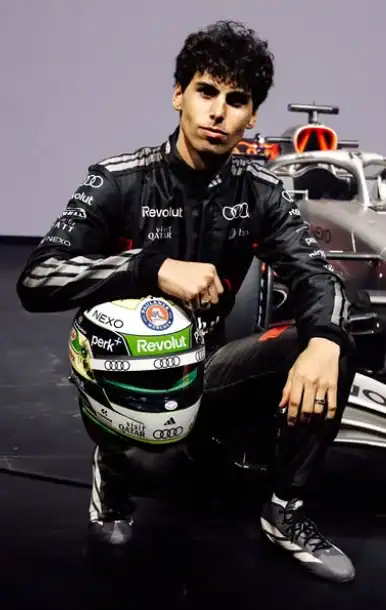
The 2026 class photo captured the full Formula 2 field on the Barcelona pit straight this week, and the image carries weight beyond a simple class photo. Several of these drivers already wear the colours of Formula One junior programmes, and a handful are pencilled in for FP1 outings across the 2026 calendar. For helmet collectors tracking the careers that produce tomorrow’s display pieces, this grid shot is a working scouting document.
Key Takeaways
The 2026 F2 grid photo was taken on the Barcelona pit straight, mirroring the F3 class shot held days earlier.
Multiple F2 drivers in the frame hold contracts with F1 junior programmes and are in line for FP1 sessions in 2026.
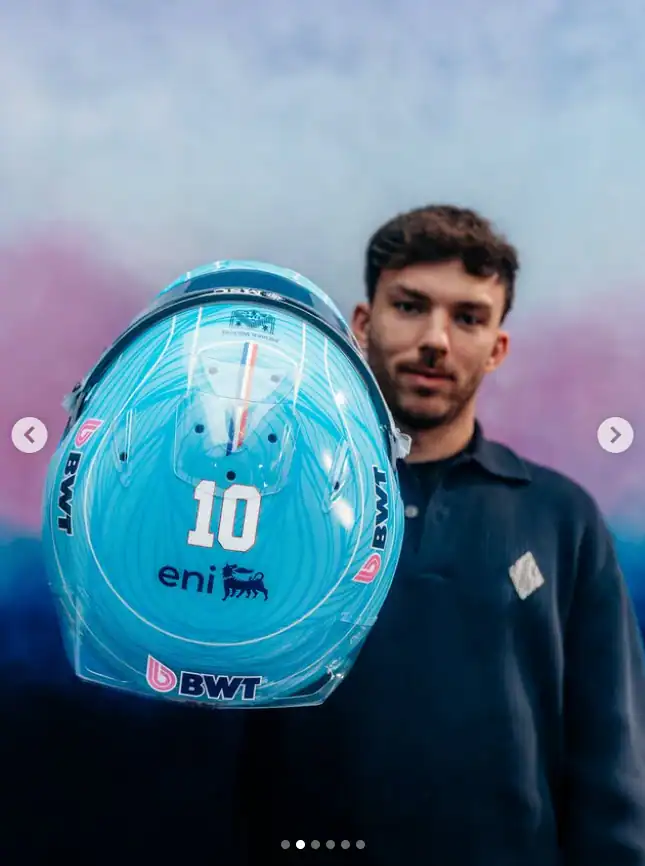
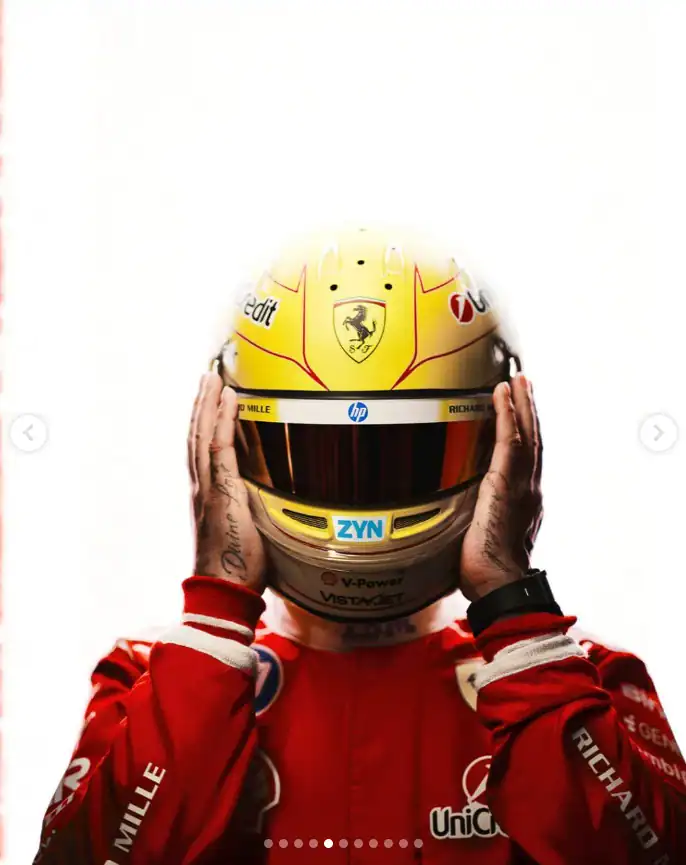
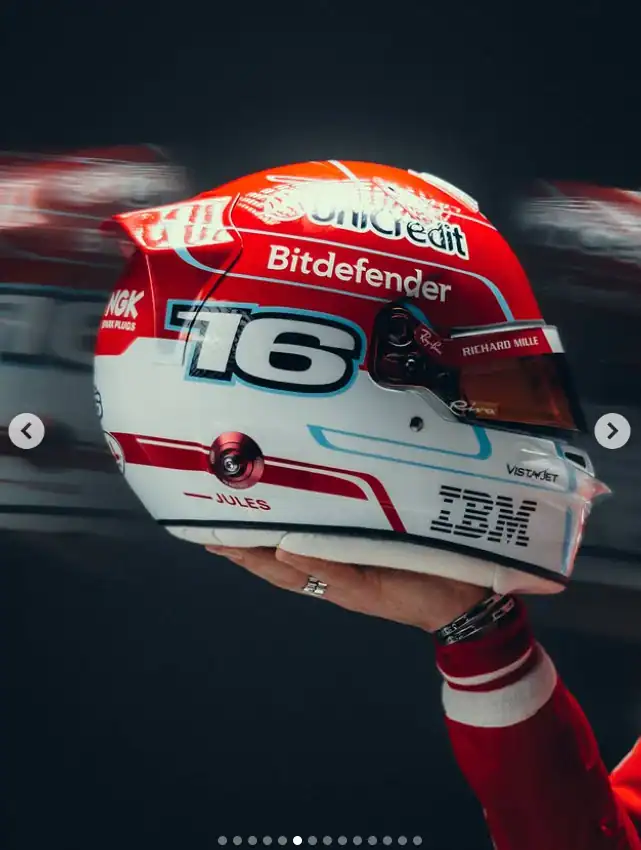
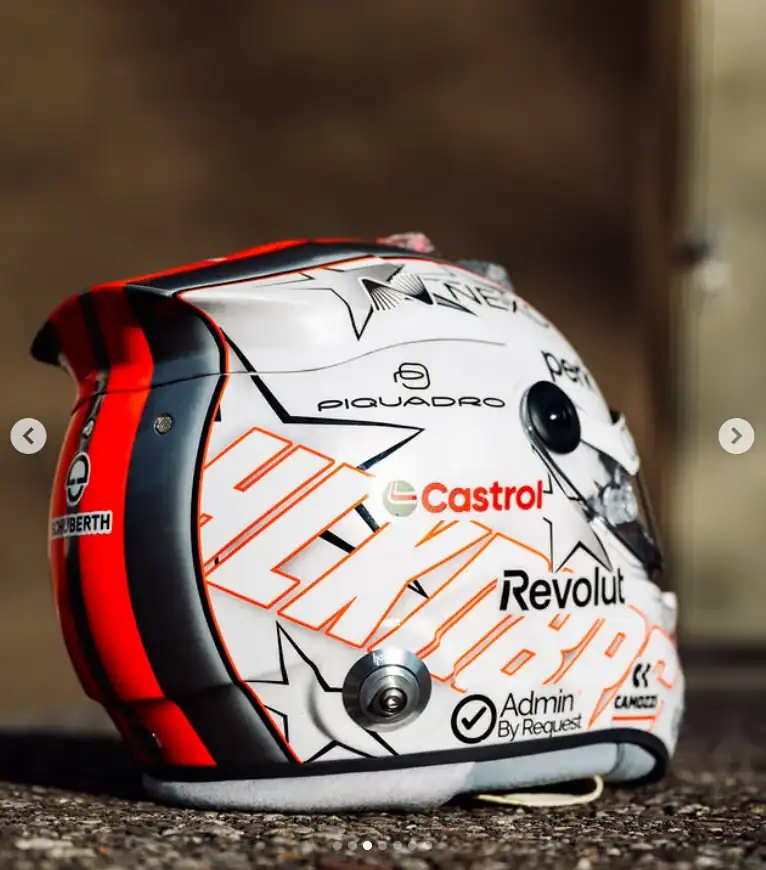
Junior-category helmet liveries from drivers like Hamilton, Verstappen and Leclerc now sit among the most-requested 1:1 display replicas.
Collectors who track F2 graduates early often secure replicas of debut-season designs before wider demand pushes availability down.
A Class Photo With Career-Defining Weight
The annual Formula 2 class photograph is one of the quieter rituals of a race week, but the 2026 edition shot on the Barcelona pit straight carries more signal than most. The frame shows the full 22-car driver roster lined up in matching team kit, helmets cradled under the arm, against the backdrop of the Circuit de Barcelona-Catalunya — the same 4.657 km layout that opens the European leg of the F1 calendar.
The F3 field gathered for the same exercise 48 hours earlier. Together, the two photographs map the entire single-seater feeder pyramid in a single weekend. For anyone studying the helmet market, this is the moment careers — and the liveries that define them — begin to crystallise.
Why The Barcelona Class Photo Matters
Barcelona is not chosen by accident. The circuit hosts pre-season F2 and F3 testing, which means by the time the class photo is taken, every driver has logged meaningful mileage in the 2026-specification chassis. The car runs an 18-inch Pirelli tyre, a 3.4-litre turbocharged V6, and a power output close to 620 bhp — the closest a junior driver gets to F1 hardware before the real thing.
Who Is In The Frame — And Who Has An F1 Contract
Roughly half the 2026 F2 grid is affiliated with a Formula One team’s young driver programme. Mercedes, Red Bull, Ferrari, McLaren, Alpine and Aston Martin all have at least one name in the photograph. That affiliation is the difference between a strong F2 season and a genuine path to a race seat.
FP1 Outings On The 2026 Calendar
F1 regulations require each team to run a rookie driver in two FP1 sessions per car across the season — four rookie outings per team, 40 in total across the grid. A significant share of those slots will go to drivers visible in this F2 class photo. For collectors, FP1 debuts are the first appearance of a custom F1-specification lid in race-weekend conditions, and the designs that emerge from those Friday sessions become some of the most chased display pieces of the following year.
The Helmet Pipeline
When a junior driver graduates from F2 to F1, the helmet design often evolves but rarely changes wholesale. Lando Norris carried his neon yellow base from F2 into his McLaren debut. Oscar Piastri kept the papaya-and-black motif from his 2021 F2 title campaign. Watching the F2 paddock now is watching the design DNA of the 2027 and 2028 F1 grid take shape.
The Collector Angle: Spotting The Lid Before The Market Does
A full-size 1:1 collector replica of a driver’s championship-winning helmet typically lands on the market 6 to 12 months after the title is sealed. By that point, demand has already absorbed the first production run. The collectors who get the cleanest examples — sharpest paint, earliest serial numbers — are the ones who identified the driver during their junior career.
What To Look For In A Junior Driver’s Helmet
Three details on a junior driver’s helmet tell you whether the design will translate well into an F1-era display piece:
- Base colour confidence. A single dominant colour ages better than a busy palette. Verstappen’s blue, Leclerc’s red-and-yellow, Hamilton’s purple — all started as junior-category commitments.
- Sponsor block placement. If the sponsor logos sit in clean rectangles rather than across the painted artwork, the design will adapt to an F1 helmet without disruption.
- Visor strip and tear-off tabs. The visor strip is the most-photographed 27 mm of any helmet. Drivers who commit to a signature visor strip in F2 — a national flag, a personal monogram — almost always carry it into F1.
Studying the Barcelona class photo with those three filters narrows 22 drivers down to a shortlist of roughly six whose helmets are worth tracking through the 2026 season.
Display Replicas And The Junior-Category Wave
Collector demand for junior-category helmet replicas has climbed sharply over the last three years. A 1:1 display reproduction of a driver’s F2 title-winning lid — produced to exhibition standard, with hand-applied decals and authentic paint depth around 0.18 mm across multiple lacquer layers — now commands prices that approach mid-tier F1 replicas from a decade ago.
Why Junior-Era Replicas Sit Well In A Collection
An F1 helmet collection built only around current world champions tells a thin story. Adding a driver’s junior-category lid alongside their F1-era helmet creates a two-piece narrative on the shelf: where the design started, where it ended up. A standard 1:1 helmet display case measures around 32 × 32 × 35 cm, and pairing two helmets side by side on a 70 cm shelf is one of the cleanest display formats in the hobby.
The Barcelona Photo As A Watchlist
Treat the 2026 F2 class photo as a watchlist. Identify the drivers wearing F1 academy patches. Note their helmet base colours. Track their FP1 outings across the 24-round 2026 calendar. By the time one of them lifts a trophy in F1, you will already know which display replica belongs on your shelf.
What History Tells Us About These Photos
Look back at the F2 class photo from 2018. It contained Norris, Russell and Albon — three drivers who would all hold race seats in F1 within 18 months. The 2020 photo included Piastri, Tsunoda and Zhou. The 2022 frame featured Drugovich and Pourchaire. Roughly 30% of any given F2 class photo ends up on an F1 grid within three years.
The probability that the 2026 Barcelona photograph contains a future F1 race winner is high. The probability it contains a future World Champion is lower but not negligible — historically around one in every three or four class photos.
The Helmet That Wins It All
The helmet design worn by the next World Champion is, statistically, already painted. It exists somewhere in the Barcelona paddock, sitting on a stand in an F2 garage as the drivers shuffled into position for the group shot. The challenge for collectors is identifying which one.
FAQ
Q: When was the 2026 F2 class photo taken?
The photograph was taken on the Barcelona pit straight during the F2 round at the Circuit de Barcelona-Catalunya, a 4.657 km layout. The F3 field had completed the same exercise 48 hours earlier.
Q: How many F2 drivers are tied to F1 junior programmes?
Approximately half of the 22-car 2026 F2 grid holds an affiliation with a Formula One academy, including programmes run by Mercedes, Red Bull, Ferrari, McLaren, Alpine and Aston Martin.
Q: What is an FP1 rookie session and why does it matter for collectors?
Each F1 team is required to field a rookie driver in 4 FP1 sessions per season — 40 outings across the grid. These Friday sessions are often the first public appearance of a junior driver’s F1-specification helmet design, making them a key event for collectors tracking new liveries.
Q: Are junior-category helmet designs sold as collector replicas?
Yes. Full-size 1:1 display replicas of junior-category helmets, including F2 title-winning designs, are produced to exhibition quality with hand-applied decals and multi-layer paintwork. They are display and collector pieces only, not certified for protective use.
Q: How can I tell if a junior driver’s helmet design will become collectable?
Three signals matter: a confident single dominant base colour, clean sponsor block placement that survives the move to F1, and a signature visor strip the driver commits to across multiple seasons. Designs meeting all three tend to translate well into F1-era display replicas.
Browse F1 Helmet Collection
Display and collector replicas only. Not certified for protective use. Full-size 1:1 scale.
This article was written with the help of AI tools. Editorial policy