Blog
Barcelona FP1 Rookie Hour: Seven Teams Swap Drivers at Catalunya
 123Helmets Editorial Team
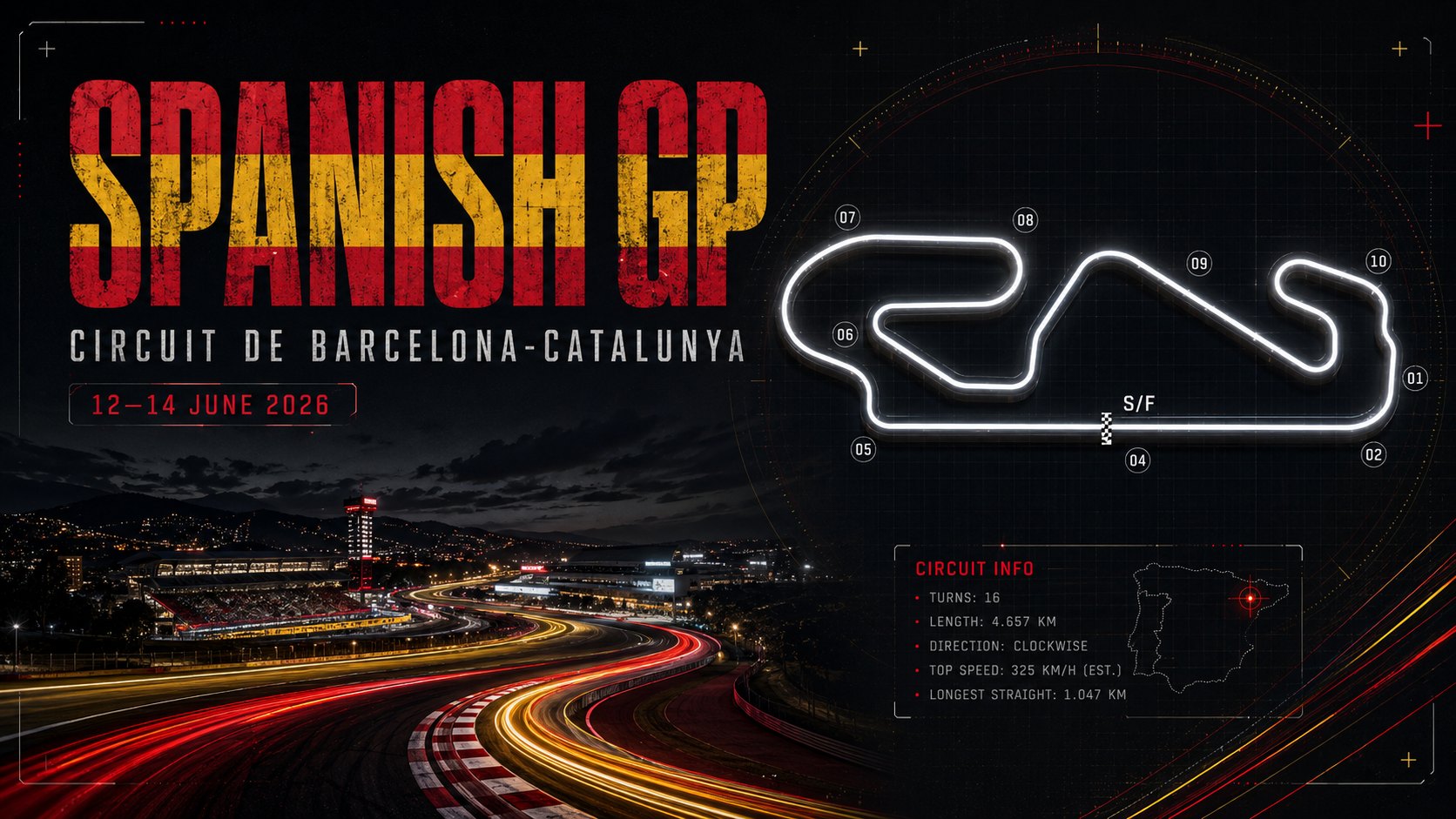
Seven of the eleven teams on the 2026 grid will hand their cars to junior drivers during Friday’s opening practice at the Circuit de Barcelona-Catalunya. Mercedes, Ferrari, McLaren, Red Bull, Williams, Audi and Cadillac all rotate line-ups for FP1 — and the resulting helmet parade is one of the most photogenic of the year for collectors tracking debut liveries.
Key Takeaways
Seven of 11 teams swap drivers for FP1 at Barcelona, the largest single-session rookie rotation of 2026.
Fred Vesti replaces championship leader Kimi Antonelli at Mercedes after 5+ years inside the Silver Arrows system.
Dino Beganovic takes Hamilton’s Ferrari for his 3rd career FP1 outing, following Bahrain and Austria in 2025.
Each rookie debut brings a fresh helmet livery — a key window for collectors building full-size 1:1 display sets.
Why Barcelona becomes the rookie capital on Friday
The Circuit de Barcelona-Catalunya is the most-tested venue on the calendar, and that history is exactly why teams park their full-time drivers for the opening hour. Junior drivers know the layout from F2, F3 and pre-season running, which reduces the learning curve and lets engineers gather useful data on the medium-downforce package before qualifying simulations begin in FP2.
The 2026 sporting regulations carry over the 2025 rule: every full-time driver must sit out two practice sessions across the season to make room for a rookie, defined as a driver with no more than 2 Grand Prix starts. Barcelona is one of the most popular choices on the calendar, alongside Bahrain, Austria and Mexico City, because the 4.657 km layout punishes mistakes without being catastrophic to lap-time recovery.
For collectors, Friday morning at Catalunya is a one-off photo opportunity. Seven different helmets that rarely — if ever — appear in race trim will be on track at the same time. That is more debut and reserve-driver liveries than any other FP1 session of the year, and it sets up a busy week for replica display research.
The 2026 rookie rule in plain numbers
Two mandatory FP1 sessions per car, multiplied across 11 teams and 2 cars each, gives 44 rookie outings spread over the 24-round 2026 calendar. Barcelona alone accounts for 7 of those slots in a single Friday — roughly 16% of the entire season’s rookie running compressed into 60 minutes of green-flag time.
Mercedes: Fred Vesti steps into the championship-leading car
Replacing standings leader Kimi Antonelli during FP1 is Fred Vesti, the sole Mercedes reserve driver for 2026 after more than 5 years inside the team’s young driver programme. The Dane has been linked with Williams and Cadillac for full-time seats in recent seasons but has shifted his focus toward endurance racing, currently competing in the IMSA SportsCar Championship.
Vesti is far from new to the routine. He has now logged 4 FP1 outings since 2023, and Friday in Barcelona will be his 5th. The pressure is different this time — Antonelli leads the drivers’ standings, and any setup data Vesti delivers in that opening hour feeds directly into the title fight.
Helmet display note
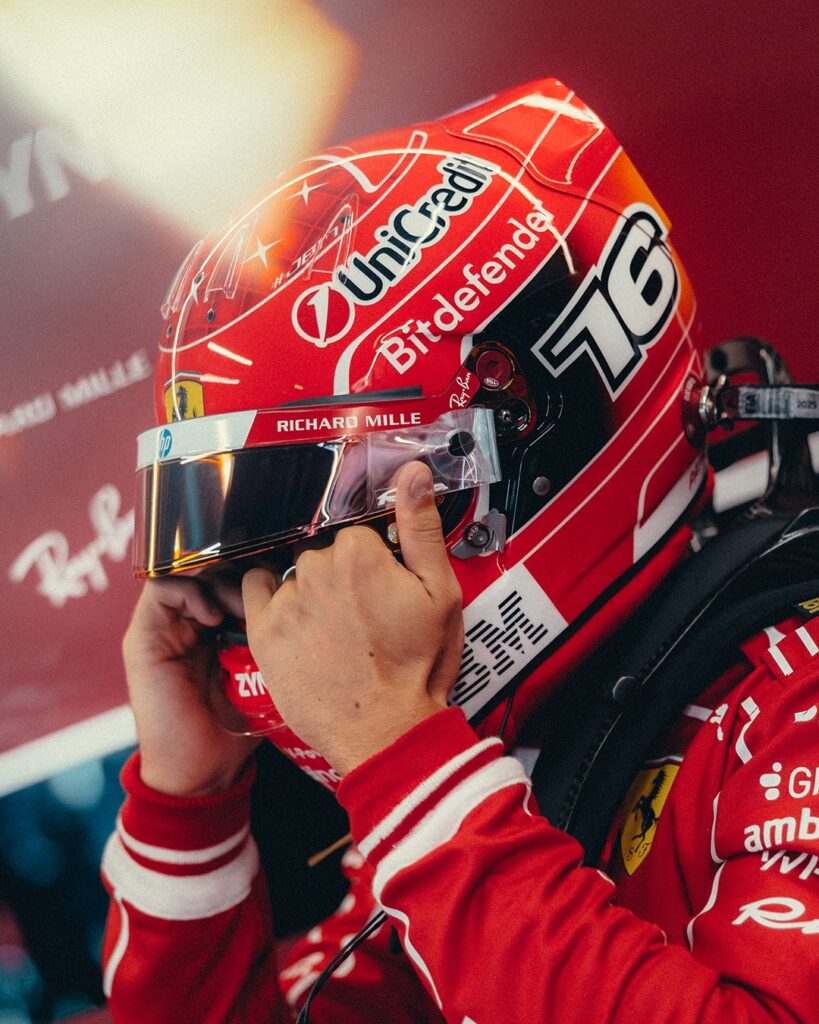
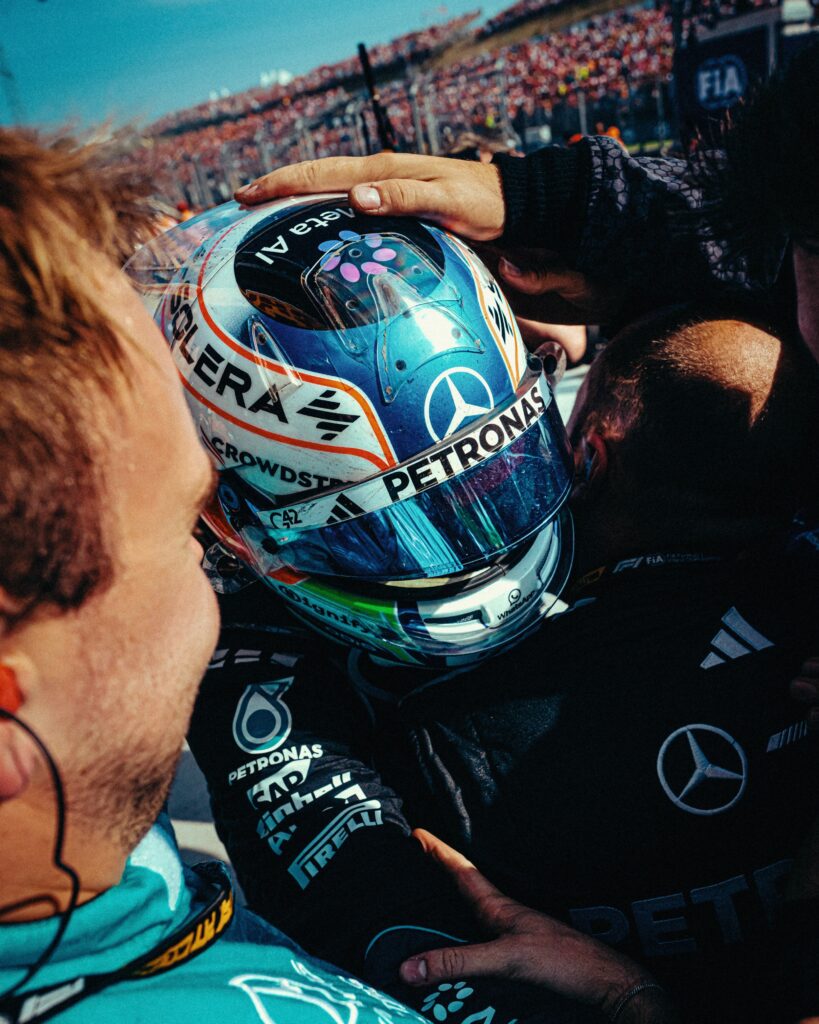
Vesti’s blue-and-white reserve helmet retains the carbon-weave crown finish and a matte clear-coat that catches Catalunya’s afternoon light. For collectors, the Mercedes reserve liveries are some of the rarest 1:1 replica subjects — they appear on track perhaps 4 or 5 weekends per season, making any verified photographic reference from Barcelona valuable for display documentation.
Ferrari: Dino Beganovic takes over Hamilton’s car
Taking a short break from his Formula 2 campaign — where he sits 6th in the standings, 20 points adrift of the leader — Dino Beganovic replaces Lewis Hamilton during FP1. The 22-year-old has been part of the Ferrari Driver Academy since 2020 and will make his 3rd FP1 appearance, following outings in Bahrain and Austria in 2025.
Alongside his F2 schedule, Beganovic has logged substantial simulator hours at Maranello, giving him a working baseline on the 2026 Ferrari before he turns a wheel at Catalunya. That preparation matters: he gets roughly 60 minutes of running, and the team will likely lock him into a structured 18-to-22 lap programme covering low-fuel reference runs and a longer aero-rake validation stint.
The collector angle
Beganovic’s helmet for the weekend keeps his trademark Swedish blue-and-yellow base with a Prancing Horse shield on the chin bar — a one-off variation that rarely makes it onto display shelves. Replicating that finish on a full-size 1:1 collector piece requires careful colour matching: the Ferrari red used on the shield sits at a different gloss level than the surrounding blue, and a well-executed exhibition replica will reproduce that 2-layer contrast under direct light.
McLaren, Red Bull, Williams: the midfield rookie wave
McLaren, Red Bull and Williams round out the most-watched part of Friday’s rotation. Each team uses FP1 to evaluate a young driver against the same 2026 chassis their race drivers will hand back at the lunch break, giving engineers a direct lap-time and tyre-degradation comparison across roughly 25 laps of running per car.
For Williams, the rookie outing also functions as a contract-evaluation tool. The team has rotated several junior names through FP1 across 2025 and 2026, and Barcelona’s mix of high-speed Turn 3, the technical Turn 5 complex and the heavy-braking final chicane gives a 360-degree read on a young driver’s range in a single session.
Why these helmets matter on a display shelf
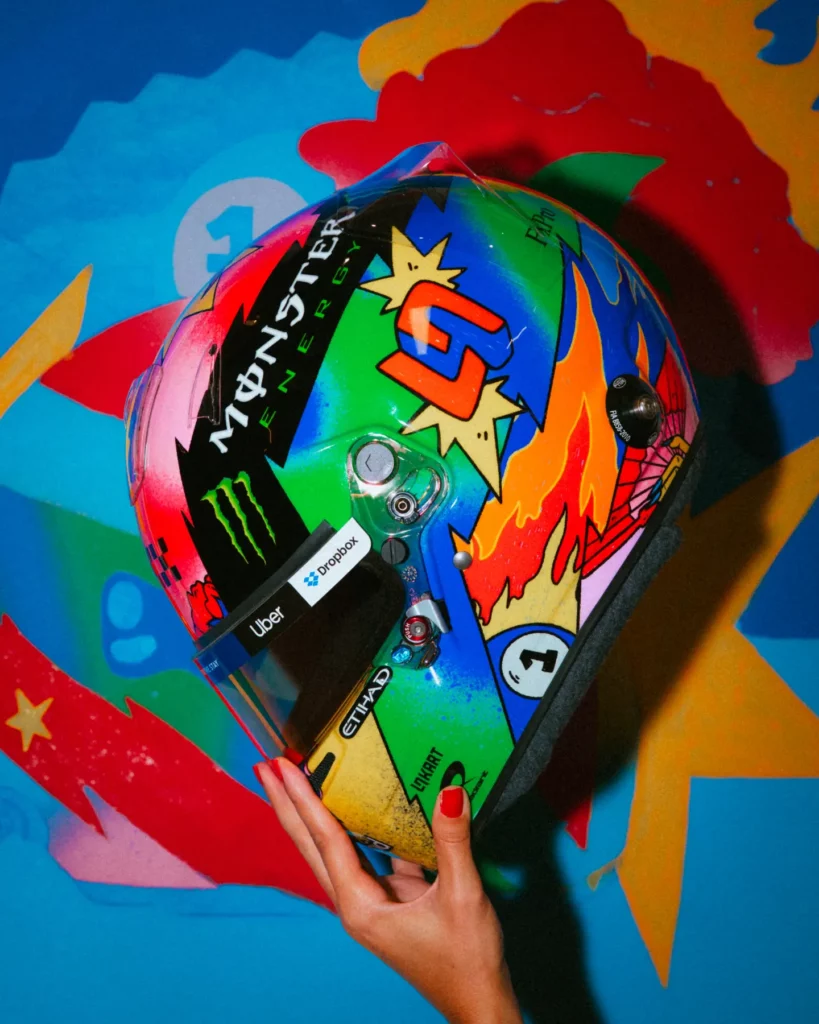
Rookie FP1 helmets are often hybrids — a junior driver’s personal design adapted to the team’s sponsor footprint and chin-bar requirements. That mix produces some of the most visually distinct helmets of the year. A full-size 1:1 replica of a one-off FP1 helmet sits beautifully alongside the same driver’s later race-spec lid, giving collectors a 2-helmet evolution piece from the same season.
Audi and Cadillac: new-team rookie debuts in 2026
The arrival of Audi (the rebranded Sauber project) and Cadillac as the 11th team on the 2026 grid has expanded the rookie pool considerably. Both teams are using FP1 sessions like Barcelona to evaluate drivers tied to their wider motorsport programmes — Audi through its developing junior pipeline, Cadillac through links with IndyCar and sportscar talent.
For Cadillac in particular, FP1 outings double as marketing milestones. The team’s white-and-red corporate identity, combined with a debuting rookie’s personal helmet design, creates the kind of imagery that defines a first-season programme. Audi’s livery, anchored on its signature titanium-grey base, photographs differently again — the matte finish absorbs flash photography in a way that gloss helmets do not, which is worth noting for display lighting setups at home.
Display lighting notes for 2026 rookie helmets
Matte-finish replicas (such as the Audi style) need warm 2700K-3000K LED lighting to avoid looking flat. Gloss replicas (Ferrari, McLaren) handle cooler 4000K light without losing depth. Mixing both finishes on a single shelf works only when each helmet has its own dedicated light source — otherwise the matte pieces visually disappear next to the gloss ones.
What to watch on Friday — and what to collect afterwards
The session runs for 60 minutes, and most rookies will complete somewhere between 22 and 28 laps depending on red flags and traffic. The first 10 minutes typically see installation laps only; the meaningful running starts around the 15-minute mark, with longer stints from the 35-minute point onward.
For collectors, the key moments to document are the helmet reveals during the Thursday media day and the first on-track photographs after the green light. Those early images become the reference points for any future full-size 1:1 replica project. A clean side-profile shot, a chin-bar close-up and a crown-detail photo are the 3 angles that matter most for verifying a display piece.
By the time FP2 begins at 17:00 local time, the regular drivers are back in their cars and the rookie helmets are already on their way back to the team motorhomes. That 60-minute window is the entire on-track lifespan for some of these designs in 2026 — which is exactly what makes them worth tracking.
“Barcelona is the most-tested circuit on the calendar, which is why it remains the logical choice for rookie FP1 running — the data quality is high and the learning curve for a junior driver is manageable inside 60 minutes.”
— F1 technical paddock observation, 2026
FAQ
Q: How many teams are running rookies in FP1 at Barcelona?
Seven of the 11 teams on the 2026 grid — Mercedes, Ferrari, McLaren, Red Bull, Williams, Audi and Cadillac — are fielding a rookie driver during Friday’s opening practice session.
Q: Who replaces Kimi Antonelli at Mercedes?
Fred Vesti, the team’s sole reserve driver for 2026 after more than 5 years inside the Mercedes programme. Barcelona will be his 5th FP1 outing since 2023.
Q: Who drives Lewis Hamilton’s Ferrari in FP1?
Dino Beganovic, a Ferrari Driver Academy member since 2020. It is his 3rd FP1 outing, following appearances in Bahrain and Austria in 2025. He currently sits 6th in F2, 20 points off the lead.
Q: What defines a rookie under the 2026 FP1 rule?
A rookie is a driver who has started no more than 2 Grands Prix. Every full-time driver must give up their car to a rookie in 2 practice sessions across the season.
Q: Why are rookie FP1 helmets interesting for collectors?
Many rookie helmets are one-off designs that appear on track for just 60 minutes before being retired for the weekend. A full-size 1:1 collector replica captures a livery that may never see a race weekend again, making it a distinctive exhibition piece.
Browse F1 Helmet Collection
Display and collector replicas only. Not certified for protective use. Full-size 1:1 scale.
This article was written with the help of AI tools. Editorial policy