Blog
Franz Tost: Verstappen Lost His Braking Edge in 2026
 123Helmets Editorial Team
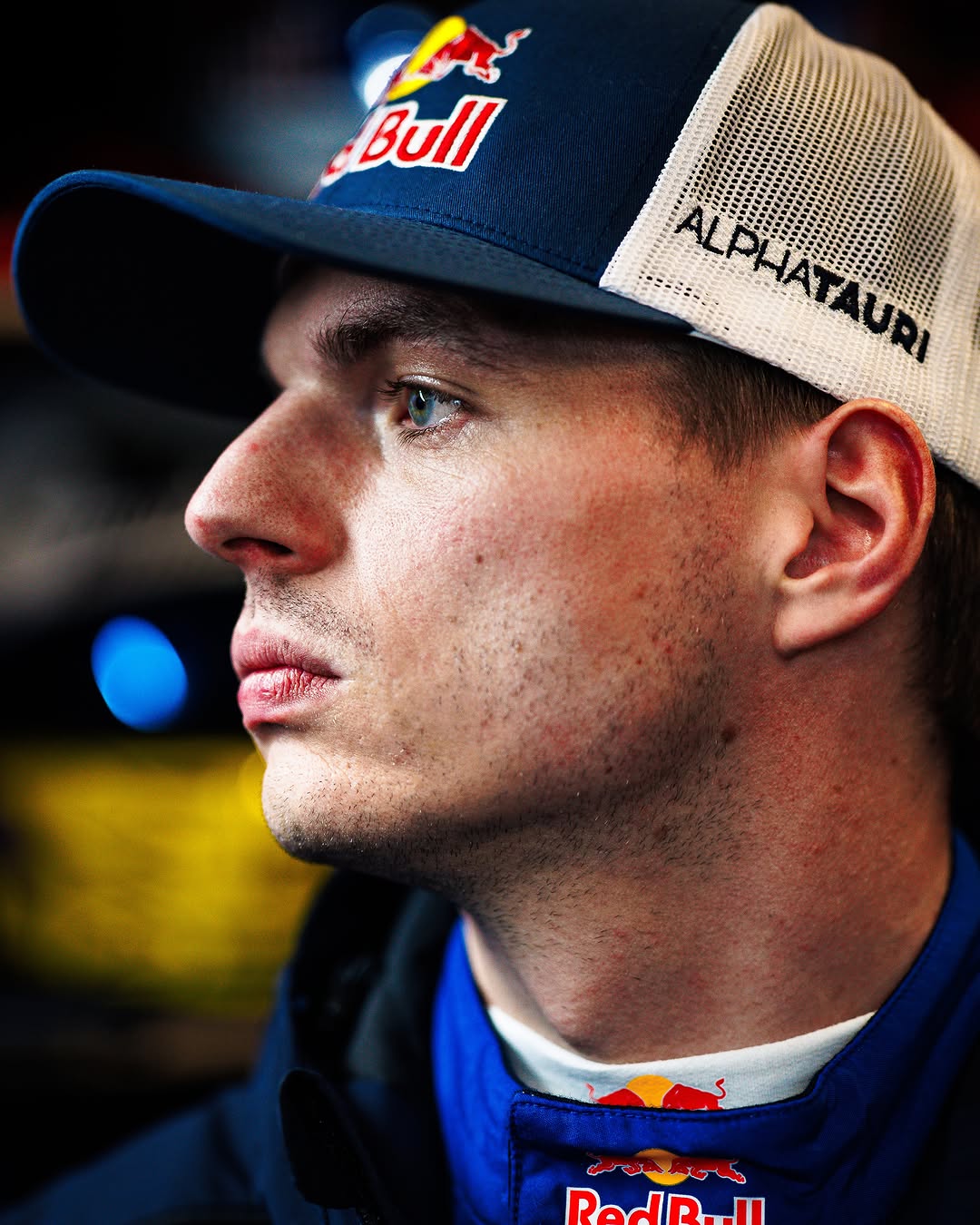
Former Alpha Tauri team principal Franz Tost says the 2026 Formula 1 regulations have stripped Max Verstappen of his most lethal weapon: late braking. With Kimi Antonelli 101 points clear in the championship, the shift from a 50/50 power split to a new electrical management formula has rewritten the competitive order — and Tost thinks he knows exactly why.
Key Takeaways
Franz Tost argues the 2026 50/50 combustion-to-electrical power split has eliminated late braking as a competitive weapon, directly hurting drivers like Verstappen.
Kimi Antonelli leads the 2026 championship with 156 points and five consecutive victories; Verstappen has scored just 55 points in the same period.
Verstappen won three of the four ground-effect era championships; the 2026 regulation overhaul ended that dominant cycle.
Stakeholders including the FOM, FIA, and power unit manufacturers have agreed to shift from the current 50/50 split toward a 60/40 split in future seasons.
The Claim That Cuts to the Core
Franz Tost’s verdict is precise: the 2026 regulations have removed late braking as a performance differentiator, and that removal has cost Max Verstappen more than it has cost anyone else on the grid. The former principal of Toro Rosso and Alpha Tauri — the programme that developed Verstappen into a world champion — told Austrian outlet Krone that he has not seen a single boring race in 2026, directly contradicting the four-time champion’s public frustration with the new formula.
The observation carries weight precisely because Tost spent years watching Verstappen up close. He managed the junior team that launched the Dutchman into Formula 1 as a 17-year-old, and he understands the specific skill set that made Verstappen exceptional. His point is not that Verstappen has declined — it is that the regulations have legislated away the territory where Verstappen was, by most measures, the best driver on the planet.
“Drivers like Max Verstappen, Lando Norris, or Fernando Alonso used to be able to exploit their strengths under braking,” Tost said. “But if you have to lift off the throttle 10 or 20 metres before the braking point to recharge, that advantage is lost.”
That 10-to-20-metre window is not a minor adjustment. In Formula 1 terms, it is a fundamental rewrite of how a corner entry is attacked — and for a driver whose reputation was built on carrying speed deeper into braking zones than any rival dared, it represents a structural disadvantage baked into every lap of every race.
How the 2026 Rules Changed Everything
The 2026 season brought the most significant technical overhaul Formula 1 had seen in years, ending the ground-effect era that had defined the sport since 2022. The headline change to the power unit regulations was the introduction of a strict 50/50 split between internal combustion engine output and electrical energy deployment — a ratio designed to push the sport toward a more electrified future.
In practice, that split has altered driver behaviour at every corner entry. Under the previous regulations, drivers could brake as late as their nerve and the car’s mechanical grip allowed. Under the 2026 framework, the electrical recovery system demands that drivers lift the throttle earlier — in some cases 10 to 20 metres before the conventional braking point — to harvest enough energy for the next deployment phase. The throttle lift is not optional; it is a prerequisite for competitive lap times.
For drivers whose strongest attribute was aggression under braking, this is a meaningful constraint. Verstappen built his reputation on corners like Eau Rouge, the chicane at Monza, and Turn 1 at Bahrain, where he consistently carried more speed into the braking zone than teammates, rivals, and the data suggested was achievable. That style of driving — rooted in spatial confidence and physical commitment — is precisely what the 2026 energy management protocol penalises.
Red Bull has compounded the problem with reliability issues in 2026, leaving Verstappen without a consistently competitive package even when his driving inputs are optimal. The car and the regulations have moved against him simultaneously.
Verstappen’s Championship Collapse in Numbers
Kimi Antonelli leads the 2026 Formula 1 World Championship with 156 points after five consecutive victories — a run that has put the Mercedes driver in a position of command not seen in the sport since Verstappen’s own dominant 2023 season. Against that, Verstappen has accumulated just 55 points. The gap between them stands at 101 points.
That gap is not simply a reflection of car performance. It illustrates how completely the competitive hierarchy has shifted since the regulation change. During the ground-effect era, Verstappen took three of the four available championships — 2021, 2022, and 2023. In 2024, Lando Norris claimed his maiden title in a season where Verstappen remained competitive throughout, keeping pace until the closing rounds despite Red Bull‘s car falling behind the McLaren on outright pace.
The contrast with 2026 is stark. Verstappen has not challenged for a race victory in multiple rounds. His point-scoring has been inconsistent, hindered by the reliability problems that have plagued Red Bull across the early portion of the season. And while he has been vocal about the regulations since the opening rounds of 2026, the championship mathematics leave little room for a recovery without wholesale changes to both the car and the rules framework.
Tost’s observation reframes this situation. The numbers are not just a Red Bull problem — they reflect a specific disadvantage for a specific type of driver, one who thrived in a technical environment that no longer exists.
Tost’s Position and the Broader Driver Debate
Franz Tost’s disagreement with Verstappen’s assessment is measured rather than dismissive. He told Krone that he can understand the frustration of top drivers, but he separates that frustration from a verdict on the quality of racing the 2026 regulations have produced. In his view, the races have not been boring — the problem is that the drivers who dominated the previous era are no longer able to dominate in the same way.
“I can also understand the frustration of the top drivers,” Tost said. “But if you have to lift off the throttle 10 or 20 metres before the braking point to recharge, that advantage is lost.”
This is a notable position for a man who spent years as Verstappen’s boss and, before that, oversaw multiple generations of Red Bull’s driver development structure. Tost is not a casual observer — he is someone with direct knowledge of what made Verstappen elite. His argument is that the 2026 rules have not made racing worse; they have made it more equal by neutralising a skill that was never evenly distributed across the grid.
Verstappen, for his part, has been consistent since the opening rounds of 2026 in arguing that the 50/50 power split has produced racing that rewards energy management over driving ability. He has said publicly that the new formula places more emphasis on managing electrical output than on the wheel-to-wheel instincts that defined the ground-effect era. Tost’s response suggests that what Verstappen calls “less skill” is, more precisely, a different set of skills — ones that do not favour him in the way the previous set did.
The 60/40 Fix and What Comes Next
The complaints from Verstappen and other drivers have not gone unanswered. The FOM, the FIA, and the power unit manufacturers have agreed to shift away from the 50/50 split in favour of a 60/40 ratio in the coming seasons. The direction of that split — more combustion, less electrical dependency — addresses precisely the concern Verstappen has raised: that the current formula over-indexes on energy management at the expense of raw driving skill.
Whether that change arrives in time to alter Verstappen’s 2026 trajectory is another matter. With Antonelli holding a 101-point lead and five victories to his name, the arithmetic is severe. A rule change scheduled for future seasons does not help a driver who needs points on the board now.
For Tost, the debate illustrates something more fundamental about how regulation changes interact with driver identities. Every major technical overhaul in Formula 1 history has produced winners and losers — not based solely on car performance, but on which driver attributes the new rules reward. The 2026 change has not diminished Verstappen’s talent; it has changed the context in which that talent operates.
The shift to 60/40 may restore some of that context. Until it does, Verstappen is racing in a formula that was not written for him — and the championship standings, with 156 points for Antonelli against his 55, reflect that reality with complete clarity.
Collecting the Verstappen Era: A Permanent Record
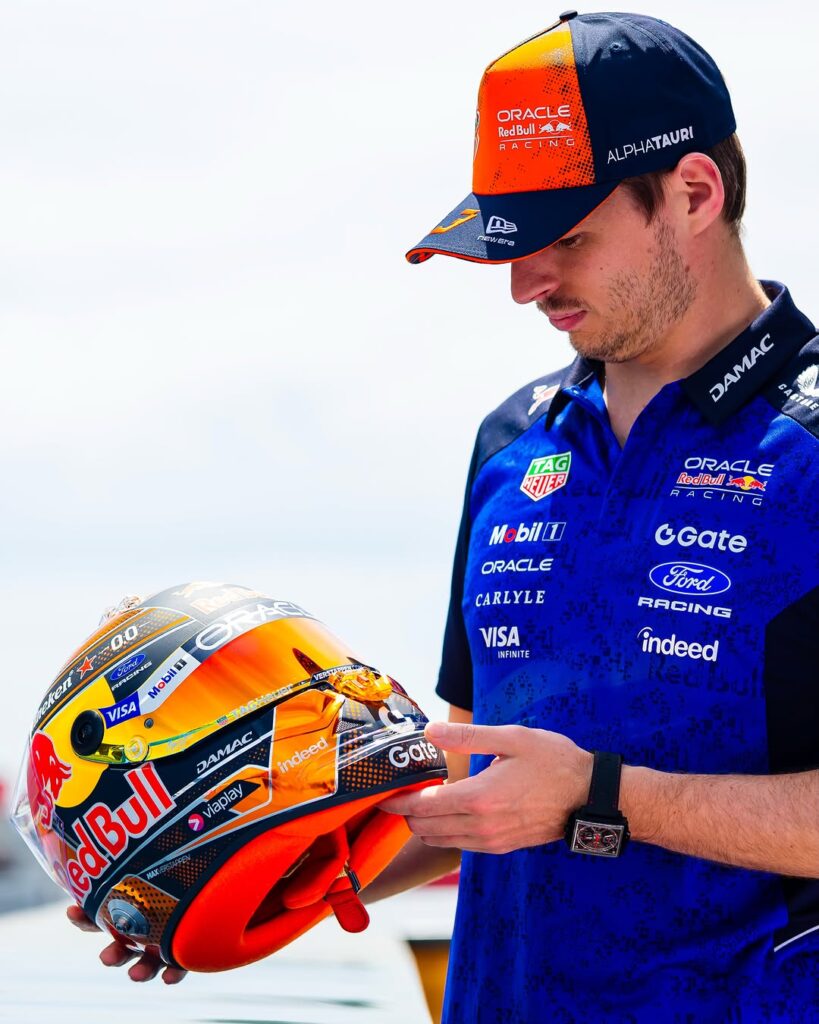
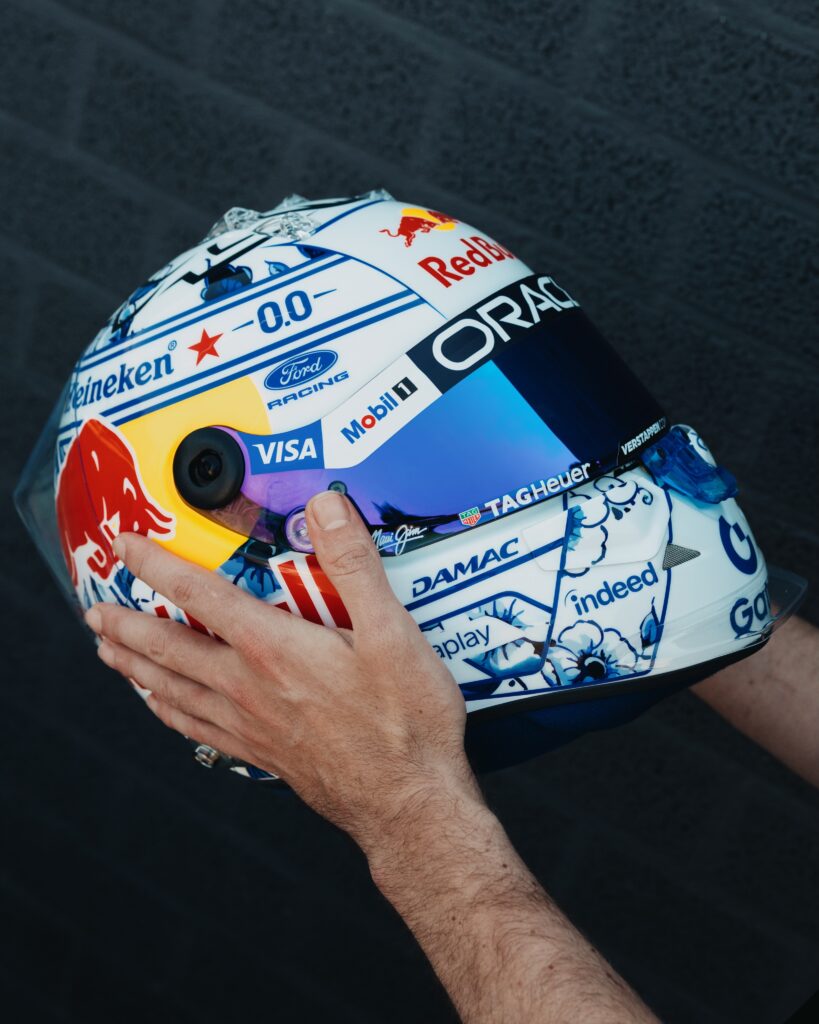
The 2026 season marks a turning point in the Verstappen story, and turning points are exactly what serious collectors document. At 123Helmets.com, the full-size 1:1 display replica helmets in the Max Verstappen collection capture the liveries and designs from across his championship years — pieces that fix a specific moment in the competitive history of the sport in permanent, exhibition-quality form.
Each replica is produced at full 1:1 scale, matching the geometry of a race helmet worn at circuit level. These are collector and display items only — not certified for any protective, road, or track use — produced for exhibition and heritage purposes. The shell construction and finish replicate the visual detail of the originals, from the Oracle Red Bull Racing livery markings to the specific visor tint used across different championship seasons.
As the 2026 season reshapes the competitive order, the Verstappen pieces from the ground-effect era take on added significance. Three championships in four seasons represent a statistical achievement that the new regulations have, at least for now, put beyond reach. A display replica from that period is a physical record of a specific technical and competitive environment — one that Tost himself confirms has now fundamentally changed.
For collectors who follow the sport at this level of detail, the gap between Verstappen’s 55 points and Antonelli’s 156 in 2026 is not just a championship statistic. It is the moment the ledger turned — and helmets from the seasons before that turn carry the weight of that context.
“Drivers like Max Verstappen, Lando Norris, or Fernando Alonso used to be able to exploit their strengths under braking. But if you have to lift off the throttle 10 or 20 metres before the braking point to recharge, that advantage is lost.”
— Franz Tost, former Alpha Tauri and Toro Rosso Team Principal, speaking to Krone
“I haven’t seen a single boring race this season.”
— Franz Tost, former Alpha Tauri and Toro Rosso Team Principal, speaking to Krone
FAQ
Q: Why does Franz Tost say Verstappen has lost his advantage in 2026?
Tost argues that the 2026 50/50 combustion-to-electrical power split forces drivers to lift off the throttle 10 to 20 metres before the braking point to recharge the electrical system, eliminating the late-braking advantage that Verstappen used as his primary weapon.
Q: How far behind is Verstappen in the 2026 championship?
Verstappen has 55 points in the 2026 championship, compared to Kimi Antonelli’s 156 points — a deficit of 101 points. Antonelli has also won five consecutive races.
Q: What is changing about the F1 power unit regulations?
The FOM, FIA, and power unit manufacturers have agreed to move from the current 50/50 combustion-to-electrical split toward a 60/40 ratio in future seasons, following widespread driver complaints about the current formula.
Q: What are the Max Verstappen replica helmets available at 123Helmets.com?
The Verstappen collection features full-size 1:1 display and collector replica helmets from across his championship seasons. They are exhibition-quality pieces only — not certified for any protective, road, or track use.
Q: How many F1 championships did Verstappen win in the ground-effect era?
Verstappen won three of the four World Championships available during the ground-effect era — the 2021, 2022, and 2023 titles. Lando Norris claimed the fourth, in 2024, with Verstappen remaining in contention throughout that season.
Shop Max Verstappen Collection — full-size 1:1 display and collector replica helmets from every championship season. Exhibition quality, not for protective use.
Display and collector replicas only. Not certified for protective use. Full-size 1:1 scale.
This article was written with the help of AI tools. Editorial policy