
Blog
Haas Throwback Livery in Canada: The 200th GP Tribute and What It Means for Collectors
 123Helmets Editorial Team

Haas Throwback Livery in Canada: The 200th GP Tribute and What It Means for Collectors
When Haas crossed the 200-Grand-Prix threshold at the 2024 Canadian Grand Prix, the American outfit didn’t let the milestone slip by quietly. A throwback livery, matching race suits and a celebratory tone in Montreal turned a single weekend into one of the most visually distinctive chapters in the team’s short but turbulent history — and one that collectors are still talking about today.
Key Takeaways
Haas marked its 200th Grand Prix at the 2024 Canadian GP with a one-off throwback livery and matching crew and driver suits.
The visual update revisited earlier Haas branding cues, blending heritage red, black, and grey with modern aero surfaces.
For collectors, milestone-livery weekends create immediate scarcity around helmet designs, suits, and team-issued merchandise.
Full-size 1:1 replica helmets tied to one-off liveries are display-only collector pieces, never intended for protective use.
A Milestone Few Predicted: 200 Grands Prix for Haas
When Haas F1 Team rolled onto the grid in Melbourne in 2016, very few inside the paddock would have wagered that the American constructor would still be racing — and celebrating round numbers — nearly a decade later. Yet at the 2024 Canadian Grand Prix in Montreal, Haas ticked over its 200th Formula 1 start, a number that places the squad firmly within the modern era’s most resilient privateer projects.
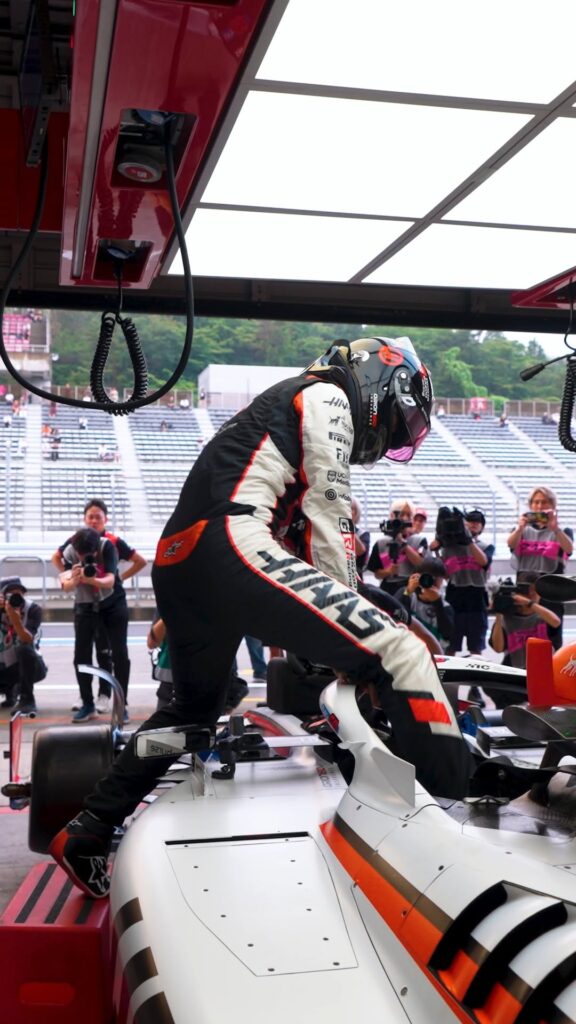
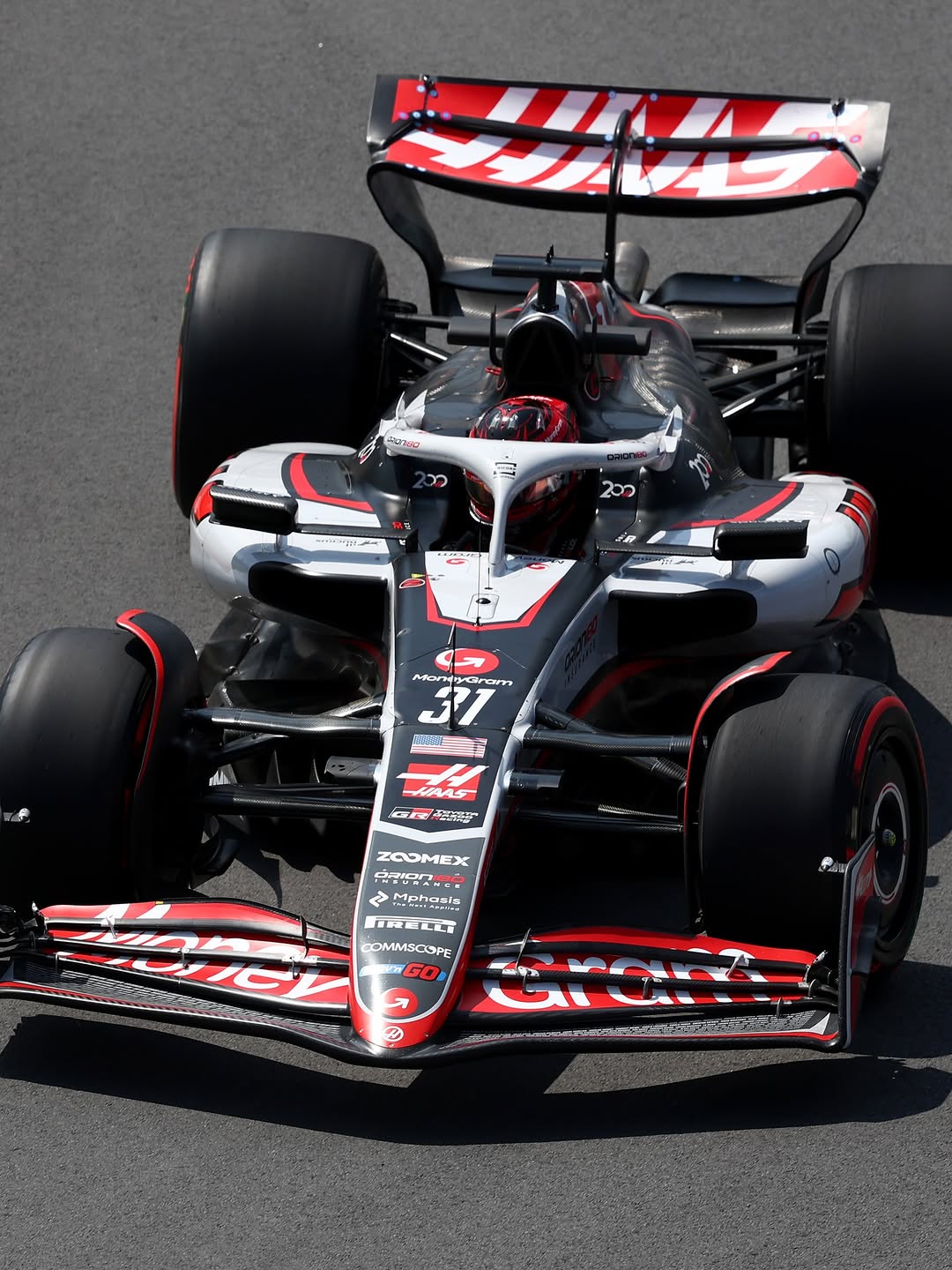
To mark the occasion, the team didn’t simply post a graphic on social media. Instead, Haas chose the most public, most photographed canvas available to any F1 outfit: the car itself. A bespoke throwback livery appeared on the VF-24 chassis for the Canadian weekend, accompanied by matching race suits for drivers and crew. The result was a coherent, single-weekend visual identity that drew immediate attention from photographers, fans and the collector community alike.
The choice of venue was no accident either. Canada has long been one of the most visually rich rounds on the calendar — the Circuit Gilles Villeneuve, the maple-leaf iconography, the urban Montreal backdrop — and pairing a milestone livery with that setting amplified the impact of the design.
Why milestone weekends matter
Round-number Grands Prix occupy a particular cultural niche in Formula 1. Teams use them to acknowledge longevity, thank partners, and reset their public narrative. For Haas — a team that has weathered chassis controversies, driver reshuffles, and several rounds of internal restructuring — reaching 200 starts was not just a statistic. It was a statement of permanence.

The Throwback Livery: Visual Breakdown
The 2024 Canadian GP livery leaned into Haas’s heritage palette rather than reinventing it. The dominant tones remained the team’s recognisable red, black, and metallic grey, but the proportions and graphic treatments were reshuffled to echo earlier Haas seasons — particularly the bolder, more contrast-heavy approach of the team’s mid-2010s era.
Key visual elements
The most noticeable changes appeared along the engine cover, sidepods and rear wing endplates. Larger blocks of solid colour replaced the busier sponsor stacking seen on the standard 2024 livery, giving the car a cleaner, more graphic silhouette under Montreal’s harsh midday sun.
- Engine cover: simplified panelling with a bold sweep echoing the original VF-16 design language.
- Sidepods: revised typography and partner placement, with hierarchy adjusted to highlight the milestone graphic.
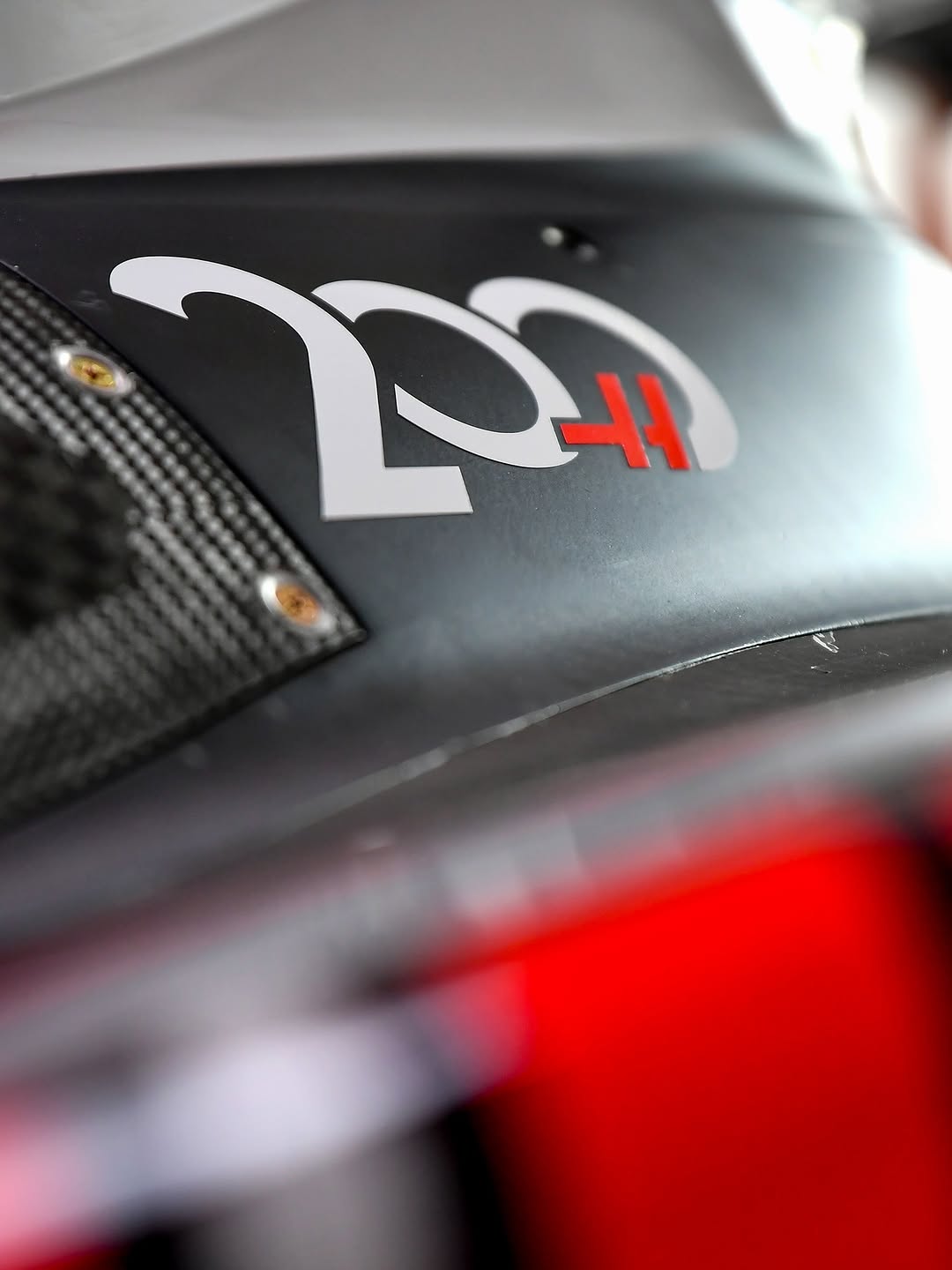
- Nose cone: a dedicated 200th GP mark, positioned to be visible in onboard and pit-lane shots.
- Halo and airbox: reworked accents tying the car visually to the matching driver and crew suits.
Suits and crew kit
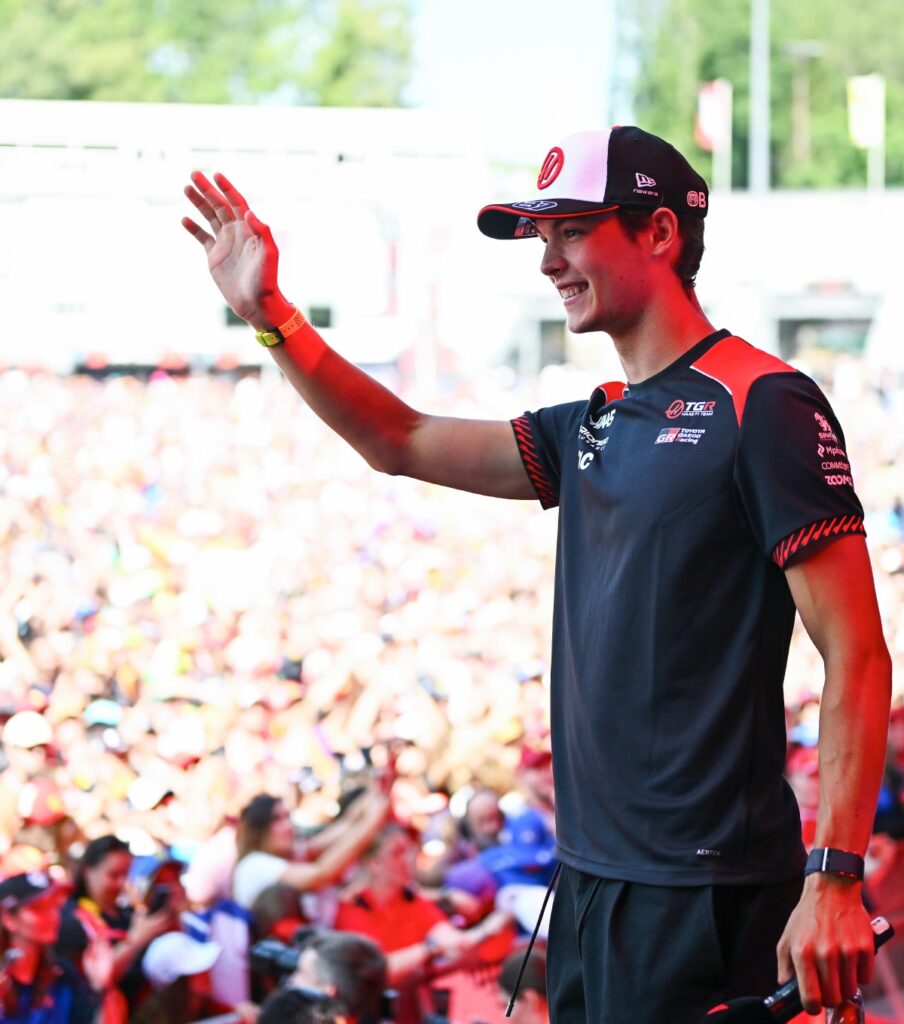
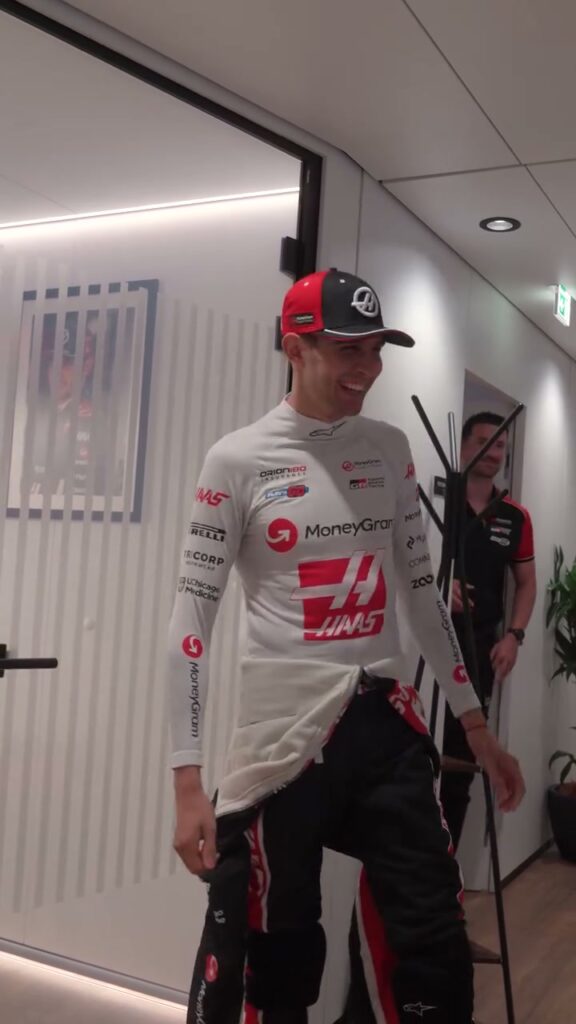
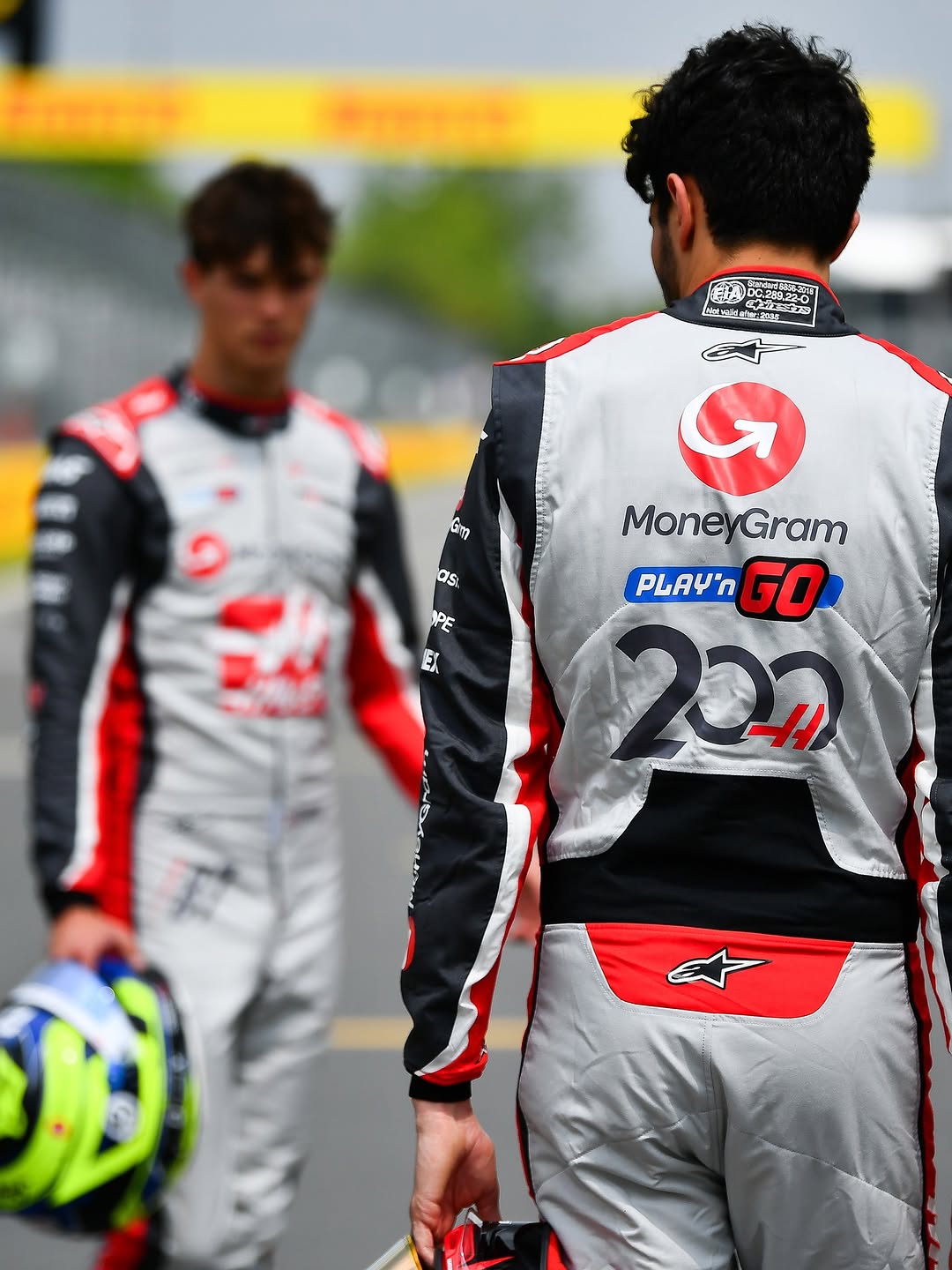
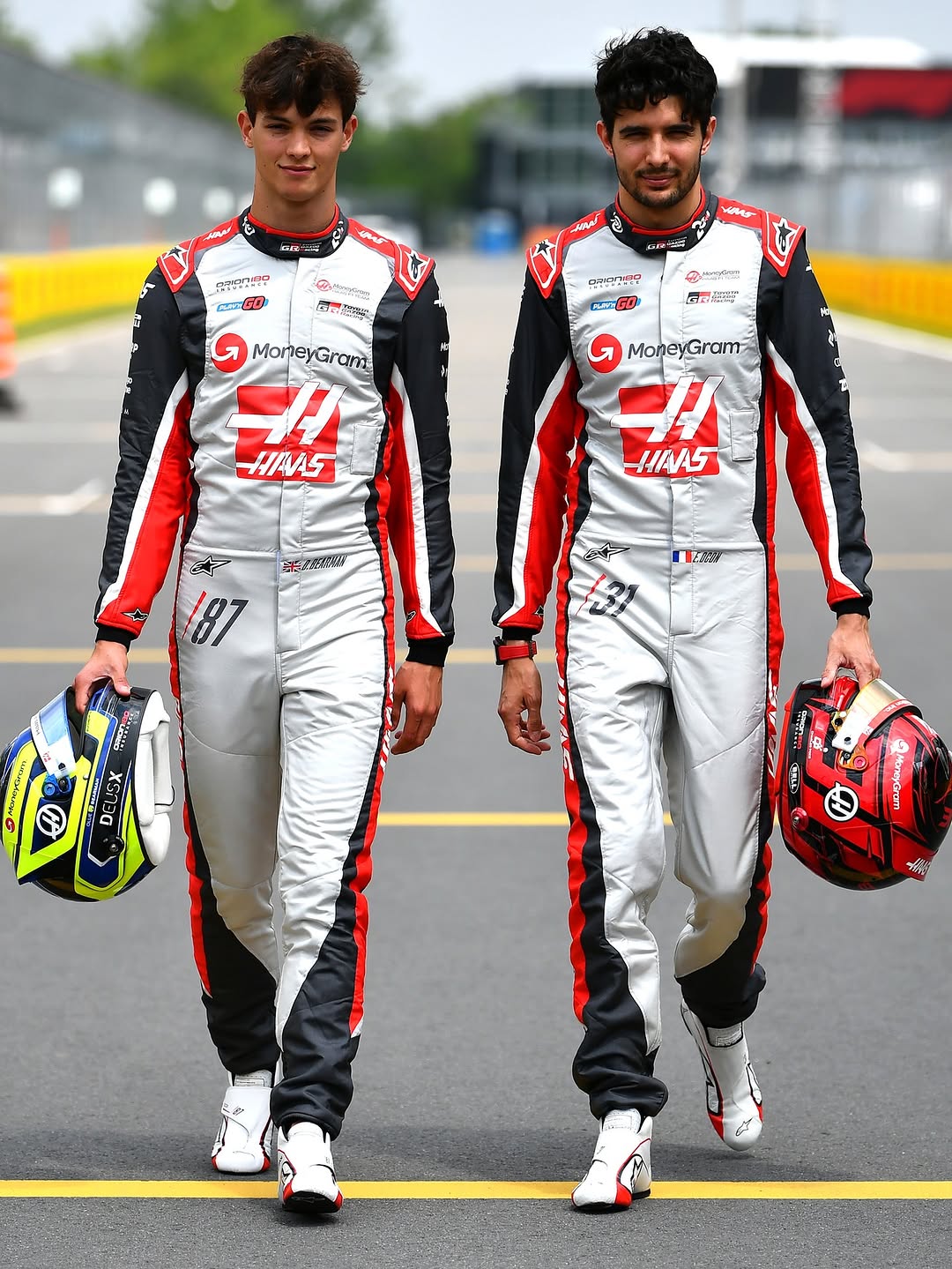
The race suits were not a copy-paste of the car. They were designed as a complementary piece, sharing the same heritage palette but interpreting it through the proportions of a driver’s overall — broader chest panels, redistributed sponsor real estate, and bespoke embroidery acknowledging the milestone. Pit-crew kit and team-wear followed the same brief, ensuring that television broadcasts read the weekend as a single, cohesive visual event.
The maple-leaf detail
A small but deliberate maple-leaf graphic appeared in several locations, anchoring the design to its Canadian setting. It’s the kind of detail that easily gets missed in long shots but becomes the centrepiece of close-up photography — exactly the type of element collectors look for when documenting one-off weekends.
Branding Strategy: Heritage Without Nostalgia
What made the Haas 200th GP livery effective from a brand-communications standpoint was its restraint. The team didn’t attempt a full retro recreation. There was no exact copy of the 2016 launch car, no recycled sponsor stack from an earlier season. Instead, the design referenced heritage cues — proportions, palette, graphic boldness — while remaining unmistakably a 2024-era Formula 1 car.
This is a strategy several teams have adopted in recent seasons: tribute liveries that nod backward without locking themselves into pure nostalgia. The benefit is twofold. First, the car still functions as a current marketing surface for active partners. Second, the design ages well, because it isn’t tied to a specific past season that future fans may or may not remember.
The role of partners
Any one-off livery requires partner cooperation. Logos move, scale up or down, and in some cases are temporarily reduced in prominence to make room for the milestone graphic. The fact that Haas was able to deliver a clean, balanced design suggests strong alignment with its commercial portfolio — itself a sign of organisational maturity for a team that, not long ago, was navigating much more volatile sponsor relationships.
Why Collectors Pay Attention to One-Off Liveries
From a collector’s perspective, milestone-livery weekends are among the most interesting moments on the F1 calendar. A one-off design exists, by definition, for a finite window — often a single race weekend — which immediately changes the scarcity profile of any associated merchandise, photography, or display item.
Scarcity and documentation
Standard-season liveries appear on roughly two dozen race weekends. A one-off appears on one. That asymmetry alone shifts how the design is documented, photographed, and remembered. Collectors who track liveries season by season tend to flag these weekends early, building reference libraries of images, press releases, and broadcast captures.
Helmet and suit pairings
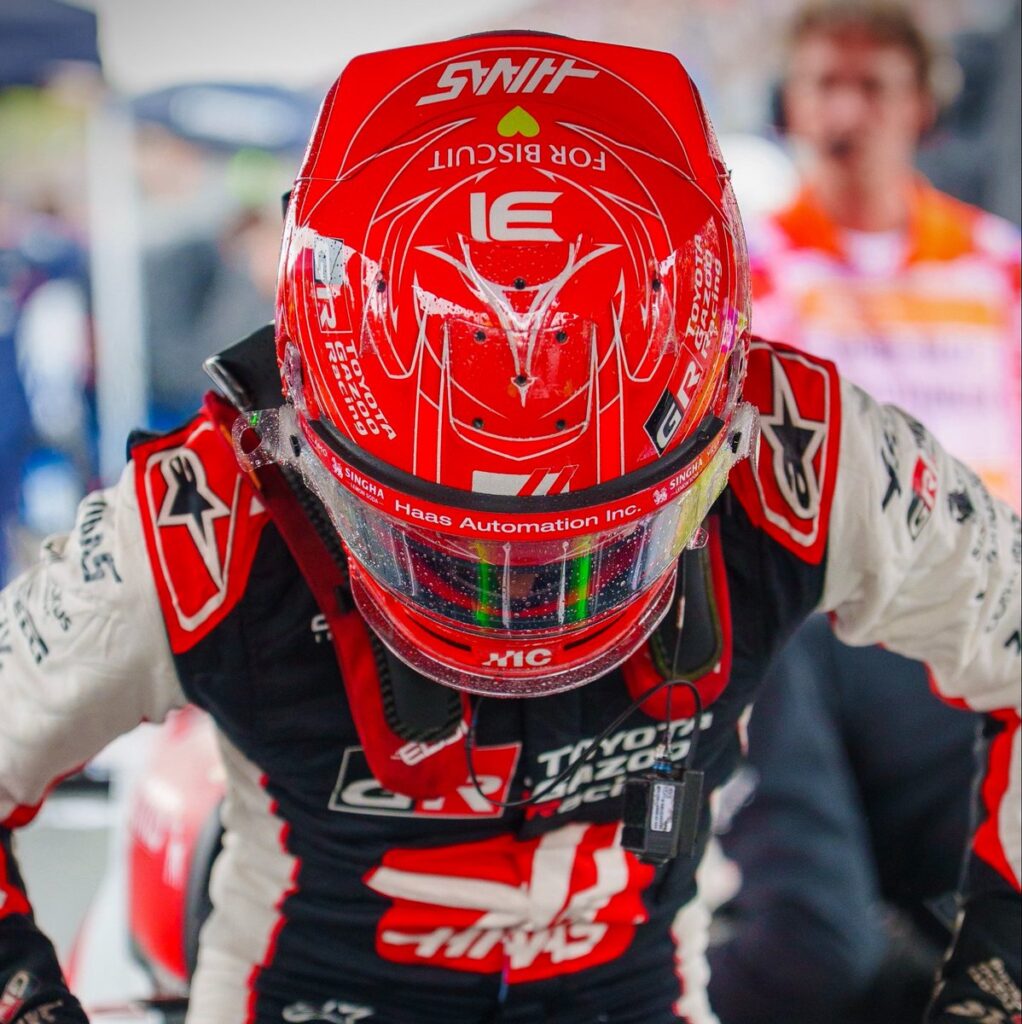
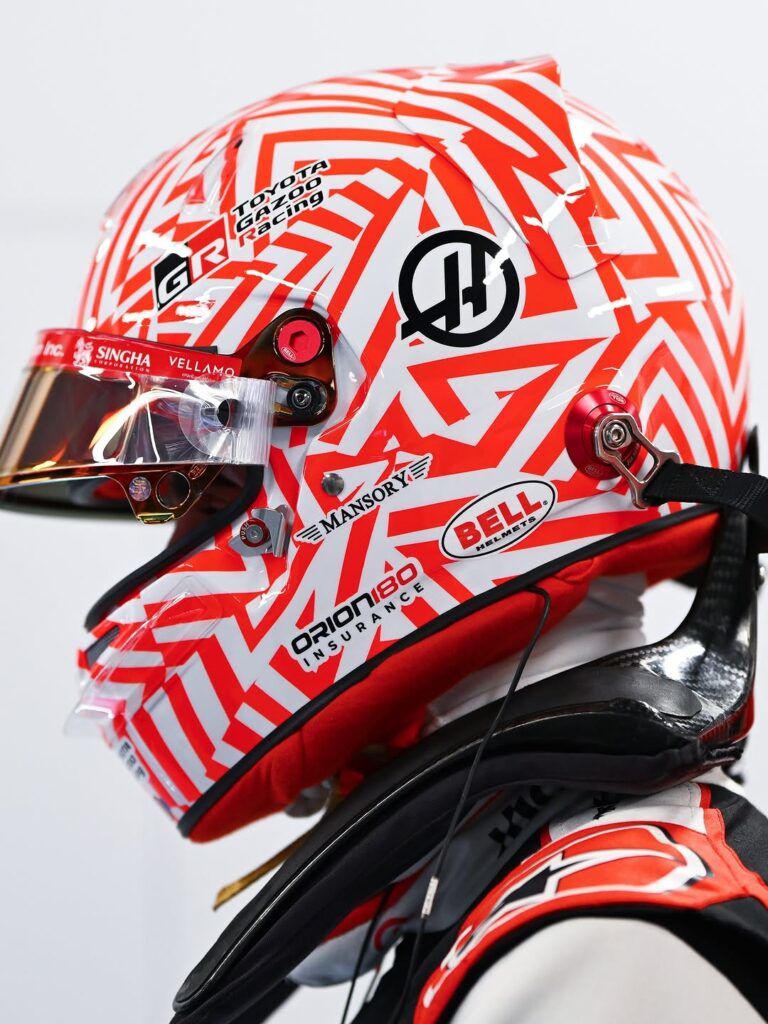
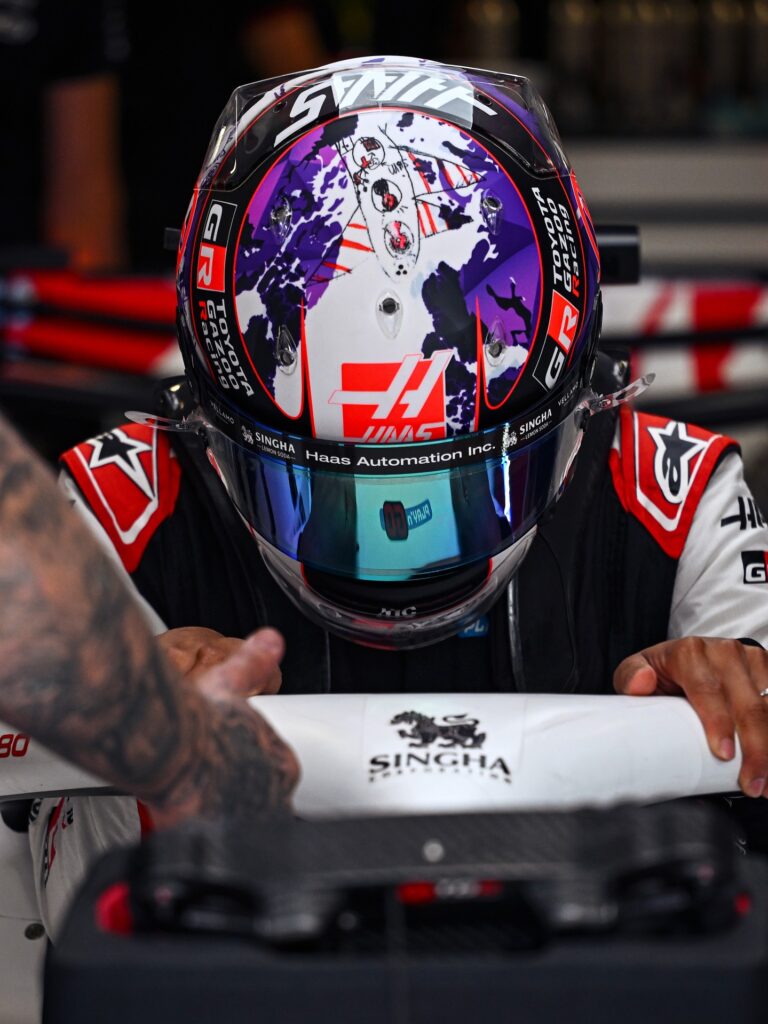
While drivers don’t always change their personal helmet design for a milestone weekend, the visual context around the helmet shifts dramatically. A driver’s standard helmet sitting against a throwback car and suit becomes its own collectable visual — a single-weekend pairing that won’t be replicated.
For full-size 1:1 replica helmets produced for display purposes, this is exactly the kind of context that informs how a piece is presented in a collection. A milestone-weekend helmet, set alongside reference imagery from that specific Grand Prix, tells a story that a standard-season piece simply cannot. These replicas are exhibition-quality display items — collector pieces meant for shelves, cabinets and display rooms, not for any form of active use.
What to look for when building a Haas display
- Date-stamped imagery: photos and broadcast captures from the actual milestone weekend.
- Crew kit references: details that match the throwback design across drivers, mechanics and engineers.
- Press materials: official team communications that document the design intent.
- Replica pairings: full-size 1:1 display helmets that contextualise the weekend within a broader Haas collection.
The Bigger Picture: Haas’s Visual Identity Trajectory
Looking at the 200th GP livery in isolation tells only part of the story. Step back across Haas’s broader visual history and a pattern emerges: the team has cycled through several distinct identity phases since 2016, each reflecting a different era of ownership priorities, partner relationships and on-track ambitions.
From launch to milestone
The original Haas livery prioritised clarity and confidence — strong colour blocks, large typography, a fresh-American-arrival posture. Subsequent seasons saw the design fragment as sponsor stacks grew and changed. The 2024 throwback effectively reached back to that earlier confidence and reapplied it through a modern lens.
What it signals going forward
Liveries are not just decorative. They are signals — about ambition, about partnership health, about how a team wants to be perceived in a paddock crowded with louder, better-funded rivals. The fact that Haas chose to mark its 200th GP with a confident, heritage-anchored design suggests a team comfortable with its own story and prepared to celebrate the parts of it worth remembering.
For fans building long-term Haas collections, that consistency matters. A team with a clear visual through-line gives collectors something coherent to track across seasons — and milestone weekends become natural anchor points in that timeline.
“Reaching 200 Grands Prix is the kind of number that reframes how a team talks about itself — and the livery is the loudest way to say it out loud.”
— 123Helmets Editorial
FAQ
Q: What was special about the Haas livery at the 2024 Canadian Grand Prix?
Haas ran a one-off throwback livery to celebrate its 200th Formula 1 Grand Prix start. The design referenced earlier Haas visual cues, paired with matching driver and crew suits, and was used exclusively for the Canadian weekend.
Q: How is a throwback livery different from a special edition livery?
A throwback livery deliberately references a team’s past visual identity, while a special edition can mark anything — a sponsor launch, a charity weekend, a regional event. Haas’s 200th GP design was a throwback tied to a milestone, combining both categories.
Q: Are full-size 1:1 replica helmets safety-rated?
No. The replicas referenced on 123Helmets.com are display and collector pieces only. They are full-size 1:1 exhibition-quality items intended for shelves, cabinets and display rooms, and are never offered for protective or active use of any kind.
Q: Why do collectors track one-off livery weekends so closely?
Because a one-off design exists for a single weekend, it has built-in scarcity. Collectors document the weekend through photography, press materials and display pieces, creating a focused reference point within a broader season-by-season collection.
Q: Will Haas use the 200th GP livery again in future seasons?
Throwback and milestone liveries are typically single-use by design. While elements of the visual language may inform future identity work, the 200th GP livery itself was tied specifically to the Canadian weekend that marked the milestone.
Explore exhibition-quality, full-size 1:1 display helmets inspired by the modern F1 grid. Browse F1 Helmet Collection at /shop/ and build a display worthy of the moments that matter.
Display and collector replicas only. Not certified for protective use. Full-size 1:1 scale.
This article was written with the help of AI tools. Editorial policy