
Blog
Hadjar Storms to P6 at 2026 Belgian GP From Last
 123Helmets Editorial Team
Isack Hadjar turned a last-place start into a sixth-place finish at the 2026 Belgian Grand Prix, with Red Bull timing three pit stops under Safety Car conditions to convert long-run pace into a genuine points haul at Spa-Francorchamps.
Key Takeaways
Isack Hadjar started at the back of the grid and finished sixth at the 2026 Belgian Grand Prix.
Red Bull built the result around long-run pace shown across practice sessions rather than one-lap speed.
All three of Hadjar’s pit stops were timed to Safety Car periods to minimise time loss.
Spa-Francorchamps, at 7.004 km, is one of the longest circuits on the calendar and rewards exactly this kind of patient strategy.
A Back-of-Grid Recovery
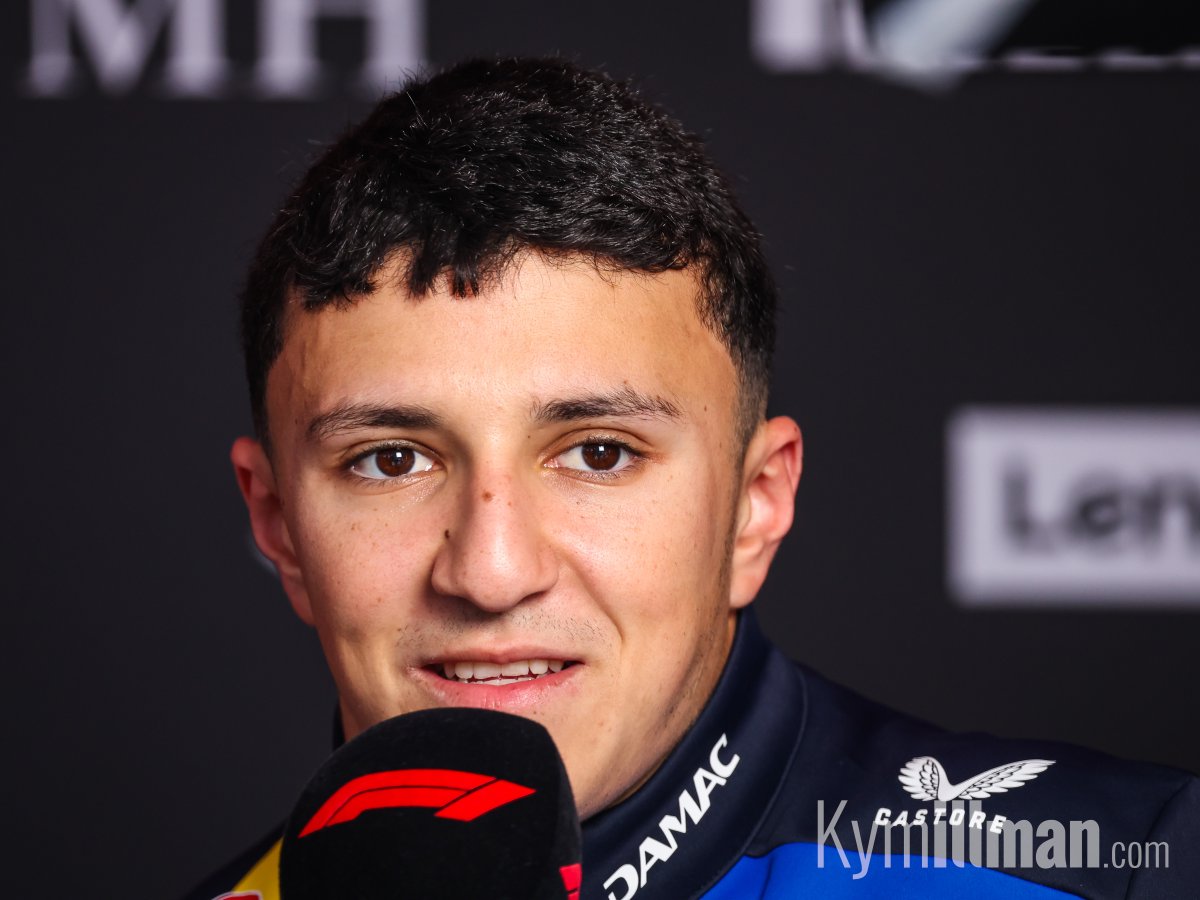
Isack Hadjar started the 2026 Belgian Grand Prix from the back end of the grid and finished sixth at the chequered flag. That gain represents one of the more striking recovery drives of the season so far, converting a compromised Saturday into a genuine points result on race day. Speaking in the media pen afterwards, Hadjar was all smiles, crediting a car that had been quietly strong across the weekend even though qualifying position did not reflect it.
Recovery drives like this tend to stick in the memory longer than routine top-six finishes achieved from the front of the grid, because they require the driver and the pit wall to get every variable right in real time. At a 7.004 km circuit like Spa-Francorchamps, where overtaking opportunities exist but track position still carries weight, climbing from last to sixth is not a passive outcome — it is the product of pace, patience and a strategy call that had to be nailed under pressure.
Red Bull’s Strategy Masterclass
Red Bull’s approach centered on long-run pace rather than headline lap times. Hadjar explained that the team had focused on long-run pace throughout practice sessions, a decision that paid off once the race settled into its rhythm and tyre degradation became the deciding factor rather than single-lap speed.
That focus meant sacrificing some visibility in the early sessions — long-run testing rarely produces eye-catching timesheet positions — in favor of data that would matter once the field spread out and strategy windows opened. It is the kind of trade-off that only shows its value late on a Sunday afternoon, and on this occasion it did exactly that. The car built by the Red Bull strategy group ended up being the fastest tool for the specific race Hadjar had in front of him, not the fastest tool for a single flying lap.
Safety Car Timing Was Key
All three of Hadjar’s pit stops were timed to Safety Car periods, a detail he pointed to directly as the difference-maker. Pitting under Safety Car conditions typically costs a fraction of the time lost during green-flag stops, because the field is bunched up and running at reduced speed rather than at full racing pace.
Executing that three times in a single race, without a driver losing track position to rivals who might have stayed out, is a logistical challenge for any pit wall. It requires reading the timing of a Safety Car intervention correctly, having the tyre choice ready, and getting the driver in and out of the pit lane cleanly under a compressed window. Red Bull got all three calls right on this occasion, and the sixth-place result is the direct consequence of that execution.
The Helmet Behind the Drive
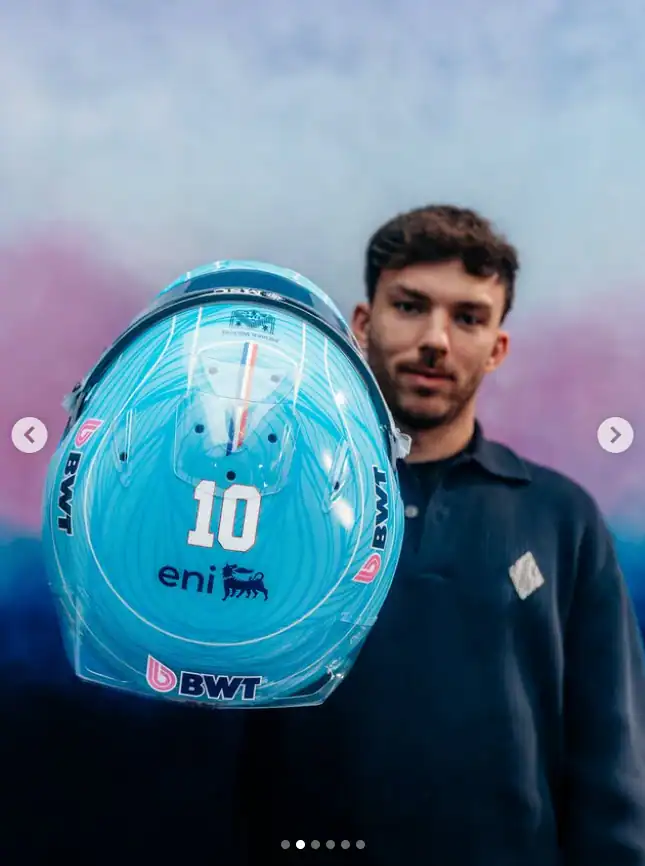
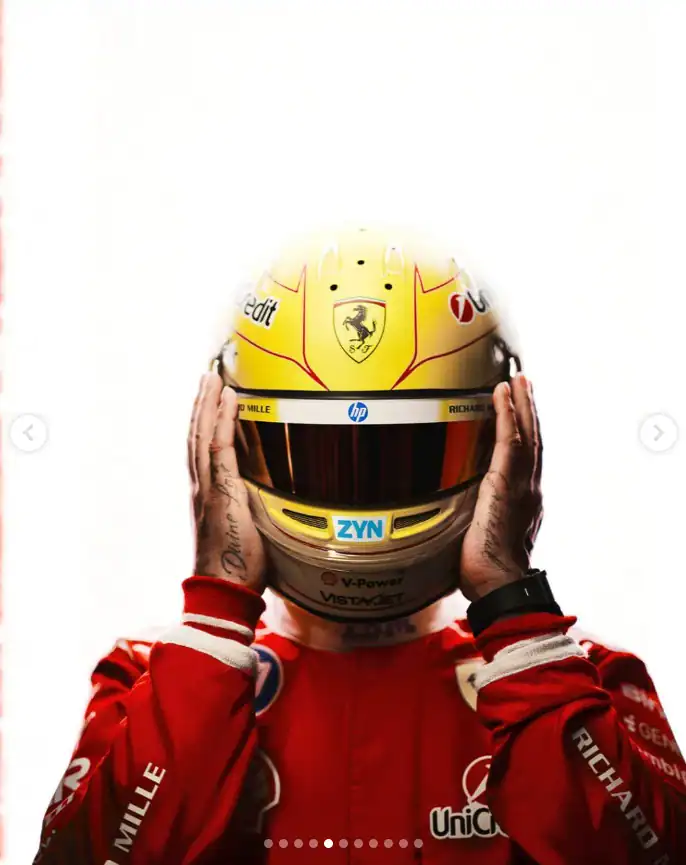
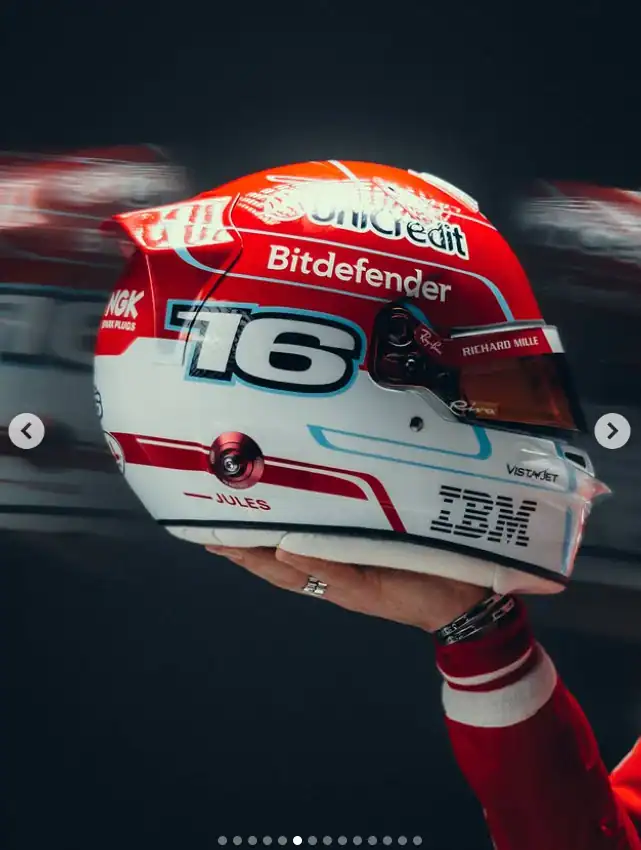
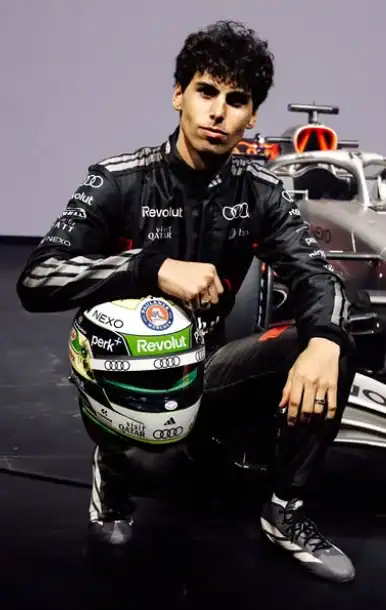
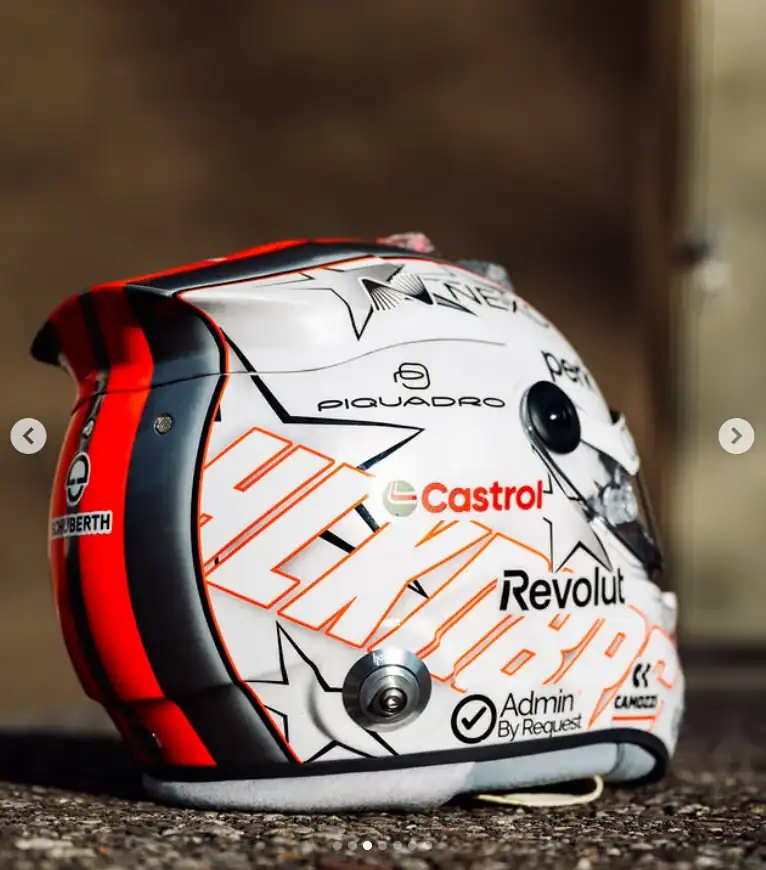
Race-day helmet designs become part of the story whenever a driver produces a result like this one, and collectors tend to seek out the exact livery worn during a standout weekend. A recovery drive from the back of the grid to sixth is precisely the type of moment that turns a helmet from a season graphic into a piece with a specific race attached to it.
Full-size 1:1 display replicas built to exhibition quality let fans mark a weekend like this on a shelf rather than only in a results sheet. These are collector items designed for display, not for wear, and the appeal is in reproducing the details of the shell, visor and paint scheme as closely as the original as possible — a way of holding onto a single afternoon at Spa-Francorchamps long after the chequered flag has fallen.
What This Means for Collectors
Strong recovery drives increase demand for the specific helmet worn on that weekend, because the story behind the design gives the piece added context beyond the graphic itself. A driver who starts last and finishes sixth gives collectors a clear, memorable narrative to attach to a display piece — the kind of detail that gets repeated whenever the helmet is shown off.
For anyone building a collection around a particular driver or team era, a weekend like this one at the Belgian Grand Prix is worth noting alongside the livery reveal itself. The three-stop strategy, the back-of-grid start, and the sixth-place finish are all facts that turn a simple helmet display into a small piece of race history.
Looking Ahead
Hadjar’s Belgian Grand Prix result adds another data point to a season where strategy execution has repeatedly separated similar-paced cars in the midfield and points-paying positions. With practice-session long-run data proving decisive once again, expect Red Bull to lean further into that approach at circuits with similarly long lap distances and variable Safety Car probability.
For fans following the championship battle, this kind of result is also a reminder that grid position on a Saturday does not fix the outcome of a Sunday. A well-timed Safety Car window and a driver willing to manage tyres over a long stint can turn a difficult qualifying session into one of the highlights of a race weekend.
“We focused on long-run pace throughout practice, and the team nailed the timing on all three stops under the Safety Car — that’s what turned the weekend around.”
— Isack Hadjar, post-race media pen
FAQ
Q: Where did Isack Hadjar start the 2026 Belgian Grand Prix?
He started from the back end of the grid. Despite the difficult grid slot, a focus on long-run pace during practice and a well-timed strategy on race day allowed him to move through the field.
Q: What position did Hadjar finish at the Belgian GP?
He finished sixth. The result came from climbing steadily through the field rather than a single dramatic overtake, built on tyre management and pit stop timing.
Q: How many pit stops did Hadjar make, and why were they important?
He made three pit stops, all timed to Safety Car periods. Pitting under Safety Car conditions minimizes the time loss compared to green-flag stops, which was central to the final result.
Q: Is the helmet Hadjar wore during this race available as a display replica?
123Helmets.com offers full-size 1:1 collector and display replica F1 helmets covering current drivers and liveries. Check the shop for the latest available designs.
Q: Are these helmets meant for wearing on track?
No, these are display and collector items only. They are full-size 1:1 exhibition-quality replicas intended for display, not for protective or on-track use.
Browse F1 Helmet Collection
Display and collector replicas only. Not certified for protective use. Full-size 1:1 scale.