
Blog
Isack Hadjar’s Montreal Mixed Emotions: P4 Through Adversity and a Display-Worthy Story
 123Helmets Editorial Team
Isack Hadjar’s Montreal Mixed Emotions: P4 Through Adversity and a Display-Worthy Story
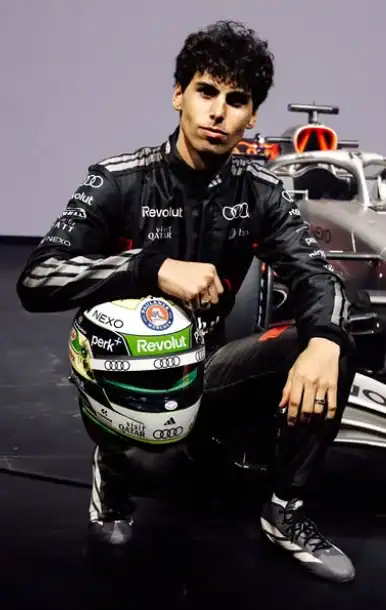
Isack Hadjar walked away from Montreal with a paradox in his hands: a magnificent fourth place earned despite two penalties, yet a deep frustration with how the car felt beneath him. For collectors who follow the human story behind every helmet on display, the Frenchman’s Canadian Grand Prix is exactly the kind of narrative that turns a 1:1 replica into a piece of living motorsport history.
Key Takeaways
Hadjar secured P4 in Montreal despite serving two separate penalties during the race
The young driver admitted he struggled with car balance compared to his strong Saturday pace
His honest, mature reaction to adversity is exactly the narrative collectors value in display pieces
Breakthrough rookie performances like this elevate the long-term collectibility of 1:1 replica helmets
A Result That Defies the Stopwatch
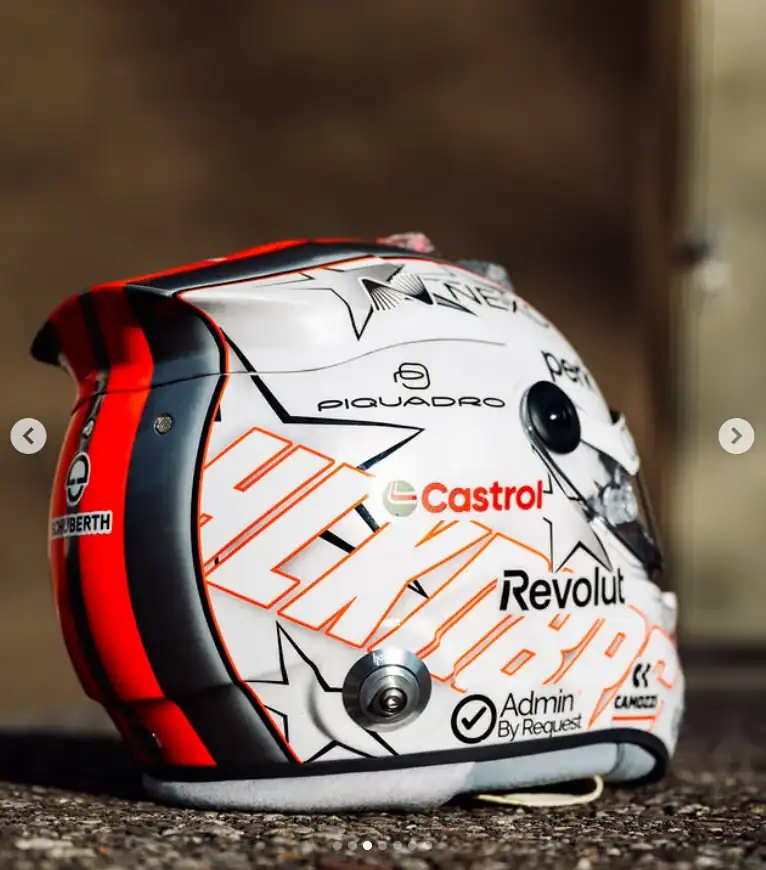
Fourth place in Formula 1 is never a small achievement, and when it arrives after two in-race penalties, it becomes something close to a small miracle. That is precisely what Isack Hadjar delivered in Montreal, converting a difficult Sunday into a result that will look spectacular in the season’s record books — and one that, for collectors, instantly elevates the storytelling power of any full-size 1:1 replica helmet associated with his rookie campaign.
What made the performance remarkable was not raw speed alone, but the way Hadjar navigated a race where everything seemed to push back against him. Two penalties would derail many drivers entirely. For Hadjar, they became obstacles to overcome, and the recovery itself became the headline.
Why This Kind of Drive Resonates with Collectors
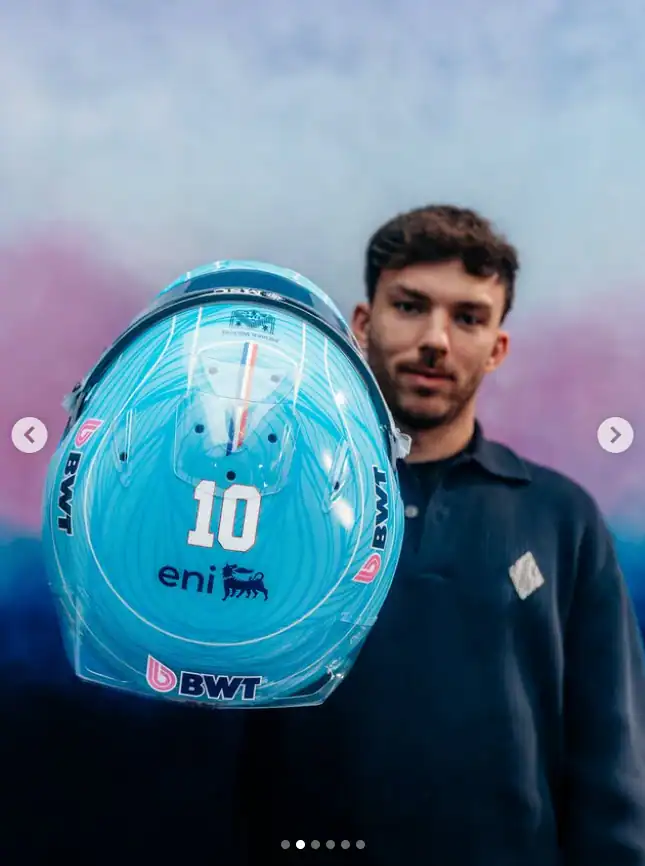
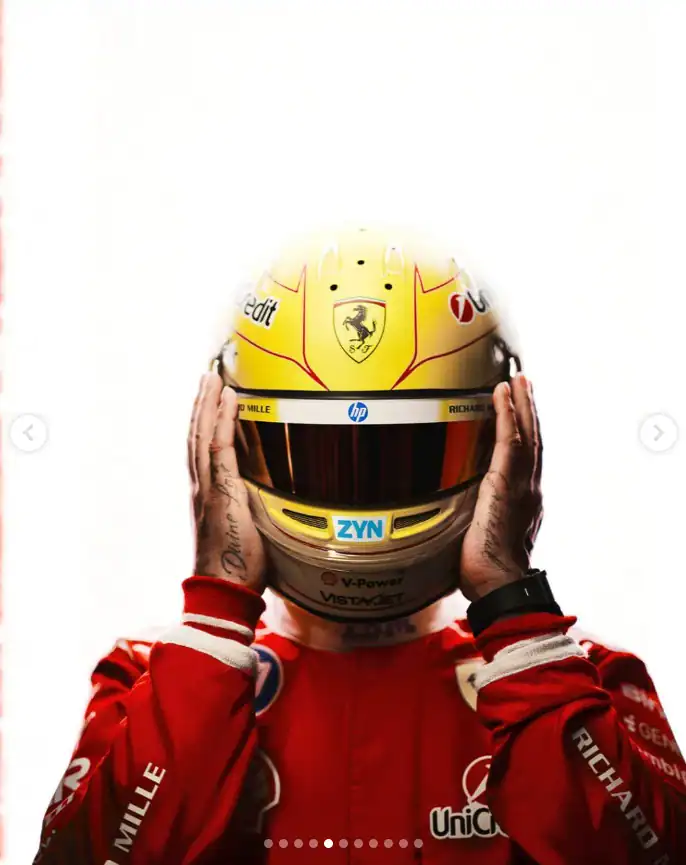
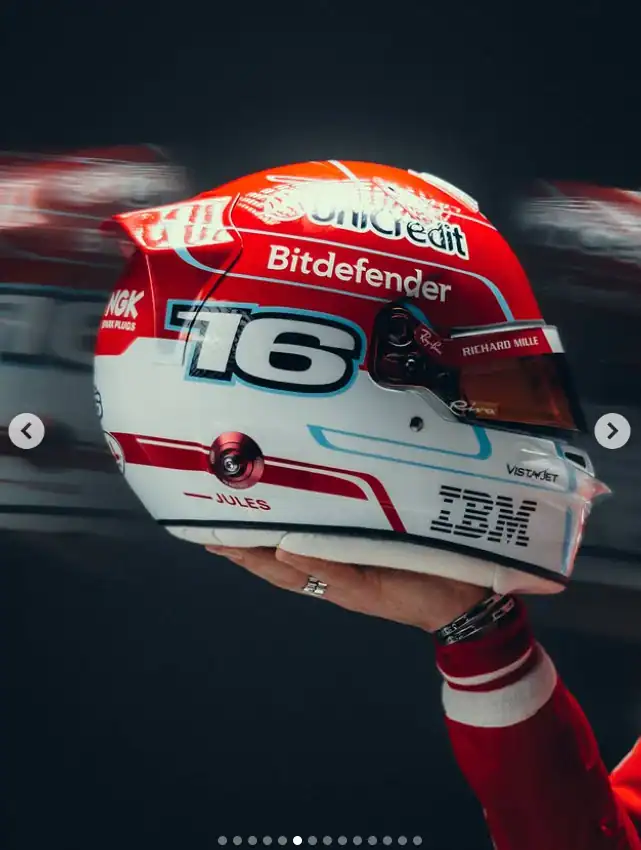
The most coveted display helmets in any private collection are rarely the ones associated with easy, dominant victories. They are the ones tied to defining moments — drives where character is revealed. Montreal 2025 is shaping up to be one of those defining moments for Hadjar, and that significance flows directly into the cultural value of the exhibition-quality replicas inspired by his season.
“I Don’t Mind the Penalties” — A Mature Voice in a Young Driver
Speaking after the race, Hadjar’s tone was striking. There was no blame-shifting, no excuses. “I don’t mind the penalties. I think they’re fair,” he said, immediately accepting the stewards’ decisions and moving the conversation toward what he could control: his own performance in the car.
That kind of self-awareness is rare in any sport, let alone in a high-pressure rookie season. It is also exactly the quality that turns a driver into a long-term collector favorite. When a young talent demonstrates emotional maturity alongside competitive results, the helmets, liveries, and memorabilia tied to that era acquire a depth that purely performance-driven careers often lack.
The Honest Confusion
What Hadjar could not explain was the disappearance of his pace. “I don’t really understand where the pace went, because I really felt like I was struggling a lot out there,” he admitted. “Yesterday I felt great in the car, and now it’s very hard to drive.”
This is the voice of a driver searching, learning, and refusing to settle for surface answers. It is also the kind of quote that, decades from now, will appear in retrospectives and books — and that will sit on a card beside a 1:1 helmet replica in a serious collector’s display room.
From Saturday Confidence to Sunday Struggle
One of the most fascinating aspects of Hadjar’s Montreal weekend was the dramatic shift in feel between Saturday and Sunday. On Saturday, he felt at home in the car, confident, in rhythm. By Sunday, that connection had evaporated.
“In a way I felt like I was back in FP1, to be honest. So not pleasant to drive,” he explained. The reference to FP1 — the very first practice session of a race weekend, when drivers are still learning the track surface, tire behavior, and balance — speaks volumes. Going from race-ready confidence on Saturday to FP1-level discomfort on Sunday is a brutal psychological journey to manage mid-race.
The Discipline Behind Adaptation
And yet, despite that discomfort, he extracted P4. That gap — between how the car felt and what the result said — is one of the defining markers of an elite driver in the making. Senna, Schumacher, Hamilton, Verstappen: every era has its drivers who could deliver results even when the car was fighting them. Hadjar’s Montreal performance places him, at least for one Sunday, in that conversation.
For those building a curated F1 helmet collection, moments like these are the connective tissue that gives a display its narrative arc. A 1:1 replica is not just an object — it is a marker of a story, and stories like Hadjar’s Montreal recovery are the ones that make a collection feel alive.
The Helmet as a Witness to the Story
There is a reason serious enthusiasts gravitate toward full-size 1:1 collector helmets rather than scaled-down miniatures or generic merchandise. The 1:1 replica carries the visual weight, the proportions, the surface detail, and the presence of the real article. When it sits in a lit display cabinet, it does not merely represent the driver — it stands in for the helmet that was inside the cockpit during exactly the kind of moment Hadjar lived through in Montreal.
Display Considerations for the Modern Collector
For collectors thinking about how to showcase rookie-era pieces tied to drivers like Hadjar, a few principles consistently emerge:
- Eye-level placement. A 1:1 replica deserves to be viewed at the height it would sit on a driver’s shoulders, not tucked away on a low shelf.
- Controlled lighting. Warm, directional LED lighting brings out the metallic flakes, candy coats, and matte contrasts that define modern F1 livery design — without exposing the piece to UV damage over time.
- Context cards. A small printed card noting the race, the result, and a defining quote — like Hadjar’s “I don’t mind the penalties” — transforms a beautiful object into a documented historical reference.
- Dust protection. Acrylic cases preserve the visual integrity of the paintwork and keep the piece exhibition-ready for decades.
These display pieces are intended strictly as collector items and exhibition replicas. They are not protective equipment and are not designed for any use beyond static display.
Why Rookie-Season Narratives Drive Long-Term Collector Value
Across the history of Formula 1 memorabilia, the items that appreciate most meaningfully over time tend to be those tied to a driver’s earliest defining moments. The helmet from a first podium. The livery from a breakthrough qualifying lap. The visual identity of a rookie season that later became the launching pad for a championship career.
Hadjar’s Canadian Grand Prix sits squarely in that category of potentially defining rookie moments. Whether or not it becomes a footnote or a chapter in a future championship story, it is exactly the kind of race that collectors will look back on and say: that was the day we saw what he could be.
The Long View
A full-size 1:1 replica helmet acquired during a driver’s rookie season carries something that later-career pieces cannot replicate — the sense of having been there at the beginning. For exhibition-quality collectors, that emotional and narrative weight is often the difference between a display that is impressive and a display that is unforgettable.
What Comes Next for Hadjar
Hadjar’s closing words in Montreal pointed forward, not backward: “I need to really dig deep.” That is the language of a competitor who already knows that one strong Sunday is not enough. For the rest of the season, every race becomes a chance to refine, to recover the feel he had on Saturday, to translate Montreal’s recovery into Montreal’s full potential.
For collectors and fans, the trajectory is the story. Whether Hadjar climbs steadily toward the front, plateaus, or breaks through into regular podium contention, each chapter adds another layer to the narrative behind the helmets and display pieces inspired by his career.
And that is the deeper appeal of a thoughtfully curated F1 helmet collection: it is never static. Every race, every quote, every honest moment of struggle and recovery, adds another layer of meaning to the objects on the shelf.
“I don’t mind the penalties. I think they’re fair. I don’t really understand where the pace went, because I really felt like I was struggling a lot out there.”
— Isack Hadjar, after the Canadian Grand Prix
“In a way I felt like I was back in FP1, to be honest. So not pleasant to drive. I need to really dig deep.”
— Isack Hadjar, post-race interview
FAQ
Q: What did Isack Hadjar achieve at the Canadian Grand Prix?
Hadjar finished P4 in Montreal despite serving two separate penalties during the race, making the result a particularly impressive recovery drive in his rookie season.
Q: Why did Hadjar struggle in the race despite a strong Saturday?
Hadjar himself said he could not explain the lost pace, describing the car’s feel on Sunday as similar to FP1 — uncomfortable and difficult to drive — even though he had felt great in it the day before.
Q: Why are rookie-season moments important for F1 helmet collectors?
Rookie-season narratives often define a driver’s long-term legacy. Helmets and display pieces tied to breakthrough drives carry deeper storytelling value and tend to remain among the most prized items in serious collections over time.
Q: Are 1:1 F1 replica helmets suitable for any kind of use beyond display?
No. Full-size 1:1 replica helmets are exclusively collector items and exhibition pieces. They are designed for static display only and are not intended for any other purpose.
Q: How should a collector best display a 1:1 F1 helmet replica?
Eye-level placement, controlled warm LED lighting, a small context card with race details and a defining quote, and an acrylic protective case are the four pillars of a serious exhibition-quality display setup.
Browse F1 Helmet Collection
Display and collector replicas only. Not certified for protective use. Full-size 1:1 scale.