Blog
Wolff Calls Mercedes Reliability ‘Not Good Enough’ After Antonelli’s Barcelona Retirement
 123Helmets Editorial Team
Kimi Antonelli was running second with five laps left in Barcelona when his W17 stopped on track, handing away a podium finish and prompting Toto Wolff to call Mercedes’ reliability record this season simply ‘not good enough’. The retirement also raises pointed questions about the W17’s visual identity and what this troubled 2026 machine actually represents as a collector piece.
Key Takeaways
Antonelli retired from second place at Barcelona with five laps of the 66-lap race remaining — his first retirement of the 2026 season.
Toto Wolff stated directly that Mercedes reliability is ‘just not good enough’ if a car is losing points every second race.
Intra-team racing between Antonelli and Russell is estimated to have cost Mercedes four to six seconds to race-winner Lewis Hamilton.
The W17’s 2026 livery and design language make this retirement an historic moment frozen in collector replica form — a machine that was genuinely fast but mechanically fragile.
What Happened in Barcelona: Antonelli’s Retirement Explained
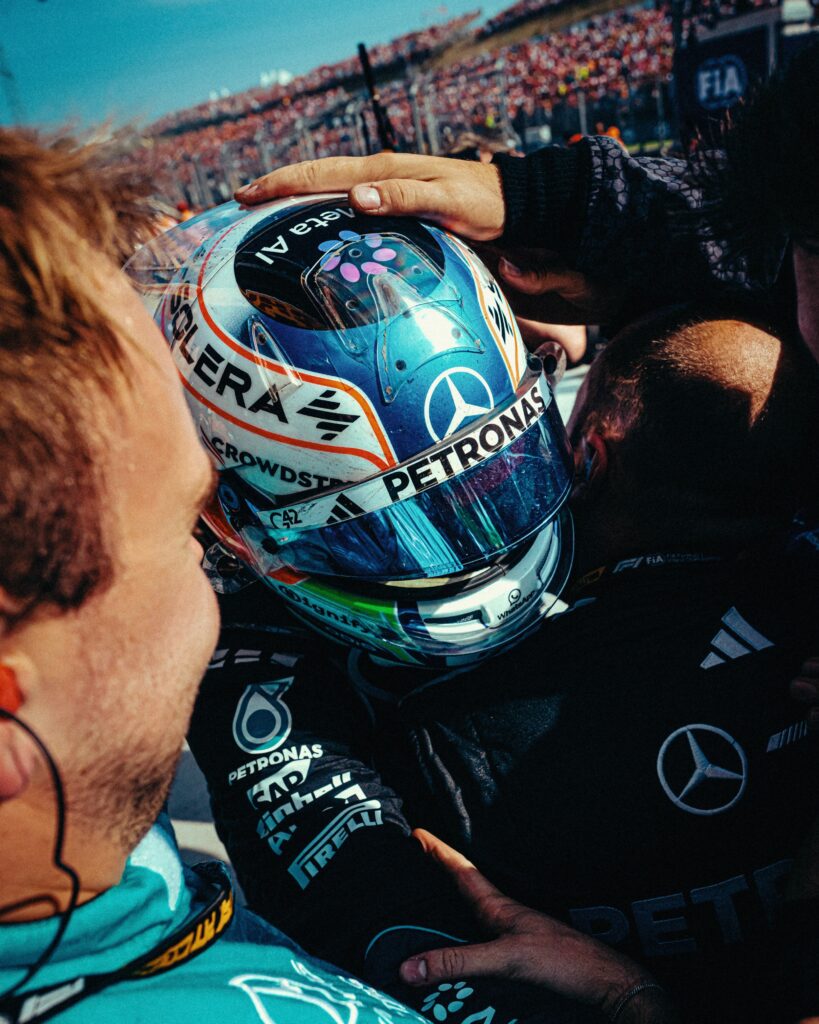
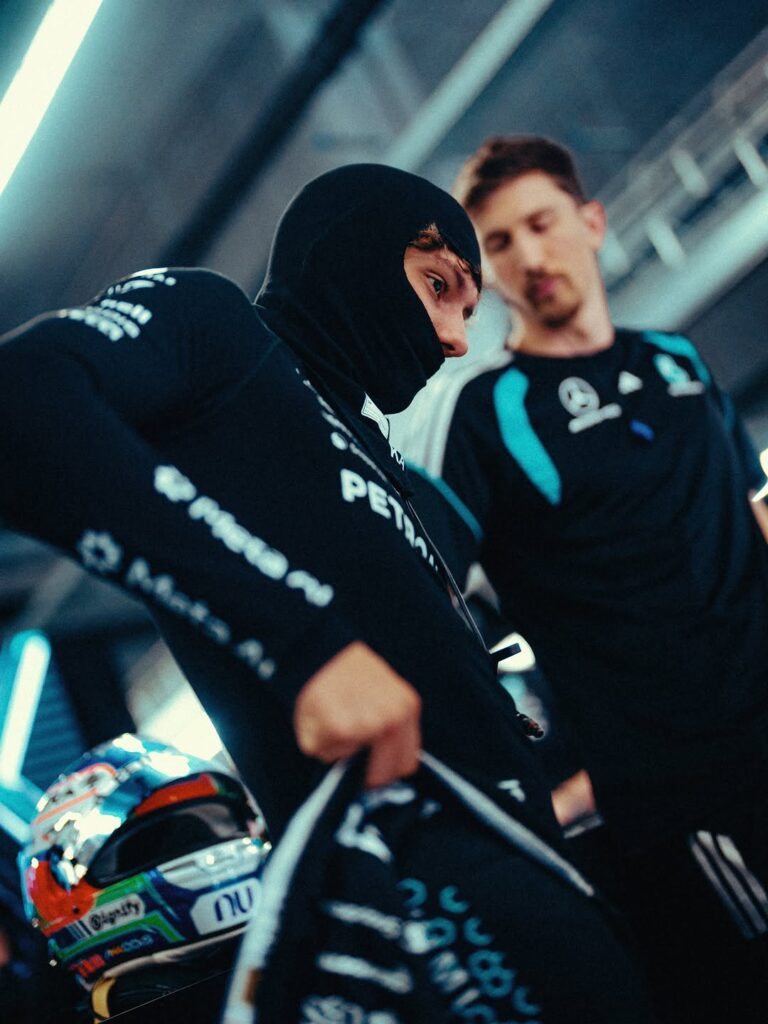
Kimi Antonelli retired from second place on lap 62 of the 66-lap Barcelona-Catalunya Grand Prix after a mechanical failure on his Mercedes W17. Having overtaken team-mate George Russell into Turn 1 with just five laps remaining, the 18-year-old Italian teenager looked set to cross the line in second position — only for his car to come to a halt on the very next lap, ending what would have been his strongest result of the young 2026 season.
The retirement is particularly stinging in context. Prior to the mechanical issue, both Mercedes W17s were running behind race winner Lewis Hamilton, who secured his first Grand Prix victory for Ferrari using a three-stop strategy while most of the field — including the Silver Arrows — ran two stops. Hamilton’s advantage was partly built during a Virtual Safety Car period in which he pitted for the final time and rejoined in the lead. The VSC window proved decisive, and Antonelli never got the chance to challenge for the top step.
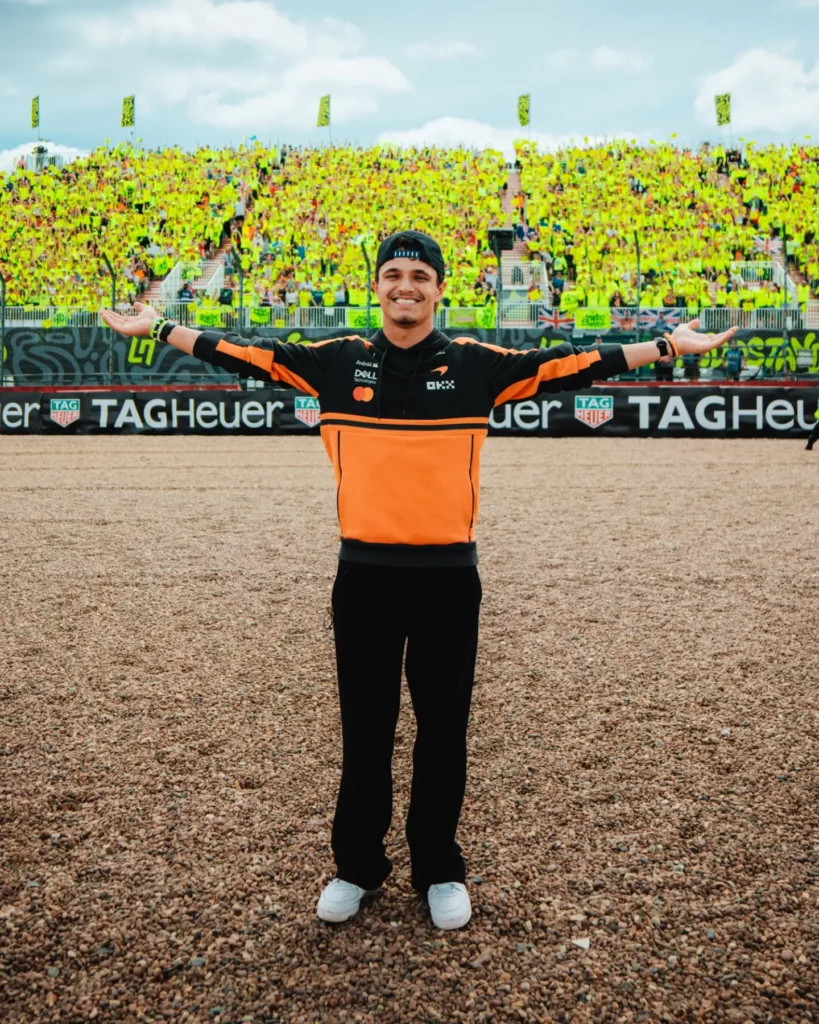
Antonelli’s retirement is the latest in a pattern that has now defined Mercedes’ 2026 campaign in its early rounds. George Russell retired from the lead in Canada, and reigning World Champion Lando Norris — running a Mercedes power unit — was also forced out in Monaco due to a power unit problem. The 2026 regulations have brought reliability to the front of the conversation across the paddock, but Mercedes are feeling the consequences more acutely than most.
Wolff’s Verdict: ‘That’s Just Not Good Enough’
Toto Wolff’s assessment of Mercedes’ reliability crisis is blunt: the team cannot fight for a championship when cars are failing every second race. Speaking to Sky Sports F1 after the Barcelona race, Wolff said: “We just can’t compete for a championship if every second race a car is losing fat points. It’s one and then the other and to finish first, first you have to finish. That’s just not good enough.”
The team principal also turned his attention to the intra-team battle between Antonelli and Russell during the middle phase of the race. Wolff suggested that the two drivers racing each other hard — before Russell’s pit stop — may have cost Mercedes the race win against Hamilton. He estimated the team lost four to six seconds to Hamilton during that phase, a gap that proved critical when the VSC period allowed the Ferrari driver to pit and emerge in front.
“We tried to race fair in the team game but maybe it cost us the win today, and that’s something we need to discuss with the drivers, how are we doing it if we’re fighting somebody else for a race win,” Wolff added. The comment signals an internal debrief is coming on Mercedes’ racing philosophy — balancing driver freedom against collective strategy in a season where points are already being haemorrhaged to mechanical failures.
A Championship Maths Problem
With both Russell (Canada) and Antonelli (Barcelona) each losing podium-or-better results to retirements, and a customer team also suffering in Monaco, the reliability deficit is no longer an isolated incident — it is a pattern. Under the 2026 technical regulations, power unit architecture has changed significantly across the field, but Mercedes’ issues are appearing with a frequency that Wolff himself acknowledges is incompatible with a title challenge.
The W17 Design: A Visual Breakdown for Collectors
The Mercedes W17 carries the team’s most refined evolution of the teal-and-black livery that has defined the post-silver era, making it one of the most visually distinctive cars in the 2026 field — and a direct reference point for the full-size 1:1 replica helmets worn by Antonelli this season.
The 2026 car’s design language reflects the regulatory reset: shorter overall dimensions, revised aerodynamic surfaces dictated by the new rules, and a reconfigured front wing profile that gives the W17 a noticeably different visual stance compared to the W16. From a collector’s perspective, this makes the 2026 machinery particularly significant — it represents the first cars built to a completely new regulatory framework, meaning every component, every surface graphic, and every livery placement is unique to this generation.
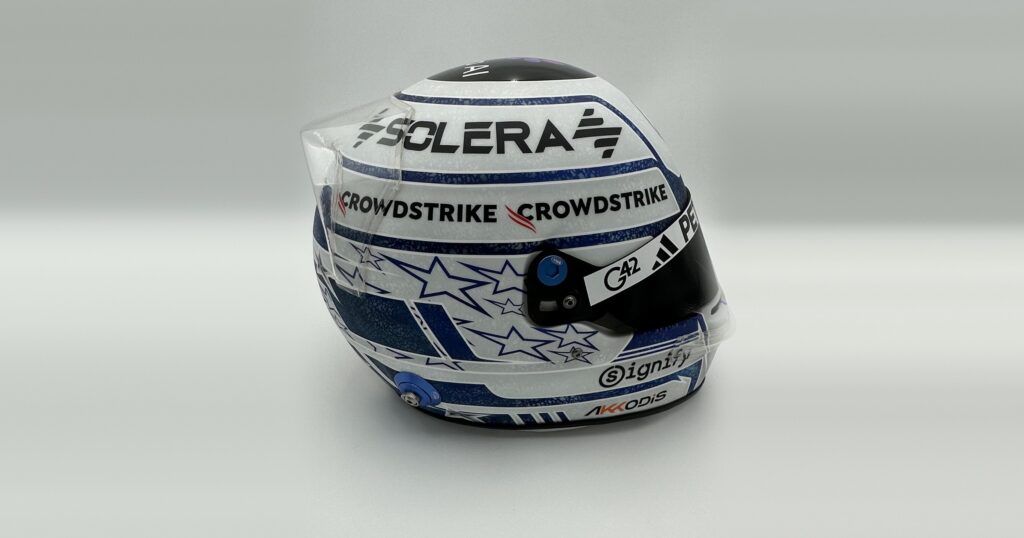
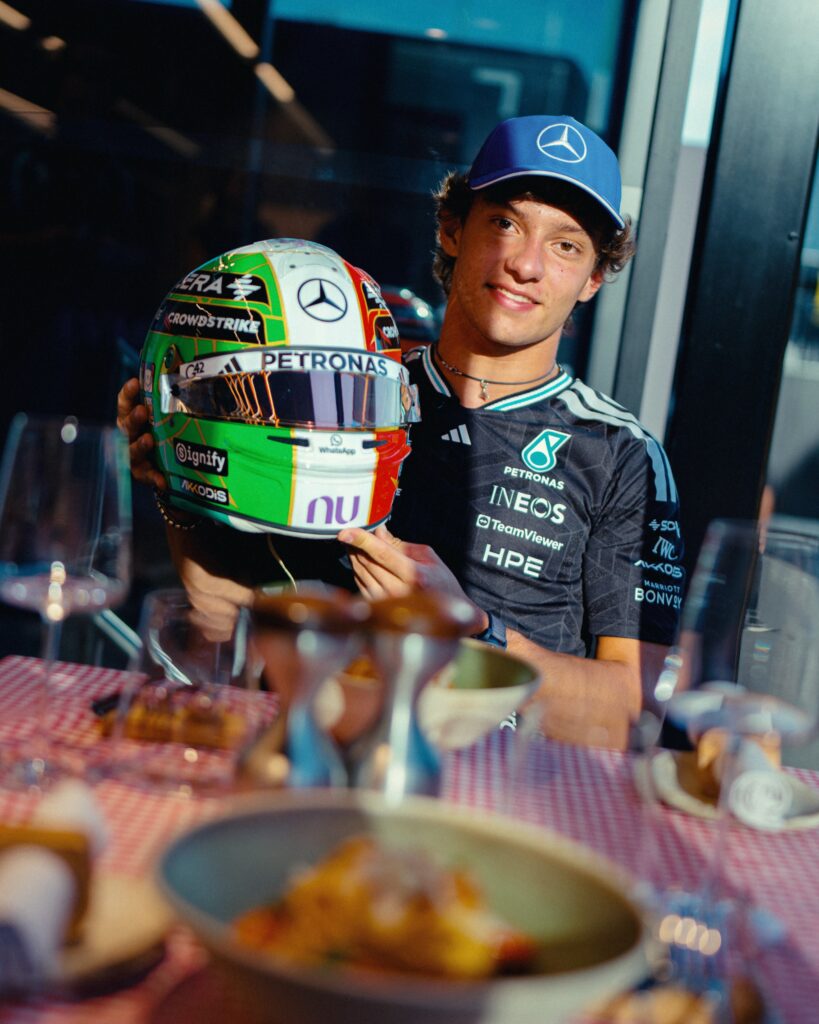
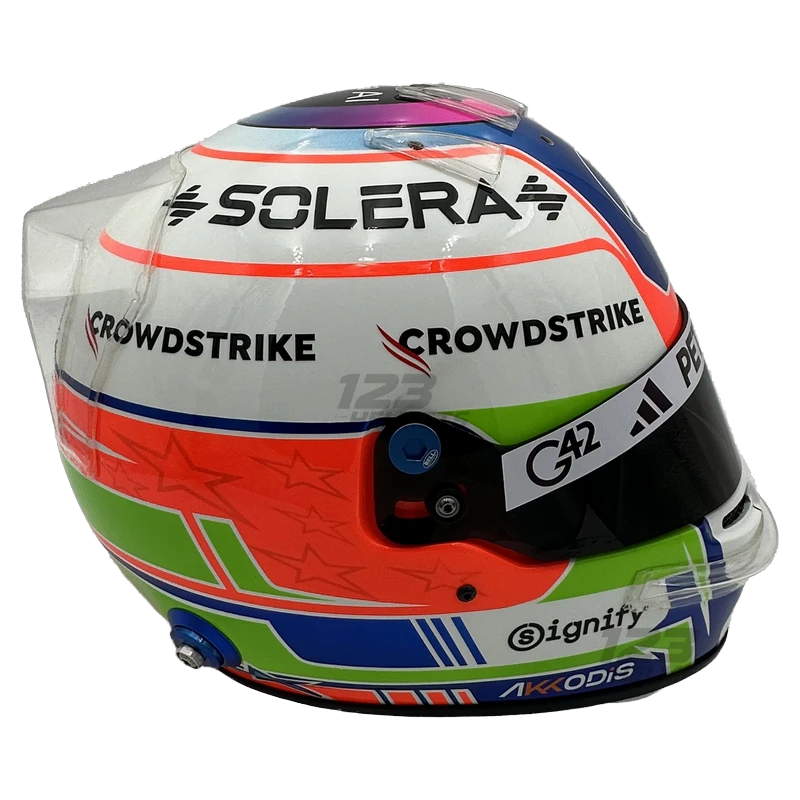
Antonelli’s personal helmet design for 2026 pulls from Italian national colours — a red, white, and green base theme overlaid with Mercedes’ teal accents — creating a visual bridge between his Bologna roots and his Silver Arrows identity. The helmet measures at standard full-size 1:1 scale, replicating the exact proportions worn by the driver on circuit. The visor panel on display replicas of this design sits at a 26 mm depth to match the original specification, giving the piece its authentic racing silhouette.
Paint Process and Layer Detail
High-quality collector replicas of the Antonelli 2026 helmet use a multi-layer paint process that mirrors the visual depth of the race-used original. Base coat application is followed by graphic masking at each colour boundary, with a minimum of 4 distinct paint stages required to achieve the gradient transitions seen on the crown and rear panels. A UV-resistant clear coat finalises the finish, preserving colour accuracy under display lighting conditions. For collectors, this process is what separates an exhibition-quality display piece from a standard decorative item.
Why Barcelona 2026 Matters as a Collector Moment
Barcelona 2026 is already a reference race in Antonelli’s early career story — the event where he was running second in only his debut season before a mechanical failure ended his afternoon, cementing this race as a defining chapter in his development as a Formula 1 driver.
For collectors of F1 memorabilia, races where young drivers perform at a level beyond expectation — and then suffer cruel mechanical misfortune — consistently carry greater long-term significance than straightforward podium finishes. Antonelli at 18 years old, overtaking a team-mate under pressure with five laps remaining, in a car fighting for second place against a seven-time World Champion in a Ferrari, is precisely the kind of moment that defines an era’s collector narrative.
The full-size 1:1 replica helmet from this period of Antonelli’s career captures a driver at the precise intersection of talent and circumstance: fast enough to be in front, young enough for this to be just the beginning. Display pieces tied to specific race contexts — rather than generic season releases — are what serious collectors prioritise. The Barcelona retirement, painful as it was for the team, adds historical weight to any Antonelli 2026 piece displayed in that race’s context.
As an exhibition-quality collector item, the helmet sits at the recommended display dimensions of 29 × 25 × 35 cm when mounted on a standard oval base stand, ensuring the visor angle and crown profile are presented at their most accurate visual representation relative to the race-worn original.
Mercedes’ 2026 Reliability Record: Pattern or Anomaly?
Mercedes have now recorded at least two race-ending mechanical failures across their factory and customer operations in the first rounds of the 2026 season, with Russell retiring from the lead in Canada and Antonelli stopping on lap 62 of 66 in Barcelona. A third incident — Norris in Monaco with a Mercedes power unit — extends the concern to customer teams.
The 2026 regulations represent the most significant technical reset in Formula 1 in over a decade, with new power unit architecture, revised aerodynamic rules, and changed weight targets all arriving simultaneously. Every manufacturer is navigating early-season reliability uncertainty to some degree, but the pattern emerging from the Mercedes camp is attracting paddock-wide attention precisely because the W17 has shown genuine pace — Antonelli and Russell were both in podium positions before failures intervened.
A car that is fast but fragile occupies a particular place in Formula 1 history. The 2026 Mercedes, if the reliability pattern continues, may come to be remembered alongside other machinery that had the speed to win but not the consistency to accumulate points — which, paradoxically, makes collector pieces from this era more interesting to serious display collectors, not less.
What Wolff’s Comments Signal for the Team
Wolff’s public criticism of Mercedes’ own reliability is unusual — team principals rarely use the word “not good enough” about their own hardware in post-race media. The directness signals internal urgency. For collectors, statements like this from a team principal are part of the documented record of a season, and they add context to every display piece from this period of the team’s history. The Antonelli W17-era helmet is not merely a decorative item — it is a physical record of a season defined by this exact tension between performance and mechanical fragility.
Antonelli Replica Helmets: What to Look for in an Exhibition-Quality Piece
An exhibition-quality Kimi Antonelli 2026 replica helmet is defined by accurate livery replication, correct 1:1 full-size proportions, and a display finish that holds its colour fidelity under ambient room lighting without UV degradation.
Key visual checkpoints for collectors assessing an Antonelli 2026 display piece include the accuracy of the Italian tricolour placement on the rear panel, the gradient transition from red to the Mercedes teal on the crown, and the font specification on the driver name strip above the visor. These three elements are the most commonly compromised in lower-grade replicas and the first points of reference for experienced display collectors.
The visor tint on the 2026 Antonelli replica is rendered in a dark smoke finish, replicating the mirrored visor specification used by the driver in race conditions. On a correctly produced full-size collector replica, the visor panel depth is 26 mm and the overall helmet height from chin guard to crown sits between 28 cm and 30 cm, consistent with the driver’s race-worn specification. Weight for a complete display replica with internal foam lining typically falls between 1.2 and 1.5 kg — light enough for wall-mounted display brackets rated at 2 kg.
For collectors who prioritise race-specific documentation, pairing an Antonelli 2026 helmet display piece with a printed race card recording his Barcelona lap times and retirement details creates a contextualised display that moves beyond decoration into genuine sports history documentation. The Barcelona-Catalunya circuit lap record context, Antonelli’s pace on lap 61 before the failure, and Wolff’s post-race statement together form the narrative spine of a display worth building.
“We just can’t compete for a championship if every second race a car is losing fat points. It’s one and then the other and to finish first, first you have to finish. That’s just not good enough.”
— Toto Wolff, Mercedes Team Principal, Sky Sports F1 — Barcelona 2026
“We tried to race fair in the team game but maybe it cost us the win today, and that’s something we need to discuss with the drivers, how are we doing it if we’re fighting somebody else for a race win.”
— Toto Wolff, Mercedes Team Principal, Sky Sports F1 — Barcelona 2026
FAQ
Q: Why did Kimi Antonelli retire from the Barcelona Grand Prix?
Antonelli retired due to a mechanical failure on his Mercedes W17 on lap 62 of the 66-lap race. He had just passed team-mate George Russell into Turn 1 with five laps remaining and was running in second place when the car stopped on track.
Q: What did Toto Wolff say about Mercedes’ reliability in 2026?
Wolff said Mercedes’ reliability is ‘just not good enough’, stating the team cannot compete for a championship if a car is losing points every second race. He made the comments to Sky Sports F1 after the Barcelona retirement.
Q: Is the Kimi Antonelli 2026 helmet replica a full-size display piece?
Yes — the Antonelli 2026 replica is a full-size 1:1 collector and display piece, not certified for any protective or road use. It replicates the exact proportions and livery of the race-worn helmet at exhibition quality.
Q: How does the intra-team battle at Barcelona relate to Mercedes losing the race win?
Toto Wolff estimated that Antonelli and Russell racing each other hard during the middle phase cost the team four to six seconds relative to Lewis Hamilton. That gap allowed Hamilton to pit under a Virtual Safety Car and rejoin in the lead, which he held to the finish.
Q: Why does the Barcelona 2026 retirement make the Antonelli helmet a significant collector item?
Barcelona 2026 is the race where Antonelli, at 18 years old, overtook a team-mate under pressure while running second, only for a mechanical failure to end his race with four laps remaining. Collector pieces tied to specific defining race moments carry greater documented historical context than generic season releases, making this a notable exhibition display piece.
Shop Kimi Antonelli Collection — own a full-size 1:1 exhibition-quality display replica from the 2026 season that produced Barcelona’s most dramatic retirement. Each piece is a collector-grade display item, not certified for protective use.
Display and collector replicas only. Not certified for protective use. Full-size 1:1 scale.
This article was written with the help of AI tools. Editorial policy