
Blog
Monaco GP Concept: F1 Teams Reimagined as Yacht Liveries for Harbour Display
 123Helmets Editorial Team
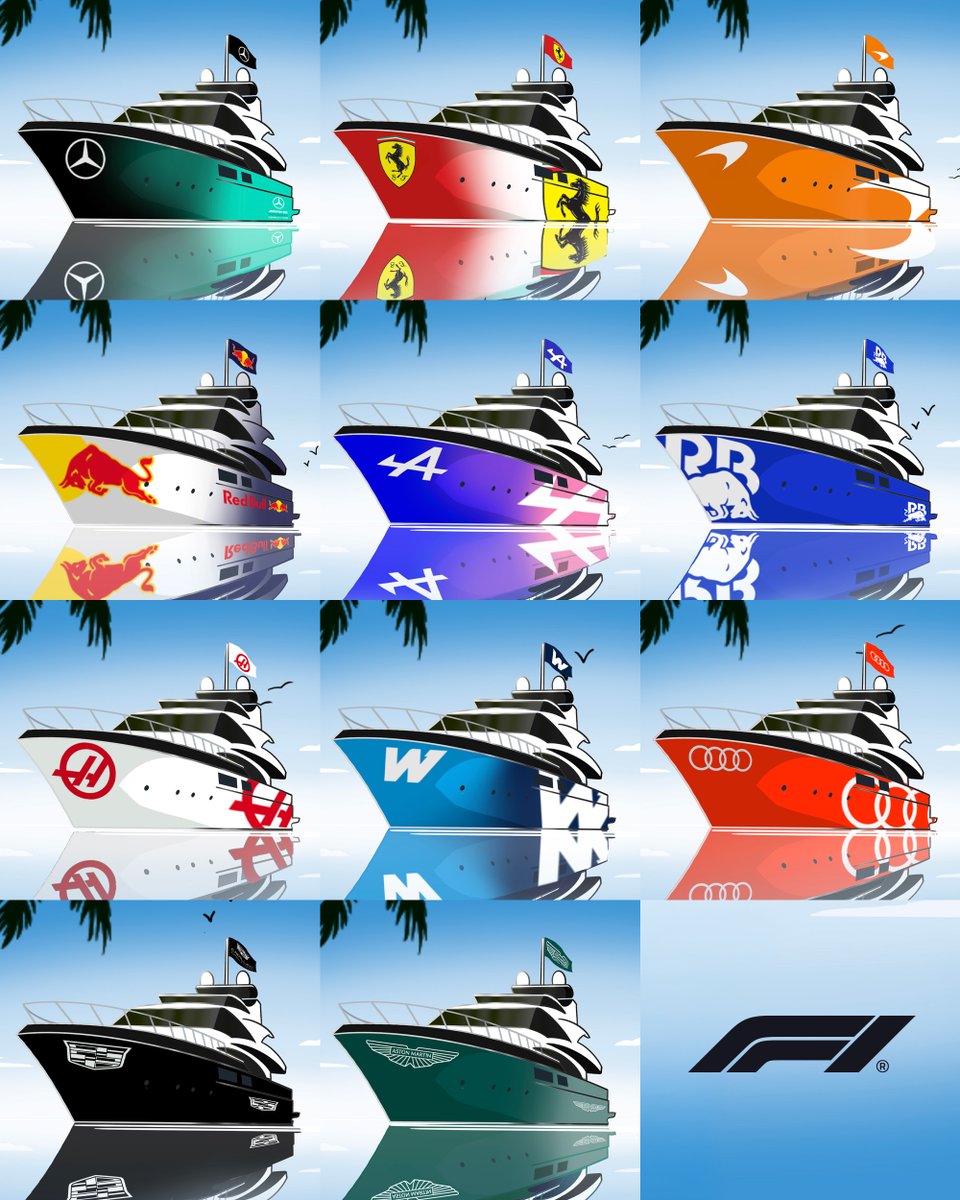
The Monaco Grand Prix harbour is the only stop on the calendar where the paddock spills onto the water. A viral concept doing the rounds on F1 social channels asks a simple question: what if the 10 constructor liveries from the 2025 grid were applied to the superyachts moored in Port Hercule? For collectors who track every paint code and sponsor decal across a season, the idea opens a fresh angle on team branding, scale, and how a livery reads when stretched across a 60-metre hull instead of a 5.63-metre chassis.
Key Takeaways
The 2025 Monaco GP is the 82nd running of the event, held on the 3.337 km Circuit de Monaco with 78 laps
A yacht livery concept stretches team colour codes across hulls up to 60 m long — roughly 10× the length of an F1 car
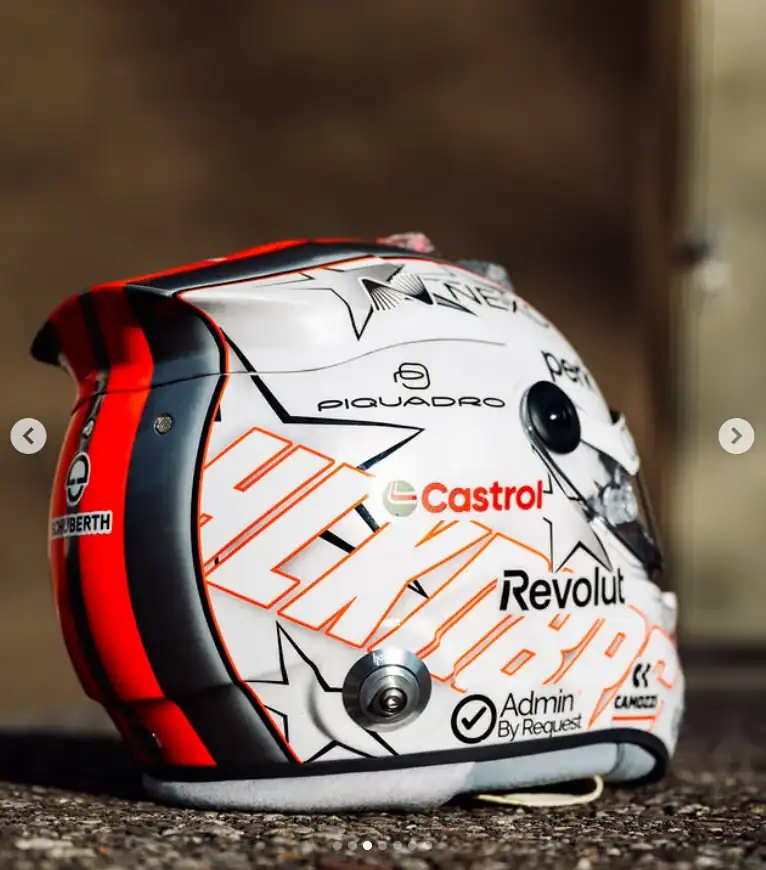
Display replica helmets at 1:1 scale (around 27 cm long, 1.45 kg) remain the most accurate way to study livery detail at home
Harbour-side branding at Monaco is a tradition dating back to the first championship-era race in 1950
Why Monaco is the only circuit where this concept makes sense
No other round on the 24-race 2025 calendar puts the constructors this close to the water. The Circuit de Monaco runs 3.337 km around Port Hercule, with the swimming pool section and the tunnel exit both sitting metres from moored superyachts. The harbour holds roughly 700 berths during grand prix week, with the largest hospitality yachts reaching 80 m or more along the Quai Antoine 1er.
That proximity is why the yacht livery concept caught fire on F1 social channels. A team paint scheme designed for a car with a 3.6 m wheelbase reads very differently when applied to a hull ten or twenty times longer. Sponsor logos that sit neatly on a sidepod become billboards. Accent stripes that flow over an airbox have to negotiate portholes, tenders, and helipads.
For livery collectors, the appeal is the thought experiment itself: how does a team identity scale up, and which 2025 designs would survive the translation?
How the 2025 grid would translate to the harbour
The liveries that scale up cleanly
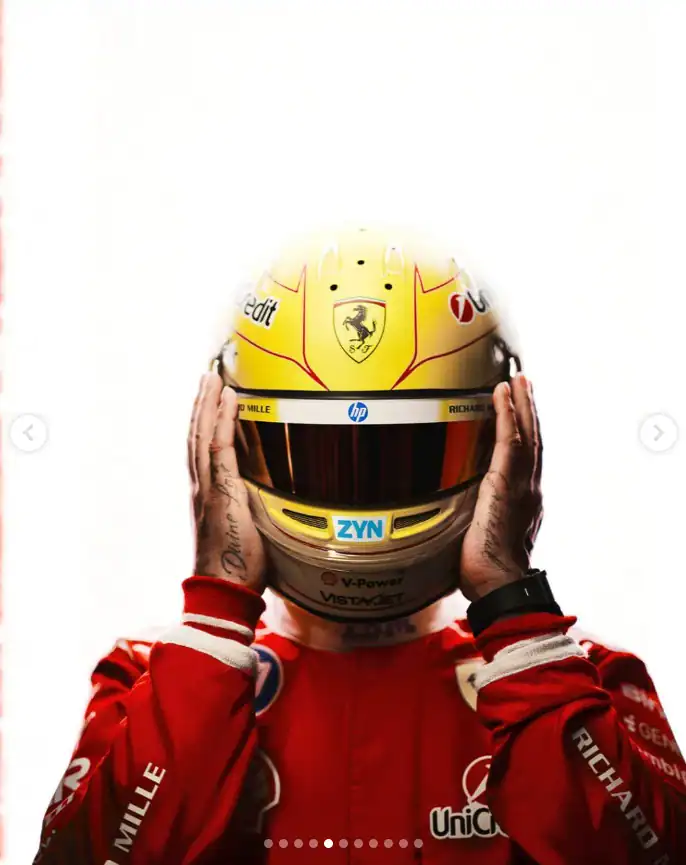
Ferrari’s HP-era red, McLaren’s papaya orange with the black anthracite accents introduced in 2024, and Williams’ navy-and-cyan revival are the three schemes most cited in fan mock-ups. The reason is simple: each uses a dominant base colour covering more than 70% of the surface area, with sponsor blocks placed in defined zones. Stretch that logic across a 60 m hull and the identity stays legible from the opposite side of the harbour, roughly 400 m away.
The liveries that fight the format
Multi-tone schemes with intricate carbon-fibre exposure suffer most. A car livery built around 4 or 5 distinct paint zones, fades, and matte-versus-gloss contrasts loses coherence at yacht scale. The detail that reads beautifully on a 1:1 display helmet at arm’s length disappears at 50 m viewing distance. Mercedes’ 2025 silver-and-black split, with its precise diagonal break, is a frequent example — gorgeous on a sidepod, awkward across a superstructure.
The wildcards
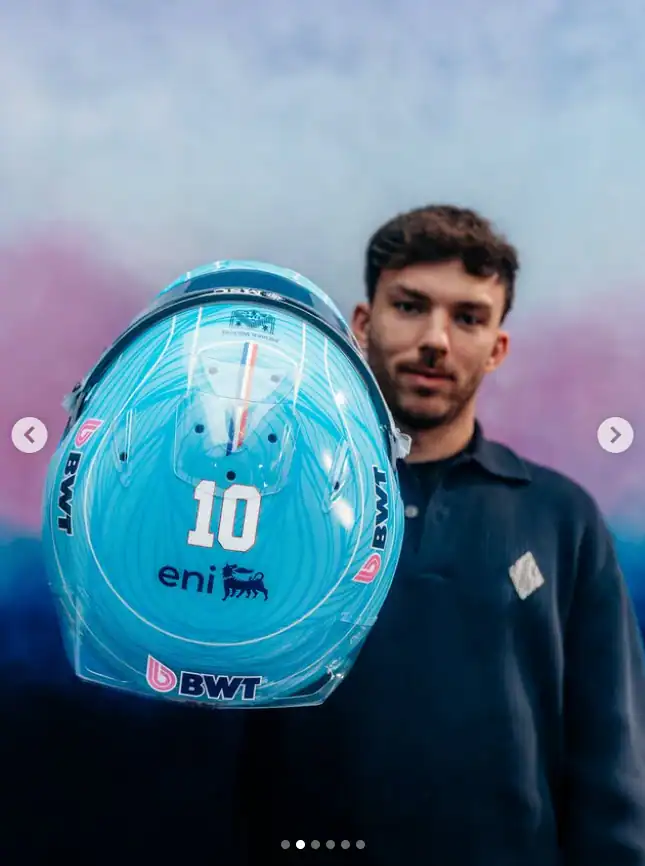
Alpine’s pink-and-blue BWT partnership livery and Kick Sauber’s neon green are the two schemes most likely to dominate the harbour visually. Both rely on high-saturation accent colours that the human eye picks up at distance. In a hypothetical concept fleet of 10 yachts moored along the Quai des États-Unis, those two would be the first identified by spectators on Casino Square, some 60 m above sea level.
What this tells us about modern F1 branding
The yacht concept is a useful stress test for how teams think about brand architecture in 2025. Every constructor now operates a layered identity: a heritage colour, a title-partner palette, a secondary sponsor band, and a season-specific accent. When the FIA capped livery changes at 2 major variants per season in recent technical regulations, teams responded by building modular designs that could be reskinned for night races, anniversary rounds, and home grands prix.
Heritage colours still anchor the system
Ferrari’s red, McLaren’s orange, Williams’ blue, and Mercedes’ silver are the four anchors that survive any reinterpretation. A yacht concept proves it — the eye finds these colours first, regardless of canvas. For collectors building a full-grid display, this is why heritage-anchored helmets and 1:1 replicas hold value across season changes: the base palette outlasts the sponsor cycle.
Sponsor zones translate, sponsor details don’t
A title-partner wordmark designed for a 1.8 m sidepod reads fine when scaled up. A QR code, a technical-partner micro-logo, or a 3-line regulation marking does not. The yacht concept exposes the difference between brand and detail — and explains why collector-grade replica helmets focus on the brand-level paintwork, with sponsor decals applied as the final layer.
The collector angle: liveries on yachts, liveries on helmets
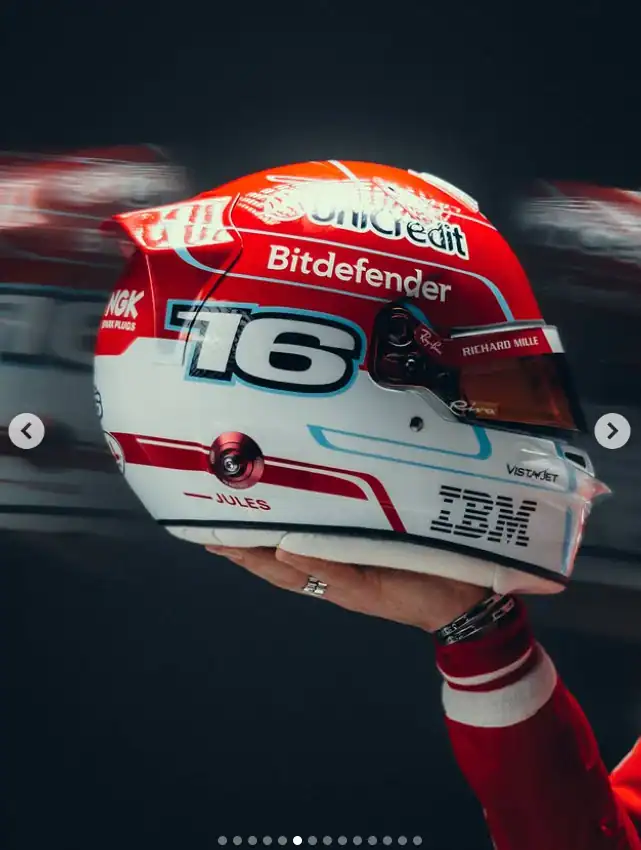
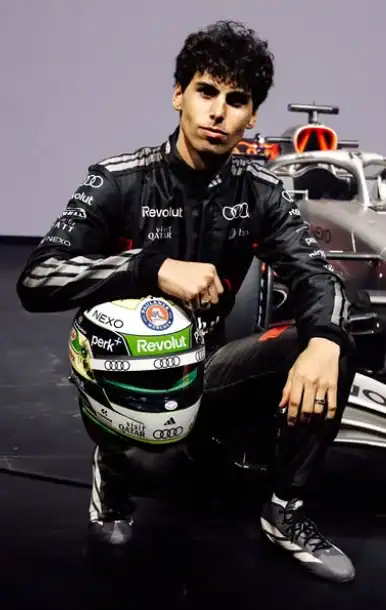
A full-size 1:1 replica helmet is roughly 27 cm long, 24 cm wide, and weighs around 1.45 kg in display configuration. That scale is the closest most collectors will get to handling the actual paint logic a team applies to its cars. A yacht concept is the opposite extreme — the same livery stretched across a hull 200× longer than a helmet.
Both extremes teach the same lesson: livery is about hierarchy. The dominant colour does 70% of the work. The accent does 20%. The detail does 10%. A display helmet that gets those proportions right will look correct from across a room; one that doesn’t will read as a generic paint job no matter how many sponsor decals are applied.
What collectors should watch for in 2025 livery releases
The 2025 season runs from the Australian GP on 16 March to the Abu Dhabi finale on 7 December, with Monaco on 25 May as the 8th round. Teams typically reveal special one-off liveries 2 to 4 weeks before the race in question. For collectors tracking the full grid on replica helmets, Monaco is historically the round most likely to produce a commemorative driver helmet design — a tradition stretching back decades.
The yacht concept won’t appear on real hulls. But it is a reminder that every Monaco weekend, the harbour itself becomes part of the visual record of the season. A display piece on a shelf at home is the quiet counterpart to that spectacle.
From the concept to the display shelf
The viral Monaco yacht livery post is, in the end, a piece of fan art. There are no real superyacht owners commissioning Ferrari-red hulls for the 2025 race. But the concept works because it taps into the same instinct that drives collector interest in full-size 1:1 replica helmets: the desire to hold, study, and display the visual identity of a team away from the noise of race weekend.
A display helmet on a shelf is a 27 cm summary of a season. A yacht in Port Hercule would be a 60 m one. Both are exhibition pieces. Neither is built for protective use. Both are about the same thing — making a team’s identity tangible.
All helmets referenced are display and collector replicas only. Not certified for protective use. Full-size 1:1 scale.
“Monaco is the only weekend where the harbour is as much a part of the broadcast as the circuit itself.”
— F1 social channel, 2025
FAQ
Q: Is the F1 yacht livery concept real?
No. It is a fan-driven visual concept shared on F1 social channels. No team or yacht owner has commissioned a real F1-liveried hull for the 2025 Monaco GP.
Q: When is the 2025 Monaco Grand Prix?
The race is scheduled for 25 May 2025, as the 8th round of the 24-race championship, run over 78 laps of the 3.337 km Circuit de Monaco.
Q: How accurate are 1:1 replica helmets for studying team liveries?
Display replicas at full 1:1 scale (around 27 cm long, 1.45 kg) reproduce the dominant colours, accent zones, and major sponsor placements. They are exhibition pieces, not certified for protective use.
Q: Which 2025 team livery would work best at yacht scale?
Schemes with a single dominant base colour covering more than 70% of the surface — Ferrari red, McLaren papaya, Williams navy — translate most cleanly. Multi-tone designs with carbon-fibre detail lose coherence at large scale.
Q: Do F1 teams change liveries for Monaco?
Some teams produce special one-off designs for Monaco, typically revealed 2 to 4 weeks before the race. Driver helmets are more commonly customised for the round than full car liveries.
Browse F1 Helmet Collection
Display and collector replicas only. Not certified for protective use. Full-size 1:1 scale.