Blog
Facts, Stats and Trivia Ahead of the 2026 Monaco GP
 123Helmets Editorial Team
The 2026 Monaco Grand Prix marks the 70th running of the modern World Championship event around the Principality, a circuit that has shaped helmet design language for decades. With the new technical regulations reshaping car silhouettes for 2026, the livery and helmet pairings on the Monte Carlo grid become the most studied display reference of the season. Here is the numbers-led briefing before lights out, with collector-grade detail on what to watch for the trophy room shelf.
Key Takeaways
The 2026 Monaco GP runs 78 laps over the 3.337 km street circuit, totalling 260.286 km.
Monaco hosts the tightest pit lane on the calendar, with a 60 km/h speed limit and a 19-garage layout.
New 2026 chassis regulations cut car width by 100 mm, opening fresh sightlines for helmet camera shots.
Monte Carlo remains the lowest top-speed venue, peaking near 290 km/h at the tunnel exit.
Circuit Numbers That Frame the Weekend
The Circuit de Monaco measures 3.337 km across 19 corners, the shortest layout on the 2026 calendar. The race distance is set at 78 laps for a total of 260.286 km, the only round of the year that falls below the standard 305 km minimum. That exemption has stood since the modern points format took hold, and it shapes how teams plan fuel loads, tyre allocation and helmet visor tear-off counts for the session.
Qualifying carries more statistical weight here than at any other venue. Since 2010, more than 75% of Monaco winners have started from the front row, and the pole sitter has converted into victory on 9 of the last 12 visits. For collectors tracking pole-trim helmets, this is the weekend where Saturday’s lid often becomes the defining display piece of the season.
Key Layout Stats
- Length: 3.337 km
- Laps: 78
- Race distance: 260.286 km
- Corners: 19 (12 right, 7 left)
- Pit lane speed limit: 60 km/h
- Elevation change: 42 m from Portier to Massenet
What the 2026 Regulations Change for Helmet Visibility
The 2026 technical package trims overall car width by 100 mm and shortens the wheelbase by up to 200 mm versus the 2022-2025 generation. For the trackside photographer, and by extension for the collector studying podium imagery, that means the driver’s helmet sits more prominently in the frame. The halo geometry remains, but the lower cockpit shoulder line drops by roughly 15 mm, exposing more of the helmet base ring in side profile shots from Sainte-Dévote and the Nouvelle Chicane.
This matters for replica buyers because the photographic record set at Monaco 2026 will define how these helmets are documented for the next four seasons. A full-size 1:1 display replica reads correctly only when the reference imagery captures the helmet at the angle the broadcast cameras now favour. Monte Carlo’s elevated camera positions above Casino Square and at the swimming pool section deliver some of the cleanest helmet-top shots of the year, ideal for studying paint layering on the crown.
Camera Positions Worth Watching
- Casino Square overhead: full crown view, 18 m elevation
- Tunnel exit: visor-strip detail at 290 km/h
- Tabac apex: chin bar and side pod angle
- Rascasse: rear shell graphics at low speed
Helmet and Livery Pairings to Track
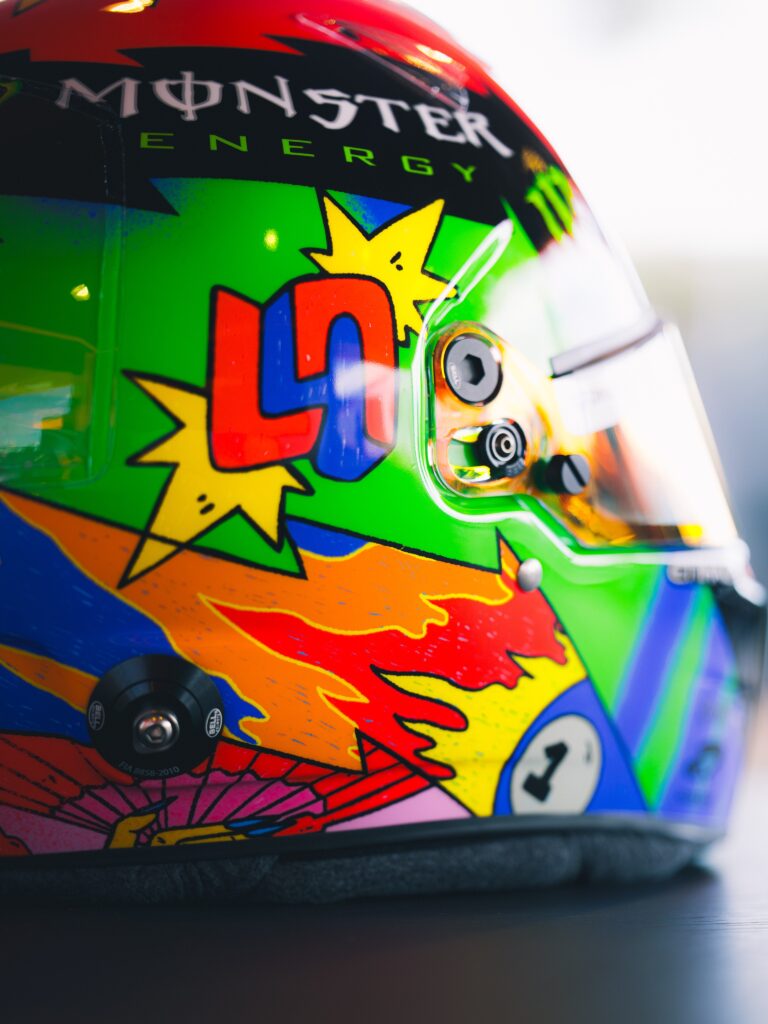
Monaco has a tradition of special-edition lids stretching back to Ayrton Senna’s gold-flecked 1987 design and Daniel Ricciardo’s 2016 shoe-podium pairing. For 2026, several drivers are expected to run Monte Carlo-specific paint, following the pattern of recent years where roughly 8 of the 20 grid helmets receive a one-off treatment for this round.
From a collector standpoint, the key visual cues are crown panel transitions, mirror-chrome accents that read on TV but require careful display lighting at home, and the placement of the driver number in relation to the top air intake. A standard race lid weighs approximately 1.45 kg in its competition form; a full-size 1:1 collector replica typically lands between 1.30 kg and 1.55 kg depending on shell composite, making it stable on a 27 × 35 cm acrylic plinth without additional bracing.
Display Detail Checklist
- Visor tint: typically dark smoke or iridium mirror for Monaco’s tunnel transitions
- Tear-off posts: 3 to 5 fitted, removed across the race
- Crown paint layers: 6 to 9 on special editions
- Chin strap badge: team and driver initials, 12 mm wide
- Base ring colour: matched to team livery accent
Podium Visuals and the Trophy Frame
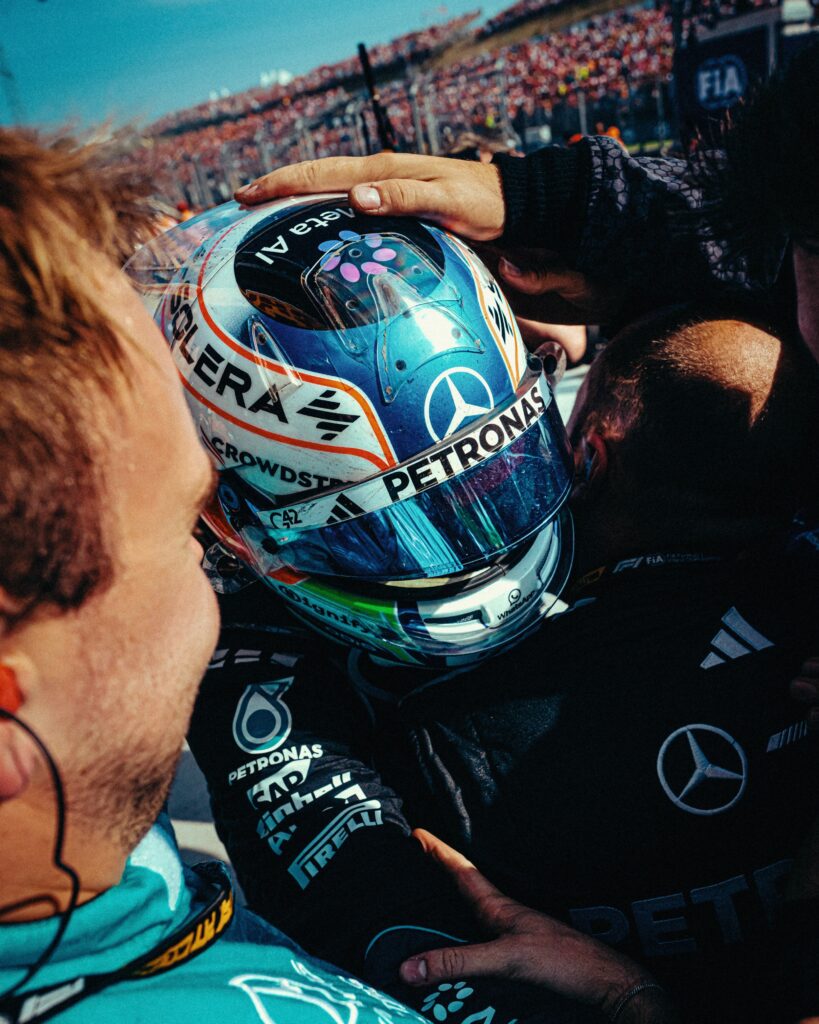
The Monaco podium sits on the start-finish straight, with the royal box backdrop that has been a constant of the broadcast since 1955. Drivers receive the trophy from a member of the Grimaldi family, and the celebration sequence runs approximately 14 minutes from chequered flag to anthem conclusion. That window produces the highest concentration of helmet-in-hand imagery of the year, because the cool-down lap leads directly into the parc fermé scrum below the podium steps.
For display planning, the Monaco trophy itself measures roughly 49 cm tall and is paired in collector photography with the driver’s race helmet on its left side. If you are arranging a shelf to mirror that composition, allow a minimum 80 cm horizontal span and 60 cm depth for a 1:1 helmet replica with a trophy reproduction. Lighting should sit at 3000K to 3500K to match the warm tones of the broadcast feed.
Historical Numbers That Still Matter
Ayrton Senna holds the all-time Monaco win record at 6 victories, a tally set between 1987 and 1993. Graham Hill and Michael Schumacher follow on 5 each. The fastest race lap in modern configuration stands at 1:12.909, set by Lewis Hamilton in 2021. For 2026, with the revised power unit running 50% electrical energy split and the new active aerodynamic system on the straights, lap times are projected to fall within 1 to 2 seconds of that benchmark in qualifying trim.
The race has been held continuously on the World Championship calendar since 1955, with the exception of 2020. That makes 2026 the 71st points-scoring Monaco GP. For collectors, the implication is straightforward: this weekend’s helmets join a 71-year visual archive, and the paint schemes that debut here tend to remain in the reference library longer than any other one-off design of the season.
Quick Record Reference
- Most wins: Senna, 6 (1987-1993)
- Fastest race lap: 1:12.909 (Hamilton, 2021)
- Pole-to-win conversion since 2010: 75%+
- Continuous run on calendar: since 1955 (except 2020)
Trivia for the Display Cabinet
Three pieces of Monaco trivia worth filing alongside any 1:1 replica purchase. First, the pit lane at Monte Carlo is the narrowest on the calendar at 8.5 m wide at its tightest point, which forces teams to run 19 garages in a layout that elsewhere accommodates 22. Second, the tunnel section produces a 0.8 second lateral transition in visor tint adaptation, the reason most drivers fit a Monaco-specific tear-off stack. Third, the swimming pool chicane has been resurfaced 4 times since 2015, each resurfacing altering the camera shadow line that frames the helmet on the broadcast wide shot.
None of these details change the result on Sunday, but they all shape the imagery that defines a Monaco helmet in the months after the race. For a collector building a themed shelf, that imagery is the reference that justifies the display.
“Monaco is the only race where you can read every line on a driver’s helmet at full speed. That is why the paint here matters more than anywhere else.”
— Paddock photographer briefing, 2025
FAQ
Q: How many laps is the 2026 Monaco Grand Prix?
The race runs 78 laps of the 3.337 km circuit for a total race distance of 260.286 km, the only round of the season below the standard 305 km minimum.
Q: What is the fastest race lap at Monaco?
Lewis Hamilton holds the modern-layout record at 1:12.909, set in 2021. Projections for 2026 place qualifying pace within 1 to 2 seconds of that benchmark.
Q: Why do drivers run special helmets at Monaco?
Monaco produces the highest concentration of helmet-focused broadcast imagery of the year, with elevated cameras at Casino Square and the tunnel section. Roughly 8 of 20 grid drivers run a one-off design here.
Q: How heavy is a 1:1 Monaco display helmet replica?
A full-size 1:1 collector replica typically weighs between 1.30 kg and 1.55 kg, close to the 1.45 kg of a competition helmet. It is stable on a 27 × 35 cm plinth without bracing.
Q: Is a 1:1 helmet replica suitable for any protective use?
No. These are display and collector replicas only. They are not certified for any protective application and are intended exclusively for exhibition and shelf display.
Browse the full 1:1 collector helmet collection and find the Monaco-worthy display piece for your shelf.
Display and collector replicas only. Not certified for protective use. Full-size 1:1 scale.