Blog
Sainz Qualifies P17 After Final Corner Mistake
 123Helmets Editorial Team
Carlos Sainz delivered what he called his best lap of the weekend in qualifying — then lost it all at the final corner, leaving him 17th on the grid.
Key Takeaways
Sainz qualified P17 after a final-corner error wiped out what he described as his best lap of the weekend.
He admitted to struggling with car balance and missing a couple of tenths consistently throughout the weekend before that lap.
Sainz’s own words confirm the final lap was genuinely fast — on the limit through every sector — before the exit error.
The P17 grid position adds to the challenge for the race, but the pace shown on that lap hints at potential in race trim.
The Lap That Got Away
Carlos Sainz qualified 17th on the 2026 grid after a mistake at the final corner of his last flying lap erased what was shaping up to be a genuinely strong result. The error was brutal in its timing: it came at the very last corner of the very last run, when everything else had finally clicked into place.
Sainz was direct about what happened. “What I gained on entry, I lost on exit,” he said immediately after the session. The corner entry was good — aggressive, precise, on the limit — but he pushed fractionally too hard on the way out and the time evaporated. He described it as going “a bit full beans” on that lap, a phrase that captures exactly the all-or-nothing nature of a qualifying run when a driver is chasing tenths he knows he has been leaving on the table.
For those who follow Sainz closely, the frustration is compounded by the fact that the lap itself, right up until that final corner, was the kind of effort that reminds you why he is regarded as one of the more complete qualifiers on the grid. He called it “honestly a really good lap, on the limit everywhere” — which makes the exit error at the last corner all the harder to process.
A Weekend of Struggling for Balance
Sainz had been off the pace across practice and earlier qualifying runs due to persistent balance issues, consistently missing a couple of tenths compared to where he needed to be. That admission — consistent across the whole weekend, not just one session — tells a story about a car that was not cooperating through the low-speed transitions and corner exits that define lap time at this circuit.
“I’ve been struggling a lot with the balance and with the car, missing always a couple of tenths,” he said. In Formula 1 qualifying, where the difference between Q1 elimination and a top-ten lockout can be measured in hundredths of a second, consistently losing two-to-three tenths per lap to the pace you know is in the car is a deeply specific kind of frustration.
The setup work through practice had not fully resolved the problem. Sainz was unable to find the confidence at corner exit that allows a driver to commit fully on entry — the two are connected, because trust in the rear through the exit phase is what allows aggression on the way in. When the balance is wrong at the back, drivers protect the corner entry too, and the lap time suffers at both ends.
That context makes his final lap all the more significant. He had found, for 17 corners or however many came before the last, exactly the feeling he had been chasing all weekend. Then came the exit.
What P17 Means for the Race
Starting 17th on the 2026 grid is a deep hole, and the mathematics of overtaking in modern Formula 1 make climbing from there a significant ask, even for a driver with strong race-pace instincts. The circuits where Sainz has historically converted poor qualifying into solid race results tend to share one characteristic: a long first stint where tyre management rewards patience.
The pace benchmark from that final qualifying lap is useful context. Sainz himself noted he was happy with the performance despite the grid position — and a driver who has finally found the balance he was missing in qualifying often carries that feeling into race setup overnight. The question is whether the team can consolidate what they learned from those final sectors and translate it into a race car that allows him to fight forward.
From P17, the strategy will almost certainly involve an undercut attempt early in the race or an extended first stint to allow cars ahead to pit and come out behind. The pit window from that far back is actually wider than from midfield, because there is less to lose by experimenting. Sainz’s race-pace record suggests he can make positions on pure pace when the car is balanced; the evening’s setup debrief will focus on whether they can recreate the balance he found on that final lap.
Sainz’s Record and What This Moment Reflects
Carlos Sainz has built his reputation over a decade in Formula 1 on consistency and the ability to extract performance from cars that are not perfectly suited to his style. His 2026 campaign has included both strong moments and sessions like this one — where the equipment and the setup have not aligned until the last possible moment.
The qualifying mistake does not erase the substance of that final lap. If anything, it underlines something collectors and followers of the sport have always understood about the drivers whose helmets sit on shelves and in display cases: the gap between the lap that happens and the lap that almost happened is often the most revealing data point. That final run — described by Sainz as the only proper good lap he had done all weekend — is the number that tells you what the driver is capable of, even if it does not appear in the official timing sheet at the level it deserved.
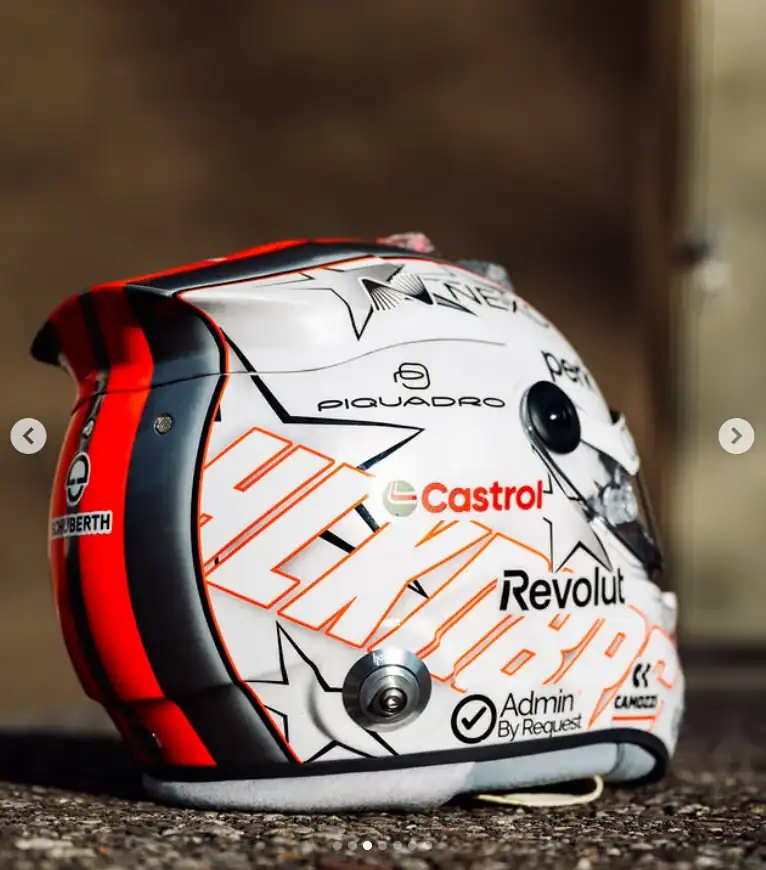
For the community that follows Formula 1 through its helmet designs, liveries, and the personal stories behind them, moments like this one matter. Sainz’s helmet for the 2026 season carries the visual identity of a driver who has had to adapt again — a new chapter, a new challenge, a qualifying session that ended 17th but contained at least one lap that was something else entirely.
The Collector Perspective: Qualifying Moments Frozen in Time
Why Race-Week Drama Drives Collector Interest
Full-size 1:1 replica F1 helmets are display pieces and collector items that connect the person who owns them to specific moments in a driver’s career — and qualifying sessions like this one are exactly the kind of moment that defines a season. A replica helmet displayed in a home or exhibition space is not just an object; it is a reference point for a specific chapter of a driver’s story.
When Sainz talks about finally finding the lap, going on the limit at every corner, and then losing it at the exit of the final corner, that is the kind of narrative that makes a particular season’s helmet significant to collectors. The 2026 helmet represents this period — the adaptation, the struggles with balance, the moments of brilliance at the edge of the lap.
Display replicas in the 1:1 scale format allow that detail to be examined closely. The paintwork, the sponsor placement, the visor configuration — all of it reflects the exact specification a driver carried on that qualifying day. A 29 × 25 × 35 cm display base positions the helmet at the correct viewing angle, and the 1.2–1.5 kg weight of a full-size replica gives it the presence on a shelf that a miniature simply cannot replicate.
Exhibition Quality and the 2026 Season
Exhibition-quality replicas are finished to the same visual specification as the race-day original, with the visor panel at 26 mm thickness to match the correct optical geometry of the full-size shell. For a driver whose season has included the kind of qualifying drama seen in 2026, owning a display piece from that season is owning a piece of a specific, documented story — one that includes a P17 grid slot and a lap that deserved better.
Looking Ahead: Recovery, Race Day, and What Sainz Said
Sainz finished his post-qualifying comments on a note that was striking in its honesty. He said he was “happy with the lap and with the performance” — not with the grid position, not with the outcome, but with what that final run proved about where the car and his feel for it had arrived by the end of the session. That distinction matters. It is the kind of self-assessment that separates drivers who process setbacks constructively from those who don’t.
The race on 2026-06-29 will tell a different story depending on how the overnight debrief goes and whether the team can hold onto the setup window Sainz found on that last lap. From P17, every position gained is hard-won. But the pace that was in the car — and in the driver — on that final qualifying run gives reason to watch the first stint closely.
For now, the grid sheet reads P17 next to Sainz’s name, and the timing tower does not record almost. But the sport’s followers — and the collectors who mark their passion for it with display-quality replicas on shelves and in cases — know that the lap described in those post-qualifying words was something worth remembering.
“What I gained on entry, I lost on exit! I went a bit full beans there in that lap, and it was honestly a really good lap, on the limit everywhere. The only proper good lap I’ve done all weekend, because I’ve been struggling a lot with the balance and with the car, missing always a couple of tenths. And then finally that last lap I managed to find them. So happy with the lap and with the performance.”
— Carlos Sainz, post-qualifying 2026
FAQ
Q: Why did Carlos Sainz qualify P17 in the 2026 session?
Sainz qualified P17 because a mistake at the final corner of his last flying lap cost him the lap time. He gained on entry but lost it on exit, dropping him to 17th on the grid despite what he described as his best lap of the weekend up to that point.
Q: What had Sainz been struggling with throughout the 2026 race weekend?
Sainz struggled with car balance all weekend, consistently missing a couple of tenths per lap compared to where he needed to be. He only found the right feeling on his very last qualifying run before the final corner error.
Q: What did Sainz say about his final qualifying lap?
He called it ‘honestly a really good lap, on the limit everywhere’ and described it as the only proper good lap he had done all weekend. He said he was happy with the lap and the performance, despite the P17 result.
Q: What is a 1:1 full-size F1 helmet replica and how does it differ from a miniature?
A 1:1 full-size replica is a display and collector item produced at the exact same dimensions as the race helmet worn by the driver, typically around 1.2–1.5 kg in weight with a 26 mm visor panel — giving it the physical presence and visual accuracy that a miniature scale model cannot replicate. It is not certified for protective use and is intended for exhibition and display only.
Q: Why do collectors value helmets connected to difficult qualifying sessions?
Collectors value helmets from difficult race weekends because those sessions represent specific, documented chapters of a driver’s career. A helmet from the 2026 season carries the context of Sainz’s adaptation, his balance struggles, and the moments — like that final qualifying lap — where the full capability of the driver was visible even if the timing sheet did not reflect it.
Browse F1 Helmet Collection
Display and collector replicas only. Not certified for protective use. Full-size 1:1 scale.
This article was written with the help of AI tools. Editorial policy