
Blog
Why McLaren Were Disqualified from the 2025 Las Vegas Grand Prix
 123Helmets Editorial Team
Why McLaren Were Disqualified from the 2025 Las Vegas Grand Prix
The 2025 Las Vegas GP delivered its biggest twist in the stewards’ room. McLaren’s Lando Norris and Oscar Piastri were disqualified hours after the chequered flag — turning the title fight on its head with two rounds remaining. Here is the full breakdown.
At a Glance
What Rule Did McLaren Break?
The issue centres on the skid plank — a wooden-composite board fixed to the underside of every F1 car. Its purpose: to define the minimum legal ride height and prevent teams from running cars so low that they generate illegal levels of downforce.
The 9mm Rule
After every race, the FIA checks the plank thickness at several precisely defined measuring points. If the thickness at any point drops below 9 mm, the car is illegal — regardless of whether the team intended it or not. No exceptions. No performance-benefit threshold. If it is under 9 mm, the car is disqualified.
Why this rule exists
The 9mm minimum ensures teams cannot exploit extremely low ride heights for aerodynamic gain over the course of a race. It is a blunt instrument by design — grey areas in post-race car legality create competitive distortions that the FIA has historically resolved with strict liability rules.
What the FIA Found in Las Vegas
During post-race scrutineering, both McLaren MCL39s showed plank wear below the 9mm minimum at multiple measuring points:
- Lando Norris’s car: Below the limit at multiple points on the right-hand side.
- Oscar Piastri’s car: Even larger deviations — excessive wear at the rear and in places at the front.
The measurements were confirmed in the presence of McLaren representatives. Once confirmed, disqualification was effectively inevitable.
Why Did the Planks Wear Out?
Team Principal Andrea Stella explained that the root cause was unexpectedly strong porpoising — the aerodynamic bouncing effect caused by stall and reattachment at high speed — combined with Las Vegas’s particular circuit characteristics.
The Circuit Factor
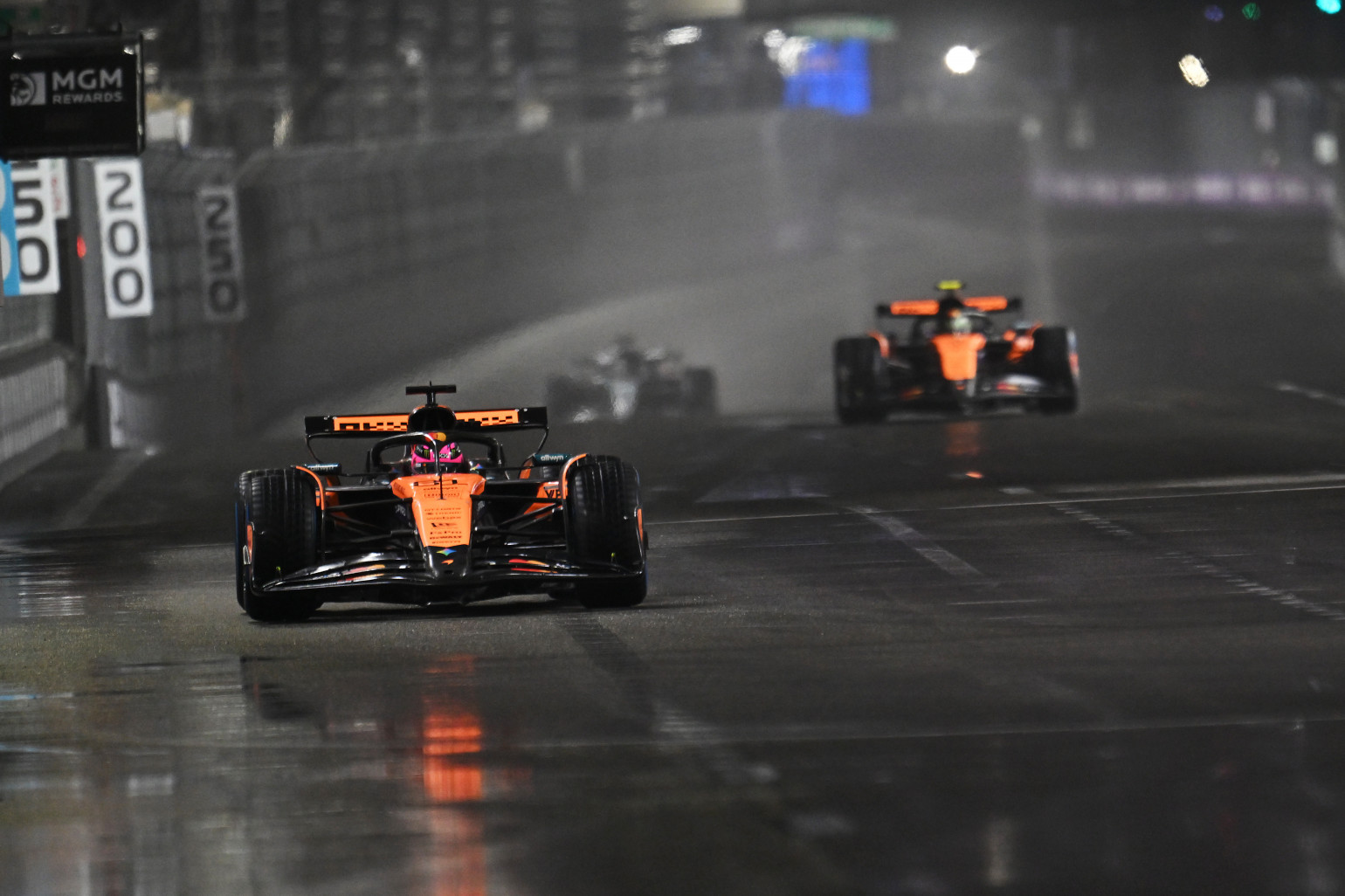
The Las Vegas Strip Circuit is a temporary street layout with uneven asphalt, bumps, and manhole covers. Each bump scraped the rear skid blocks harder than expected, accelerating plank wear beyond what the team’s models predicted.
Night Conditions
The race ran in cool night-time conditions, which altered tyre behaviour and how the car rode the bumps. Lower temperatures can change suspension behaviour in ways that increase ground contact and plank wear.
Limited Practice Data
Disrupted and shortened practice sessions earlier in the weekend left McLaren with less data than usual. Their predictions of plank wear over a full race distance were based on a smaller-than-ideal sample — a gap the real conditions exposed.
Intent Not a Factor
The FIA explicitly accepted that McLaren did not act deliberately. However, F1 technical regulations are strict liability: if the car is outside the limits for any reason, the result cannot stand. Unintentional breaches are treated identically to intentional ones.
Championship Impact — Winners and Losers
With Qatar and Abu Dhabi remaining, the Las Vegas DSQ transformed what had been a McLaren-controlled title fight into an open race.
How McLaren Responded
Publicly, McLaren took a measured tone following the decision. Team Principal Andrea Stella:
- Admitted the team misjudged the situation on ride height and porpoising.
- Stressed that no “excessive risks” were taken deliberately with the setup.
- Confirmed the FIA’s acknowledgement that the breach was unintentional, even if the penalty had to stand under strict liability rules.
Both Norris and Piastri expressed frustration but committed to not changing their approach for the final two rounds. The team’s internal message: learn from Vegas, prevent a repeat, fight for the title in Qatar and Abu Dhabi.
Key Questions — McLaren Las Vegas DSQ
What exactly is the skid plank rule in F1?
Every F1 car must run with a wooden-composite plank fixed to the underside of the chassis. The plank has several measuring points, and its thickness at each point must be at least 9mm after the race. If any point is below 9mm, the car is illegal and the driver is disqualified. The rule exists to prevent teams from running dangerous ride heights for aerodynamic advantage.
Was McLaren punished more harshly because they knew about the wear during the race?
No. The FIA’s report accepted that McLaren did not act deliberately. There is no evidence the team knew the planks were below the limit during the race. The strict liability nature of the rule means that intent — or lack thereof — does not change the penalty. If the car is outside the limit, the result cannot stand.
Could McLaren have appealed the decision?
McLaren did not successfully appeal the disqualification. In cases where physical measurements confirm a car is outside the technical regulations, appeals on the legality finding itself are typically very difficult — the data is the data. Teams can appeal on procedural grounds, but the confirmed plank measurements left very limited room to challenge the substance of the ruling.
Did the Las Vegas DSQ cost Norris the 2025 drivers’ championship?
The DSQ significantly tightened the title fight. How the championship ultimately resolved depended on the final two rounds (Qatar and Abu Dhabi), but Las Vegas materially changed the competitive picture — transforming a manageable points lead for Norris into a much closer fight with Verstappen.
What is the collector significance of the 2025 Las Vegas GP for helmet displays?
The 2025 Las Vegas race was one of the most consequential F1 events of the season — a championship-turning moment that will be referenced for years. Display replicas from the drivers involved (Verstappen as race winner, Norris and Piastri as the DSQ’d championship contenders) carry specific 2025 season significance for collectors who document these inflection points.
Collect the 2025 Title Fight
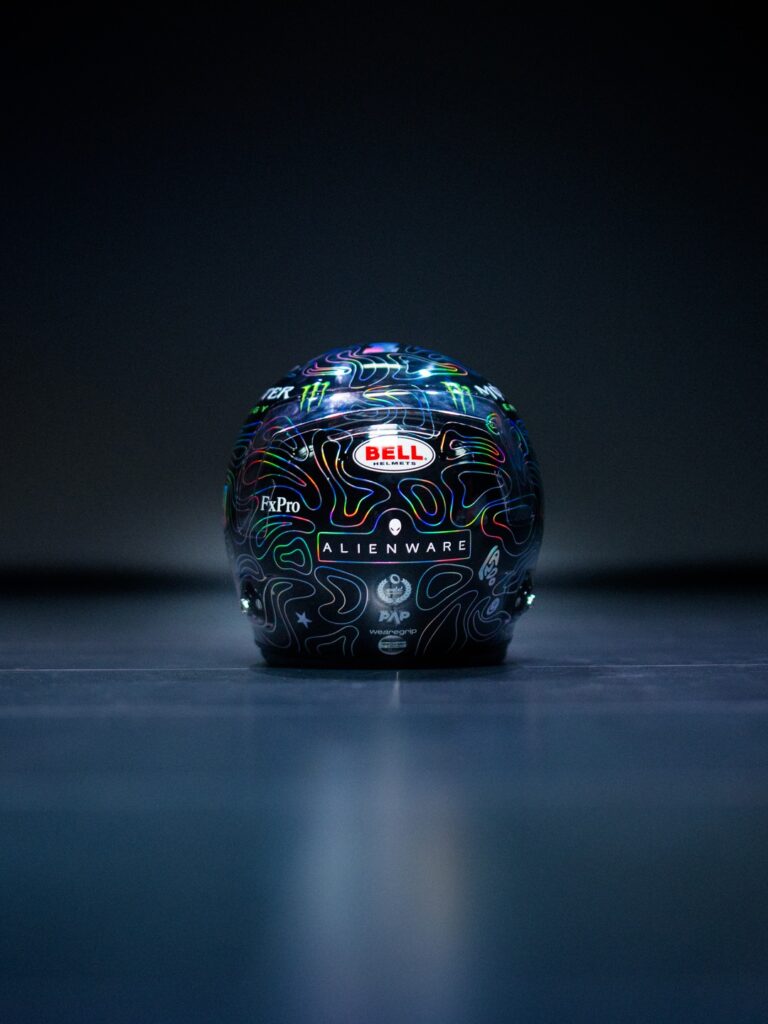
The 2025 Las Vegas Grand Prix will be remembered as the night the championship changed in the stewards’ room. Display replicas from the drivers at the centre of this story — Verstappen, Norris, and Piastri — let collectors document this pivotal moment from the season.
Display and collector replicas only. Not certified for protective use. Full-size 1:1 scale.
This article was written with the help of AI tools. Editorial policy