Blog
2026 F1 LED Engine Status Lights: A New Visual Era for Collector Helmets and Liveries
 123Helmets Editorial Team
The 2026 Formula 1 season has introduced a striking new visual layer to the grid: tweaked LED status lights that signal engine and power-unit modes directly on the bodywork. For collectors and display enthusiasts, this shift transforms how a race weekend reads on screen — and how the season’s podium moments translate onto full-size 1:1 replica helmets and liveries built as exhibition-quality display pieces.
Key Takeaways
The 2026 LED status system makes power-unit modes visible, adding a new visual dimension to podium broadcasts and display replicas.
Helmet liveries are increasingly mirroring car LED accents, creating cohesive collector display sets.
Full-size 1:1 replica helmets remain exhibition-quality display pieces — never certified for protective use.
Podium visuals from the opening rounds offer reference points for accurate collector-grade paint and finish detailing.
What the 2026 LED Engine Status Lights Actually Show
For 2026, Formula 1’s revised power-unit regulations brought a fresh emphasis on the split between the internal combustion element and the electrical deployment that now accounts for roughly half of total power output. To make this balance legible to spectators and officials, teams adopted tweaked LED status panels integrated into the rear sections of the bodywork.
These LED clusters flash in distinct patterns to indicate the active engine status — deployment, harvesting, and standby phases. Where earlier seasons relied solely on the rain light positioned at the rear, the 2026 system layers additional signaling. On a sunlit straight or under floodlights, the result is a constantly shifting band of light that reads differently lap by lap.
For the display and collector community, the relevance is immediate: these glowing accents have become signature visual cues that designers translate into the finish work on full-size 1:1 replica helmets. A helmet built as an exhibition-quality display piece can now echo the same color language seen on the car, creating a unified presentation on a shelf or in a cabinet.
Opening-Round Podium Visuals That Defined the Look
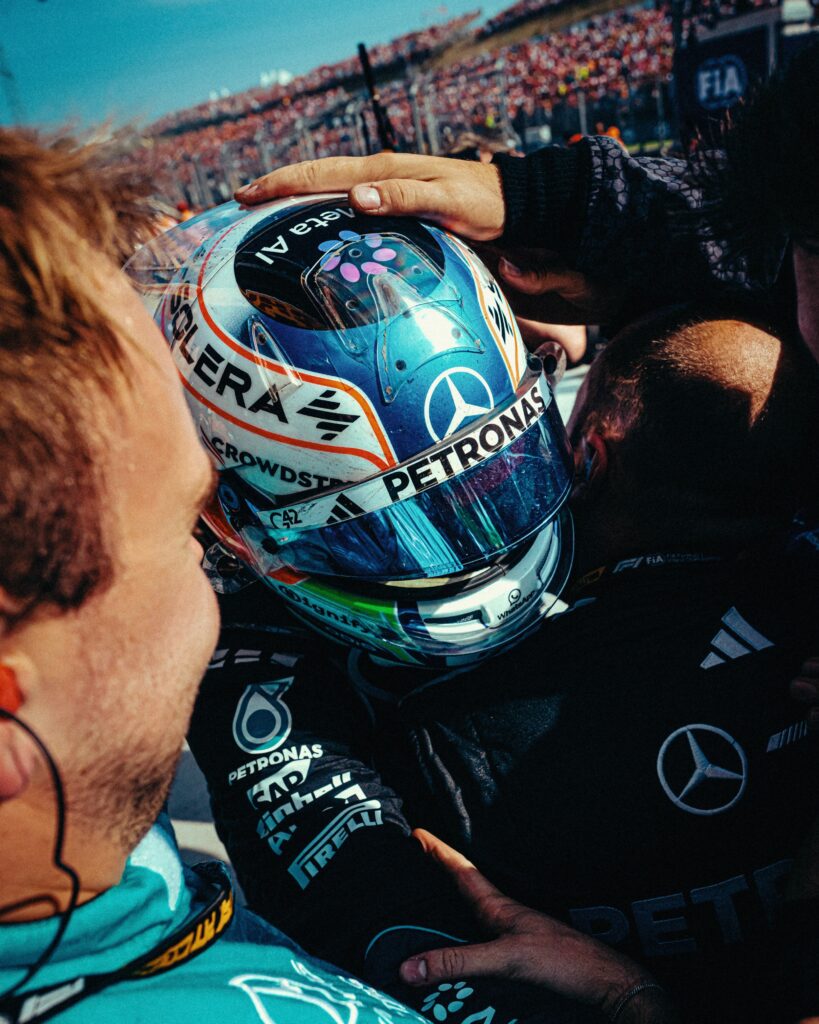
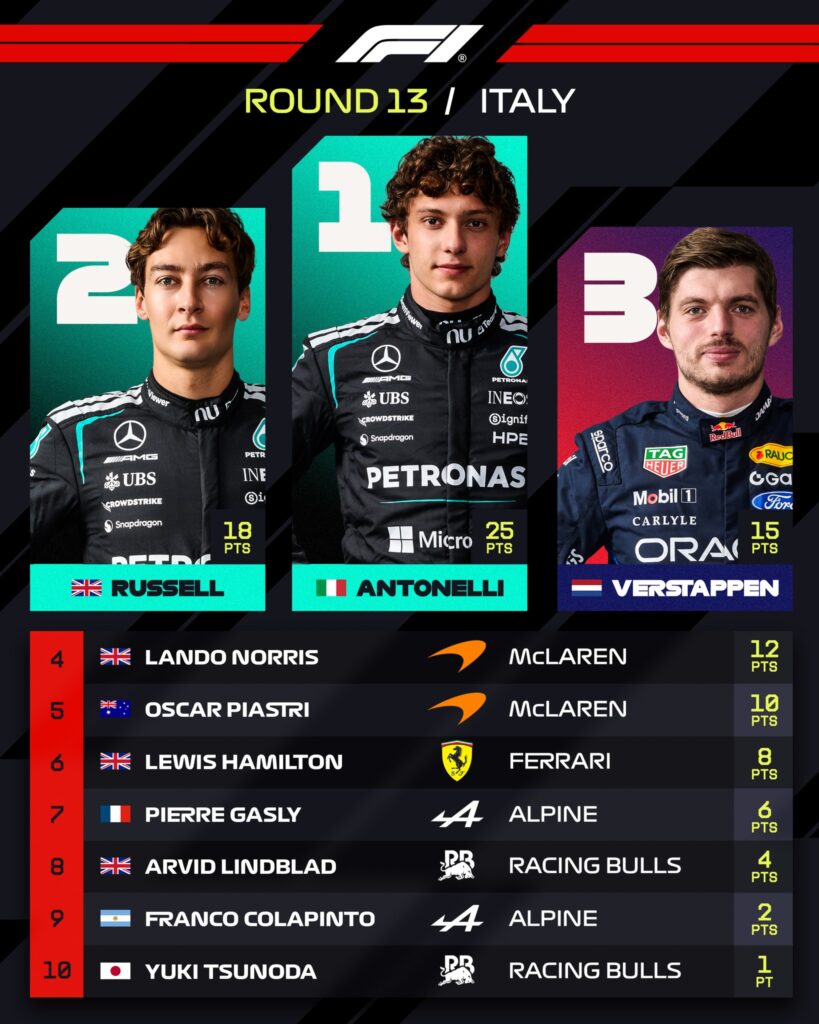
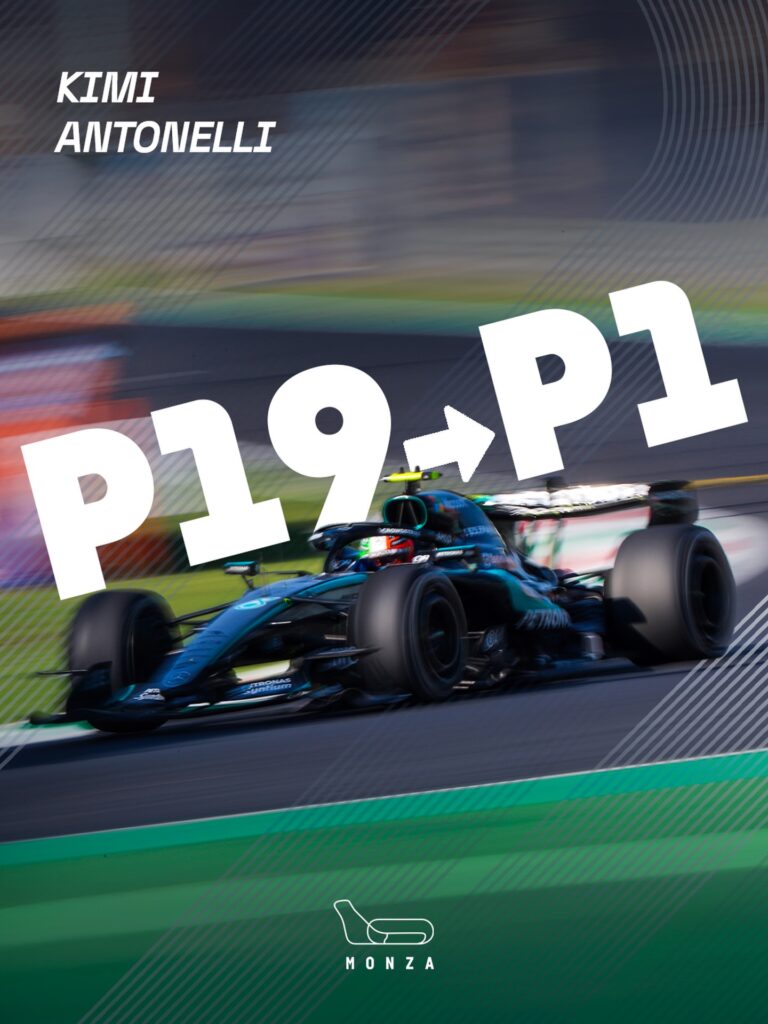
The first races of 2026 delivered podium scenes where the LED signature became part of the storytelling. As cars rolled into parc fermé, the cooling power units still pulsed their status patterns, giving photographers a window of glowing detail before the systems powered down.
From a display perspective, these are the moments that matter. A podium-celebration helmet — held aloft, catching the light — is exactly the reference a collector wants when assessing how a replica’s metallic flake and clear-coat layers should appear under gallery lighting. The contrast between matte base zones and high-gloss accent panels is what separates a generic souvenir from an exhibition-quality collector item.
Reading the Light in Photographs
Broadcast and trackside imagery from the opening weekend showed the LED bands cycling through their sequences during the slow-down laps. For those curating a display, capturing that interplay of light and lacquer is the goal. A well-finished 1:1 replica helmet uses multiple paint layers — often 6 to 8 coats including primer, base, graphics, and clear — to recreate the depth seen on camera.
How Helmet Liveries Are Mirroring the Car LED Language
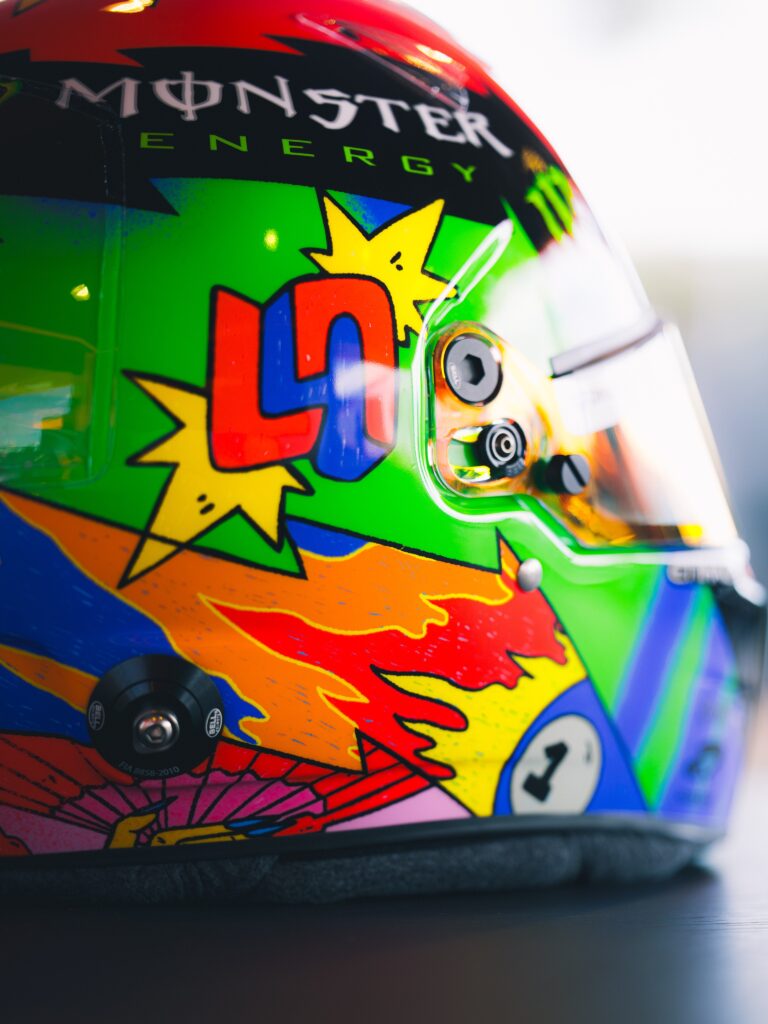
One of the most interesting trends of the 2026 season is the visual conversation between car and helmet. As LED accents define the bodywork’s nighttime and overcast appearance, several drivers have leaned into complementary helmet designs that pick up the same hues in painted form.
This is a gift for collectors building matched display sets. A full-size 1:1 replica helmet positioned beside a scale livery panel can now tell a coherent visual story — the painted graphics on the helmet answering the glowing accents of the car. Because these are display and collector replicas only, the focus is entirely on visual fidelity rather than any functional role.
Designers replicating these helmets typically work to dimensions of around 27 × 35 cm (roughly 60–62 cm in circumference) for a full-size shell, with visor apertures and aero elements finished to match televised reference. The painted LED-inspired strakes are applied as crisp graphic bands, often masked to within a millimeter for clean edges that hold up under close inspection.
Why the LED Era Elevates Display-Piece Detailing
The introduction of visible engine-status lighting has raised the bar for what a convincing display replica must capture. It is no longer enough to recreate a flat livery; the best exhibition-quality pieces now suggest the dynamic light play that defines the 2026 cars.
Skilled finishers achieve this through candy-coat layering and pearlescent pigments that shift tone with viewing angle — a static approximation of the LED’s living glow. A clear-coat thickness of several tenths of a millimeter gives the surface the wet-look depth that photographs so well in a display cabinet.
Construction Notes for Collectors
Most full-size 1:1 replica helmets intended as display pieces weigh in the region of 1.2 to 1.5 kg, balanced for stable presentation on a stand rather than any wear. The visor is fitted as a cosmetic element, typically a few millimeters thick, tinted to match the driver’s on-track configuration. None of these components are certified for protective use — they exist solely as collector items and exhibition-quality display pieces.
Curating a 2026-Themed Display Around the New Visuals
For collectors assembling a 2026 tribute, the LED status era offers a clear curatorial theme. Pairing a podium-spec replica helmet with imagery of the glowing parc fermé scenes creates an instantly recognizable narrative tied to the season’s most novel feature.
Lighting your own display matters here. A pair of adjustable LED spots positioned at roughly 45 degrees will reveal the metallic flake and graphic edges that make a 1:1 replica read as exhibition quality. Rotating the helmet so accent bands catch the light recreates the dynamic feel of the car’s status display in a static setting.
Spacing matters too: allowing 30 to 35 cm of clearance around each helmet on a shelf prevents visual crowding and lets each collector item stand as its own focal point. The result is a display that honors the 2026 season’s defining visual innovation while remaining unmistakably a presentation of collector replicas.
“The glow of a 2026 power unit cooling in parc fermé is the kind of fleeting visual a great display replica is built to preserve.”
— 123Helmets Editorial
FAQ
Q: What do the 2026 F1 LED engine status lights indicate?
They signal the active power-unit mode — such as deployment, harvesting, or standby — making the balance between combustion and electrical power visible to spectators and officials. For collectors, these glowing accents inspire the color detailing on display replicas.
Q: Are these replica helmets safe to wear?
No. Every item we discuss is a display and collector replica only — full-size 1:1 scale, exhibition-quality, and not certified for any protective use. They are built purely as collector items and display pieces.
Q: How are the LED accents recreated on a display helmet?
Finishers use painted graphic bands, candy coats, and pearlescent pigments to suggest the car’s LED light play. Multiple paint layers — often 6 to 8 coats — give the surface depth that mirrors televised reference.
Q: What size is a full-size 1:1 replica helmet?
A full-size display shell typically measures around 27 × 35 cm (roughly 60–62 cm in circumference) and weighs roughly 1.2 to 1.5 kg, balanced for stable presentation on a stand rather than any wear.
Q: How should I light a 2026-themed helmet display?
Use adjustable LED spots at about 45 degrees and allow 30 to 35 cm of clearance around each piece. This reveals the metallic flake and graphic edges that define an exhibition-quality collector item.
Discover full-size 1:1 replica helmets built as exhibition-quality display pieces inspired by the 2026 season. Browse F1 Helmet Collection.
Display and collector replicas only. Not certified for protective use. Full-size 1:1 scale.