Blog
Red Bull’s Canadian GP Comeback Verdict: A Collector’s Lens on the Podium Visuals
 123Helmets Editorial Team
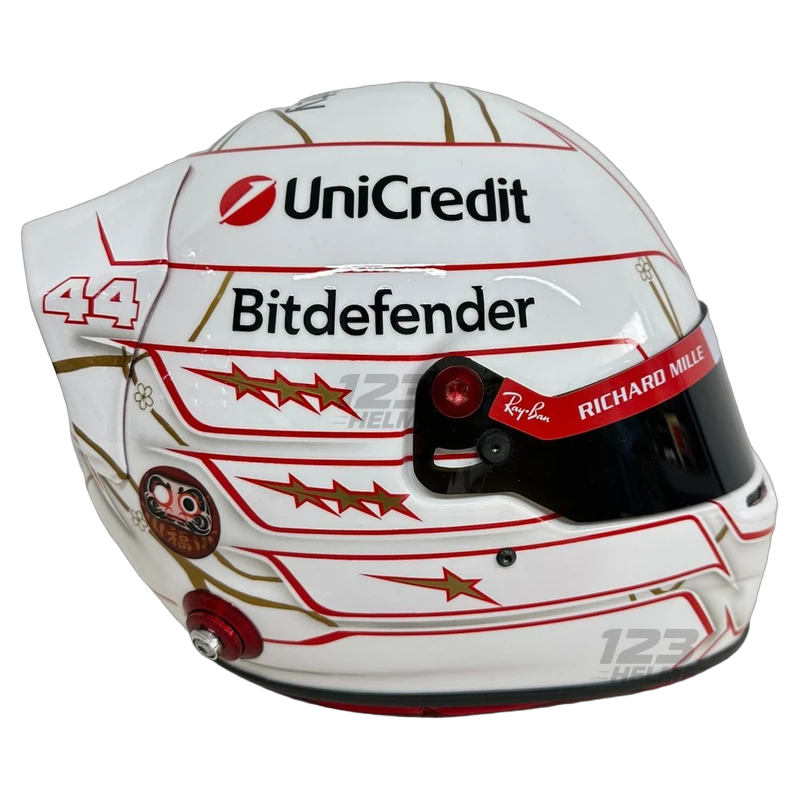
After a charged battle around the Circuit Gilles Villeneuve, Red Bull’s comeback prospects became the weekend’s defining storyline. For the collector community, the storyline doubles as a study in podium visuals — the helmet liveries, the colour blocking, and the display-worthy moments that translate so naturally into full-size 1:1 replica form.
Key Takeaways
The Canadian GP battle reignited talk of a Red Bull comeback, framed by an optimistic comeback narrative.
Podium visuals at Circuit Gilles Villeneuve highlight why helmet liveries make exhibition-quality display pieces.
Lewis Hamilton’s helmet design remains one of the most replicated full-size 1:1 collector items in the paddock.
Every replica in the collection is a display piece only — not certified for protective use.
The Canadian GP Battle and the Comeback Verdict
The Circuit Gilles Villeneuve has long been one of the most photogenic backdrops on the calendar, and the latest Canadian Grand Prix delivered the kind of wheel-to-wheel drama that fuels post-race debate. When the Canadian GP battle settled, the headline narrative centred on Red Bull’s potential for a major comeback — a narrative that immediately sent collectors back to their display shelves to revisit the visual story of the weekend.
The 4.361 km lap, stretched across 70 racing laps, packed multiple braking zones where helmet cameras and trackside photographers captured the cars at their most expressive. For the collector audience, these are the frames that matter: the moments where a helmet’s crown, visor band, and chin detail are framed perfectly against the famous Wall of Champions.
What makes the comeback verdict relevant to display enthusiasts is the way it ties performance momentum to identity. A team trending upward generates demand for the visuals associated with that surge — the liveries, the helmet finishes, the podium silhouettes. Those are precisely the elements that translate into a full-size 1:1 replica that anchors a display cabinet.
Podium Visuals That Belong on a Display Shelf
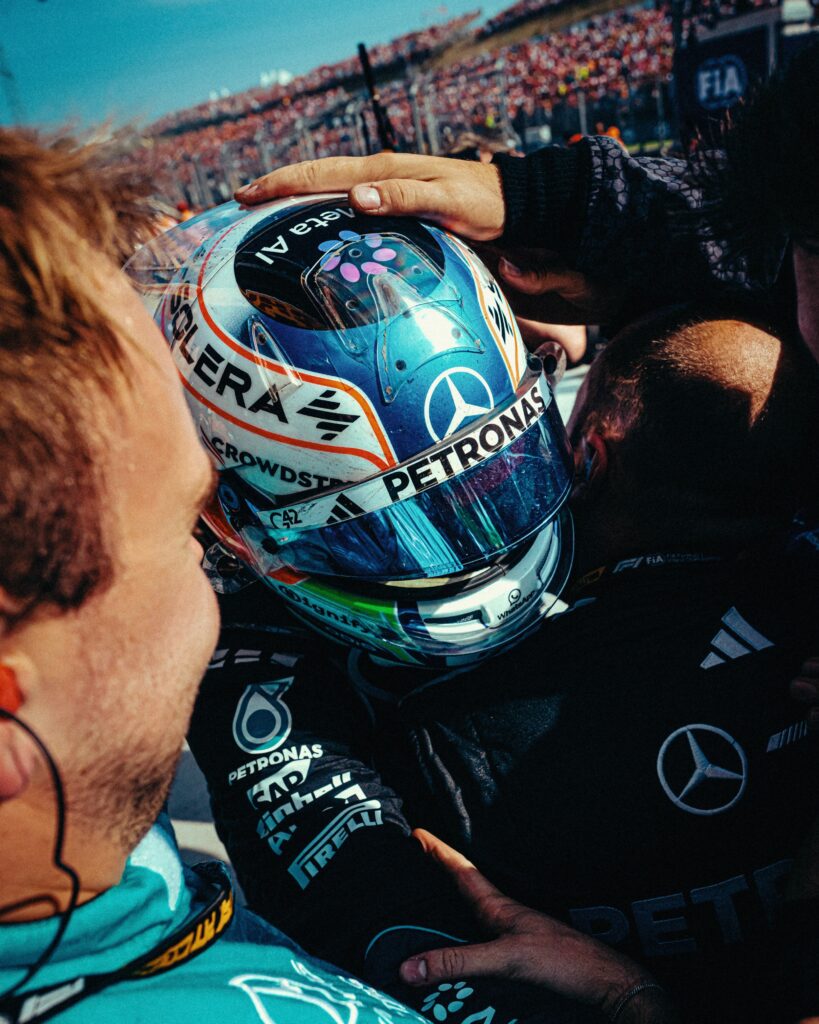
Few sports deliver podium imagery as crisp as Formula 1. At the Canadian GP, the elevated rostrum framed the top three against a saturated wall of branding and reflected light, and it is here that the helmet becomes the storytelling object. Removed and held aloft, a driver’s helmet is the single most recognisable artefact of a race weekend — and the reason it remains the centrepiece of any serious collection.
Why Helmets Outperform Other Memorabilia
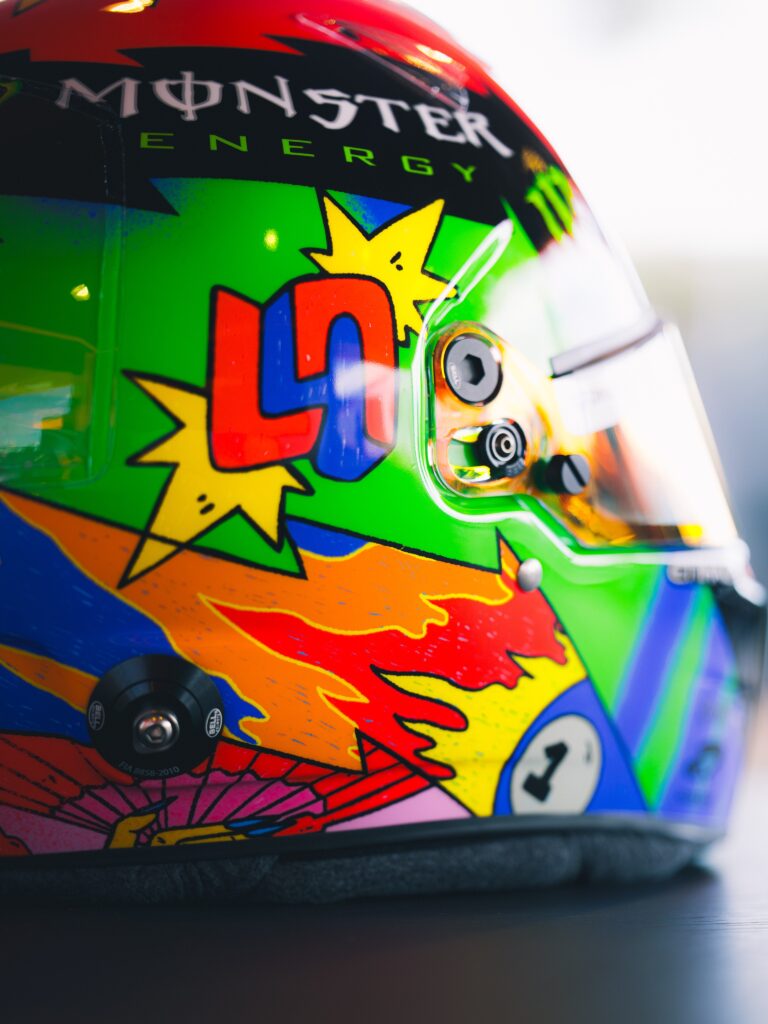
A standard full-size 1:1 replica shell measures roughly 27 × 35 cm and weighs around 1.45 kg, giving it genuine display presence without dominating a shelf. Unlike a flat print or a die-cast car, a helmet reads from every angle: the top exposes the crown graphic, the front shows the visor aperture and chin bar, and the rear carries the aerodynamic profile and sponsor zones.
The podium ceremony, typically lasting under five minutes, produces the exact lighting conditions — bright, multidirectional, glare-heavy — that expose the quality of a replica’s paint and clear-coat. Exhibition-quality pieces hold up under that scrutiny, which is why collectors gravitate to them after a visually striking weekend like Montreal.
Lewis Hamilton’s Helmet as a Collector Centrepiece
Lewis Hamilton’s helmet designs have become some of the most studied and replicated in the sport. The signature crown layout, the bold colour blocking, and the carefully balanced negative space make his lids instantly readable across a crowded display case — a quality that matters enormously when a collector is arranging a multi-driver shelf.
For a full-size 1:1 replica to honour that design, the paintwork typically involves multiple distinct layers: a base coat, the primary livery colours, the fine detailing and pinstriping, and a protective clear-coat that delivers the deep gloss seen under podium lighting. A high-spec display replica can carry 6 to 8 paint layers before the final finish, each one adding to the depth that photographs so well.
Detail That Rewards Close Inspection
The visor band, sponsor logos, and edge trim are where replica quality is won or lost. On an exhibition-grade piece, the visor mechanism and aero elements are reproduced for visual accuracy rather than function — these are display objects, not protective equipment. Held at eye level, the clean transitions between colours are exactly what separate a collector item from a generic souvenir.
Because Hamilton’s career spans multiple eras and liveries, his helmets form a natural collecting sub-theme. A shelf tracing his designs becomes a visual timeline — and the Canadian GP comeback storyline is the kind of moment that prompts enthusiasts to fill the gaps in that timeline.
From Race Footage to Living-Room Display
The translation from broadcast footage to display object is more deliberate than casual fans realise. Television frames the helmet in motion at speeds that blur the finer graphics; the static replica reverses that, holding every detail still for inspection. That contrast is the appeal — what the camera glimpsed at 300 km/h, the collector studies at arm’s length.
Positioning matters. A full-size 1:1 replica looks best on a shelf with at least 40 cm of clearance above it, allowing the crown graphic to be viewed without crowding. Angled lighting from above mimics the podium effect and brings out the multi-layer gloss finish. Many collectors pair the helmet with a simple acrylic stand to lift it clear of the surface and present the chin detail.
Building a Display Around a Race Weekend
A single standout weekend like the Canadian GP offers a ready-made theme. A display can pair the helmet with a framed lap chart, a circuit map of the 4.361 km layout, or a print of the podium moment. The helmet remains the anchor — the three-dimensional object that gives the arrangement its weight and draws the eye first.
This is where the comeback verdict and the collecting instinct align. Momentum stories create emotional attachment to specific weekends, and collectors mark those moments with the most tangible artefact available: a faithful, exhibition-quality replica of the helmet that defined the day.
Caring for an Exhibition-Quality Replica
A display replica rewards basic care. The clear-coat that delivers its podium-grade gloss can dull if exposed to prolonged direct sunlight, so a position away from south-facing windows preserves the finish. A soft microfibre cloth removes dust without scratching, and the shell should be lifted by its base rather than the visor edge to protect the trim.
Temperature stability matters too. A consistent room environment keeps the paint layers and clear-coat from stress over years of display. Treated this way, a full-size 1:1 replica holds its showroom appearance indefinitely, making it a long-term centrepiece rather than a fading souvenir.
It bears repeating that these are display and collector items only. They are not certified for protective use and should never be treated as functional equipment. Their value lies entirely in their visual fidelity — the same fidelity that makes the Canadian GP podium imagery so compelling on a shelf.
“A team trending upward doesn’t just win points — it generates the visuals that collectors want to live with.”
— 123Helmets Editorial
“The podium is the best lighting test a replica will ever face, and the best ones pass it every time.”
— 123Helmets Editorial
FAQ
Q: Are these helmets safe to wear?
No. Every item in our range is a display and collector replica only. They are full-size 1:1 scale exhibition pieces and are not certified for protective use of any kind.
Q: What size is a full-size 1:1 replica helmet?
A typical replica shell measures around 27 × 35 cm and weighs roughly 1.45 kg, giving it genuine display presence while remaining manageable on a standard shelf.
Q: Why are Lewis Hamilton helmets popular with collectors?
His designs feature bold colour blocking and a distinctive crown layout that reads clearly from across a room. Spanning multiple eras and liveries, his helmets form a natural collecting timeline.
Q: How should I display my replica for the best effect?
Allow at least 40 cm of clearance above the helmet, use angled overhead lighting to mimic the podium effect, and keep it away from direct sunlight to protect the clear-coat finish.
Q: How many paint layers go into an exhibition-quality replica?
A high-spec display replica can carry 6 to 8 paint layers before the final clear-coat, building the depth and gloss that make the piece read so well under bright lighting.
Shop Lewis Hamilton Collection
Display and collector replicas only. Not certified for protective use. Full-size 1:1 scale.