Blog
Antonelli’s Late Fade Puzzles Mercedes at 2026 Dutch GP
 123Helmets Editorial Team

Kimi Antonelli held on for second place at the 2026 Dutch Grand Prix, but a mid-race handling change that Mercedes still cannot explain has triggered what trackside engineering director Andrew Shovlin called a full review of the data before the Italian round.
Key Takeaways
Kimi Antonelli jumped George Russell off the line to take second place before the end of lap one at the 2026 Dutch Grand Prix.
Antonelli finished runner-up to Lando Norris after his W17 developed progressively more oversteer with each tyre change.
Mercedes trackside engineering director Andrew Shovlin confirmed no aero balance changes were made, deepening the mystery ahead of the Italian Grand Prix.
Russell moved aside on an offset strategy to let Antonelli, on course for a stronger result, through late in the race.
How the Dutch Grand Prix Unfolded for Antonelli
Kimi Antonelli started third on the grid and was running second inside the opening lap of the 2026 Dutch Grand Prix. He passed teammate George Russell off the start line before lap one was complete, immediately putting himself into position to fight for a strong finish behind race winner Lando Norris of McLaren.
The early laps looked comfortable. Antonelli described feeling good on the medium compound and decent on his first set of hards, giving no early indication of the trouble that would follow. It was only as the race wore on and he cycled through further tyre changes that the picture began to shift.
By the second hard-tyre stint, Antonelli reported the car felt “really odd,” a description that stuck with Mercedes engineers as they reviewed the telemetry after the checkered flag. The championship leader ultimately crossed the line in second place, behind Norris, in what became a straight fight to hold position rather than a challenge for the win.
The Balance Problem That Mercedes Can’t Explain
Mercedes says the car got progressively worse to drive with each tyre change, despite no setup adjustments being made during the pit stops. “Each tyre had a bit more oversteer than the tyre before it and we’re trying to understand why that was,” said trackside engineering director Andrew Shovlin in the team’s Dutch GP debrief.
Shovlin was explicit that the usual suspects were ruled out. “We didn’t change the car, we didn’t add any aero balance, which is the sort of thing that could have explained it,” he said. That leaves Mercedes chasing a cause somewhere in tyre behavior, track evolution, or a car characteristic not yet understood, rather than a driver-side setup call gone wrong.
Shovlin confirmed the team is running a full data review to get to the bottom of the issue before Formula 1 heads to Italy for the next round. “It’s important to solve those sort of things ahead of the next race,” he added, underlining how tight the fight up front has become without Mercedes’ next major upgrade yet on the car.
Defending Under Pressure From Ferrari
Antonelli spent the closing laps defending second place from a fast-closing Ferrari pair rather than attacking for the win. He said the handling problem left him with “little confidence in the car” as Lewis Hamilton and Charles Leclerc, both driving for Ferrari, closed the gap in the final stint.
At the same time, Russell was also bearing down on his teammate after Mercedes split the pair onto offset strategies. Rather than fight it out, Russell yielded position late in the race, allowing Antonelli through and securing the stronger result for the championship leader over a podium-quality drive of his own.
The net result was a Mercedes one-two on pace at the front of the midfield battle, even if the final laps were far tighter than the early stages suggested they would be. Antonelli’s second place kept his championship lead intact, but the manner of the finish left as many questions as answers inside the garage.
Podium Visuals and the Helmet Story Behind the Result
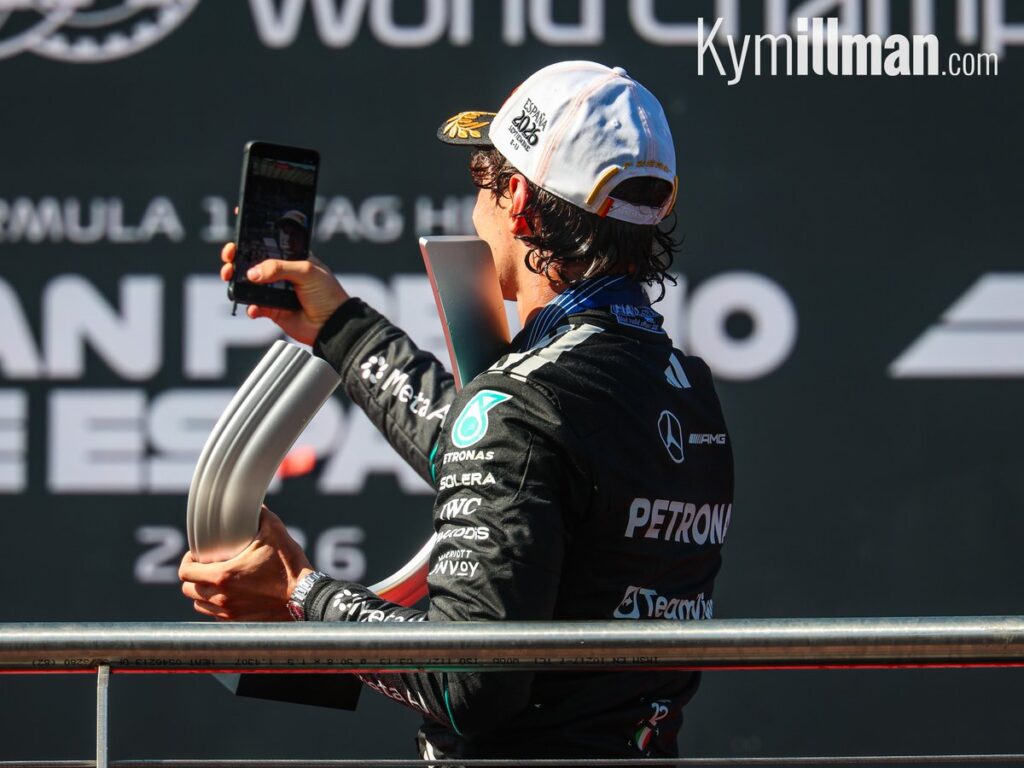
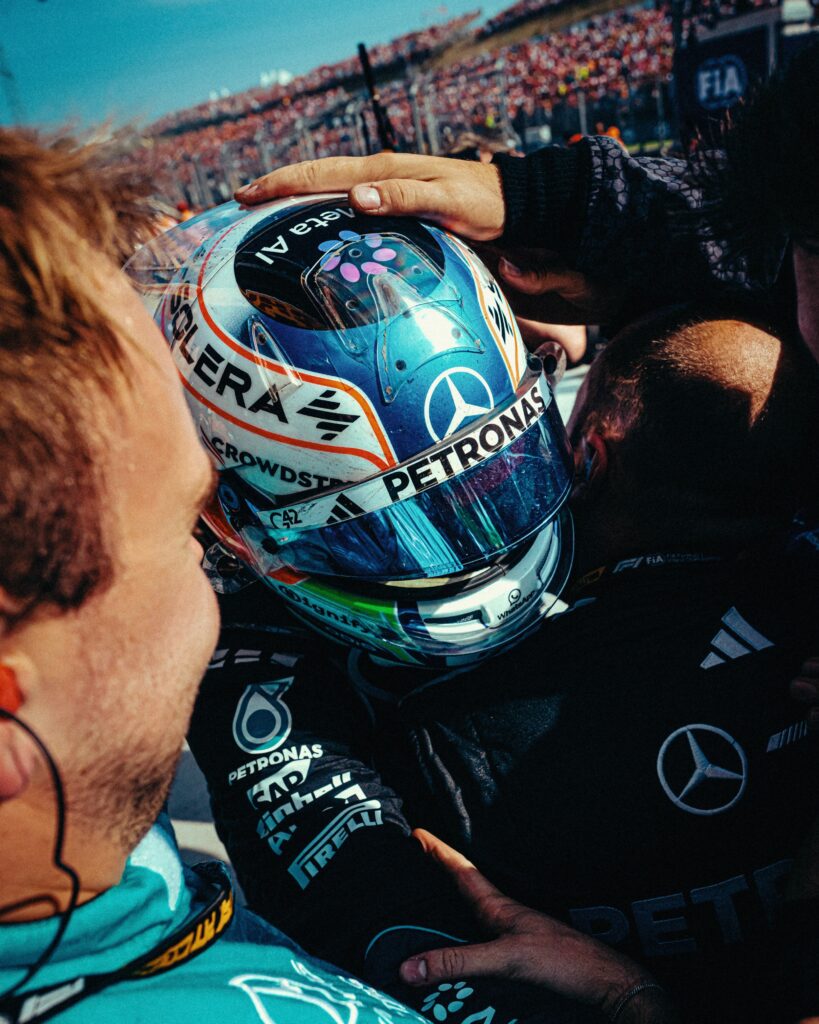
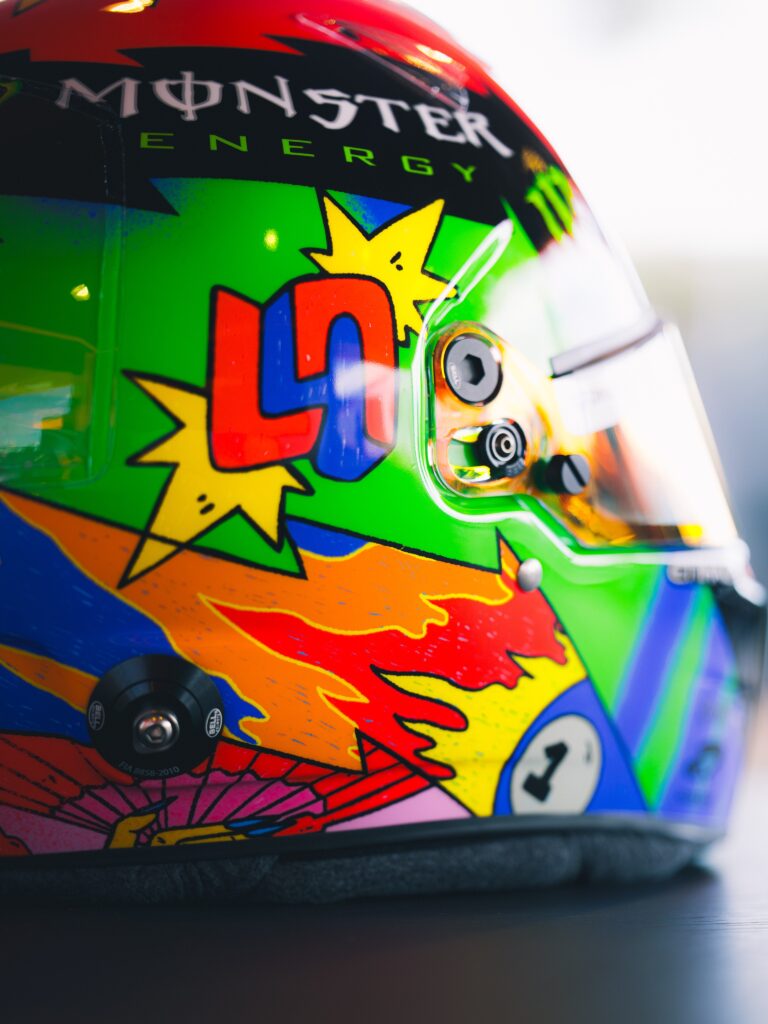
Antonelli’s second-place finish at the 2026 Dutch Grand Prix adds another photographed moment to a helmet design that has become one of the most recognizable liveries on the current grid. The high-contrast graphics that carried him through Zandvoort’s demanding corners are now part of the visual record of his championship-leading season, from the formation lap through to the podium interviews.
For collectors, race weekends like this one are exactly the moments that turn a helmet graphic into a piece worth owning as a display item. A full-size 1:1 replica of the design Antonelli wore at this event captures the same paint scheme photographed trackside, offering the kind of exhibition-quality detail that a shelf or cabinet display calls for. The finish, the sponsor placement, and the color separation are all rendered to match what was seen on camera during the race.
As Mercedes works through its data review before Italy, the helmet remains a constant through the ups and downs of a race weekend — a fixed visual identity even as the car’s balance shifted lap by lap underneath Antonelli in the closing stint.
What Comes Next Before the Italian Grand Prix
Mercedes has a short turnaround to resolve the Dutch GP balance mystery before Formula 1 arrives in Italy. Shovlin’s comments make clear the team sees this as a priority item rather than a one-off anomaly, given how close the competitive order has become without Mercedes’ anticipated major upgrade yet fitted to the car.
“It’s obviously getting really tight now in terms of performance,” Shovlin said. “We’re still waiting for our major update to land and that will help but in the meantime, it is going to be a bit of a fight.” That framing suggests Mercedes expects the current level of competitiveness, and the unpredictability that came with it in the Netherlands, to persist for at least one more round.
For Antonelli, the priority is straightforward: keep the championship lead intact while engineers work out why his tyres behaved so differently late in a race that started with him passing Russell inside the opening lap.
“It was really weird because I felt good with the medium. I felt decent on the first hard, but then on the second one it just felt really odd.”
— Kimi Antonelli, Mercedes
“Each tyre had a bit more oversteer than the tyre before it and we’re trying to understand why that was. We didn’t change the car, we didn’t add any aero balance, which is the sort of thing that could have explained it.”
— Andrew Shovlin, Mercedes trackside engineering director
FAQ
Q: Where did Kimi Antonelli finish at the 2026 Dutch Grand Prix?
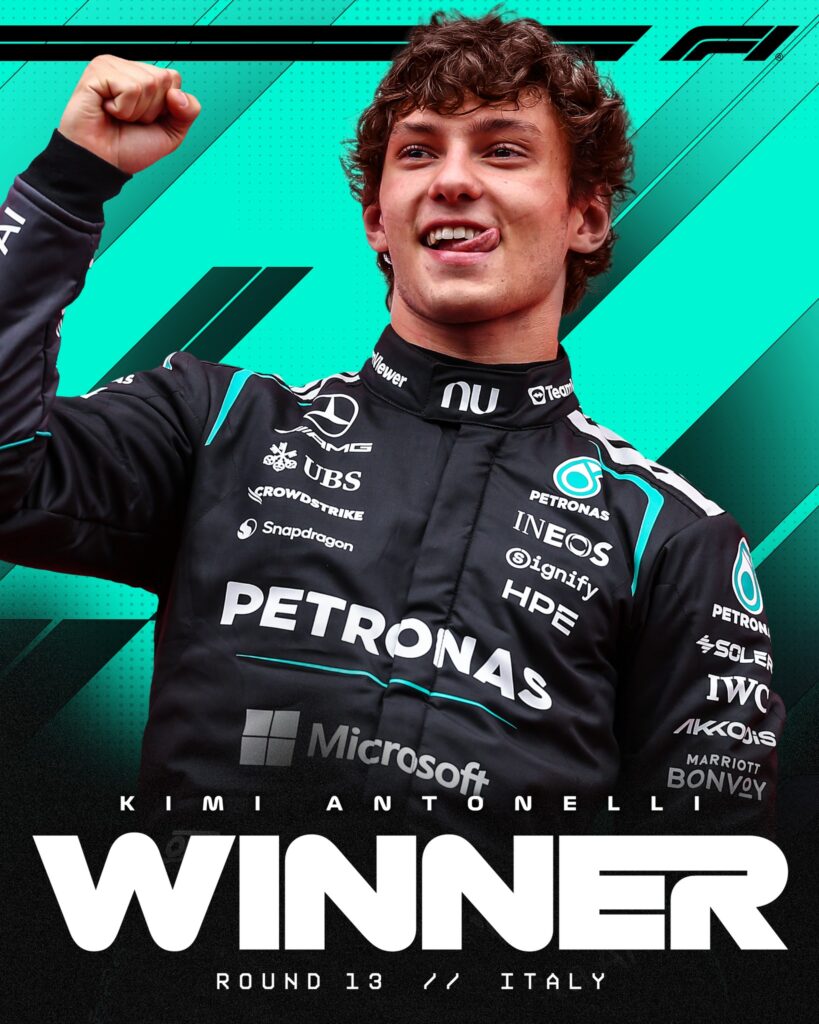
Kimi Antonelli finished second, behind race winner Lando Norris of McLaren, after qualifying third and passing George Russell for the position within the opening lap.
Q: What problem did Antonelli’s Mercedes have during the race?
His W17 developed progressively more oversteer with each tyre change during the second half of the race, a symptom he described as feeling ‘really odd’ by his second set of hard tyres.
Q: Did Mercedes change Antonelli’s car setup during the race?
No, according to trackside engineering director Andrew Shovlin, Mercedes made no car changes or aero balance adjustments during the pit stops, which is what makes the growing oversteer hard to explain.
Q: Why did George Russell let Antonelli through late in the race?
Russell and Antonelli were on offset tyre strategies, and Russell yielded position to his teammate late in the race, helping Antonelli secure the stronger finishing position.
Q: Is a full-size Kimi Antonelli helmet replica available to buy?
Yes, 123Helmets.com offers a full-size 1:1 replica of Kimi Antonelli’s helmet design as a display and collector item for fans following his 2026 championship campaign.
Shop Kimi Antonelli Collection
Display and collector replicas only. Not certified for protective use. Full-size 1:1 scale.